
Podcasting has become an effective way to share knowledge, express ideas, build an audience, and establish a strong online presence. Learn how to start your own podcast with this beginner’s guide covering podcast planning. Whether you are a content creator, entrepreneur, industry expert, or business owner, starting your own podcast allows you to communicate directly with people interested in your topics. With the growing popularity of audio and video content, podcasts offer an opportunity to build meaningful connections with audiences.
Starting a podcast may seem challenging when you are unfamiliar with recording equipment, audio editing, and publishing platforms. However, with proper planning and the right recording setup, beginners can create professional and engaging episodes. Understanding each stage of podcast production helps you turn your ideas into valuable content and build a consistent podcasting routine.
1. Choose Your Podcast Topic and Niche
The first step in starting a podcast is deciding what you want to discuss. Your topic should reflect your interests, knowledge, or business expertise while offering value to a specific audience. Choosing a clear niche makes it easier for listeners to understand what your podcast is about and why they should follow it.
You can create podcasts around business advice, entrepreneurship, technology, entertainment, education, lifestyle, interviews, or industry discussions. Before finalising your topic, consider your target audience and the questions or challenges you can address through your episodes.
2. Identify Your Target Audience
Understanding your target audience helps you create podcast content that connects with the right listeners. Think about who would benefit from your discussions, what interests them, and which topics they are likely to explore.
For example, an entrepreneur-focused podcast may discuss business growth, leadership, marketing, and startup experiences. A creative podcast may focus on photography, filmmaking, design, or content creation. Having a clear audience in mind helps you plan relevant episodes and develop a consistent communication style.
3. Plan Your Podcast Format and Episode Structure
Once you have selected your topic and audience, decide how your podcast episodes will be presented. Your format influences the recording setup, episode length, preparation, and overall production process.
Popular podcast formats include:
-
Solo Episodes: Share your knowledge, opinions, experiences, and advice directly with listeners.
-
Interview Podcasts: Invite guests to discuss their expertise, stories, and professional experiences.
-
Co-Hosted Podcasts: Conduct conversations with another host to explore different perspectives.
-
Panel Discussions: Bring multiple participants together to discuss a particular subject.
-
Educational Podcasts: Explain useful concepts, industry information, and practical topics.
Choosing a suitable format gives your podcast a clear identity and makes future episode planning easier.
4. Prepare Your Podcast Equipment and Recording Setup
You do not need an extremely expensive setup to start podcasting, but using reliable equipment can significantly improve recording quality. Clear audio is particularly important because listeners should be able to understand conversations without distractions.
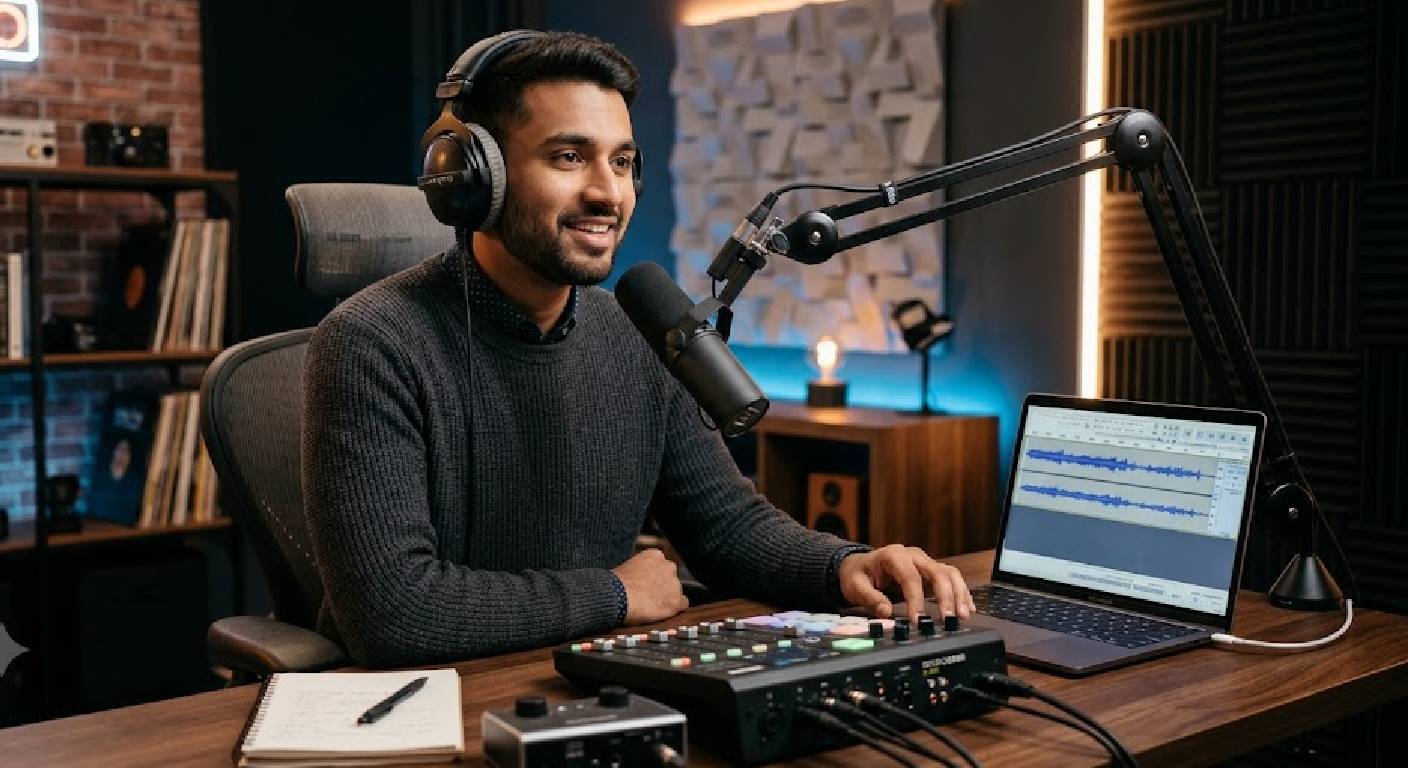
A basic podcast recording setup may include a quality microphone, headphones, a computer, recording software, and a quiet environment. If you plan to create video podcasts, you may also need cameras, proper lighting, and a suitable background. Beginners can start with essential equipment and upgrade their setup as their podcast develops.
5. Write Your First Podcast Script and Episode Plan
Preparing an episode outline helps you communicate ideas clearly and maintain a natural conversation. You do not always need to write every sentence in advance, but having a structured plan prevents unnecessary pauses and keeps the discussion focused.
Start with an introduction that welcomes listeners and explains the episode topic. Organise the main discussion into a few important points, prepare relevant questions if guests are involved, and finish with a conclusion. A well-planned episode creates a smoother recording experience and helps deliver useful information.
6. Record Your Podcast in a Suitable Environment
The recording environment plays an important role in podcast quality. Background noise, echo, interruptions, and poor microphone placement can affect the final audio. Choose a quiet space, test your equipment, and check recording levels before beginning the episode.
For beginners who want a more professional result, recording in a dedicated podcast studio can be a useful option. Professional studios provide suitable microphones, acoustic treatment, recording equipment, and technical facilities. This allows hosts and guests to focus on the conversation while maintaining consistent recording quality.
7. Edit and Publish Your Podcast Episodes
After recording, the next step is editing and preparing your episode for publishing. Editing helps remove unwanted pauses, background noise, recording mistakes, and unnecessary sections. You can also improve audio levels, add an introduction or outro, and prepare video versions when required.
Before publishing, make sure your episode is properly organised and presented. Important publishing steps include:
-
Audio Editing: Improve sound clarity and remove unnecessary recording sections.
-
Episode Description: Write a clear summary explaining what listeners will learn.
-
Cover Artwork: Create professional podcast artwork that represents your brand.
-
Publishing Platform: Upload episodes to suitable podcast hosting and distribution platforms.
-
Episode Promotion: Share your podcast through your website, email, and social media channels.
8. Promote Your Podcast and Maintain Consistency
Publishing your first episode is only the beginning. To attract listeners, you need to promote your podcast and maintain a consistent publishing schedule. Share episode announcements, interesting highlights, short video clips, and useful discussion points across your digital platforms.
You can also collaborate with guests, encourage listeners to share episodes, and embed podcast content on your business website. Reviewing audience feedback and episode performance helps you understand which topics receive attention. Consistent publishing and continuous improvement can gradually help your podcast reach a wider audience.
Conclusion
Starting your own podcast requires planning, creativity, suitable recording equipment, and a clear understanding of your target audience. From choosing a niche and preparing episode topics to recording, editing, and publishing, every stage contributes to creating a professional podcast experience.
Beginners do not need to manage everything perfectly from the first episode. Start with a clear idea, focus on delivering valuable discussions, and improve your production quality over time. With consistent effort and the right recording support, podcasting can become a powerful way to build your personal brand, connect with audiences, and grow your business.