
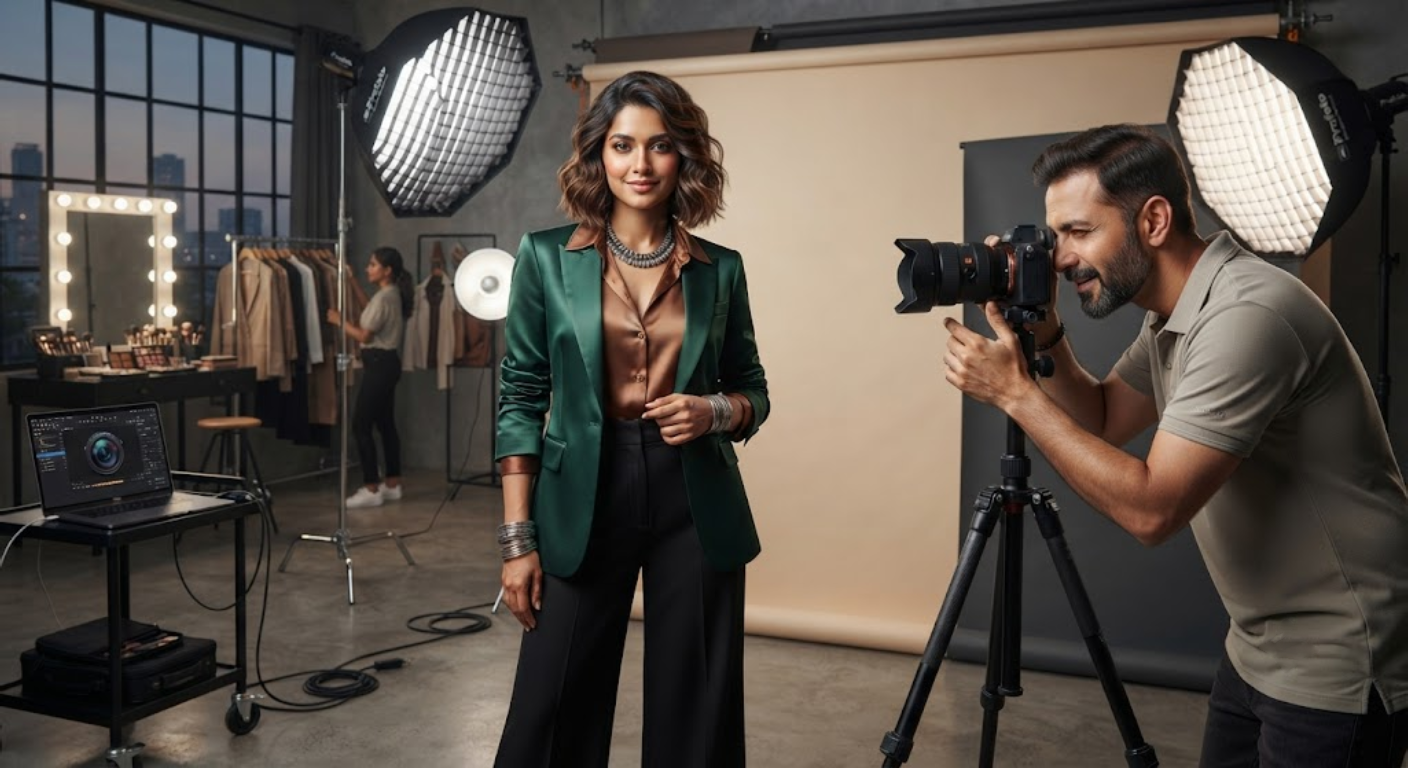
A professional model photograph is more than a picture of a person. It is a visual representation of personality, style, confidence and potential. Whether you are an aspiring model building your first portfolio, an established fashion professional updating your book, an influencer creating branded content, or a fashion company photographing models for a campaign, the quality of the shoot can significantly influence how your work is perceived.
Mumbai is one of India’s major creative and fashion hubs, making it a natural destination for professional model photography. The city offers access to photographers, studios, makeup artists, stylists, designers, production teams and creative professionals who can bring different concepts to life.
However, simply booking a photographer and standing in front of a camera does not automatically create a strong portfolio. A successful model photoshoot requires planning. The concept, wardrobe, location, lighting, makeup, poses, expressions, camera angles and post-production should all work together.
This guide explains how to plan model photography in Mumbai professionally, whether your goal is a fashion portfolio, commercial campaign, e-commerce shoot, personal branding session or creative editorial.
1. Define the Purpose of Your Model Photoshoot
Before selecting a photographer or studio, decide exactly what you want the photographs to achieve.
A model portfolio, fashion campaign and commercial shoot may all feature models, but they require different creative approaches.
For example, a new model may need clean headshots, full-length photographs and different expressions to demonstrate versatility. A fashion model may require editorial images with stronger styling and creative direction. An e-commerce model shoot may focus more heavily on clothing, fit and product presentation.
Your purpose determines nearly every other decision.
If the shoot is for a portfolio, you should aim for variety without making the images look disconnected. If it is for a fashion brand, the clothing and brand identity should remain central. If it is for social media, you may want a combination of vertical photographs, close-ups and lifestyle-oriented compositions.
Before the shoot, answer questions such as:
- Who will see these photographs?
- Where will they be used?
- What type of modelling work are you targeting?
- Do you need portrait, full-length or editorial images?
- Are the photographs for personal branding or a commercial client?
- Do you need both photographs and short-form video?
Having a clear purpose prevents you from collecting dozens of similar photographs that do not serve a specific objective.
2. Choose the Right Type of Model Photography
Model photography covers several different categories, and each has a different visual objective.
1. Model Portfolio Photography
Designed to showcase versatility, appearance, expressions, posing ability and camera presence.
2. Fashion Photography
Focuses on clothing, styling, creative direction, poses, lighting and editorial presentation.
3. Commercial Model Photography
Created for advertisements, brands, campaigns, websites and promotional material.
4. E-commerce Model Photography
Shows apparel, accessories, beauty products or other products being worn or used by a model.
5. Beauty Photography
Concentrates on facial features, makeup, hair, skincare and close-up details.
6. Personal Branding Photography
Useful for influencers, entrepreneurs, professionals and creators who want polished visual content.
7. Lookbook Photography
Creates a consistent collection of photographs for a fashion designer or clothing brand.
8. Creative Editorial Photography
Uses distinctive styling, locations, lighting and artistic direction to create visually memorable photographs.
Understanding the category helps you communicate your expectations to the photography team.
3. Build a Strong Concept and Mood Board
A successful fashion or portfolio shoot normally begins before the camera is switched on.
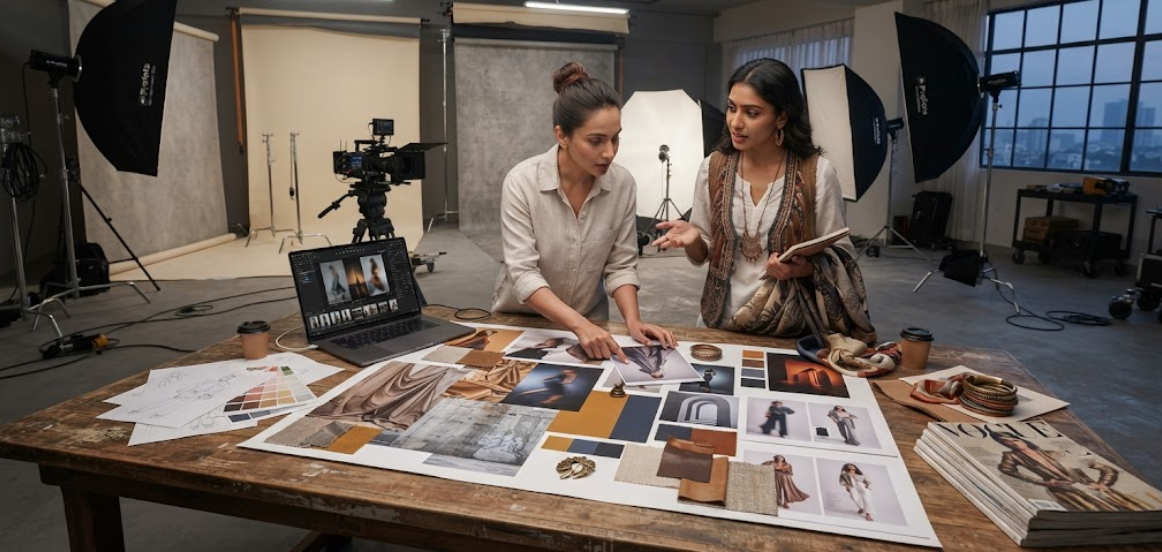
A mood board gives the photographer, model, stylist and makeup artist a common creative direction. It can include references for poses, outfits, lighting, backgrounds, expressions, compositions and overall visual style.
Your mood board does not need to copy another photographer’s work. Instead, use references to communicate the feeling you want.
For example, you might want:
- Minimal studio portraits
- Luxury fashion editorial
- Street-style fashion
- Contemporary Indian fashion
- Beauty-focused portraits
- High-fashion dramatic poses
- Clean commercial photographs
- Lifestyle personal branding
Try to create a balanced visual direction rather than collecting random references.
A good mood board also prevents wasted studio time. The creative team can understand what needs to be photographed before the session begins.
If you are working with a professional studio, share the mood board several days before the shoot whenever possible. This gives the team time to prepare lighting, backdrops, props and equipment.
4. Prepare Your Model, Wardrobe and Styling
Styling can completely change the appearance of a portfolio.
Even excellent photography cannot fully compensate for clothing that does not fit correctly, poorly prepared hair or makeup that does not suit the concept.
Plan wardrobe according to the purpose of the shoot. A portfolio may benefit from a mixture of clean, simple outfits and more styled fashion looks. A commercial shoot should prioritize the client’s product or brand. An editorial shoot can allow more experimentation.
Before arriving at the studio, prepare every outfit.
Wardrobe Checklist
- Prepare more outfits than the final number of looks required.
- Check that every garment is clean and properly ironed.
- Carry appropriate footwear for each outfit.
- Bring accessories that complement the concept.
- Carry backup clothing options.
- Keep garments protected during transportation.
- Avoid excessive branding unless it is part of the concept.
- Select colours and silhouettes that photograph well.
- Coordinate outfits with the planned backgrounds.
- Prepare complete looks before the shoot.
Hair and makeup should also be planned around the photography style. Beauty photography may require detailed makeup work, while commercial photography may benefit from a more natural appearance.
5. Select the Right Photography Studio in Mumbai
The studio environment can have a major impact on the final photographs.
A professional model photography studio should provide enough space for full-length compositions, multiple lighting arrangements and comfortable movement. The availability of different backgrounds can also help create variety during one session.
When evaluating a studio, consider:
- Shooting space
- Ceiling height
- Lighting equipment
- Background options
- Camera and lens capabilities
- Changing area
- Makeup area
- Styling space
- Air conditioning and comfort
- Privacy
- Production assistance
- Post-production services
A studio that offers photography along with production support can make the process easier because the creative team can coordinate lighting, posing, styling and shot planning together.
For Mumbai-based models and brands, location also matters. A conveniently located studio can reduce travel time and make it easier to coordinate models, makeup artists, stylists and clients.
6. Plan Lighting for Different Looks
Lighting is one of the most important technical elements in model photography.
The same model can appear completely different depending on the lighting arrangement. Soft lighting can create flattering beauty portraits, while harder directional lighting can produce stronger editorial images.
A professional shoot may use different lighting setups throughout the session.
For example, a large soft light positioned near the model can create smooth facial illumination. Side lighting can introduce dimension and shadows. Backlighting can separate the subject from the background, while controlled contrast can create a more dramatic fashion look.
The photographer should select lighting based on:
- Skin texture
- Face shape
- Clothing
- Background
- Mood
- Desired contrast
- Type of photography
- Final image usage
Lighting should also remain consistent when creating a portfolio series. Excessively different lighting styles can make the photographs look like they came from unrelated shoots.
7. Work on Posing, Expressions and Camera Presence
A professional camera can capture technically sharp images, but strong model photography also depends on how the subject performs in front of the camera.
Posing should feel intentional rather than forced.
For portfolio photography, the model should demonstrate variety. This could include relaxed portraits, confident fashion poses, natural expressions, seated compositions and full-length poses.
A photographer or creative director can guide the model through subtle changes in:
- Head position
- Shoulder placement
- Hand position
- Body angle
- Weight distribution
- Facial expression
- Eye direction
- Walking movement
- Sitting positions
- Interaction with clothing or props
One of the biggest advantages of working with an experienced photographer is direction during the session. The model does not have to know every pose beforehand.
The photographer can observe the model’s natural strengths and adjust angles accordingly.
Instead of repeating the same pose, aim for a sequence of small changes. A slight change in posture or facial expression can produce an entirely different photograph.
8. Create Variety Within One Portfolio Shoot
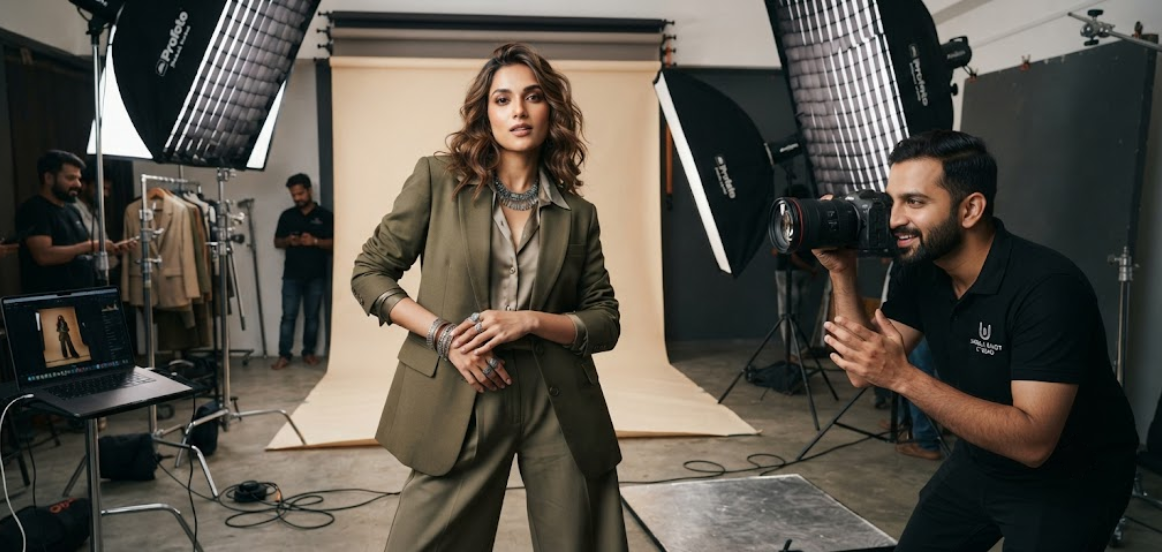
A strong portfolio should demonstrate versatility.
If every image has the same background, outfit, expression and pose, the viewer may not see the model’s full potential.
However, variety does not mean changing everything randomly. The photographs should still feel like part of one professionally planned portfolio.
A well-planned session can include:
Look 1 — Clean Portrait
Simple styling, neutral background and natural expression.
Look 2 — Fashion Editorial
Stronger styling, directional lighting and confident posing.
Look 3 — Commercial
Friendly expressions and clean compositions suitable for brands.
Look 4 — Lifestyle
Natural movement and environmental interaction.
Look 5 — Beauty
Close-up portraits emphasizing makeup, hair and facial features.
This combination gives agencies, brands and clients more useful photographs to evaluate.
For a beginner, even a relatively simple studio setup can produce a versatile portfolio when the photographer carefully changes the lighting, wardrobe, framing and posing.
9. Use Professional Camera Equipment and Photography Techniques
Camera equipment matters, but it is only one part of professional photography.
A skilled photographer understands how to combine camera settings, lenses, lighting, composition and direction to achieve the desired result.
Different lenses can create different perspectives. A portrait-focused lens may provide flattering facial proportions and background separation, while a wider lens can be useful for full-body fashion compositions or environmental photographs.
During a professional model shoot, the photographer may adjust:
- Focal length
- Aperture
- Shutter speed
- ISO
- White balance
- Focus mode
- Lighting power
- Light position
- Camera angle
- Shooting distance
High-resolution photographs also provide flexibility during post-production. The photographer can make controlled crops while retaining useful image quality.
The objective should not simply be to use expensive equipment. The equipment should support the creative concept and intended final use.
10. Plan Professional Editing and Retouching
Photography does not necessarily end when the camera stops.
Professional post-production helps transform selected photographs into polished final images while preserving the model’s natural appearance.
Basic editing can include exposure correction, white balance, colour balancing, contrast and cropping.
Retouching may address temporary skin imperfections, stray hairs, clothing distractions or small background issues. However, excessive retouching can make the photograph look unnatural.
For model portfolios, maintaining realistic skin texture is particularly important. The objective should be to enhance the photograph rather than completely change the model’s appearance.
Depending on the shoot, post-production may include:
- Exposure correction
- Colour correction
- Skin retouching
- Background cleanup
- Hair refinement
- Clothing cleanup
- Minor object removal
- Image cropping
- Sharpening
- Exporting for web and print
Ask the photographer about the number of final edited photographs included in the package and whether high-resolution files are supplied.
Conclusion
Professional model photography requires more than simply standing in front of a camera. A strong shoot combines creative planning, suitable styling, professional lighting, confident posing, high-quality photography and thoughtful post-production.
Whether you are an aspiring model creating your first portfolio, an experienced fashion professional updating your photographs, a brand launching a campaign or an e-commerce company photographing products on models, preparation can make the entire process more efficient and productive.
Mumbai offers a wide range of creative resources for professional model photography. The key is to choose a photography team that understands your objective and can translate your concept into images that look polished, authentic and commercially useful.
Before booking your next model photography in Mumbai session, define your goals, prepare your wardrobe and mood board, discuss the shoot plan with your photographer and confirm the final deliverables. With the right preparation and creative team, one well-planned shoot can provide a versatile collection of photographs for portfolios, websites, social media, campaigns and professional opportunities.