
Recording a video is only the beginning of the production process.
Even when a shoot has been captured with professional cameras, good lighting and clear audio, the raw footage still needs to be shaped into a finished piece of content. Editing, colour grading, sound design, subtitles, motion graphics and platform-specific exports can all influence how the final video looks and feels.
This is where professional post-production becomes important.
For businesses and creators producing Instagram Reels, YouTube Shorts, brand videos, corporate content, podcasts and promotional videos, post-production can turn hours of raw footage into focused, polished and publish-ready content.
Professional post-production is not simply about adding transitions or making a video look cinematic. It involves selecting the right footage, improving pacing, cleaning audio, maintaining visual consistency, adding useful graphics and preparing the final content for its intended platform.
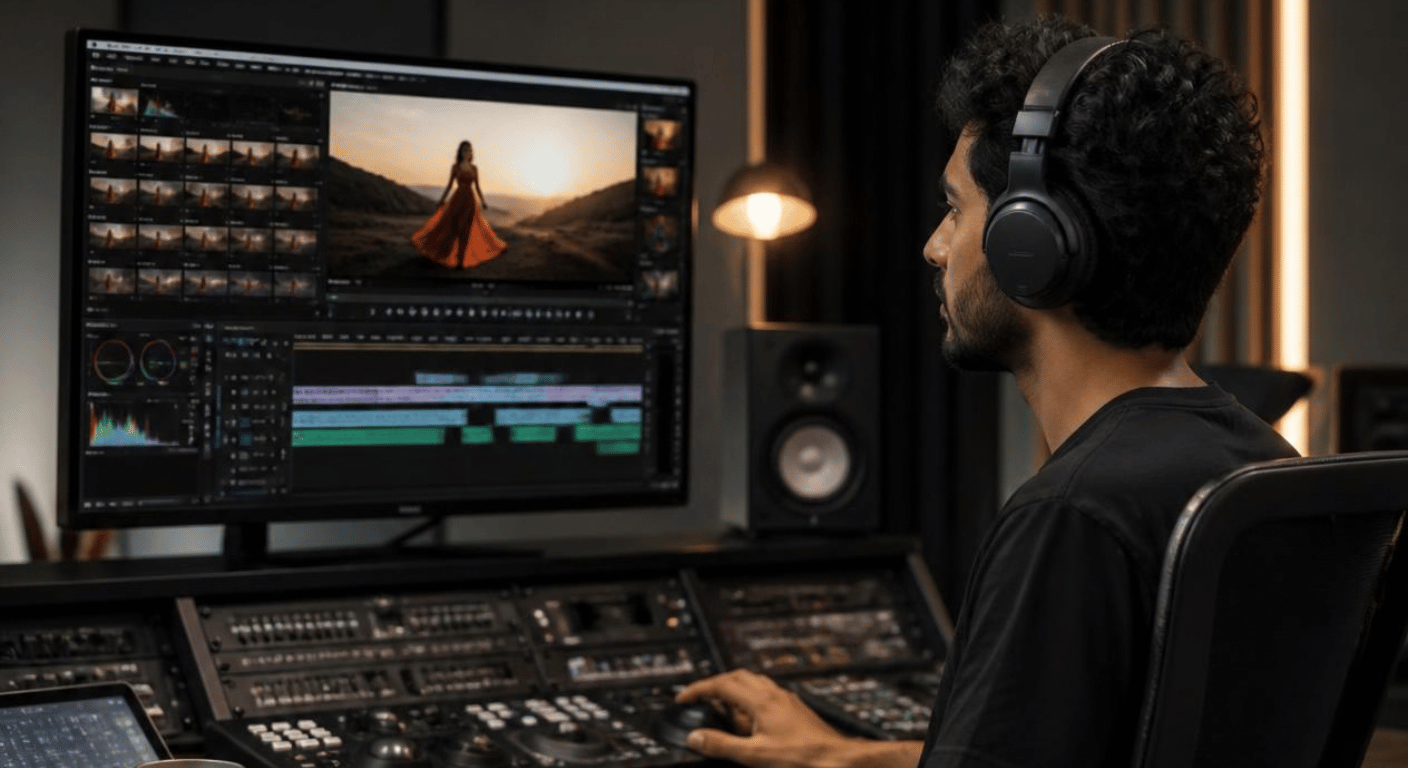
MW Stuudio offers post-production as both part of its video and Reel production workflow and as a standalone service for clients who have already recorded their content elsewhere. Its current post-production services include video editing, colour grading, sound design, motion graphics, subtitles, thumbnail design and photo retouching.
In this guide, we will explore how professional post-production can transform videos and Reels and why brands should consider editing as an essential part of the content-production process.
1. Why Post-Production Matters After the Shoot
Once filming is complete, you may have dozens or even hundreds of video clips.
Some takes may be stronger than others. There may be pauses, repeated sentences, camera adjustments, background noise or moments that do not contribute to the final story.
Post-production brings this material together.
The editor reviews the available footage and determines what should remain in the final video.
This process can involve:
- Selecting the strongest takes
- Removing unnecessary footage
- Arranging clips in the right sequence
- Improving pacing
- Cleaning audio
- Correcting colour
- Adding graphics and captions
- Preparing the final export
The objective is not simply to shorten the footage.
It is to turn raw material into a structured piece of communication.
A well-edited video can feel more focused because every shot has a purpose.
For businesses, this can be especially important when the content needs to communicate a product, service, idea or brand message within a limited amount of time.
2. Editing Can Improve the Pace of Your Videos
Pacing is one of the most noticeable differences between raw footage and professionally edited content.
A video can contain excellent information but still feel slow if there are unnecessary pauses, repetitive sections or long gaps between important points.
Editing allows the production team to control the rhythm of the content.
For example, a Reel may require quick cuts and tighter pacing, while a corporate interview may benefit from a more natural conversational rhythm.
Different types of content require different editing approaches.
A professional editor can decide:
- Where to make a cut
- How long a shot should remain on screen
- When to change camera angles
- Where B-roll should be introduced
- When graphics should appear
- When music should rise or fall
- Which sections should be removed
The goal is to create a viewing experience that feels intentional rather than randomly assembled.
This is particularly important for short-form content, where the available time is limited and the message needs to be communicated efficiently.
3. Colour Grading Can Create a Consistent Visual Style
Two clips recorded under slightly different lighting conditions can sometimes look noticeably different when placed next to each other.
One may appear warmer, another cooler. Skin tones may vary. Background colours may change. Exposure may not be consistent.
Colour correction and colour grading help address these differences.
Colour correction focuses on creating a technically balanced image.
This can involve adjusting:
- Exposure
- White balance
- Contrast
- Saturation
- Skin tones
- Highlight and shadow levels
Colour grading goes a step further by establishing a particular visual mood or style.
For example, a brand may prefer a clean commercial appearance, a warm lifestyle aesthetic or a more cinematic visual treatment.
Consistency is particularly important when creating a series of Reels.
If ten videos are published as part of the same content campaign, a consistent visual treatment can help them feel like part of one production rather than ten unrelated videos.
MW Stuudio’s post-production service includes colour grading as part of its video editing workflow.
4. Professional Audio Editing Can Make Videos Easier to Watch
Viewers may forgive an imperfect camera angle more easily than poor audio.
Background noise, inconsistent volume, echo, microphone problems or distracting sounds can make otherwise useful content difficult to watch.
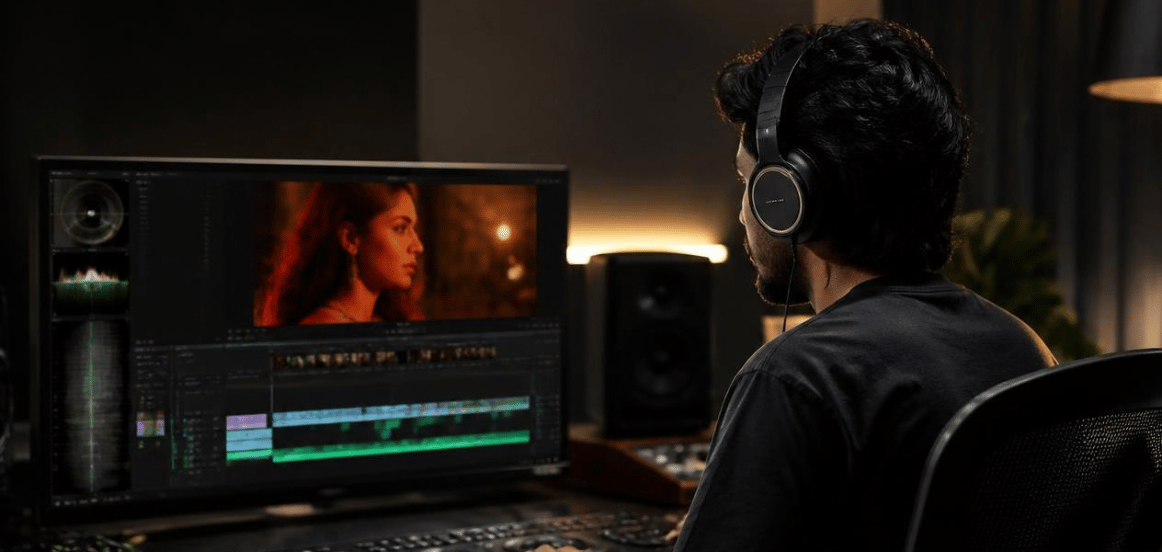
Professional audio post-production can improve the listening experience.
Depending on the recording, the workflow may include:
- Dialogue cleanup
- Volume balancing
- Noise reduction
- Equalisation
- Compression
- Music balancing
- Sound effects
- Audio transitions
- Final audio mastering
For interviews, podcasts and talking-head videos, clear speech is particularly important.
For Reels and promotional videos, music and sound effects may also play an important role in creating rhythm.
Good sound design should support the video rather than distract from it.
MW Stuudio’s current post-production offering includes sound design, while its podcast production workflow also includes dialogue editing, level balancing, EQ, compression and mastering.
5. Subtitles Can Make Video Content More Accessible
Many people watch social media videos without relying entirely on audio.
Subtitles allow viewers to understand spoken content even when the sound is turned down or unavailable.
They can also help reinforce important statements visually.
Professional subtitle production involves more than simply adding automatic captions.
The final captions should be reviewed for:
- Spelling
- Timing
- Punctuation
- Speaker changes
- Line breaks
- Positioning
- Readability
For short-form videos, captions can also be styled to fit the brand’s visual identity.
The objective should be to make the text easy to follow without overwhelming the screen.
For educational content, interviews, podcasts and talking-head Reels, accurate subtitles can be particularly useful because much of the video’s value is contained in spoken information.
MW Stuudio includes subtitles among its current post-production capabilities and also lists subtitles as part of its professional podcast and video workflows.
6. Motion Graphics Can Improve Information Delivery
Not every message can be communicated effectively through video footage alone.
Motion graphics can help explain information visually.
They can include:
- Animated titles
- Lower thirds
- Product callouts
- Simple diagrams
- Icons
- Animated statistics
- Logo animations
- Section headings
- Promotional graphics
For example, a corporate video could use motion graphics to introduce different departments.
A product video could use simple visual callouts to highlight features.
A Reel could use animated text to reinforce an important statement.
The key is restraint.
Graphics should support the message rather than cover the screen with unnecessary animations.
A professional post-production team can decide where motion graphics add value and where a simple cut is more effective.
MW Stuudio currently lists motion graphics among its standalone post-production services.
7. Professional Editing Can Transform Long Footage Into Multiple Reels
One of the biggest advantages of professional post-production is the ability to identify multiple useful moments within a longer recording.
A podcast, interview, webinar or brand shoot may contain many sections that can work as individual pieces of content.
For example, one long recording could potentially be edited into:
- Short educational clips
- Expert quotes
- Question-and-answer Reels
- YouTube Shorts
- Founder clips
- Customer-focused videos
- Behind-the-scenes content
- Promotional snippets
The editor needs to identify moments that make sense independently and then structure them for short-form viewing.
This requires more than simply cutting a long video into equal pieces.
Each short video should have its own context and purpose.
Professional editing can therefore become part of a broader content-repurposing strategy.
Instead of viewing the original recording as one finished video, brands can treat it as a source of multiple content assets.
8. B-Roll Can Make Videos More Dynamic
A common challenge with interviews and talking-head videos is that a single camera angle can become visually repetitive.
B-roll provides additional visual material that can be placed over the main dialogue.
B-roll might include:
- Product close-ups
- Office activity
- People working
- Studio footage
- Demonstrations
- Location shots
- Hands using a product
- Behind-the-scenes footage
For example, if a founder is explaining how a product is made, the editor can show relevant production or product footage while the founder continues speaking.
This creates visual variety without interrupting the spoken narrative.
B-roll can also hide cuts.
If a sentence needs to be shortened or a pause needs to be removed, relevant B-roll can be placed over the edit so the transition feels more natural.
This is one reason professional editing is about storytelling rather than simply joining clips together.
9. Professional Post-Production Helps Build Brand Consistency
A brand may publish dozens or hundreds of videos over time.
If every video has a different colour treatment, subtitle style, typography, music approach and editing rhythm, the content can feel disconnected.
A professional post-production workflow can establish repeatable visual standards.
Brands can create guidelines for:
- Caption style
- Font selection
- Colour palette
- Logo placement
- Intro and outro treatment
- Lower-third design
- Music style
- Transition style
- Colour grading
- Thumbnail design
Once these standards are established, future videos can follow the same visual language.
This can be especially useful for businesses producing regular Reels or recurring video series.
Instead of reinventing the editing style every time, the production team can work from an established system.
The result can be a more cohesive content library.
10. Platform-Specific Editing Can Improve Content Delivery
A video that works well on YouTube may not automatically work well as an Instagram Reel.
Different platforms and placements can require different formats, dimensions and editing approaches.
For short-form vertical content, editors may need to consider:
- 9:16 framing
- Vertical-safe composition
- Caption placement
- Mobile screen readability
- Shorter cuts
- Platform-specific exports
Long-form YouTube content may require a different structure.
Website videos may need a different compression level or aspect ratio.
LinkedIn content may require another presentation style depending on the purpose of the video.
Professional post-production allows one source recording to be adapted into multiple deliverables rather than simply exporting the same file repeatedly.
MW Stuudio’s Reel production workflow currently includes platform-ready 9:16, 1080p exports for Instagram Reels and YouTube Shorts, alongside complete post-production.
Conclusion
Sometimes that means fast cuts and dynamic graphics. At other times, it means subtle colour correction, clean audio and simple transitions that keep attention on the speaker.
The right editing approach depends on the brand, audience, platform and purpose of the video.
For businesses that already have footage, standalone post-production can provide an efficient way to turn existing recordings into finished content. For brands starting from the shoot stage, combining professional production and post-production can create a more consistent workflow from camera to final delivery.
MW Stuudio brings video production, Reel production, podcast production, photography and post-production together within its broader creative studio ecosystem.
Ultimately, the quality of a video is not determined by the camera alone.
It is the combination of planning, production and post-production that turns raw footage into professional content.