
Customers want to know more than what a business sells. They also want to understand the people behind the business, the experience they bring, the problems they solve and the reasons they built the company.
This is one reason founder video content has become an important part of modern business marketing.
Founder videos allow business owners to communicate directly with their audience. Instead of relying only on product photographs, advertisements or written website content, businesses can use video to show the personality, knowledge and perspective of the founder.
However, one common problem remains: What should a business owner actually talk about on camera?
Many founders know their industry extremely well but become unsure when the camera starts recording. They may worry about forgetting what to say, sounding rehearsed or running out of topics after a few videos.
The solution is to create a structured list of topics before the shoot.
Founder video content does not need to be complicated. A founder can talk about the company’s story, customer problems, industry insights, mistakes, lessons, products, processes, values and future plans.
With proper planning, one professional shoot can also produce multiple videos for LinkedIn, Instagram, YouTube, the company website and other marketing channels.
This guide explains what business owners can talk about on camera and how to plan founder video content that feels useful, authentic and professional.
1. Start With the Founder’s Story
One of the most natural places to begin founder video content is with the founder’s story.
People are often interested in why a business was started.
A founder can talk about:
- Where the original idea came from
- What problem inspired the business
- How the company started
- Early challenges
- First customers
- Important milestones
- Lessons from the early years
- How the business has evolved
The story does not need to be dramatic.
A simple and honest explanation of how the business began can create useful context for customers.
For example, a founder of an e-commerce brand could explain why they created a particular product after noticing a gap in the market.
A founder of a consulting company could discuss an industry problem that motivated them to start the business.
A founder of a manufacturing company could explain how the company’s expertise developed over time.
These stories help audiences understand the business beyond its products or services.
The key is to focus on meaningful moments rather than trying to tell the entire history of the company in one video.
2. Explain the Problem Your Business Solves
Customers are usually more interested in their own problems than in a company’s internal operations.
Founder videos can therefore focus on the problems the business was created to solve.
Ask:
What problem does your customer face?
Then explain:
- Why the problem exists
- Why customers struggle with it
- What mistakes people commonly make
- What customers should consider
- How your business approaches the problem
For example, a website development founder could explain why businesses lose enquiries because of poor website structure.
A skincare founder could explain common mistakes customers make when choosing products.
A financial services founder could discuss common planning challenges.
This type of founder video content positions the business owner as someone who understands the customer’s situation.
It also makes the content educational rather than purely promotional.
A useful rule is:
Talk about the customer’s problem first and your solution second.
This makes the video more relevant to the audience.
3. Share Industry Knowledge and Expert Insights
A founder’s knowledge can become a valuable source of content.
Business owners spend years learning about their industry, customers, products and market. Founder videos provide an opportunity to share that knowledge.
Possible topics include:
- Industry trends
- Common customer questions
- Emerging technologies
- Changing consumer behaviour
- Common industry mistakes
- Important buying considerations
- Myths and misconceptions
- Practical tips
- Lessons from experience
For example, a real estate founder could discuss factors buyers should consider before purchasing property.
A fashion business owner could explain changing customer preferences.
A technology founder could discuss practical applications of new technologies.
This type of content can be especially useful for LinkedIn, Instagram and YouTube.
It also gives audiences a reason to follow the founder instead of seeing every video as an advertisement.
4. Answer Questions Customers Ask Again and Again
One of the easiest ways to generate founder video content is to turn frequently asked customer questions into videos.
Think about the questions your sales team, customer-support team or business owner hears regularly.
Examples include:
- How does your service work?
- How long does the process take?
- What should customers prepare?
- Which product should customers choose?
- What does your service include?
- What mistakes should customers avoid?
- What does the buying process look like?
- What happens after purchase?
Each question can become an individual short-form video.
This approach has two major advantages.
First, the content is directly connected to real customer needs.
Second, the founder already knows the answer, which makes recording easier.
Instead of asking a founder to invent topics, give them questions they already answer in everyday conversations.
This often results in more natural and useful videos.
5. Talk About Mistakes and Lessons Learned
Founders do not always need to present perfect success stories.
Lessons from mistakes can create highly useful content.
A founder could discuss:
- A business mistake they made
- A product decision that did not work
- An early marketing mistake
- A hiring lesson
- A customer-service lesson
- A failed experiment
- An assumption that turned out to be wrong
- Something they would do differently today
The purpose is not to expose confidential information or create unnecessary controversy.
Instead, the goal is to share practical lessons that other business owners or customers can learn from.
For example:
“Three mistakes I made when starting my first business.”
“What I wish I knew before launching our first product.”
“The biggest lesson we learned from our first 100 customers.”
These topics can create highly relatable founder video content because they show experience rather than simply promoting success.
6. Explain Your Products or Services Without Making a Sales Pitch
Founder videos can explain products and services, but they do not always need to feel like advertisements.
Instead of saying:
“Our product is the best product available.”
A founder can explain:
- Why the product was created
- Who it is designed for
- How it works
- What problem it addresses
- How customers should use it
- What makes the product different
- What customers should consider before buying
This approach provides useful information while naturally introducing the product.
For service businesses, founders can explain how the service process works from the customer’s perspective.
For example:
“Here is what happens after you contact our team.”
“These are the three things we check before recommending a solution.”
“Here is how we approach a new client project.”
Educational product and service videos can help customers feel more informed before making a decision.
7. Share Behind-the-Scenes Stories
Customers often see the finished product but never see what happens behind it.
Founders can use video to show the thinking and work involved in building the business.
Possible topics include:
- How products are developed
- How quality is checked
- How a service is delivered
- How the team works
- How decisions are made
- How products are sourced
- What happens before a launch
- What goes into maintaining quality
Behind-the-scenes content can make a company feel more transparent.
It can also demonstrate the amount of work that goes into delivering the final product or service.
For example, a food brand founder could explain how ingredients are selected.
A manufacturing founder could show quality-control processes.
A creative-agency founder could explain how a campaign is developed.
The more specific the story, the more useful the content becomes.
8. Talk About Business Values and What Matters to You
Customers may also want to understand what a company stands for.
Founders can talk about the principles that influence business decisions.
Possible topics include:
- Customer service
- Product quality
- Innovation
- Sustainability
- Craftsmanship
- Transparency
- Team culture
- Long-term relationships
- Community involvement
- Continuous improvement
These videos should be specific rather than generic.
Instead of simply saying:
“Customer satisfaction is important to us.”
Explain what that means in practice.
For example:
“Here is how we handle a customer complaint.”
Or:
“This is why we spend more time checking every product before dispatch.”
Specific examples make company values easier to understand.
Founder video content can therefore communicate not only what a business sells but also how it operates.
9. Discuss the Future of Your Industry
Founders can also create content around where their industry is heading.
This could include:
- Emerging trends
- New customer expectations
- Technology changes
- New business models
- Changing purchasing behaviour
- Opportunities for businesses
- Challenges the industry may face
The key is to share informed perspectives rather than make unsupported predictions.
A founder might say:
“Three changes we are seeing in our industry.”
Or:
“What businesses should prepare for over the next few years.”
These topics can position the founder as someone actively engaged with their industry.
They can also create discussion and engagement around the video.
When planning founder video content, consider creating a mix of evergreen educational topics and timely industry discussions.
10. Create Short Opinions and Strong Business Perspectives
Not every founder video needs to be a detailed educational presentation.
Short opinions can also become effective social media content.
For example:
- “One business lesson I learned the hard way.”
- “Why small businesses should stop doing this.”
- “The biggest mistake I see customers make.”
- “One thing I would change about our industry.”
- “What I wish every new entrepreneur understood.”
- “The advice I would give my younger self.”
These topics give the founder an opportunity to communicate a clear point of view.
The strongest videos often focus on one idea at a time.
A short video should not attempt to explain an entire industry.
Choose one thought, explain it clearly and finish with a useful takeaway.
This format works particularly well for short-form platforms.
11. Turn One Founder Shoot Into Multiple Videos
A single founder recording session can produce much more than one video.
With proper planning, a business owner could record multiple topics during the same production session.
For example:
Founder Story
How the company started.
Customer Education
Three common customer questions.
Industry Insights
Important changes in the industry.
Business Lessons
A mistake and what it taught you.
Product Education
How your product solves a specific problem.
Behind the Scenes
How the company delivers its service.
Personal Perspective
One lesson the founder learned as an entrepreneur.
These topics can then be edited into shorter clips.
One long recording can potentially generate:
- Instagram Reels
- YouTube Shorts
- LinkedIn videos
- Website videos
- Educational clips
- Quote graphics
- B-roll content
The exact output depends on the recording style, number of topics, editing requirements and production time.
The principle is simple:
Do not plan a shoot around one video. Plan it around a content library.
Conclusion
Founder video content gives business owners an opportunity to communicate directly with customers and audiences.
The best topics are not necessarily complicated.
Founders can talk about their story, customer problems, industry knowledge, frequently asked questions, mistakes, lessons, products, processes, values and business perspectives.
The key is to provide useful information instead of turning every video into a sales pitch.
Before recording, create a list of topics and group them into clear content categories. Record multiple videos during the same production session and repurpose the footage into different formats for social media, websites and other marketing channels.
Most importantly, founders should aim to sound like themselves.
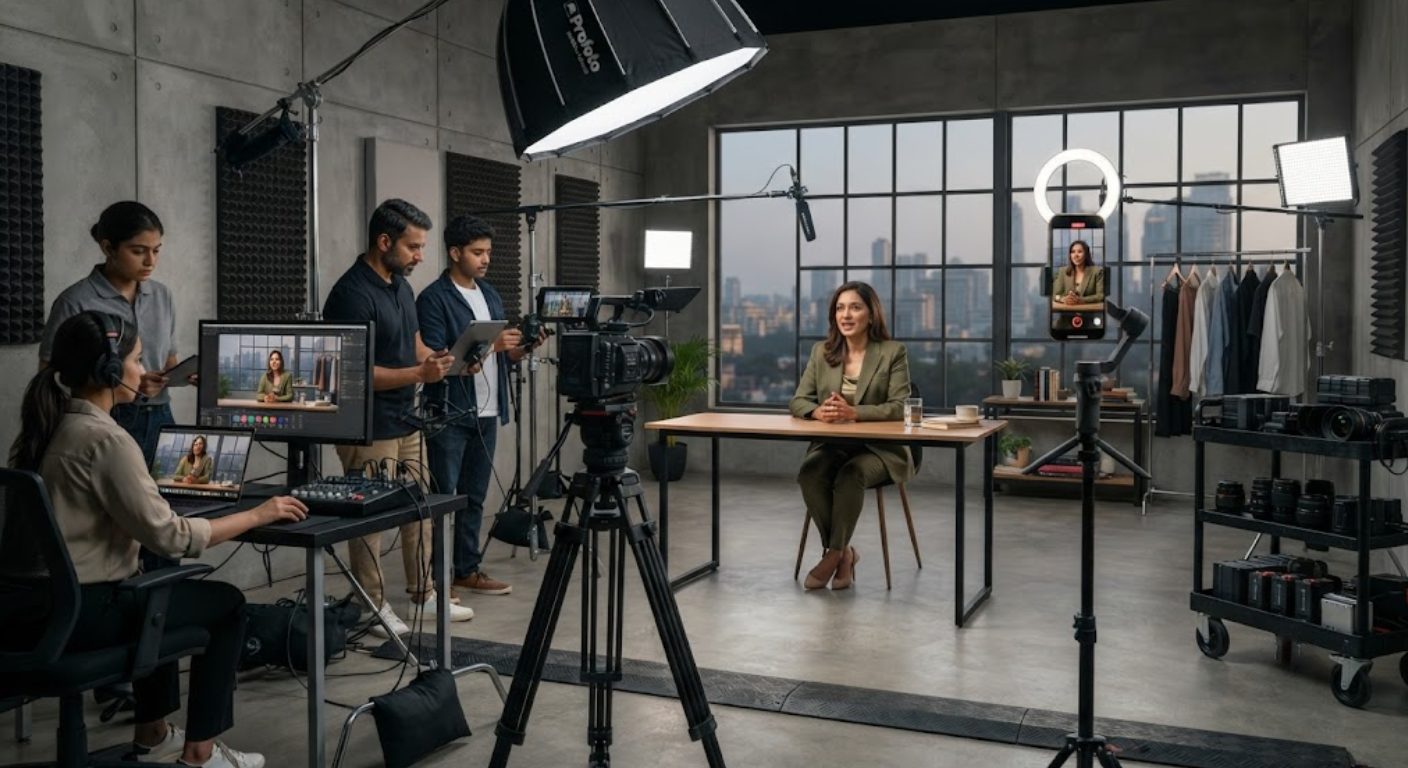
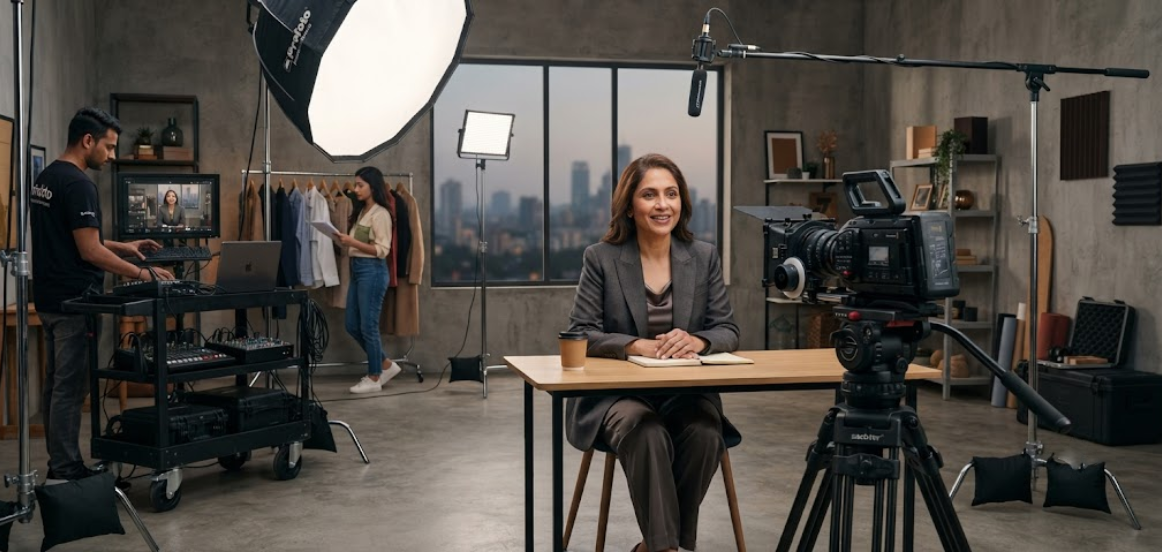
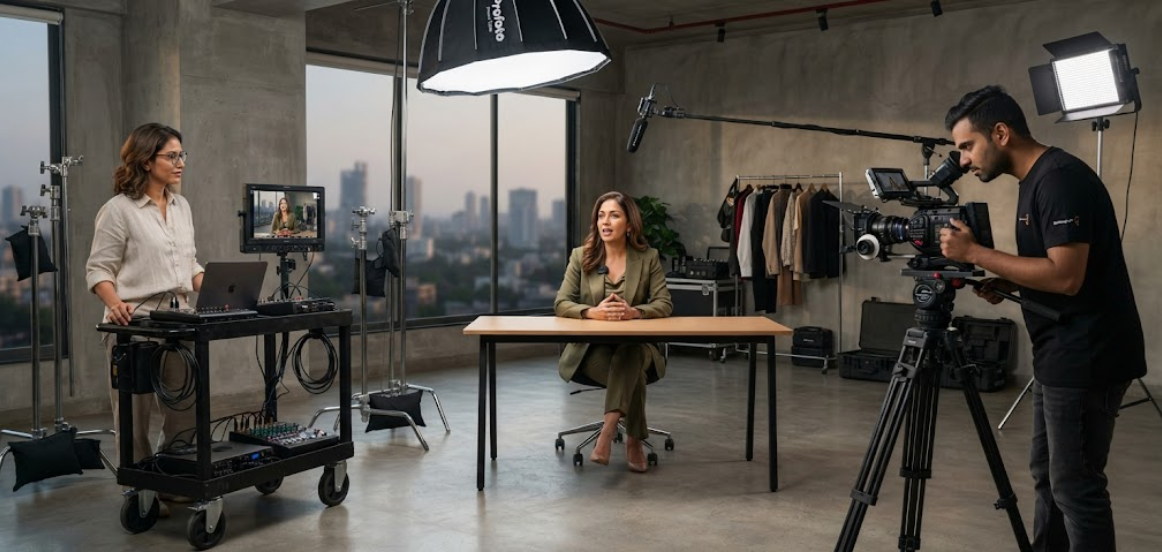
A professional camera, lighting and microphone can improve production quality, but authentic knowledge and clear communication are what make the content useful.
With a structured approach, founder video content can become a repeatable part of a company’s marketing strategy and help audiences understand the people, expertise and ideas behind the brand.