

Customer trust is one of the biggest factors influencing whether someone chooses to buy from a business. Customers may read your website, compare competitors, review your social media pages and look at your services, but hearing directly from someone who has already worked with your business can make the decision much easier.
This is where customer testimonial videos become valuable.
A customer testimonial video allows real customers to explain their experience in their own words. Instead of simply telling potential customers that your business provides quality products or services, you can show real people describing the problem they had, the solution they received and the results they experienced.
Video also adds a human element that written testimonials often cannot provide. Viewers can see facial expressions, hear the customer’s voice and understand the emotion behind their experience.
However, not every testimonial video automatically builds trust. A heavily scripted video, unnatural performance, poor audio or overly promotional message can make the testimonial feel like an advertisement.
A successful customer testimonial video should feel genuine, specific and relatable.
For businesses in Mumbai and across India, professionally produced testimonial videos can become valuable assets for websites, social media, digital advertising, presentations, landing pages and sales campaigns.
The key is to plan the story properly, make the customer comfortable and capture the experience in a professional but authentic way.
1. Understand Why Customer Testimonial Videos Build Trust
People naturally place greater value on experiences shared by other customers.
A business can claim that its products are reliable, its service is excellent or its team is professional. But when an actual customer explains their experience, the message can feel much more credible.
A strong customer testimonial video can communicate several things at once:
- Real customer experience
- Problems before using the product or service
- Reasons for choosing the business
- Experience during the buying process
- Product or service benefits
- Results achieved
- Customer satisfaction
- Confidence in recommending the business
The most effective testimonials are not simply statements saying that a company is “great.”
They tell a story.
For example, a customer might explain that they were struggling to generate enquiries through their old website, decided to work with a professional agency and eventually started receiving more relevant enquiries.
That story is much more useful than simply saying, “The service was excellent.”
Specific experiences make testimonials easier for potential customers to understand and relate to.
2. Choose the Right Customer for Your Testimonial
The customer featured in your testimonial can significantly influence how convincing the video feels.
You do not necessarily need your biggest customer or the most well-known client.
Instead, look for customers who have a genuine story to share and whose experience is relevant to the audience you want to reach.
Consider customers who:
- Have used your product or service successfully
- Can clearly explain their experience
- Represent your target audience
- Experienced a meaningful problem before working with you
- Can describe specific benefits
- Are comfortable speaking on camera
- Are willing to provide honest feedback
It can also be useful to feature different types of customers over time.
For example, a B2B company could create separate testimonials from a startup founder, an established business owner and a corporate decision-maker.
This allows different prospects to see someone whose situation resembles their own.
The more relatable the customer is, the easier it can be for a potential buyer to imagine having a similar experience.
3. Prepare Questions Instead of Writing a Rigid Script
One of the most common mistakes businesses make when producing customer testimonial videos is writing every sentence for the customer.
A fully scripted testimonial can sound unnatural.
The customer may know exactly what they are supposed to say, but the result can feel more like an advertisement than a genuine recommendation.
Instead of giving customers a complete script, prepare thoughtful questions.
Useful questions may include:
- What problem were you facing before working with us?
- Why did you decide to look for a solution?
- Why did you choose our company?
- What was your experience during the process?
- What did you like most about the product or service?
- What changed after using our solution?
- What result or improvement did you notice?
- What would you tell someone considering our service?
- Would you recommend us to others?
These questions give the customer a structure without forcing them to memorize specific sentences.
The interviewer can then ask follow-up questions whenever the customer mentions an interesting detail.
This approach usually produces more natural answers and better storytelling.
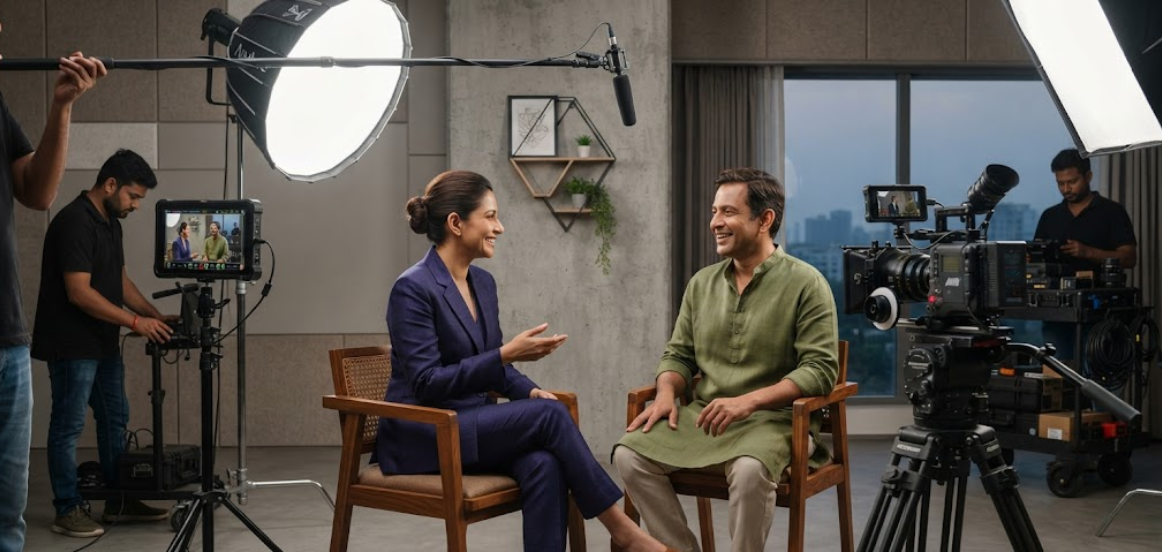
4. Build the Testimonial Around a Simple Customer Story
A strong customer testimonial video usually follows a simple narrative structure.
The viewer should understand where the customer started, what problem they faced and what happened after they found your business.
A practical structure is:
1. The Problem
What challenge was the customer experiencing?
2. The Search
Why did they start looking for a solution?
3. The Decision
Why did they choose your business?
4. The Experience
What was it like working with you?
5. The Result
What changed after using your product or service?
6. The Recommendation
Would they recommend your business to someone else?
This structure keeps the testimonial focused.
The customer does not need to explain every detail of their entire experience.
The objective is to identify the parts of the story that are most relevant to future customers.
A testimonial should answer the questions a potential buyer is already thinking about.
5. Encourage Specific Experiences Instead of Generic Praise
Specificity is one of the most important elements of an effective customer testimonial video.
Statements such as “Great service,” “Amazing company” or “Highly recommended” are positive, but they provide limited information.
A more useful testimonial explains why the customer was satisfied.
For example:
Instead of:
“The team was very professional.”
A stronger statement could explain what the team actually did that demonstrated professionalism.
Instead of:
“The product helped our business.”
The customer could describe what improved, what problem was solved or how the product changed their workflow.
Specific details help viewers understand the actual customer experience.
If possible, encourage customers to talk about:
- Their original challenge
- Their expectations
- Their experience with the team
- Specific features they appreciated
- Improvements they noticed
- Results they achieved
- Why they would recommend the business
The goal is not to force the customer to make exaggerated claims.
It is to help them explain their genuine experience clearly.
6. Make the Customer Feel Comfortable on Camera
Many customers are not professional speakers.
They may feel nervous when a large camera, microphone and production team are placed in front of them.
If the customer is uncomfortable, the video can feel stiff even when the answers are excellent.
The production team should therefore create a relaxed environment.
Helpful techniques include:
- Have an informal conversation before recording
- Explain the interview process clearly
- Avoid forcing the customer to memorize answers
- Allow multiple takes
- Encourage natural speaking
- Give simple direction when necessary
- Avoid interrupting unnecessarily
- Let the customer pause and restart
- Keep the atmosphere friendly
Sometimes the best testimonial happens after the customer becomes comfortable with the camera.
The first few minutes can simply be treated as warm-up conversation.
Professional production does not mean making the customer behave like an actor.
The goal is to capture the person as naturally as possible.
7. Invest in Professional Audio and Lighting
Even an excellent customer story can lose impact if the production quality is poor.
Audio is particularly important.
Viewers may tolerate a simple background, but unclear dialogue, excessive background noise or inconsistent volume can make a testimonial difficult to watch.
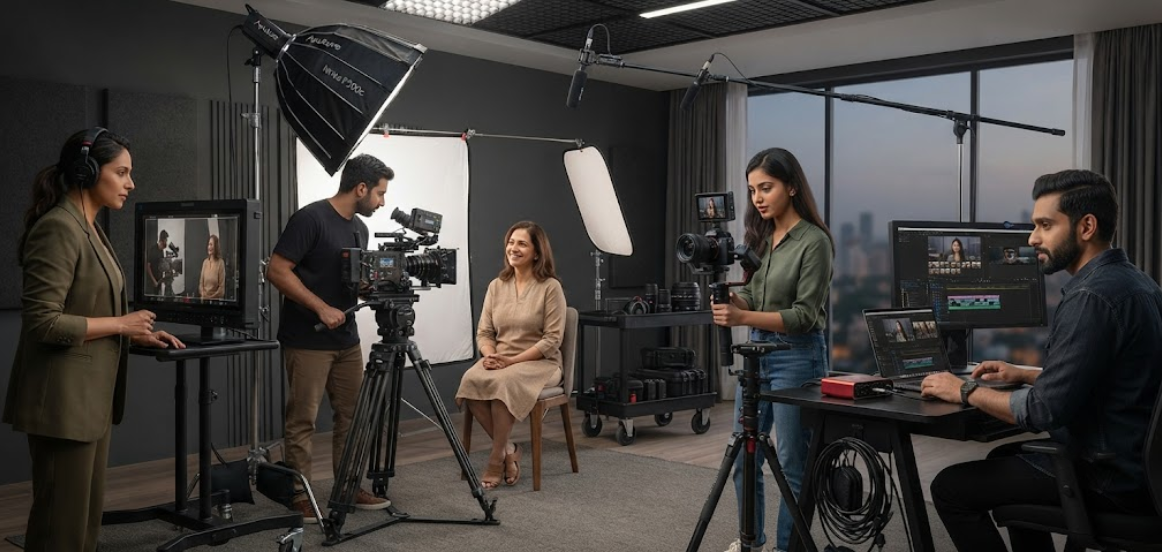
Professional customer testimonial videos should pay attention to:
- Clear microphone placement
- Background noise
- Room acoustics
- Consistent audio levels
- Soft and flattering lighting
- Proper exposure
- Clean backgrounds
- Stable camera positioning
Professional lighting also helps the customer look natural and keeps the visual quality consistent with the rest of your brand content.
The production does not need to look excessively cinematic.
It simply needs to look polished, comfortable and credible.
Good production quality signals that the business takes communication seriously.
8. Capture Supporting B-Roll to Make the Testimonial More Engaging
A testimonial does not have to consist entirely of a customer speaking directly to the camera.
Supporting B-roll can make the final video more dynamic and help visually explain the customer’s story.
Depending on the business, B-roll could include:
- Customer using the product
- Customer interacting with your team
- Product demonstrations
- Store or office environment
- Service delivery
- Packaging
- Team collaboration
- Before-and-after visuals
- Product close-ups
- Customer interactions
- Website or application usage
- Behind-the-scenes moments
For example, if a customer is discussing how a product improved their daily workflow, supporting footage can show the product being used.
If the customer is talking about a professional service, B-roll can show meetings, project work or the completed result.
This creates a more visually interesting testimonial while keeping the customer’s voice at the centre of the story.
9. Create Different Versions for Different Marketing Channels
One customer testimonial can produce several useful pieces of content.
Instead of creating one long video and publishing it everywhere, consider adapting the footage for different platforms.
For example:
- Full testimonial for your website
- Short testimonial Reel
- Instagram Story clips
- LinkedIn testimonial video
- YouTube customer story
- Website landing-page video
- Short advertising clips
- Sales presentation content
- Social media quote graphics
- B-roll clips for future campaigns
Vertical and horizontal versions can also be created depending on the intended platform.
This approach makes the production investment more valuable.
A single customer interview can become a complete content package rather than one isolated video.
10. Add Customer Testimonials to Your Sales and Marketing Funnel
Customer testimonial videos should not be treated only as social media content.
They can become valuable sales assets throughout the customer journey.
Consider using them on:
- Homepage
- Service pages
- Product pages
- Landing pages
- Pricing pages
- Case study pages
- Social media
- Email campaigns
- Sales presentations
- Digital advertising
- Proposal documents
- YouTube channels
The placement should match the customer’s decision stage.
For example, a testimonial on a homepage can establish general credibility.
A detailed testimonial on a service page can help a visitor understand the specific service.
A short testimonial in an advertisement can capture attention and provide social proof.
The more strategically you distribute customer testimonial videos, the more opportunities they have to influence purchasing decisions.
11. Edit the Testimonial Without Losing Authenticity
Editing can make a customer testimonial more engaging, but excessive editing can remove the authenticity that makes testimonials valuable.
The editing process should focus on clarity and storytelling.
Useful elements include:
- Removing long pauses
- Removing repeated statements
- Improving audio quality
- Adding relevant B-roll
- Creating clean transitions
- Adding subtitles
- Correcting colour and exposure
- Creating shorter social media versions
- Adding simple brand graphics where appropriate
Subtitles are especially useful for social media because many people watch videos without sound.
However, avoid changing the customer’s meaning.
The testimonial should still represent what the customer genuinely said and experienced.
The best customer testimonial videos feel polished without feeling manufactured.
12. Build a Long-Term Customer Testimonial Video Library
Businesses should not stop after producing one testimonial.
As your customer base grows, continue collecting customer stories from different industries, locations, customer types and use cases.
Over time, you can build a valuable testimonial library.
Your collection might include:
- Product testimonials
- Service testimonials
- Founder testimonials
- B2B customer stories
- E-commerce customer experiences
- Long-term customer stories
- Before-and-after stories
- Case study videos
- Short social proof clips
- Industry-specific testimonials
This gives your marketing team a growing collection of authentic content.
You can then match the most relevant testimonial to each campaign, service page or target audience.
A strong testimonial library also reduces the pressure to constantly create completely new promotional content.
The customer stories themselves become an ongoing source of trust-building content.
Conclusion
Customer testimonial videos can be one of the most effective ways to demonstrate real customer experiences and strengthen trust in your business.
The strongest testimonials are not overly scripted advertisements. They are genuine customer stories that explain a problem, describe the experience and show what changed after working with a business.
To create effective customer testimonial videos, choose the right customers, prepare thoughtful interview questions, make people comfortable on camera and invest in professional audio and lighting.
Supporting B-roll, careful editing and platform-specific versions can make the final content even more useful.
Most importantly, think beyond one video.
A well-planned testimonial shoot can create a collection of customer stories that supports your website, social media, advertising, sales presentations and long-term content strategy.
With the right planning and professional production, customer experiences can become powerful visual proof that helps potential customers feel more confident about choosing your business.