
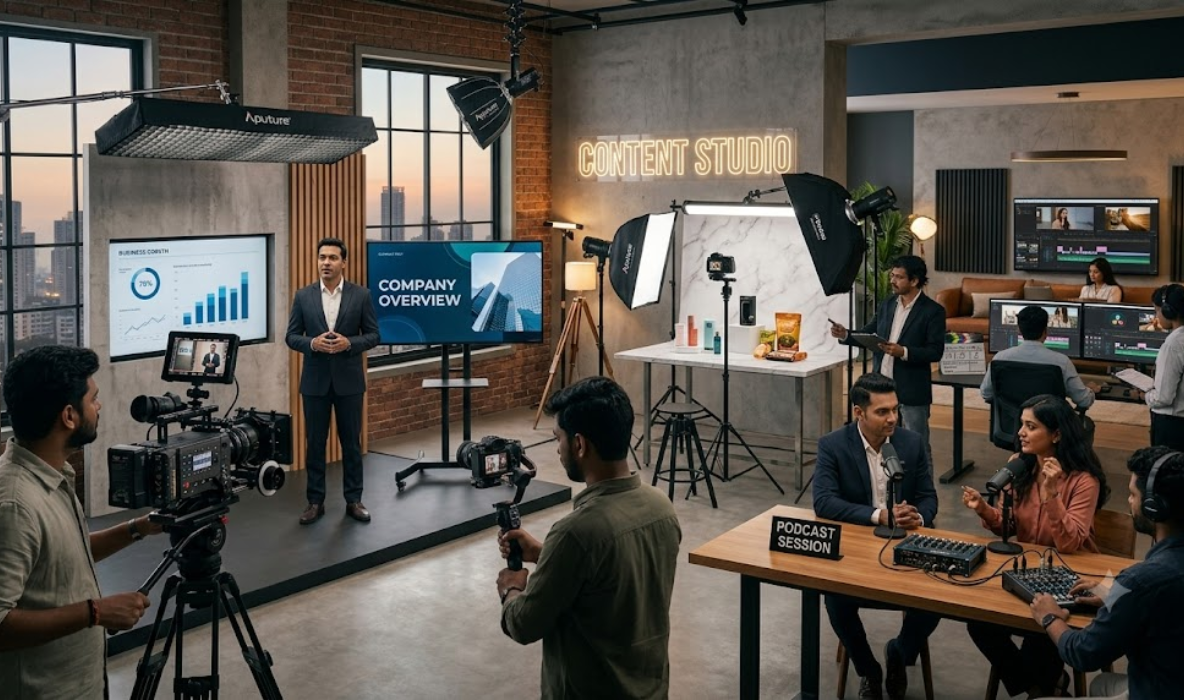
Creating content for a business can quickly become complicated.
Instagram may require Reels and photographs. YouTube may need longer videos. LinkedIn may require professional thought-leadership content. A website may need product images, team photographs, videos and banners. Podcasts may require both audio and video assets.
If every platform is handled through a separate production process, businesses can spend a significant amount of time coordinating shoots, equipment, locations, people and post-production.
A multi-platform content production day offers another approach.
Instead of planning individual shoots for every platform, a business can organise one structured production day around multiple content requirements.
For example, a single production day could generate:
- Instagram Reels
- YouTube Shorts
- LinkedIn videos
- Product photographs
- Founder photographs
- Website visuals
- Podcast content
- Product demonstration videos
- Behind-the-scenes footage
- Advertising assets
The objective is not simply to produce as much content as possible.
The objective is to plan one production session so that the resulting assets can support multiple platforms and business goals.
MW Stuudio’s current production model supports this type of connected approach. Its services include photography, Reels, YouTube Shorts, corporate videos, podcast production and post-production, while its studio pages describe combining multiple services during the same visit.
A successful production day starts long before the camera starts recording. The following 15 steps can help businesses plan one efficiently.
1. Start by Defining Every Platform You Need Content For
This list helps determine what needs to be captured.
A business launching a product might require horizontal product videos for its website, vertical videos for Instagram, product photographs for e-commerce and lifestyle images for advertising.
The production day should therefore be designed around outputs, not simply around the act of shooting.
This also prevents an important problem: finishing the shoot and later discovering that important content formats were never captured.
2. Create a Master Content List Before the Shoot
Once the platforms are identified, create one master content list.
This becomes the production-day checklist.
For example:
Video
- 10 educational Reels
- 3 product videos
- 2 founder videos
- 1 corporate introduction
Photography
- 20 product images
- 5 lifestyle images
- 5 founder portraits
- 3 team photographs
Podcast
- 2 podcast episodes
- 6 short clips
- Episode thumbnail photographs
Additional Assets
- Behind-the-scenes footage
- Website banner footage
- Advertisement clips
- B-roll
The list should be specific.
Instead of:
“Shoot social media content.”
Write:
“Shoot five 30-second videos explaining the five most common customer questions.”
Specific deliverables make production easier to organise.
They also help the production team estimate how much time each activity requires.
MW Stuudio’s batch Reel workflow similarly focuses on preparing specific content topics, hooks and shot lists before the production session.
3. Separate Content Into Production Categories
Once the master list is ready, group the content by the type of production required.
A useful structure is:
Category 1 — Video
Reels, Shorts, corporate videos, product demonstrations.
Category 2 — Photography
Products, people, lifestyle, team and branding images.
Category 3 — Podcast
Audio recording, video podcast, guest portraits and promotional clips.
Category 4 — Supporting Assets
B-roll, behind-the-scenes footage, thumbnails, website visuals and advertising material.
This makes the day easier to schedule.
For example, if the same lighting setup can be used for product photography and product video, these activities should be scheduled together.
If the same presenter needs to record ten Reels, record those together rather than repeatedly bringing the presenter back into the studio.
This is the foundation of batch production.
The goal is to minimise unnecessary changes between activities.
MW Stuudio’s photography workflow similarly groups catalogue photography by product type to reduce repeated lighting changes.
4. Plan the Production Day Around Time Blocks
A production day should have a schedule.
Without one, small delays can quickly affect the entire day.
A sample schedule could look like:
9:00–9:30
Studio preparation and equipment checks
9:30–11:00
Founder videos and talking-head Reels
11:00–12:30
Product photography
12:30–1:00
B-roll and supporting footage
1:00–2:00
Break
2:00–3:30
Product videos and demonstrations
3:30–5:00
Podcast or interview recording
5:00–6:00
Lifestyle photography and promotional assets
6:00–6:30
Behind-the-scenes and final pickup shots
The exact schedule will depend on the project.
Some productions may need an entire day for one major video.
Others may be designed specifically around high-volume batch content.
The important point is to allocate time before the shoot rather than deciding everything during production.
5. Group Content by Presenter, Product and Setup
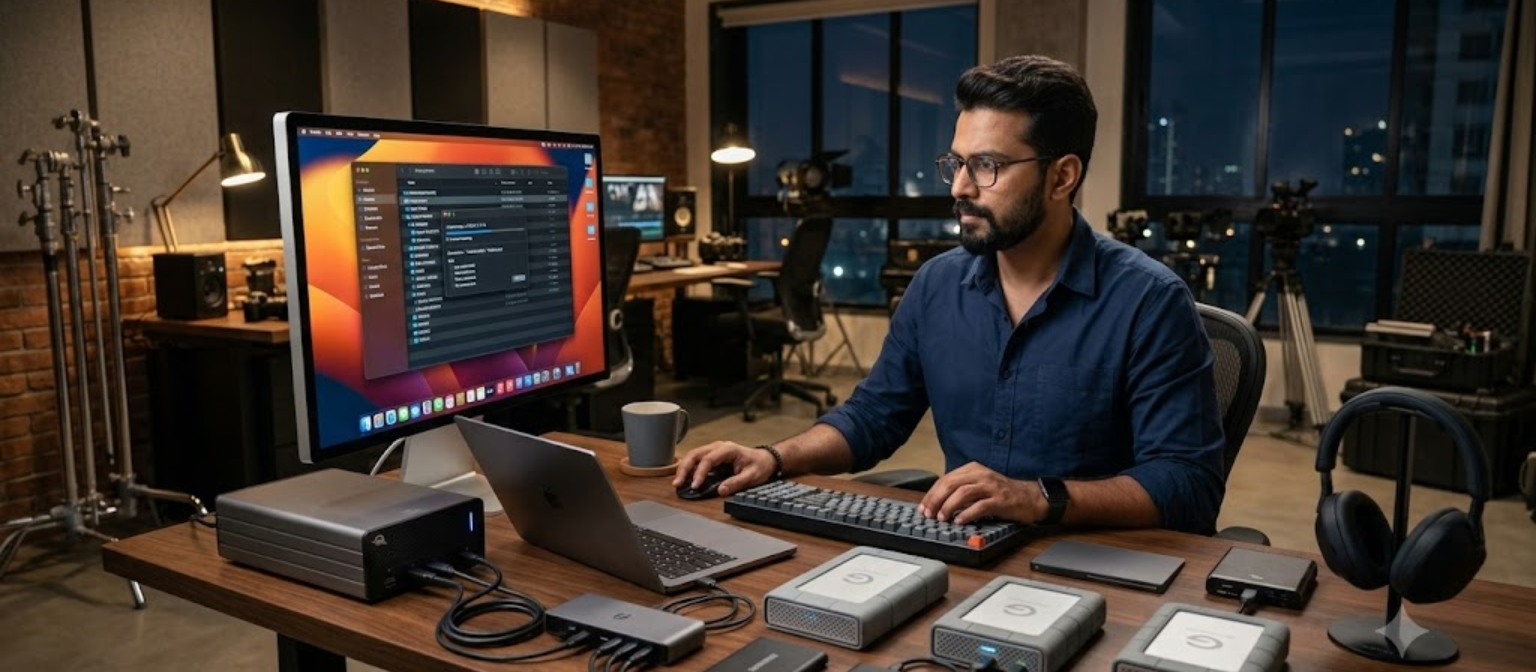
One of the easiest ways to lose production time is constantly changing setups.
Suppose a founder needs to record eight Reels.
If the team records Reel 1, changes the background, records Reel 2, changes lighting, records Reel 3 and changes the camera again, a significant amount of time is spent on setup rather than production.
Instead, group similar content.
For example:
Founder + White Background
- Reel 1
- Reel 2
- Reel 3
- Reel 4
Founder + Lifestyle Setup
- Reel 5
- Reel 6
- Reel 7
Product + Tabletop Setup
- Product video 1
- Product video 2
- Product video 3
Product + Lifestyle Setup
- Lifestyle photos
- Demonstration footage
- Advertisement clips
This creates a much more efficient production sequence.
MW Stuudio’s current batch Reel model uses multiple looks and backdrops while organising the production session in advance.
6. Prepare Scripts and Hooks Before Production Day
Production time should be used for recording rather than figuring out what someone wants to say.
Every important video should have at least a basic structure.
For short-form content:
Hook → Main Point → Supporting Information → Call to Action
For a corporate video:
Introduction → Problem → Solution → Brand Story → Closing Message
For a product video:
Product Hook → Feature → Demonstration → Benefit → CTA
The script does not necessarily need to be word-for-word.
Some presenters work better with bullet points.
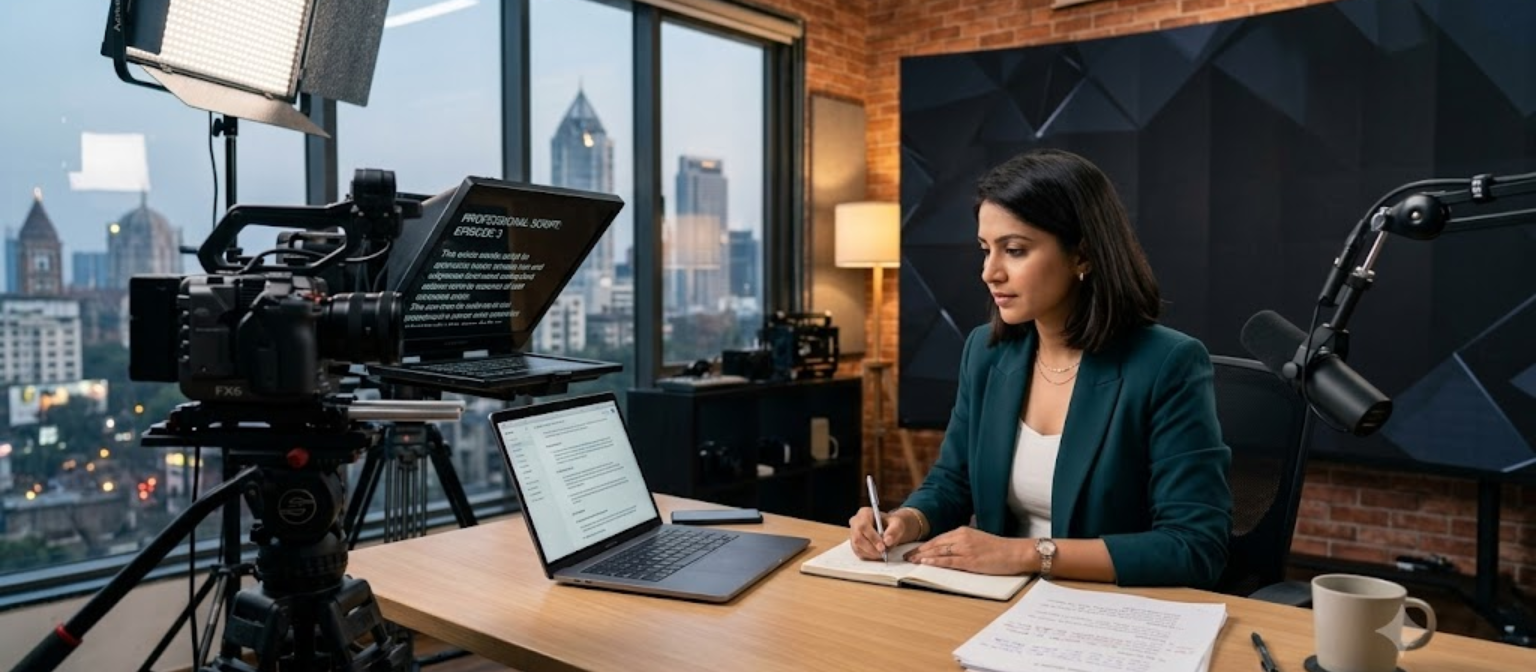
Others prefer a teleprompter.
The important thing is that the content structure is decided before production.
MW Stuudio’s current Reel production workflow describes preparing topics, hooks and shot lists before batch sessions, while its podcast service supports teleprompter-based recording for structured content.
Pre-production therefore saves production time.
7. Capture Both Vertical and Horizontal Content When Appropriate
One of the most important considerations in multi-platform production is framing.
Instagram Reels and YouTube Shorts generally require vertical content.
YouTube, websites and many corporate applications may require horizontal video.
Therefore, businesses should decide the intended format before recording.
A useful production plan might include:
Vertical
- Instagram Reels
- YouTube Shorts
- TikTok where applicable
- Vertical advertisements
Horizontal
- YouTube videos
- Website videos
- Corporate presentations
- Brand films
Some content can be designed to work across formats, but not every shot can simply be cropped.
A person’s face, product positioning, text graphics and background composition can all be affected by the crop.
The safest approach is to identify the important platforms before production.
MW Stuudio’s current Reel workflow specifically prepares 9:16 1080p exports for Instagram Reels and YouTube Shorts, with additional platform exports where required.
8. Capture Supporting B-Roll During the Same Production Day
B-roll is one of the most useful assets a business can create during a production day.
It can support many different pieces of content.
For a corporate business, B-roll could include:
- Team members working
- Office environment
- Meetings
- Product handling
- Customer interactions
- Close-up details
- Equipment
- Packaging
- Website or software demonstrations
For a product company:
- Product close-ups
- Product being used
- Packaging
- Hands interacting with the product
- Lifestyle situations
- Detail shots
These clips can later be used in:
- Reels
- Corporate videos
- Website videos
- Advertisements
- Presentations
- YouTube videos
The advantage of capturing B-roll during the same production day is that the lighting, location and visual style remain consistent.
It also creates a library of footage that can be reused later.
9. Combine Photography and Video Where Practical
Photography and video do not always need completely separate production days.
If a studio, product, model, founder or location is already prepared, businesses can often capture both types of content during the same session.
For example:
Product Setup
First capture:
- Catalogue photographs
- Detail photographs
- Lifestyle images
Then capture:
- Product demonstration video
- Product Reel
- Advertisement clips
Similarly, a founder could complete:
- Professional portraits
- Website headshots
- LinkedIn photographs
- Founder Reels
- Corporate introduction video
MW Stuudio explicitly describes this combined approach. Its studio page notes that brands can combine product photography with Reel and video content in the same professional studio environment, while podcast sessions can also be combined with photography during a single visit.
This can reduce repeated setup work and create a more visually consistent asset library.
10. Record Podcast or Interview Content With Repurposing in Mind
A podcast recording can become much more than one episode.
If a business is already bringing a host and guest into a professional studio, the session can also produce promotional assets.
For example, one episode can generate:
- Full podcast episode
- YouTube video
- Short clips
- Audiograms
- Guest photographs
- Quote graphics
- Promotional Reels
- Behind-the-scenes footage
The recording setup should therefore consider these outputs.
Multiple camera angles can provide more editing options.
Professional microphones can provide high-quality dialogue.
Additional photographs can support thumbnails and promotional posts.
MW Stuudio’s current podcast workflow includes multi-camera video, professional audio, post-production, subtitles, lower thirds and platform exports. Its site also describes combining podcast recording with Reel and photography production during the same visit.
This makes podcast production another opportunity for multi-platform content creation.
11. Plan the Post-Production Before the Shoot Ends
Production should not stop at recording.
The post-production requirements should already be defined.
For each content asset, decide:
- Required edit
- Aspect ratio
- Music
- Sound design
- Colour treatment
- Captions
- Motion graphics
- Thumbnail
- Platform
- File format
- Deadline
For example:
Instagram Reel
- 9:16
- 1080p
- Captions
- Sound design
- Brand graphics
YouTube Video
- 16:9
- High-resolution export
- Thumbnail
- Chapters where appropriate
LinkedIn Video
- Platform-appropriate dimensions
- Captions
- Professional branding
Website Video
- Web-optimised format
- Appropriate compression
- Desktop/mobile consideration
This prevents the post-production team from having to guess what each asset needs.
MW Stuudio’s current post-production workflow includes editing, colour grading, sound design, motion graphics and subtitles, while its Reel production includes platform-ready exports.
12. Create a Repurposing Map for Every Major Asset
A multi-platform production day becomes more valuable when each major asset has a repurposing plan.
For example:
One Founder Interview
Original
→ 20-minute interview
YouTube
→ Full interview
Instagram
→ 5 short Reels
LinkedIn
→ 3 professional clips
Website
→ Founder introduction section
Blog
→ Written article based on interview
Newsletter
→ Key insight
Graphics
→ 5 quote cards
This means the production team is not thinking:
“We need one video.”
It is thinking:
“We need one source recording that can support multiple content outputs.”
The same approach works with product photography.
One product shoot can provide:
- Product page images
- Social posts
- Website banners
- Advertisement images
- Email campaign visuals
- Marketplace images
Repurposing should be planned before production because it influences what needs to be captured.
13. Leave Time for Pickups and Behind-the-Scenes Content
A production schedule should never be so tightly packed that there is no room for unexpected needs.
There may be:
- A missed line
- A technical problem
- A product detail that needs another shot
- A lighting adjustment
- A different camera angle
- A missing B-roll shot
Reserve some time for pickups.
It is also useful to capture behind-the-scenes content.
Behind-the-scenes footage can itself become social media content.
For example:
“How we created our new campaign.”
“Behind the scenes of our product shoot.”
“A day in our studio.”
“How our founder prepares for a video shoot.”
These pieces can make the brand feel more transparent and human.
The important thing is to capture them without disrupting the primary production.
14. Organise and Back Up the Content Immediately
At the end of a production day, there may be hundreds of files.
Do not leave the footage scattered across memory cards.
Create a structured backup system immediately.
At least two copies of important raw footage should ideally exist before memory cards are cleared.
Good file management becomes increasingly important as the business creates more content.
15. Turn the Production Day Into a Monthly Content System
The biggest benefit of a multi-platform production day is not the day itself.
It is what happens afterward.
A well-planned production day can create a content bank that supports weeks or even months of publishing, depending on the production volume and publishing schedule.
For example:
One Monthly Production Day
Morning
- Founder Reels
- Educational videos
Afternoon
- Product photography
- Product videos
Late afternoon
- Podcast/interview
- B-roll
- Behind-the-scenes
Post-production
- 12–15 Reels
- Product images
- Several promotional clips
- Podcast episode
- Short-form podcast clips
- Website visuals
The exact output depends on the business, but the principle is powerful:
One planned production day can feed multiple publishing channels.
MW Stuudio’s current batch production model provides a practical example. Its Reel service describes full-day sessions producing 12–15 Reels, with post-production and platform-ready delivery afterward. Its podcast service describes monthly batch recording of multiple episodes, while its studio service highlights combining video, photography and podcast production in one visit.
Once the production day becomes part of a recurring monthly or quarterly schedule, content creation becomes more predictable.
The business can then plan:
Production → Post-production → Content bank → Publishing → Performance review → Next production day
This creates a repeatable content engine rather than a series of last-minute shoots.
Conclusion
A multi-platform content production day can help businesses make better use of their production time, people, equipment and creative resources.
The key is planning.
Instead of treating Instagram, YouTube, LinkedIn, websites, podcasts and advertising as completely separate content projects, businesses can identify where the same production session can support several channels.
The process begins by identifying platforms and business goals.
Then create a master content list, group similar production activities, prepare scripts and hooks, organise the day’s schedule and capture both primary content and supporting B-roll.
Photography, video and podcast production can also be coordinated when the same people, products, locations or studio setups are involved.
Post-production should be planned before the shoot, including aspect ratios, captions, sound design, colour grading, graphics and platform-specific exports.
Most importantly, every major asset should have a repurposing plan.
A founder interview can become a YouTube video, several Reels, LinkedIn clips, website content and written content.
A product shoot can create e-commerce images, social media content, website banners and advertising assets.
A podcast can produce a full episode, short clips, photographs and promotional content.
MW Stuudio’s current service model reflects this broader production approach, combining video and Reel production, photography, podcast production and post-production, while its studio services allow brands to combine different content requirements during the same visit.
The goal is not simply to make one production day extremely busy.
The goal is to make it strategic.
A successful production day should leave the business with a structured library of useful content that can be distributed across multiple platforms over time.
When planned properly, the cycle becomes:
Plan → Produce → Repurpose → Edit → Organise → Publish → Measure → Repeat
That is what turns a single content production day into a sustainable business content system.