
Podcasting has become an effective way for businesses, entrepreneurs, and content creators to share their knowledge, build brand awareness, and connect with a wider audience. However, producing a professional podcast involves much more than simply recording a conversation. Every stage, from planning and studio recording to audio processing and final video editing, contributes to the overall quality of the content.
Professional podcast production services help manage the complete recording and editing process while ensuring consistent results. With suitable equipment, experienced technical support, and a structured production workflow, creators can focus on delivering valuable conversations instead of handling every technical detail themselves. Understanding each stage of podcast production can help you create engaging episodes that are ready for digital platforms.
1. Podcast Planning and Content Preparation
Every successful podcast begins with proper planning. Before recording, it is important to define the episode topic, target audience, discussion format, and main objectives. A clear plan helps hosts maintain a natural conversation while ensuring that important points are covered.
Content preparation may include researching topics, preparing interview questions, coordinating with guests, and organising the recording schedule. This initial stage creates a clear direction for the episode and helps reduce unnecessary interruptions during production.
2. Professional Podcast Studio Recording
The recording environment plays a major role in the final quality of a podcast. A professional podcast studio provides suitable microphones, headphones, audio recording equipment, and an acoustically treated space to capture clear conversations.
For video podcasts, the studio may also include professional cameras, lighting equipment, and multiple camera angles. Proper equipment positioning and technical monitoring help maintain consistent recording quality. A comfortable and organised studio environment also allows hosts and guests to concentrate on their discussion.
3. High-Quality Audio Recording and Management
Clear audio is essential for creating a professional podcast experience. Listeners should be able to understand every speaker without being distracted by background noise, echo, or inconsistent volume levels.
Professional audio recording involves selecting suitable microphones, adjusting input levels, monitoring sound quality, and recording separate audio tracks when required. These steps provide better control during editing and help ensure that every participant’s voice remains clear and balanced throughout the episode.
4. Professional Video Recording and Camera Management
Video podcasts require careful coordination between cameras, lighting, and audio equipment. Camera positioning should capture the host and guests from suitable angles while maintaining a consistent visual presentation.
A professional video recording setup may include:
-
Multiple cameras for host, guest, and wide-angle shots.
-
Professional lighting for balanced exposure and natural skin tones.
-
Stable camera mounts for consistent framing.
-
Studio monitors to check video quality during recording.
-
Coordinated audio and video recording for accurate synchronisation.
A properly managed camera setup provides different visual perspectives and gives editors more flexibility when creating the final episode.
5. Audio Editing and Sound Enhancement
After recording, raw audio files often require editing before publication. Unwanted pauses, background noise, microphone disturbances, and inconsistent sound levels can affect the listening experience.
Audio post-production focuses on improving clarity and creating a smooth conversation flow. Editing may include noise reduction, volume balancing, removing unnecessary sections, equalisation, and adding suitable intro or outro audio. These improvements help produce a clean and comfortable listening experience across different devices.
6. Professional Video Editing and Visual Refinement
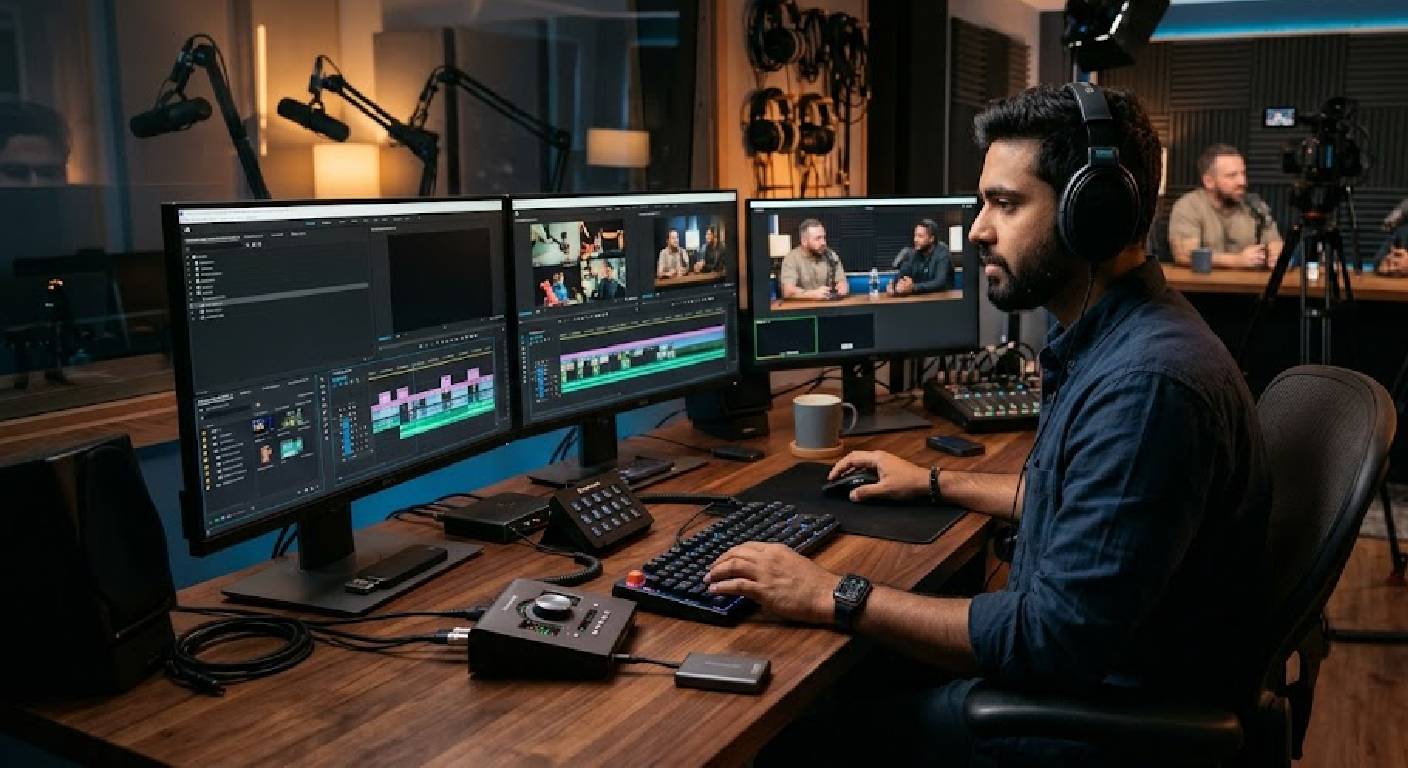
Video editing transforms raw camera recordings into a polished podcast episode. Editors combine footage from different cameras, synchronise audio, select appropriate angles, and maintain a natural flow throughout the discussion.
Some important elements of professional podcast video editing include:
-
Switching between host, guest, and wide camera angles.
-
Removing unnecessary pauses and recording interruptions.
-
Applying colour correction for consistent visuals.
-
Adding subtitles and relevant on-screen graphics.
-
Creating smooth transitions and professional episode openings.
Careful editing helps maintain viewer attention while presenting the conversation in a clean and engaging format.
7. Short-Form Content and Social Media Editing
A complete podcast episode can also provide valuable content for social media marketing. Interesting discussions, useful advice, and memorable moments can be converted into short videos for Instagram Reels, YouTube Shorts, and other platforms.
Short-form editing focuses on selecting engaging moments, creating vertical video formats, adding readable subtitles, and maintaining consistent branding. This approach allows creators to promote full-length episodes while reaching audiences who prefer shorter content.
8. Final Review and Podcast Delivery
The final stage of podcast production involves reviewing the edited content and preparing it for publication. The complete episode should be checked for audio clarity, video quality, synchronisation, subtitles, and overall presentation.
Final delivery may include edited video files, audio versions, short promotional clips, and platform-ready formats depending on the agreed production package. Proper file organisation and quality checks help ensure that the content is ready for publishing across different digital channels.
Conclusion
Professional podcast production services cover every important stage of creating a high-quality podcast, from initial planning and studio recording to audio enhancement, video editing, and final delivery. Each stage contributes to the overall experience and helps ensure that the finished content looks and sounds professional.
Whether you are an entrepreneur, business owner, interviewer, or content creator, working with an experienced podcast production team can simplify the entire process. With the right recording environment, technical expertise, and creative editing, you can turn ordinary conversations into engaging podcast content that supports your brand and reaches a wider audience.