
Professional video production is a creative process that transforms an idea into a polished visual experience. Whether a business wants to promote its services, introduce a new product, create brand awareness, or produce engaging social media content, high-quality videos can communicate messages effectively. However, creating a professional video involves much more than recording footage with a camera.
From developing the initial concept to completing the final edit, every production stage contributes to the quality of the finished video. Creative planning, scripting, location selection, camera setup, lighting, audio recording, and post-production work together to create content that reflects a brand’s identity and objectives.
1. Understanding the Video Production Concept
Every successful video begins with a clear concept. The concept defines what the video should communicate, who it is intended for, and what response the audience should take after watching it.
For businesses, the concept may focus on promoting a service, showcasing a product, introducing a company, or sharing a customer experience. A well-defined concept gives the production team a creative direction and ensures that the final video supports the intended marketing objectives.
2. Creative Planning and Script Development
Once the concept is finalized, the next step is planning the video’s structure and message. Script development helps organize the information into a clear sequence, while creative planning determines how each scene will be presented visually.
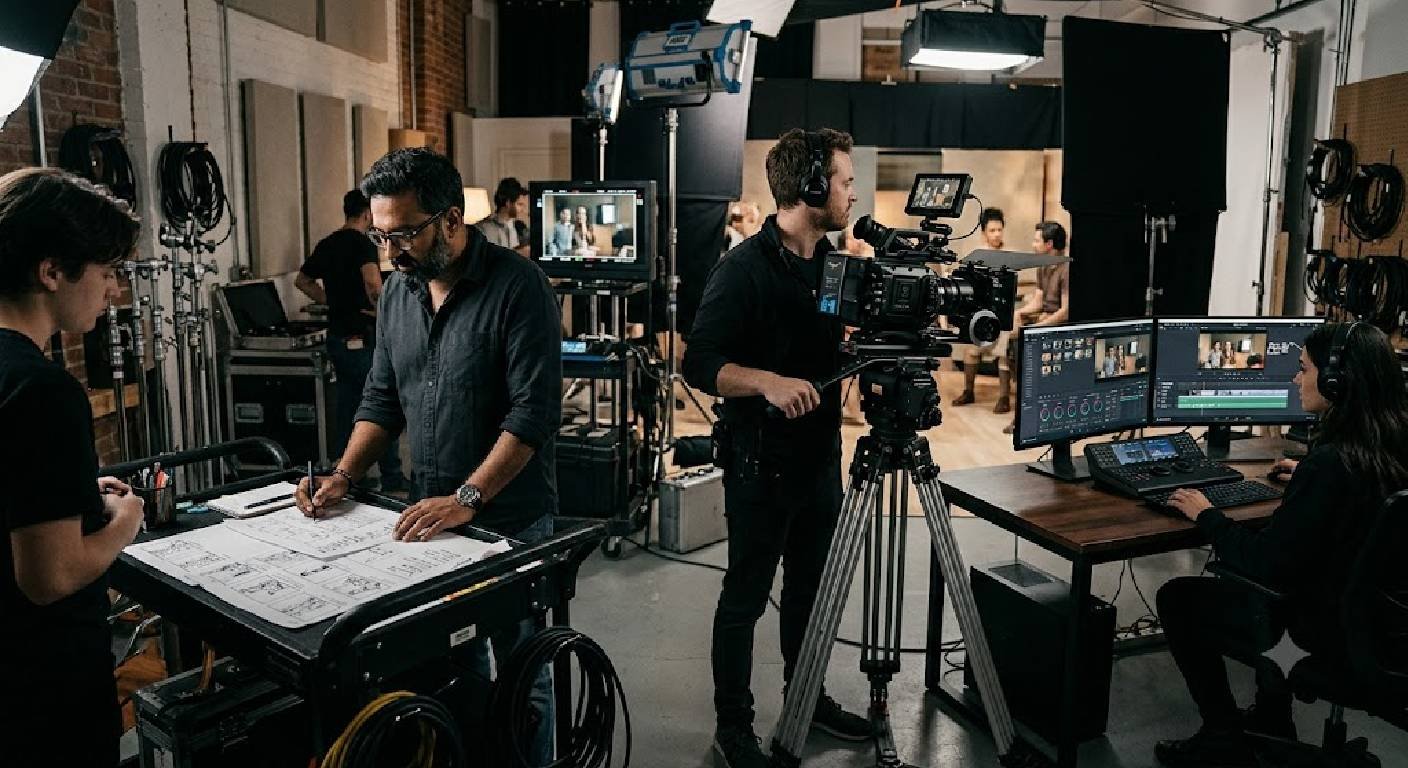
Depending on the project, this stage may include dialogue writing, voiceover planning, shot lists, storyboards, and visual references. Proper preparation saves production time and helps everyone involved understand their responsibilities during the shoot.
3. Location Selection and Production Setup
The shooting location has a significant impact on the overall appearance of a video. Indoor locations such as studios, offices, and showrooms provide controlled environments, while outdoor locations offer natural surroundings and creative backgrounds.
The production team selects locations according to the video’s concept, lighting requirements, available space, and background elements. Once the location is finalized, the camera equipment, lighting arrangements, microphones, and other production accessories are prepared.
4. Professional Camera Work and Cinematography
Cinematography is the visual foundation of professional video production. It involves selecting suitable cameras, lenses, framing techniques, and camera movements to capture footage that supports the story.
Professional camera work may include:
-
Wide shots to establish the environment and location.
-
Medium shots to capture presenters, interviews, and interactions.
-
Close-up shots to highlight product details and expressions.
-
Creative camera movements to add depth and visual interest.
Using the right combination of shots helps create a visually balanced video and keeps the audience connected to the content.
5. Lighting and Audio Recording
Lighting and audio quality directly influence the professionalism of a video. Proper lighting helps control shadows, highlight important subjects, and create the desired atmosphere. Depending on the location and creative direction, production teams may use LED lights, softboxes, reflectors, and natural lighting.
Clear audio is equally important because viewers need to understand the message without distractions. Professional microphones, suitable recording techniques, and proper sound monitoring help capture clean dialogue, interviews, and background sounds.
6. Video Editing and Post-Production
After filming is complete, the recorded footage moves into the post-production stage. Editors review the clips, select the best shots, arrange the scenes, and build a smooth visual sequence.
Post-production may involve:
-
Footage selection and timeline editing.
-
Colour correction and cinematic colour grading.
-
Audio cleaning, background music, and sound balancing.
-
Transitions, subtitles, motion graphics, and visual effects.
These processes transform raw recordings into a complete video that communicates the intended message clearly and professionally.
7. Review, Revisions and Final Quality Checks
Before delivering a video, it is important to review the complete edit and check whether it meets the original project requirements. The review process helps identify visual inconsistencies, audio issues, editing mistakes, and missing information.
Clients and production teams can evaluate the video based on its storytelling, pacing, branding, and overall presentation. Necessary revisions are completed before the final export to ensure the video is ready for its intended use.
8. Final Video Delivery and Platform Optimization
The final stage involves exporting and delivering the completed video in suitable formats. Different platforms have different video requirements, so the output should be optimized according to where it will be published.
A professional production team may prepare:
-
Horizontal videos for websites, YouTube, and presentations.
-
Vertical videos for Instagram Reels and YouTube Shorts.
-
Promotional versions for digital advertising campaigns.
-
High-resolution master files for future marketing use.
Proper export settings help maintain video quality while ensuring compatibility with the intended platforms.
Conclusion
Professional video production is a structured process that combines creativity, technical expertise, and careful execution. From the initial concept and script development to cinematography, lighting, editing, and final delivery, every stage contributes to creating an effective visual experience.
For businesses, brands, and content creators, understanding this process helps them plan better projects and achieve professional results. Working with an experienced video production team can turn creative ideas into high-quality videos that communicate brand messages, engage audiences, and support long-term marketing goals.