
People often decide what they want to eat before they visit a restaurant. They browse Google listings, explore restaurant websites, scroll through Instagram and compare food photographs before choosing where to order or dine.
In this digital-first environment, the appearance of food online can influence how customers perceive a restaurant. A well-presented dish photographed with the right lighting, composition and attention to detail can communicate freshness, quality and the overall dining experience. Poorly lit or unappealing photographs, on the other hand, may fail to represent the quality of the food being served.
This is why professional food photography helps restaurants is an important part of building a stronger digital presence. High-quality photographs help restaurants showcase their menu, maintain a consistent brand identity and create visual content for websites, social media, online listings and food delivery platforms.
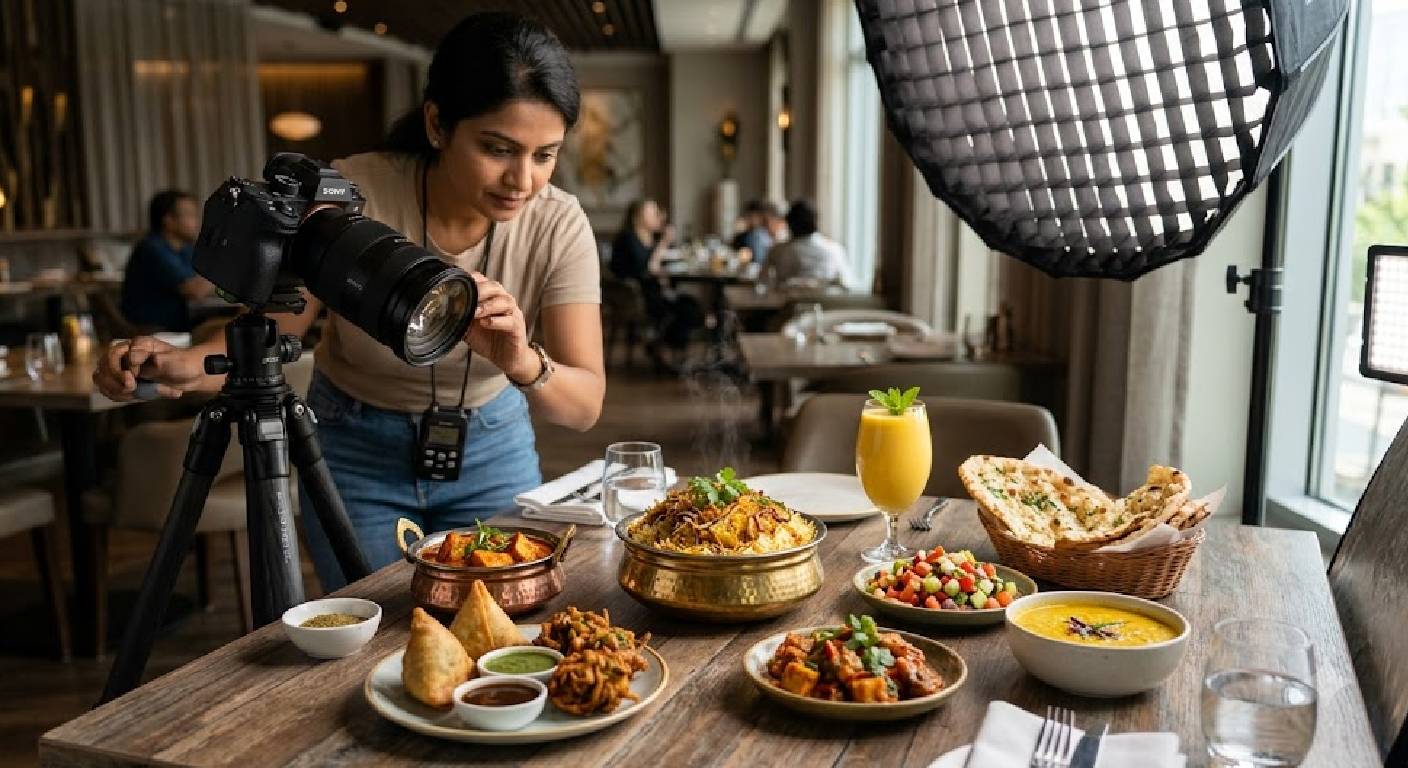
For example, a restaurant serving Indian cuisine might use detailed photographs to highlight the texture of freshly prepared curries, the presentation of a thali or the colours of traditional desserts. A café could focus on its coffee presentation, freshly baked pastries and welcoming ambience.
Each image offers an opportunity to communicate what makes the restaurant worth exploring.
MW Stuudio provides professional photography and creative production services that businesses can explore when planning visual content for their marketing activities.
Here are 15 ways professional food photography can help restaurants strengthen their online presence.
1. Create a Strong First Impression Online
A restaurant’s digital presence often creates the first impression before a customer experiences the food, service or ambience in person.
When people discover a restaurant through search results, social media or an online directory, they may evaluate its photographs alongside its location, menu, reviews and pricing. Images that look attractive and professionally presented can encourage potential customers to explore further.
Food photography helps communicate the restaurant’s personality. A premium dining establishment may use carefully composed photographs with elegant plating and controlled lighting, while a casual café may choose bright, natural-looking images that reflect a relaxed atmosphere.
The important thing is to make the visuals consistent with the actual dining experience.
Start by identifying the impression your restaurant wants to create. Consider the cuisine, target audience, price range and overall atmosphere. Use these factors to guide the style of your food photographs.
Avoid relying exclusively on random phone pictures taken under different lighting conditions. Although smartphone photography can be useful for everyday updates, a planned collection of professional images provides greater consistency across important marketing channels.
A strong first impression does not guarantee a visit or order, but it can help customers understand the restaurant’s offering and give them a reason to take the next step.
2. Make Your Restaurant Menu More Appealing
A menu tells customers what a restaurant serves, but photographs can help them visualise the dishes before ordering.
This is especially useful when a menu contains unfamiliar preparations, multiple variations of a dish or visually distinctive specialities.
For example, a customer browsing an Indian restaurant menu may recognise paneer tikka but want to understand how the restaurant presents its version. A photograph showing the charred edges, colourful ingredients and accompanying dips can provide a clearer impression than a dish name alone.
Professional food photography can be used for printed menus, digital menus, restaurant websites and online ordering systems.
When planning menu photography, prioritise dishes that are popular, distinctive, newly introduced or important to the restaurant’s positioning.
Maintain a consistent photographic style across the menu. Similar lighting, backgrounds, angles and colour treatment help the collection look organised rather than assembled from unrelated images.
It is also important to photograph the dishes accurately. Images should represent the ingredients, portion sizes and presentation customers can reasonably expect. Avoid editing photographs in ways that create misleading expectations.
An attractive, well-organised visual menu makes it easier for customers to explore the available options and understand the restaurant’s food offering.
3. Improve Your Restaurant’s Social Media Presence
Social media is an important discovery channel for many restaurants. People follow food accounts, explore local recommendations, save dishes they want to try and share restaurant experiences with friends.
Professional food photography gives restaurants a stronger visual foundation for their social media content.
Instead of posting images that vary widely in quality, restaurants can develop a consistent collection of photographs that reflects their menu and brand identity. These images can support Instagram posts, Facebook updates, promotional campaigns and other suitable content formats.
A restaurant might feature its signature dish one day, showcase a seasonal dessert another day and share a close-up of a freshly prepared beverage later in the week.
Visual variety helps maintain interest while keeping the overall presentation recognisable.
Consider these practical approaches:
- Highlight signature dishes and customer favourites.
- Photograph new menu additions.
- Show ingredients, textures and presentation details.
- Capture seasonal specials and festive menus.
- Use lifestyle photographs that communicate the dining experience.
Food photographs can also serve as starting points for short videos, behind-the-scenes content and chef-led stories.
However, professional imagery should support useful content rather than replace it. Add relevant captions, accurate information and clear directions for reservations or ordering when appropriate.
A consistent visual approach can help your restaurant present itself more professionally and give potential customers more reasons to engage with its content.
4. Strengthen Your Restaurant’s Google Business Profile
When customers search for restaurants nearby, they may encounter Google Business Profiles containing photographs, reviews, location details, opening hours and other business information.
The photographs on your profile can help potential customers understand the food and atmosphere before deciding whether to visit.
Professional food photography provides useful images for showcasing signature dishes, menu highlights, beverages and special offerings. Restaurant owners can complement these with authentic photographs of the dining area, exterior and overall environment.
A balanced photo collection gives people a more complete understanding of the business.
For example, a customer looking for a family restaurant might want to see the food presentation and seating environment. Someone searching for a café may be interested in coffee, desserts and the atmosphere.
Keep your images current and representative of the actual restaurant. Remove or replace outdated photographs when menu items or presentation styles change, where platform controls allow it.
Restaurants should also ensure that their profile information is accurate, including the address, opening hours, contact details and website link.
Professional photographs do not guarantee higher local search rankings. However, useful visuals can strengthen the profile’s presentation and help customers evaluate the restaurant alongside other available information.

5. Build Trust Through Consistent and Authentic Food Images
Customers want to know what they can reasonably expect when ordering from a restaurant. Photographs contribute to those expectations, making accuracy and consistency important.
If a restaurant’s online images look dramatically different from the dishes served in person, customers may feel disappointed. Overly edited colours, unrealistic portions or excessive styling can create a gap between marketing and the actual experience.
Professional food photography should make dishes look appealing while preserving their genuine characteristics.
This involves choosing appropriate lighting, capturing the natural texture of ingredients, presenting the food carefully and making restrained adjustments during editing.
For example, a photograph of freshly baked bread should communicate its actual crust and texture. A bowl of soup should reflect its real colour and consistency rather than appearing artificially saturated.
Restaurants should also maintain a consistent visual style across menus, websites and social media. Customers benefit when the same dish looks recognisable wherever they encounter it.
Authenticity is particularly important for signature dishes that customers may specifically seek out.
By showing food accurately and attractively, restaurants can establish clearer expectations and create a more dependable relationship between their online presentation and the dining experience.
6. Help Your Restaurant Stand Out From Competitors
Customers in the same area may have many restaurants to choose from, particularly in popular dining locations. A distinctive visual identity can help a restaurant communicate what makes it different.
Professional food photography can highlight the details that distinguish your offering, such as signature recipes, unique plating, regional cuisine, premium ingredients or creative beverage presentations.
For example, a restaurant specialising in Maharashtrian cuisine might showcase traditional dishes with authentic styling. A contemporary dessert café could focus on intricate pastry details, layered textures and carefully composed dessert photographs.
The objective is not simply to make every dish look attractive. It is to communicate the restaurant’s particular identity.
Begin by reviewing how your restaurant appears alongside similar businesses. Consider whether your photographs clearly show your cuisine, presentation style and intended dining experience.
Develop a consistent photographic direction using suitable backgrounds, lighting, colour palettes and composition. The style should reflect the brand rather than imitate another restaurant’s visuals.
Avoid using a generic image collection that could represent almost any dining establishment. Original photographs of your actual food give customers a more meaningful impression of what you offer.
A distinctive visual approach can support brand recognition and help customers understand why your restaurant deserves consideration.
7. Support Online Food Delivery and Ordering
For restaurants offering takeaway or delivery, customers often make decisions without seeing or smelling the food in person.
Product photographs therefore play an important role in helping them understand what they are ordering.
Clear, appetising images can show the dish’s main ingredients, presentation and serving style. This is especially useful when customers are choosing between similar dishes or exploring unfamiliar items.
Restaurants can use professional photographs across their own online ordering systems and supported third-party food delivery platforms, following each platform’s image requirements.
Prioritise photographs for popular dishes, combination meals, meal boxes, desserts and items that benefit from visual explanation.
Consider the following when planning delivery menu photography:
- Keep the dish clearly visible in the frame.
- Use lighting that represents the food’s real colour.
- Avoid distracting backgrounds and unnecessary props.
- Maintain consistent framing across similar menu items.
- Ensure the image accurately represents the serving.
Where presentation differs between dine-in and delivery, photograph the version that customers are actually likely to receive through that channel.
Review image dimensions, file specifications and other platform rules before uploading. Different services may have different requirements.
Professional photographs cannot guarantee more orders, but they can help make digital menus easier to understand and improve the quality of the restaurant’s online presentation.
8. Make Your Restaurant Website More Engaging
A restaurant website can provide information about the menu, location, reservations, opening hours, catering services and dining experience.
Food photography helps bring these pages to life and gives visitors a more immediate sense of what the restaurant offers.
A well-composed hero image can introduce the restaurant’s signature cuisine, while menu photographs help visitors explore individual dishes. Gallery images can showcase the dining environment and provide additional context.
The photographs should support the website’s purpose rather than simply fill empty space.
For example, a fine-dining restaurant may use elegant food compositions that reflect its premium positioning. A casual café might choose bright, welcoming photographs of breakfast dishes, coffee and pastries.
Website photography should also be optimised for performance. Large, uncompressed image files can slow down page loading, especially on mobile devices. Use suitable image dimensions, compression and modern formats where supported, while preserving visual quality.
Ensure that important images have appropriate alternative text where needed, and maintain sufficient contrast for text placed over photographs.
Choose images that work across desktop and mobile layouts, checking how the subject appears when the page is resized or cropped.
A carefully planned image collection can make a restaurant website more informative, visually appealing and consistent with the in-person experience.
9. Increase the Impact of Restaurant Advertising Campaigns
Restaurant advertising often competes for attention in crowded social media feeds and digital placements. Strong food photography can help an advertisement communicate its offering quickly.
An image of a signature dish, a colourful beverage or an appealing dessert may give viewers an immediate understanding of what the restaurant wants to promote.
Professional photographs can support campaigns for new menu launches, seasonal specials, festive dining, weekday offers, catering and special events.
Before arranging a shoot, identify the campaign objective and the audience it needs to reach. Then choose photographs that communicate the offer clearly.
For example, a lunch promotion might focus on a complete meal, while a dessert campaign could use close-up imagery that highlights texture and presentation.
Prepare variations for the placements you intend to use. A wide image may work well on a website banner, while a vertical composition may be more appropriate for certain mobile social media placements.
Keep the main subject visible and leave suitable space for advertising copy when the design requires it.
The image, caption, offer and destination page should communicate a consistent message. If an advertisement promotes a specific meal, customers should be able to find accurate details about that meal after clicking.
10. Showcase Seasonal Menus and Special Occasions
Restaurants frequently introduce limited-time dishes, seasonal ingredients, festive menus and special dining experiences. These occasions create opportunities for fresh visual content.
Professional food photography can help communicate the appearance and appeal of these offerings before the promotional period begins.
For example, a restaurant may feature festive Indian sweets during Diwali, special thalis during a regional celebration or refreshing drinks during warmer months. A café might promote a seasonal dessert collection or a themed brunch menu.
Plan the photography around the campaign calendar so that the images are ready before promotion starts.
Discuss the styling, colours, props and background with the photographer to ensure that the images suit the occasion without overwhelming the food itself.
Seasonal photography should remain accurate to the actual menu. If an item is available only for a limited period, communicate the availability dates clearly in the accompanying content.
Keep the final photographs organised so they can be adapted for website banners, social posts, email announcements and other relevant channels.
A planned collection of seasonal visuals helps restaurants refresh their online presence and communicate new offerings in a timely, consistent manner.
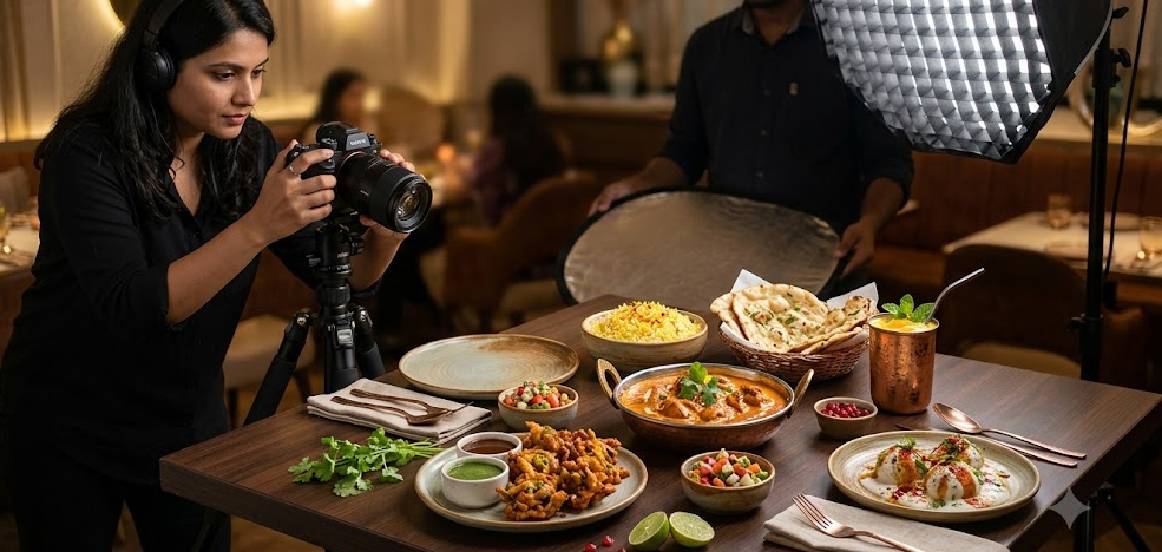
11. Create More Opportunities for Food Content and Reels
Professional food photography can also support a broader content production strategy. A planned shoot can capture more than a single hero image, providing different compositions and details for future posts.
For example, a shoot featuring a signature burger might include a full plated image, close-ups of its ingredients, a chef’s hands assembling the dish and a wider view of the preparation area.
These assets can support static posts, carousel content, short-form videos and behind-the-scenes storytelling.
Restaurants can also combine still photography with video footage to show cooking processes, plating techniques, ingredient preparation and the final presentation.
When planning the shoot, identify the formats required for each channel. Capture vertical footage where suitable for Reels and other short-form video placements, alongside photographs intended for menus and websites.
Keep the content aligned with the restaurant’s actual operations and brand personality. Not every post needs to be a promotion; some can introduce ingredients, explain a dish’s origin or show the care involved in preparation.
A coordinated production session can create a useful collection of assets without requiring a completely separate shoot for every publishing date.
MW Stuudio offers video shoot and editing services that restaurants can explore when planning food-related video content alongside photography.
12. Highlight the Chef’s Craft and Ingredient Quality
Food photography can communicate more than the finished appearance of a dish. It can also help tell the story behind the restaurant’s cooking.
Customers may be interested in how ingredients are selected, how a dish is prepared or what makes a signature recipe distinctive.
Photographs can highlight fresh herbs, carefully arranged spices, handmade preparations, baking techniques and the finishing details that contribute to the final presentation.
For example, a restaurant specialising in traditional cuisine might show the ingredients used in a regional recipe. A bakery could capture the texture of freshly baked bread or the detail involved in decorating pastries.
These images can be incorporated into website articles, social media posts, chef profiles and behind-the-scenes content.
Keep the story genuine. Only make claims about ingredient sourcing, preparation methods or freshness that the restaurant can substantiate.
Consider combining food photographs with short explanations from the chef or kitchen team. This gives customers useful context and helps the restaurant communicate its culinary identity.
When planned thoughtfully, these visuals can make marketing content more informative and help customers understand the care that goes into preparing the dishes they enjoy.
13. Maintain a Consistent Visual Identity Across Platforms
A restaurant may appear on its website, Google Business Profile, social media accounts, delivery listings and advertising campaigns. Customers should be able to recognise the brand across these different touchpoints.
Inconsistent image quality, unrelated backgrounds and varying colour treatments can make the restaurant’s presentation feel fragmented.
A consistent food photography style helps bring these assets together.
Start by defining the visual direction. Consider whether the brand should feel premium, traditional, contemporary, casual or family-friendly.
Then establish guidelines for:
- Backgrounds and table surfaces.
- Lighting and image brightness.
- Camera angles and composition.
- Colour treatment and editing.
- Plating and garnish presentation.
- Image dimensions and cropping.
These guidelines do not require every photograph to look identical. Different dishes need different compositions, and variety keeps the visual collection interesting.
The goal is to make the images feel as though they belong to the same restaurant.
Organise approved photographs by dish, campaign, date and intended use. This helps the marketing team select suitable assets and avoid repeatedly using outdated images.
A recognisable visual identity can make the restaurant’s digital presence more organised and reinforce the impression created by its wider branding.
14. Plan Food Photography Around Your Restaurant’s Marketing Goals
Not every photograph needs to serve the same purpose. Some images may be intended to promote popular dishes, while others support online ordering, website design, seasonal campaigns or brand storytelling.
Planning photography around clear goals helps restaurants prioritise the images they need.
Begin by identifying the most important marketing activities for the coming months. These might include updating the menu, launching a new delivery range, improving the website or promoting a festive dining experience.
Then prepare a shot list that connects the required images to those activities.
For each photograph, consider:
- Which dish or experience should be featured?
- Who is the intended audience?
- Where will the image be published?
- What information should the image communicate?
- Which format and dimensions are required?
- When will the photograph be needed?
Arrange dishes in a practical shooting sequence. Similar food items may share a lighting setup, while dishes that need to be photographed immediately after preparation should be prioritised accordingly.
Coordinate with the chef, photographer and marketing team so that plating, timing and creative requirements are understood before the session begins.
This approach helps reduce confusion and ensures that the final collection supports real business needs rather than producing attractive images without a clear use.
15. Choose a Professional Photography Partner for Better Results
Food photography requires a combination of visual skill, technical knowledge, styling and practical coordination.
A professional photographer understands how lighting, composition, colour and camera angles influence the appearance of different dishes. Experience with food also helps the production team plan the timing and presentation required for a successful shoot.
Before choosing a photography partner, review portfolios and look for work that matches your restaurant’s needs.
Ask whether the photographer has experience with your type of cuisine, menu photography, advertising campaigns or restaurant branding. Discuss the intended deliverables, image formats, editing requirements and usage arrangements before the shoot.
It is also useful to explain how the photographs will be used. A website hero image, delivery menu and social media campaign may require different compositions and crops.
A clear brief helps the photographer prepare suitable equipment, lighting and styling. It also allows the restaurant to organise the dishes and kitchen schedule around the production requirements.
MW Stuudio offers product photography services in Mumbai that businesses can explore when planning professional visual content. Discuss your specific food photography requirements and confirm that the proposed service is suitable for your restaurant and intended deliverables.
The right production approach should balance attractive presentation, authentic food styling and practical requirements for using the final images across digital channels.
Conclusion
Professional food photography can play an important role in helping restaurants build a stronger digital presence. High-quality images make menus easier to explore, improve the presentation of social media content, support restaurant websites and help customers understand what they can expect from the dining experience.
Consistent, authentic photographs can also strengthen brand recognition, showcase signature dishes and support campaigns for seasonal menus, online ordering and special events.
The most effective approach begins with clear planning. Identify your restaurant’s visual identity, prioritise the dishes that matter most, create a practical shot list and coordinate photography with your marketing calendar. Make sure the final images represent the food accurately and are optimised for their intended platforms.
Remember that photography is one part of a broader digital strategy. Accurate business information, useful menus, customer reviews, responsive website design and reliable service also contribute to how customers perceive a restaurant.
For restaurants looking to refresh their visual content, MW Stuudio offers professional photography services and video production services in Mumbai that businesses can explore according to their creative requirements.
Ultimately, professional food photography is not just about making dishes look attractive. It is about presenting your restaurant honestly, communicating its identity and helping potential customers make more informed decisions about where to dine or order.