

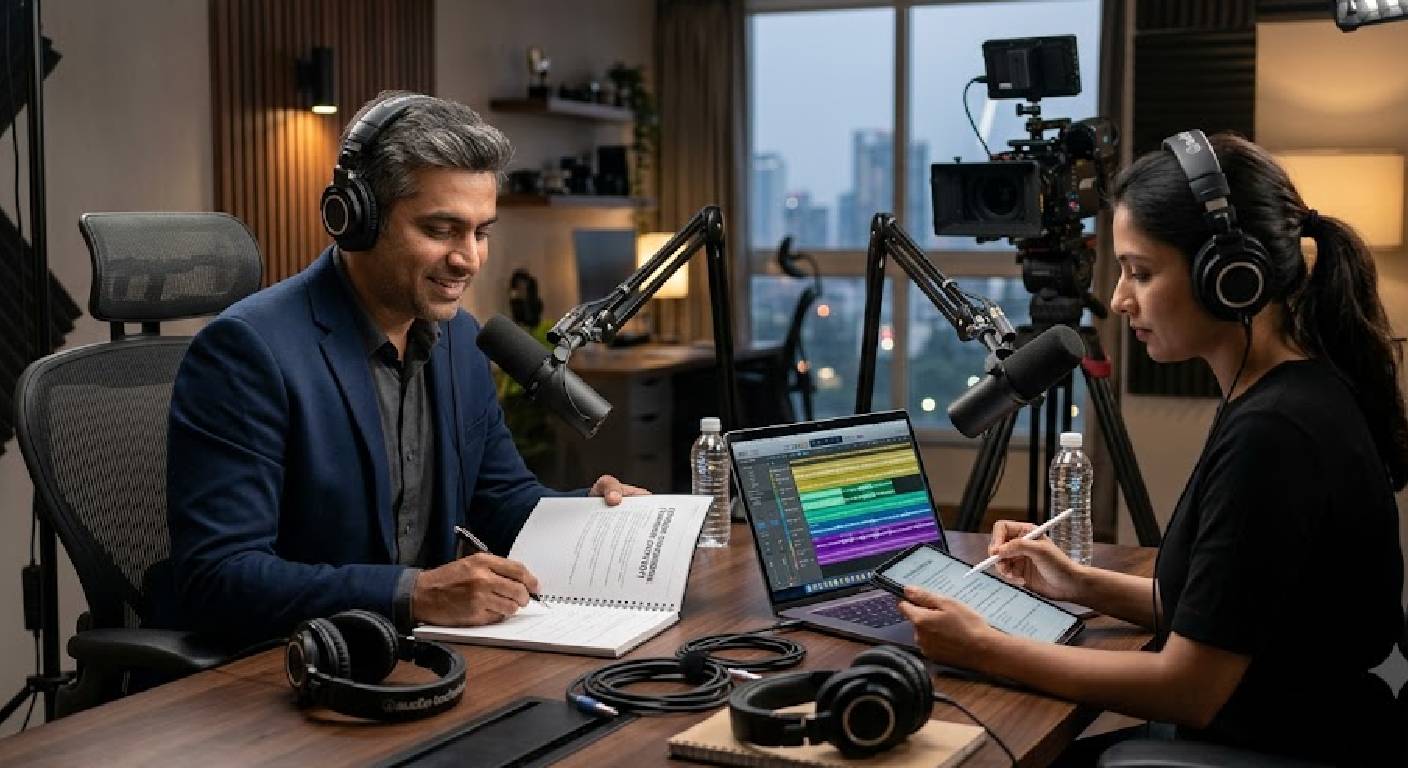
Starting a business podcast involves more than selecting a topic, inviting guests and recording conversations. Businesses also need to decide how their podcast will sound, what listeners can expect from each episode and why the show deserves a place in their regular listening routine.
A distinctive format helps answer these questions. It gives a podcast a recognisable structure, creates consistency between episodes and helps audiences understand what makes the show different from other programmes covering similar subjects.
For example, a business podcast could focus on interviews with entrepreneurs, but interviews alone may not make it memorable. The show could become more distinctive by asking every guest to explain one difficult business decision, share a lesson from a failed experiment and recommend one practical action for listeners.
Similarly, a marketing podcast could use real-world campaign breakdowns, while a leadership podcast might explore how business leaders approach challenging workplace situations.
The goal is not to make a podcast unnecessarily complicated. It is to develop a repeatable experience that reflects the brand, serves the intended audience and gives every episode a clear purpose.
MW Stuudio offers podcast studio and production services in Mumbai for businesses and creators planning professional audio or video podcasts. However, the format should be defined before recording begins, because the concept influences the questions, production setup, episode length and editing approach.
Here are 15 practical ways to develop a distinctive format for your business podcast.
1. Define the Main Purpose of Your Podcast
Before choosing recurring segments or planning the recording setup, identify what the podcast should achieve.
A business podcast might educate potential customers, share industry insights, establish a founder’s professional voice, explain company expertise or create meaningful conversations with industry professionals.
These objectives can overlap, but one should guide the overall format.
For example, a software company creating a podcast for business owners may focus on explaining technology decisions in simple language. A creative agency might explore branding challenges, campaign ideas and lessons from the creative process.
Ask yourself three questions:
- What should listeners learn or understand?
- What subjects can the business discuss credibly?
- How should the podcast support the wider brand?
Your answers will influence everything from episode topics to guest selection.
A podcast designed to educate potential customers may need practical examples and clear explanations. A show intended to build industry relationships may benefit from interviews and thoughtful discussions.
Avoid making every episode a direct advertisement for your services. The podcast should provide value independently of whether a listener becomes a customer.
A clear purpose gives your team a useful standard for deciding which ideas belong in the show and which ones would make it feel unfocused.
2. Identify a Specific Target Audience
A distinctive podcast is easier to develop when it speaks to a clearly defined audience rather than trying to appeal to everyone.
A broad topic such as business growth can include entrepreneurs, marketing professionals, corporate executives, freelancers and students. Each group may have different interests, experience levels and expectations.
Choose the people whose questions and challenges your podcast will address most effectively.
For example, instead of creating a general marketing podcast, a digital agency could develop a show for small business owners who want to understand SEO, website development and digital marketing decisions.
A business consulting firm might focus on founders managing growing teams, while an e-commerce brand could create a show for online sellers navigating product presentation and customer experience.
Consider the audience’s:
- Professional experience and responsibilities.
- Most common questions.
- Knowledge gaps and challenges.
- Preferred level of technical detail.
- Reasons for listening to a business podcast.
You can learn about these needs through customer conversations, frequently asked questions, sales discussions and feedback from existing audiences.
The objective is not to exclude everyone outside your core audience. It is to establish a clear starting point that helps your podcast develop a relevant identity.
When listeners recognise their own challenges in your episodes, they have a stronger reason to return for future discussions.
3. Find a Distinctive Angle Within Your Industry
Your podcast can cover a familiar industry while approaching its subjects from a more specific perspective.
For example, several shows may discuss entrepreneurship, but one could focus on decisions founders regret, another on behind-the-scenes business processes and another on lessons from small companies that grew steadily.
The subject establishes the general category. Your angle determines how you explore it.
Start by reviewing the questions your audience asks and the conversations already taking place in your industry. Look for opportunities to explain overlooked issues, explore practical experiences or present familiar subjects through a different lens.
Consider these examples:
- A marketing podcast that analyses why campaigns work or fail.
- A leadership show that examines difficult management decisions.
- An e-commerce podcast that investigates common customer-experience problems.
- A creative business podcast that explains the thinking behind successful projects.
- A technology podcast that translates technical decisions into business implications.
A distinctive angle should be sustainable. Avoid choosing a concept that sounds unusual but provides too few opportunities for future episodes.
It should also reflect the host’s knowledge and interests. A format becomes difficult to maintain if every episode requires the host to discuss subjects outside their experience.
Your strongest angle may come from a combination of industry expertise, audience needs and a particular way of exploring problems.
4. Choose the Right Podcast Format
Once the purpose and audience are clear, select a format that suits the type of content you want to create.
Different formats offer different advantages. The right choice depends on how the host communicates, how much preparation each episode requires and how the audience prefers to explore the subject.
Common options include:
- Solo podcast: One host explains ideas, shares experience or teaches a subject directly.
- Interview podcast: The host explores a topic through conversations with guests.
- Co-hosted podcast: Two or more regular hosts discuss subjects from different perspectives.
- Roundtable podcast: Several participants examine a topic or debate different viewpoints.
- Narrative podcast: Episodes use storytelling, research and structured narration.
- Hybrid podcast: A combination of interviews, solo explanations and recurring segments.
A business consultant with strong teaching skills might prefer solo episodes. A founder who enjoys conversations may be more comfortable interviewing other entrepreneurs.
A hybrid format can work well when a show needs both expert conversations and clear explanations from the host.
Do not choose a format only because it is popular. Consider your resources, guest access, recording schedule and the amount of editing required.
Spotify for Creators also recommends choosing a format that matches the subject and intended audience. Your format can evolve as the show develops, but starting with a clear structure makes the first episodes easier to plan.
5. Create a Recognisable Episode Structure
A repeatable episode structure helps listeners understand the flow of the show while giving the production team a practical recording plan.
Without a structure, discussions can become repetitive, introductions may run too long and important points can get lost in unrelated conversation.
Develop an outline that suits your chosen format.
For example, a 30-minute business podcast might follow this structure:
- Opening: Introduce the topic and explain why it matters.
- Context: Establish the problem or question.
- Main discussion: Explore the key ideas, evidence or experiences.
- Practical takeaway: Identify what listeners can apply.
- Closing: Summarise the discussion and invite audience participation.
This is only a starting point. An interview-based show may need more time for the guest’s background, while a case-study format may require space to explain the original situation and evaluate the outcome.
Use the same broad sequence where it helps, but avoid forcing every episode into an identical conversation.
The opening should make the subject clear without spending several minutes on unrelated introductions. The conclusion should give listeners a useful sense of completion.
A consistent structure also helps with editing, because the production team can identify transitions, remove unnecessary repetition and maintain a comfortable pace.
6. Develop Signature Segments That Listeners Recognise
Recurring segments can give a podcast a memorable identity beyond its general topic.
A signature segment is a repeatable part of the show that audiences can recognise from one episode to another. It might involve a particular question, a short challenge, a practical lesson or a consistent way of analysing a problem.
For example, a business podcast could include:
- The One Big Decision: A guest explains a difficult decision they made.
- The Practical Takeaway: The host summarises one action listeners can try.
- Myth or Reality: The participants examine a common business assumption.
- The Mistake We Learned From: A guest discusses a lesson from an unsuccessful approach.
- One Question From the Audience: The host answers a listener-submitted question.
Choose segments that fit the podcast’s purpose instead of adding them merely to make the show look different.
Two or three recurring elements may be enough. Too many segments can make the episode feel fragmented or overly scripted.
Give each segment a clear purpose and a predictable place in the episode. If it includes a guest question, explain the question in advance so the guest can provide a thoughtful answer.
Over time, a strong recurring segment may become one of the most recognisable features of the show and provide useful material for short-form video clips.
7. Develop a Distinctive Hosting Style
The host plays a major role in shaping how the podcast feels.
Some business podcasts are analytical and structured. Others are conversational, humorous, reflective or focused on storytelling. None of these styles is automatically better than the others; the important thing is to choose an approach that suits the subject and audience.
Consider how you want to communicate.
Should the host ask direct questions, explain complex ideas in simple language, challenge assumptions respectfully or encourage guests to share detailed personal experiences?
A distinctive style does not require exaggerated reactions or artificial enthusiasm. It can come from thoughtful questioning, clear explanations, genuine curiosity and a consistent way of connecting ideas.
For a technical business podcast, the host might regularly translate industry terminology into practical examples. A leadership podcast might give guests time to explain the context behind difficult decisions.
Prepare a few guiding principles for the host, such as:
- Keep questions clear and focused.
- Ask follow-up questions when an answer needs clarification.
- Explain unfamiliar terms.
- Avoid interrupting important explanations.
- Connect discussions to practical business situations.
Review early episodes to identify what feels natural and what needs improvement.
The aim is to develop a recognisable voice without copying another podcast’s personality or presentation style.
8. Build a Guest Selection Strategy
If your podcast includes interviews, guest selection should reinforce the show’s format rather than simply prioritise well-known names.
A guest should contribute relevant experience, a useful perspective or knowledge that helps the audience understand the episode’s subject.
For example, a podcast for small business owners might feature a founder who has navigated a practical growth challenge, a specialist who can explain a technical issue or a professional who can offer a different perspective on a common business problem.
Create a simple guest selection framework based on:
- Relevance to the episode topic.
- Experience or knowledge they can contribute.
- Ability to explain ideas clearly.
- Potential value to the intended audience.
- Willingness to participate in a thoughtful conversation.
Plan guest questions around the show’s distinctive angle. If your podcast focuses on business decisions, ask guests to explain how they evaluated options rather than requesting only a general career history.
A consistent guest approach helps the audience understand what kinds of conversations to expect.
You do not need every guest to have the same job title or level of public recognition. Different experiences can make the show more interesting when they connect to the podcast’s central purpose.
Always confirm important details, permissions and expectations before recording, especially when discussing sensitive business experiences or identifiable client projects.
9. Use Storytelling to Make Business Topics More Engaging
Business discussions can become difficult to follow when they consist only of definitions, advice and abstract concepts.
Storytelling provides context by showing how a problem developed, what decisions were made and what happened next.
For example, instead of discussing customer retention only as a marketing concept, a host could explore a business scenario involving customer complaints, a change in service and the lessons learned from the experience.
A useful story structure is:
Situation → Challenge → Decision → Outcome → Lesson
This sequence gives the audience a way to follow the discussion and understand why the lesson matters.
Stories can come from the host’s own professional experience, guest interviews, publicly documented cases or hypothetical examples clearly identified as such.
Avoid presenting an invented scenario as a real client success story. When discussing actual businesses or people, verify relevant details and obtain permission where necessary.
Storytelling should also support the subject rather than overwhelm it. A long personal anecdote may be entertaining but still fail to answer the question that brought the audience to the episode.
Encourage guests to explain the context behind their experiences, including the constraints and trade-offs they faced.
This approach can make complex business concepts easier to understand and help listeners remember the practical lessons from each episode.
10. Establish a Consistent Audio and Visual Identity
A distinctive format is not only about what is discussed. The way the podcast sounds and looks also contributes to its identity.
Audio podcasts rely heavily on clear voice recording, balanced sound levels and consistent editing. Video podcasts add camera framing, lighting, backgrounds and visual presentation to the experience.
Start by defining a style that suits your brand.
Consider:
- Introductory and closing music, where appropriate.
- Voice levels and audio processing.
- Pacing and transition style.
- Camera angles and framing.
- Lighting and background treatment.
- Thumbnail and cover-art direction.
- Captions and on-screen graphics.
A serious business interview may suit a clean studio setup, while a creative-industry discussion could use a more relaxed visual environment.
Consistency does not mean every episode needs identical camera shots. Different guests and topics may require adjustments, but the overall production should still feel connected.
Avoid letting music, animations or visual effects distract from the conversation. The main objective is to make the content comfortable to listen to or watch.
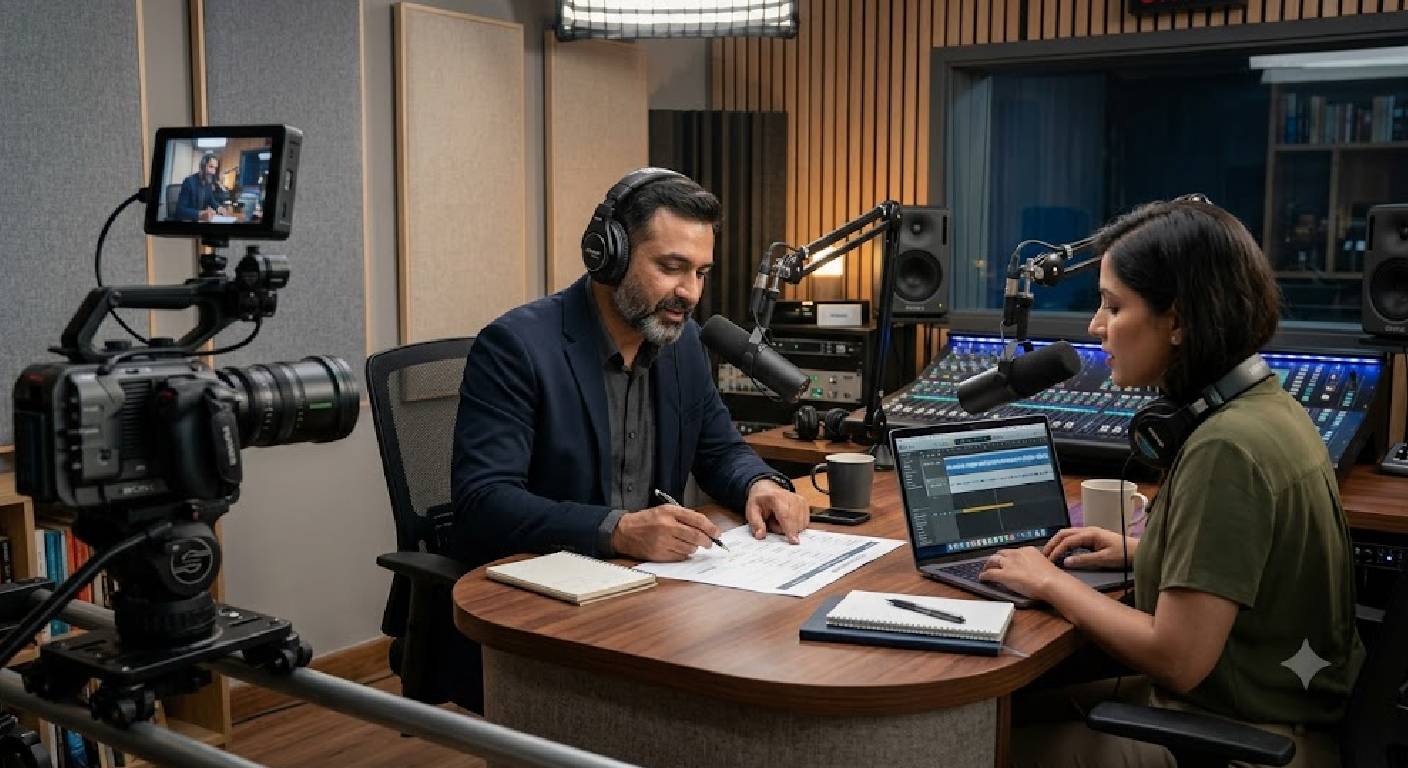
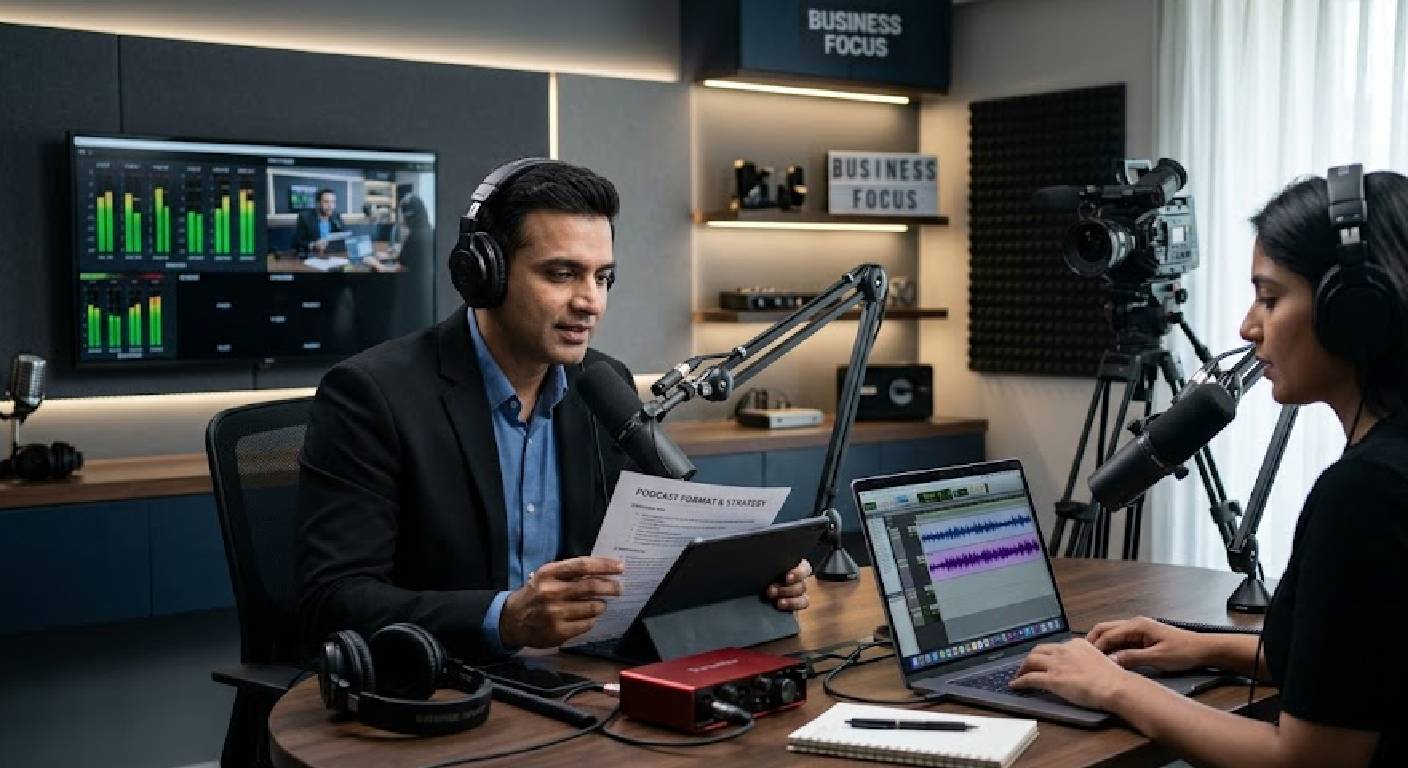
MW Stuudio’s podcast studio in Mumbai offers recording options for audio and video podcasts, including professional microphones, lighting and multi-camera setups. These elements can support a consistent production style when they match the project’s needs.
11. Make Each Episode Feel Fresh Without Losing Consistency
A distinctive format should create familiarity without making every episode predictable.
Listeners should recognise the show’s structure, but they should also have a reason to discover what is different about each new release.
One way to balance these needs is to keep the core format stable while changing the central question, guest perspective or practical challenge.
For example, a business podcast could retain its recurring segments while exploring a different theme in each episode: hiring, customer experience, marketing decisions, operational efficiency or leadership.
You can also vary the type of evidence or perspective used.
One episode might feature an interview, another could examine a business case and a third might answer questions submitted by listeners. If these formats are part of your overall concept, they can create variety without confusing the audience.
Avoid introducing too many unrelated formats at once. Sudden changes can make it difficult for listeners to understand what the podcast represents.
A useful approach is to test small variations within the existing structure. Try a new segment for a limited number of episodes, then review audience feedback and production requirements.
The aim is to build a show that feels familiar enough to revisit and flexible enough to keep exploring relevant subjects.
12. Plan Episode Length Around the Content
There is no single ideal duration for every business podcast. The appropriate length depends on the topic, format, audience expectations and amount of useful material available.
A focused solo explanation may be effective in a relatively short episode, while a detailed interview or case study may need more time.
Choose a realistic target based on what the episode needs to accomplish.
For each proposed topic, ask:
- How much context does the audience need?
- Will the episode include one speaker or several?
- Does the subject require examples or detailed analysis?
- Can the main point be explained without unnecessary repetition?
- How much preparation and editing will the format require?
A target duration can help the host plan the discussion, but it should not become a reason to remove useful context or add unnecessary conversation.
If a topic is too broad for one episode, divide it into a short series. For example, a show about business website development might cover planning, design, launch and ongoing maintenance in separate episodes.
Review the pacing during editing. Remove repetitive explanations and long pauses while preserving meaningful moments.
The goal is not to make every episode the same length. It is to make each episode as long as necessary to deliver its intended value.
13. Turn Audience Questions Into Part of the Format
Audience participation can make a business podcast more responsive to the questions people actually want answered.
Instead of relying entirely on the host’s topic list, create a consistent way for listeners to suggest subjects, submit questions or share challenges.
For example, a podcast could feature one audience question at the end of every episode. A business-focused show might ask listeners to submit a marketing problem, while a leadership podcast could invite questions about team management.
Useful sources of questions include:
- Comments on published episodes.
- Questions received through the company website.
- Common customer enquiries.
- Relevant social media discussions.
- Feedback from newsletters or community groups.
Review submissions before using them. Remove personal information and obtain permission when a question identifies an individual or organisation.
Do not promise to answer every submission. Select questions that match the show’s purpose and can be addressed responsibly.
Audience questions can also help generate future topics. If several people raise similar concerns, that may indicate an opportunity for a deeper episode.
Over time, this approach can help the podcast feel less like a one-way broadcast and more like an ongoing conversation with its intended audience.
14. Repurpose the Format for Video and Short-Form Content
A well-designed podcast format can support more than full-length audio or video episodes.
Recurring questions, clear discussion sections and practical takeaways create natural opportunities to produce shorter content from each recording.
For example, an interview about business growth could provide:
- A full-length podcast episode.
- Short video clips featuring useful insights.
- A brief summary of the main lessons.
- A written article based on the discussion.
- Social media posts highlighting key questions.
- A newsletter linking to the complete episode.
Plan these possibilities before recording. Clear audio, suitable camera framing and a well-organised episode structure make it easier to identify useful excerpts later.
However, not every section will work as a standalone clip. An excerpt should provide enough context to make sense without misleading the audience about what the speaker meant.
Adapt each output to the platform. A short vertical video may need captions and tighter editing, while a written article may require additional context and fact-checking.
MW Stuudio provides studio and production services that businesses can explore when they need recording, editing and platform-ready content as part of a managed production workflow.
Repurposing helps extend the value of a recording session while allowing the main podcast to remain the central piece of content.
15. Test, Review and Refine Your Podcast Format
Your initial podcast format should provide a clear direction, but it does not have to remain unchanged forever.
After publishing several episodes, review how well the format serves the audience and how practical it is for the team to maintain.
Look at both audience response and production experience.
Useful indicators may include:
- Listening or viewing patterns across episodes.
- Audience comments and submitted questions.
- Shares, saves and meaningful discussions.
- Feedback about recurring segments.
- The subjects that generate useful follow-up conversations.
- Recording and editing time.
- The consistency of your publishing schedule.
No single metric explains whether a podcast format is successful. A shorter episode may attract fewer total listening minutes while still answering its intended question effectively. Audience feedback and production observations should be considered together.
Identify one area to improve at a time. You might shorten the introduction, make the signature segment clearer, improve guest preparation or reorganise the closing section.
Give changes enough time to be evaluated. Altering the structure after every episode can make it difficult to recognise meaningful patterns.
It is also useful to revisit the original purpose and target audience periodically. As the business and its audience evolve, the podcast may need to adjust its topics or presentation.
The best format is one that remains distinctive while continuing to serve a real audience need.
Conclusion
Developing a distinctive format for your business podcast begins with understanding its purpose, audience and point of difference.
From there, you can choose a suitable episode format, establish a repeatable structure, create signature segments and develop a hosting style that reflects your brand. Guest selection, storytelling and audience participation can add depth while keeping the show relevant to its intended listeners.
A consistent audio and visual identity helps make the podcast recognisable, while flexible episode planning allows the content to explore different subjects without losing its overall direction.
It is equally important to consider production requirements. Recording, editing, publishing and repurposing all take time, so the format should be realistic for the resources available.
Review audience feedback and production performance as the show develops. Small, deliberate improvements can help the podcast become more useful and easier to maintain.
For businesses that need professional support with recording, video production and post-production, MW Stuudio offers podcast production services in Mumbai that can be explored according to the show’s requirements.
Ultimately, a distinctive business podcast does not need complicated segments or elaborate production to stand out. It needs a clear purpose, a recognisable approach and consistently useful conversations that give listeners a reason to return.