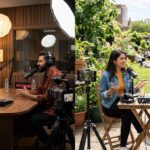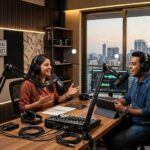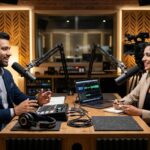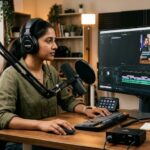

Indoor vs Outdoor Podcast Recording has become a popular way for businesses, entrepreneurs, and content creators to share ideas, conduct interviews, and connect with their audiences. However, choosing the right recording environment can significantly influence the quality and presentation of a podcast. While indoor podcast recording offers a controlled studio environment, outdoor podcast recording provides a more natural and visually interesting setting.
Both recording styles have their own advantages depending on the podcast format, audience, and production requirements. Indoor recording is often preferred for professional interviews, business discussions, and regular podcast episodes, whereas outdoor recording can create a fresh atmosphere for lifestyle conversations, travel content, and creative interviews. Understanding their differences can help you choose the right approach for your podcast.
1. Understanding Indoor Podcast Recording
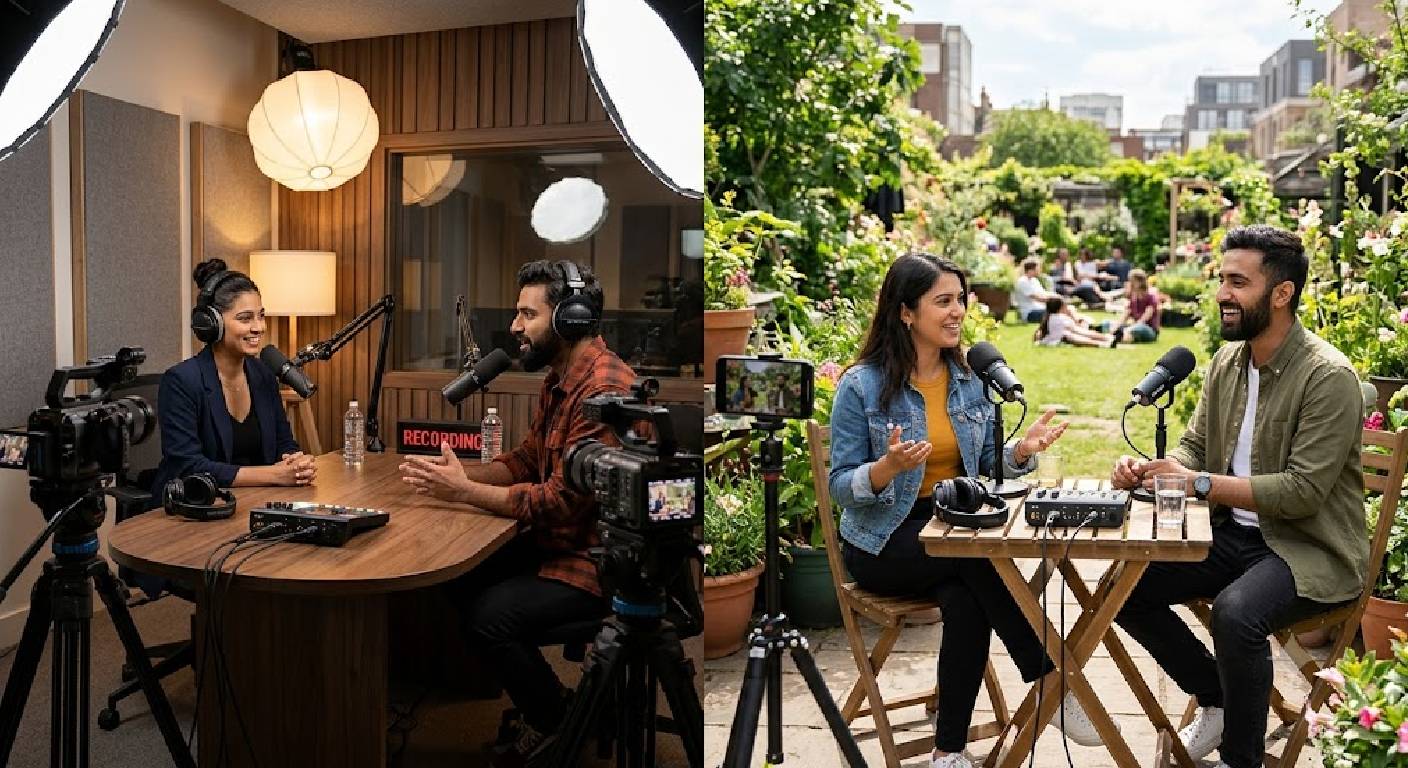
Indoor podcast recording takes place in a dedicated studio, office, or controlled indoor environment. It allows creators to manage lighting, sound, camera positioning, and background elements more effectively.
Professional podcast studios are designed to provide suitable microphones, acoustic treatment, recording equipment, and comfortable seating arrangements. This makes indoor recording particularly useful for long conversations, business interviews, educational episodes, and video podcasts that require consistent production quality.
2. Understanding Outdoor Podcast Recording
Outdoor podcast recording involves capturing conversations in locations such as gardens, rooftops, public spaces, and other open environments. It creates opportunities to produce visually different content and introduce natural surroundings into the podcast experience.
Unlike indoor studios, outdoor locations have changing environmental conditions. Wind, traffic, crowd noise, and weather can affect recording quality. Outdoor podcast production therefore requires careful location selection, suitable microphones, wind protection, and additional recording preparation.
3. Differences in Audio Quality and Background Noise
Audio quality is one of the biggest differences between indoor and outdoor podcast recording. Indoor studios provide greater control over unwanted sounds through acoustic treatment and sound isolation. This makes it easier to record clear conversations without interruptions.
Outdoor environments introduce several unpredictable sounds that may interfere with the recording. Some important differences include:
-
Indoor Recording: Controlled acoustics, reduced background noise, and more consistent voice capture.
-
Outdoor Recording: Natural ambience, possible wind interference, traffic noise, and unpredictable environmental sounds.
-
Indoor Recording: Better suitability for professional interviews and detailed discussions.
-
Outdoor Recording: More suitable for location-based conversations and creative content when ambient sound is part of the experience.
The right microphone and recording techniques can improve both formats, but indoor studios generally offer more predictable audio conditions.
4. Lighting and Camera Setup
Lighting conditions are easier to manage during indoor podcast recording because studios can use professional LED lights, softboxes, and controlled camera arrangements. This helps maintain consistent exposure and natural skin tones across different episodes.
Outdoor recording depends more on available natural light and weather conditions. Direct sunlight can create harsh shadows, while changing cloud cover may affect video brightness. Professional cameras, reflectors, portable lights, and suitable shooting schedules can help improve outdoor visuals, but the environment remains less predictable than a studio.
5. Flexibility and Creative Opportunities
Outdoor podcast recording provides creative freedom by allowing hosts and guests to interact in different surroundings. Locations such as parks, terraces, and scenic spaces can make content feel more relaxed and visually engaging.
Indoor studios offer a different type of flexibility through controlled backgrounds, camera angles, lighting arrangements, and recording equipment. Creators can maintain a consistent visual identity while changing the studio setup according to different episode requirements. The best choice depends on whether the podcast prioritises creative surroundings or controlled production.
6. Equipment and Technical Requirements
Both recording environments require suitable equipment, but their technical requirements are different. Indoor studios generally have fixed recording equipment, while outdoor production often requires portable and weather-conscious setups.
Common equipment considerations include:
-
Indoor: Studio microphones, audio interfaces, headphones, cameras, tripods, and professional lighting.
-
Outdoor: Portable microphones, wireless recording systems, windshields, portable cameras, stabilisers, and backup batteries.
-
Indoor: Fixed power sources and controlled equipment arrangements.
-
Outdoor: Portable power solutions, extra storage, and equipment protection against environmental conditions.
Planning the equipment requirements before recording helps reduce technical problems and maintain production quality.
7. Cost and Production Convenience
Indoor podcast studios may charge hourly rental fees or offer complete recording and production packages. However, they often provide ready-to-use equipment, lighting, acoustic treatment, and technical support. This can save time and reduce the need to purchase individual recording devices.
Outdoor podcast production may appear more affordable when using freely accessible locations, but professional results can require additional equipment, transportation, location permissions, and crew support. Weather-related delays and background noise may also increase production time. Comparing the complete production requirements is important before deciding which format is more suitable.
8. Which Indoor vs Outdoor Podcast Recording Style Should You Choose?
The right recording style depends on your content objectives, production expectations, and audience. Indoor recording is generally suitable for businesses, entrepreneurs, professional interviews, educational podcasts, and regular video podcast episodes that require consistent quality.
Outdoor recording can be a good option for travel podcasts, lifestyle content, street interviews, and creative conversations where the surroundings add value to the story. Some creators also combine both approaches to introduce variety into their content while maintaining a consistent podcast identity.
Conclusion
Indoor and outdoor podcast recording offer different experiences, advantages, and production challenges. Indoor recording provides better control over audio, lighting, camera arrangements, and background conditions, making it suitable for professional and consistent podcast production. Outdoor recording offers creative flexibility and natural surroundings but requires additional preparation to manage environmental conditions.
Before selecting a recording style, consider your podcast format, audio requirements, visual presentation, and production budget. If your priority is clear audio, professional video quality, and a controlled recording environment, a professional indoor podcast studio can be an effective choice. The right setup helps you create engaging episodes that reflect your content quality and brand identity.