
Podcasting has become a popular content format for creators, entrepreneurs, and businesses looking to share knowledge, communicate ideas, and connect with their target audiences. With the growth of digital platforms, Video Podcast vs Audio Podcast are no longer limited to audio recordings. Video podcasts have also gained attention because they combine conversations with visual elements, making content suitable for platforms such as YouTube and social media.
However, choosing between a video podcast and an audio podcast depends on your content goals, target audience, budget, and production requirements. Both formats offer different advantages and can help build a strong brand presence. Understanding their differences will help you select the right format for your podcasting journey.
1. Understanding Audio Podcasts
An audio podcast is a recorded conversation or discussion that audiences can listen to without watching a video. It is commonly used for interviews, storytelling, educational content, business discussions, and industry insights.
Audio podcasts allow listeners to enjoy episodes while travelling, exercising, working, or completing everyday activities. Since they do not require cameras or complex visual arrangements, they can be easier to produce and publish consistently. This makes audio podcasting a suitable starting point for beginners and creators who want to focus primarily on conversations.
2. Understanding Video Podcasts
A video podcast combines audio conversations with visual recordings of hosts and guests. It allows audiences to see facial expressions, body language, and interactions during discussions, creating a more visual experience.
Video podcasts are commonly published on platforms such as YouTube and can also be converted into short clips for social media. They require additional production arrangements, including cameras, lighting, suitable backgrounds, and video editing. For businesses and personal brands, this format provides more opportunities to showcase personality and create engaging visual content.
3. Key Differences Between Video and Audio Podcasts
Although both formats share the same purpose of communicating information, their production requirements and audience experiences are different. Understanding these differences can help you decide which approach suits your content strategy.
Some important differences include:
-
Content Experience: Audio podcasts focus on listening, while video podcasts combine listening with visual engagement.
-
Equipment Requirements: Audio podcasts mainly require microphones and recording equipment, whereas video podcasts also need cameras and lighting.
-
Production Process: Audio editing is generally simpler, while video production may involve camera adjustments, visual editing, and multiple angles.
-
Publishing Platforms: Audio episodes can be distributed through podcast platforms, while video episodes can also reach audiences through video-sharing and social media platforms.
-
Content Repurposing: Video recordings provide visual clips and highlights that can be shared across different digital channels.
4. Which Podcast Format Is More Cost-Effective?
Budget is an important consideration when choosing a podcast format. Audio podcasting generally requires fewer production resources because creators can focus on microphones, recording software, and sound editing. This makes it a practical option for beginners who want to start without investing heavily in equipment.
Video podcasting may require additional spending on cameras, lighting, studio arrangements, and video editing. However, these additional resources can create more opportunities for visual content and brand promotion. The right choice depends on your available budget and the results you want to achieve.
5. Audience Engagement: Video Podcast vs Audio Podcast
Audience engagement depends on the type of content and how people prefer to consume it. Audio podcasts are convenient for listeners who want to access discussions while performing other activities. They can also encourage audiences to spend more time listening to detailed conversations.
Video podcasts provide another level of engagement through facial expressions, visual demonstrations, and guest interactions. Viewers can connect with the personalities behind the conversations, which may help businesses and creators build stronger relationships with their audiences.
6. Equipment and Production Requirements
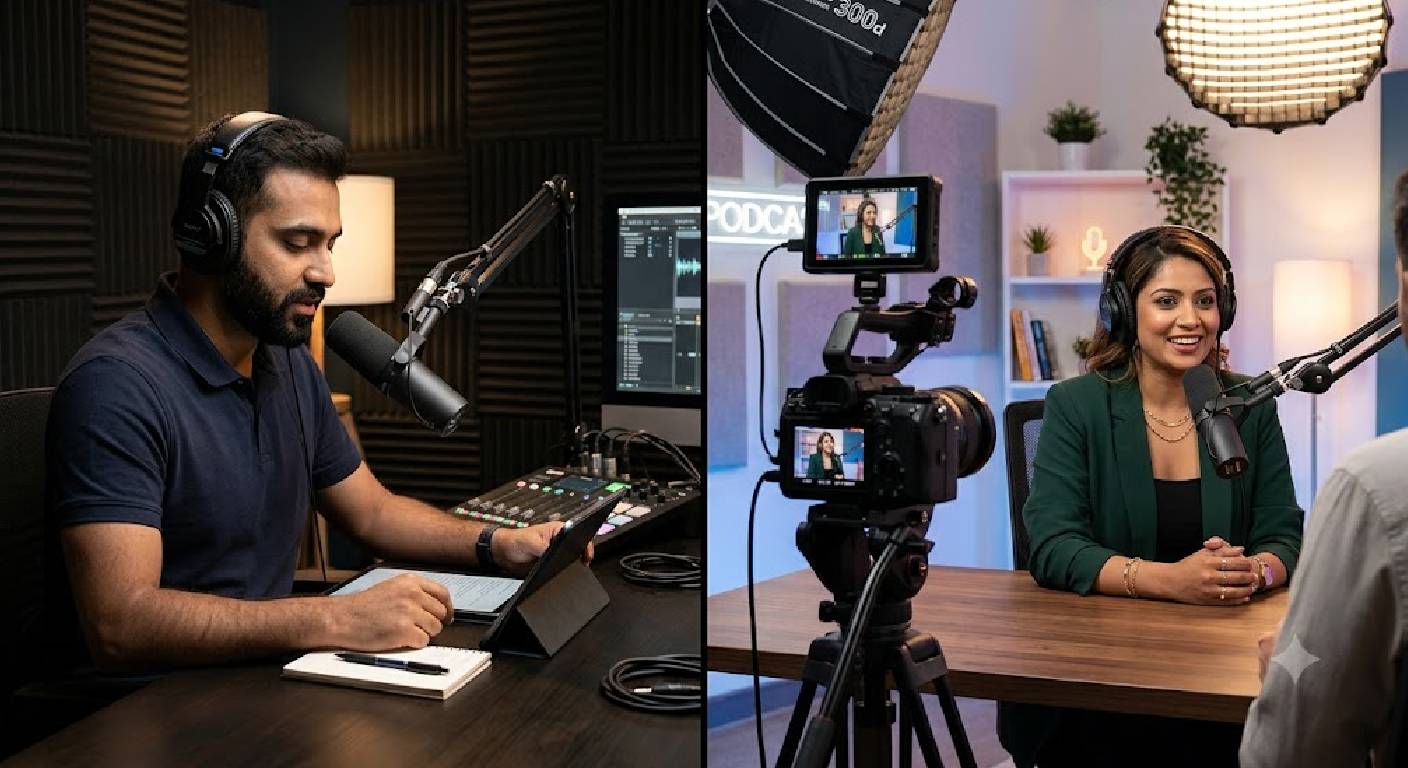
The equipment needed for each podcast format is different. Audio podcasts require a suitable microphone, headphones, and recording software, while video podcasts need additional production equipment to capture professional-looking footage.
A video podcast setup may include:
-
Professional Cameras: Capture clear and high-quality video footage.
-
Studio Lighting: Improve visibility and create balanced visuals.
-
Microphones: Capture clear audio for every participant.
-
Audio Mixers: Manage sound levels during recording.
-
Video Editing Software: Prepare recordings for publishing and social media distribution.
Choosing the right equipment helps maintain quality and creates a smoother recording experience.
7. Which Format Is Better for Businesses and Personal Brands?
For businesses and personal brands, the right podcast format depends on communication goals and audience preferences. Audio podcasts are useful for sharing detailed discussions, expert opinions, and educational information without requiring a complex visual production process.
Video podcasts can be particularly useful when personal interaction and visual brand presentation are important. Business owners can introduce their teams, invite industry experts, record interviews, and share short video highlights. They can also use the same recording session to create multiple pieces of promotional content for digital platforms.
8. Can You Combine Audio and Video Podcasting?
You do not always need to choose only one format. Recording a video podcast with professional audio allows you to create both video and audio versions from the same session. This approach helps maximise the value of each recording and gives audiences different ways to consume your content.
For example, you can publish the full video episode on YouTube, distribute its audio version through podcast platforms, and share short highlights on Instagram and LinkedIn. This combined approach supports content repurposing and helps businesses maintain a consistent presence across multiple digital channels.
Conclusion
Both video podcasts and audio podcasts offer valuable opportunities for creators, entrepreneurs, and businesses. Audio podcasting is a practical choice for those who prefer a simpler production process and want to focus on conversations. Video podcasting offers additional visual engagement and creates more opportunities for social media content and brand promotion.
If you want greater flexibility, combining both formats can be an effective strategy. By choosing the right recording setup and maintaining consistent production quality, you can create podcast content that connects with your audience and supports your long-term brand growth.