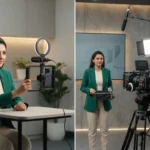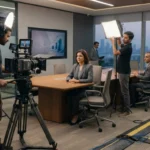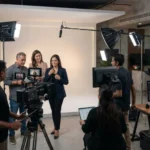

Choosing the right content studio in Mumbai can make a significant difference to the quality, consistency and efficiency of your business content.
Today, businesses need much more than occasional photographs for their website. Brands may require Instagram Reels, YouTube videos, product photography, founder videos, podcasts, testimonials, corporate videos, advertising creatives and social media content throughout the year.
This creates an important question:
How do you choose a content studio that can actually support your business goals?
Mumbai has a large number of photography studios, video production spaces, podcast studios and creative agencies. However, every studio is designed for a different purpose.
Some studios primarily provide space and basic equipment. Others offer complete production services with cameras, lighting, sound, production crew, editing and content strategy.
The cheapest studio is therefore not necessarily the best choice.
Businesses should evaluate the complete production experience, including:
- Studio facilities
- Camera and lighting equipment
- Audio quality
- Backgrounds and shooting setups
- Production team
- Photography and videography expertise
- Editing services
- Content formats
- Studio capacity
- Location and accessibility
- Pricing and packages
- Final deliverables
- Ability to produce multiple assets from one shoot
The right content studio should fit the type of content you need, the quality you expect and the business objectives you want to achieve.
For example, a founder recording educational Reels may need a completely different setup from an e-commerce company photographing hundreds of products.
Similarly, a podcast creator may prioritize acoustics and microphones, while a fashion brand may prioritize lighting, backgrounds, changing areas and professional photography.
This guide explains the most important factors Mumbai businesses should consider before selecting a professional content studio.
1. Start by Defining What Content You Need
Before comparing studios, identify exactly what you want to create.
A studio may look impressive, but if it does not support your required content formats, it may not be the right choice.
Start by creating a list of your expected production requirements.
For example, an e-commerce business might need:
- Product catalogue photography
- Lifestyle photography
- Product videos
- Model photography
- Social media Reels
- Advertising creatives
A professional services company might need:
- Founder videos
- Educational Reels
- Corporate photography
- Testimonials
- Podcast recordings
- LinkedIn content
A creator might need:
- Reels
- YouTube videos
- Podcast episodes
- Short-form clips
- Personal branding photography
Defining these requirements makes studio comparison much easier.
You should also consider how frequently you need content.
A business producing content once a year may have different priorities from a brand planning monthly production sessions.
Think about both your current requirements and future content needs.
If you expect your business to expand into podcasts, video advertising or product photography, choosing a studio that can support multiple formats may provide greater long-term value.
2. Check the Studio’s Camera and Video Equipment
Equipment is one of the most visible differences between a basic studio and a professional production environment.
However, businesses should not simply look for the most expensive camera.
The important question is whether the studio has equipment suitable for the type of content you are producing.
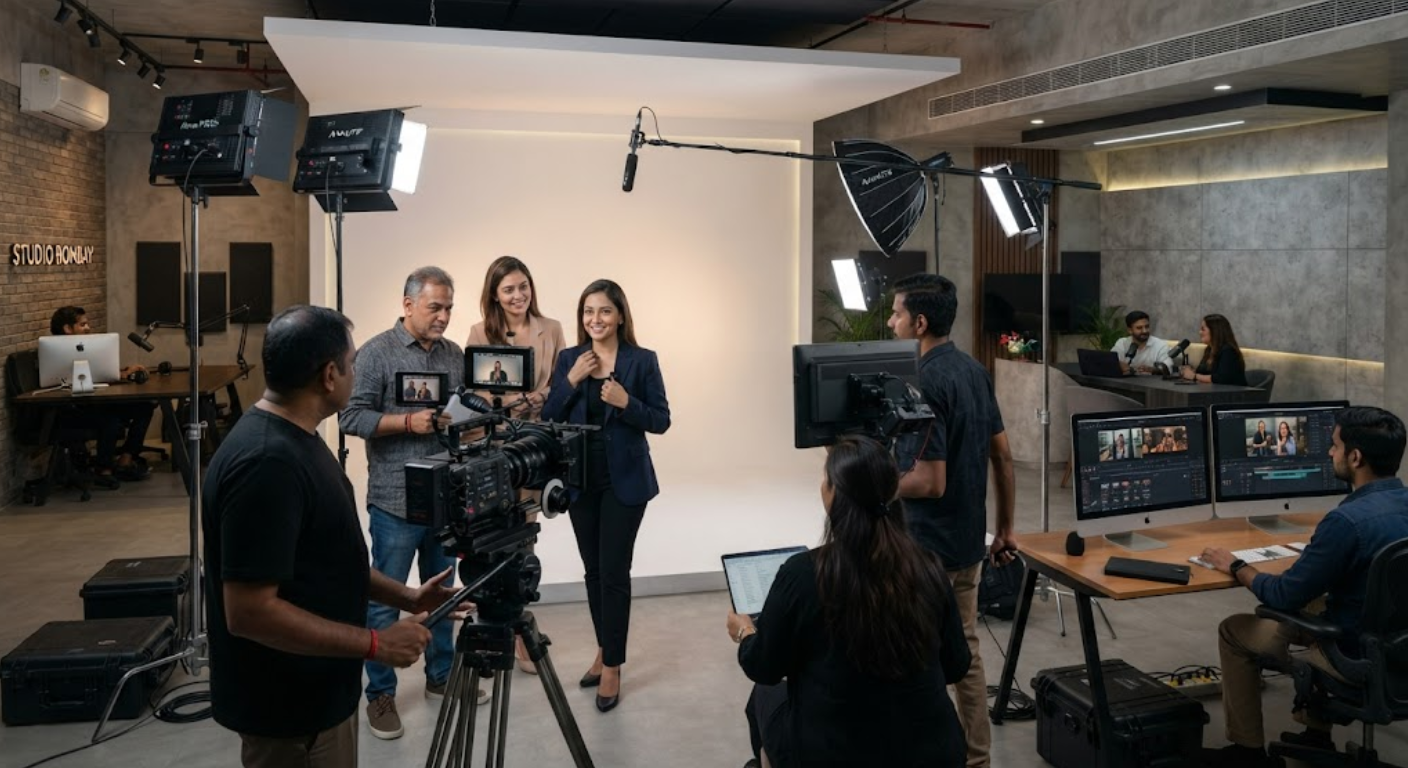
For professional video production, useful equipment may include:
- Professional cinema or mirrorless cameras
- Multiple camera bodies
- Professional lenses
- Tripods
- Gimbals
- Camera monitors
- Teleprompters
- External recording equipment
- Professional lighting
- Wireless or wired audio systems
- Monitoring equipment
Multi-camera production can be particularly useful for interviews, podcasts and business videos.
Multiple camera angles allow editors to create more engaging final videos and provide flexibility during editing.
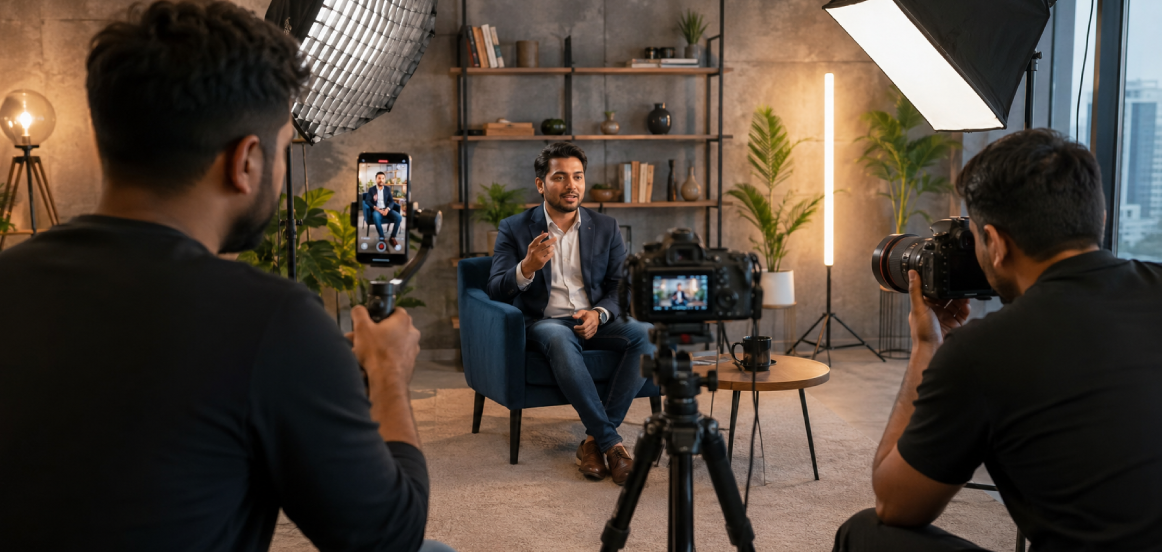
For vertical Reels, the studio should also understand how to frame subjects specifically for mobile viewing.
Ask the studio what equipment is included in the quoted price and what may incur an additional charge.
A professional studio should be able to explain its production setup clearly rather than simply listing equipment names.
3. Evaluate Lighting and Studio Background Options
Lighting can dramatically influence the appearance of photographs and videos.
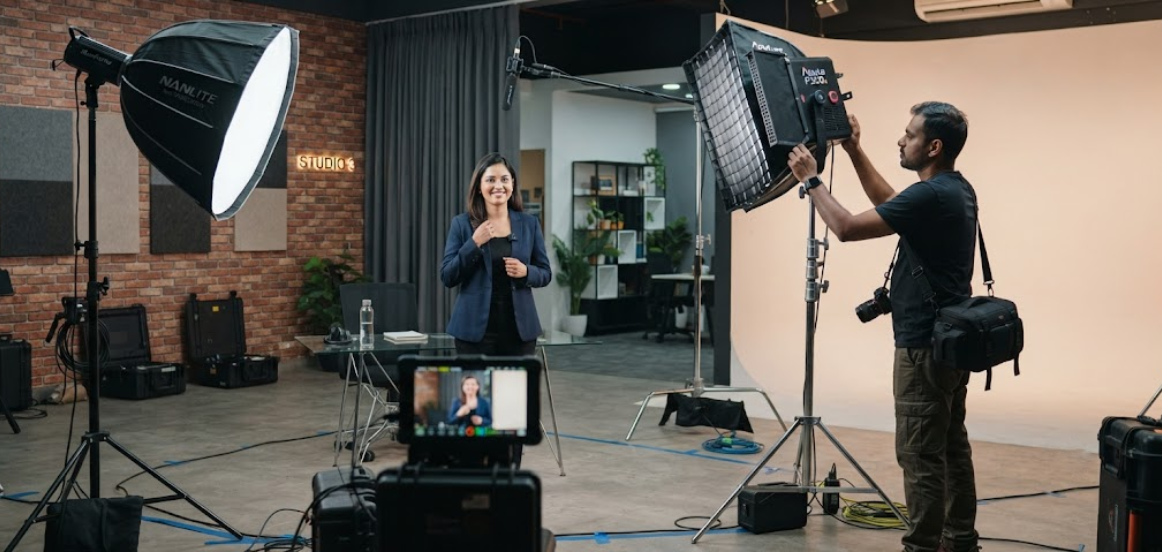
A professional content studio should have lighting equipment appropriate for different production requirements.
Depending on the shoot, you may need:
- Key lights
- Fill lights
- Backlights
- Softboxes
- LED panels
- Strip lights
- Reflectors
- Light modifiers
- Practical lights
- Adjustable lighting setups
Background options are equally important.
A single background may become repetitive if you plan to create dozens of videos.
Look for studios offering different visual environments where appropriate.
These could include:
- Clean professional backgrounds
- Lifestyle setups
- Corporate environments
- Creative backgrounds
- Product photography tables
- Podcast setups
- Interview setups
- Fashion-oriented spaces
The goal is not to use every background available.
Instead, the studio should give you enough flexibility to create visual variety while maintaining brand consistency.
For businesses creating content regularly, this flexibility can be especially valuable.
4. Check the Audio Quality for Video and Podcasts
Good visuals cannot compensate for poor audio.
This is especially important for podcasts, interviews, educational videos, founder content and testimonials.
Before booking a studio, ask how audio is recorded.
A professional setup may include:
- Broadcast-quality microphones
- Proper microphone positioning
- Audio interfaces
- Professional mixers
- Headphones
- Monitoring systems
- Acoustic treatment
- Noise control
- Dedicated sound recording
The studio environment also matters.
A visually beautiful room can still be unsuitable for recording if it creates excessive echo or outside noise.
If you are recording a podcast or talking-head video, ask whether you can hear a sample of the studio’s recorded audio.
For long-form content, audio quality becomes particularly important because viewers are expected to listen for several minutes.
Clean, consistent and understandable speech creates a much better viewing experience.
5. Look for a Studio That Offers Production Support
There is a major difference between renting studio space and booking a complete production service.
A basic studio rental may provide the room and some equipment. You may then need to manage cameras, lighting, audio, direction and post-production yourself.
A full-service production studio can provide a team to manage these elements.
Production support may include:
- Creative direction
- Camera operation
- Lighting setup
- Audio recording
- On-camera guidance
- Teleprompter operation
- Shot planning
- Production coordination
- Photography
- Videography
- Editing
- Sound design
- Captions
- Thumbnail creation
This can be particularly useful for businesses that do not have an internal production team.
Founders and employees may be experts in their industries but may not be experienced in front of a camera.
A production team can help with framing, delivery, positioning and multiple takes.
This can make the shoot more efficient and reduce unnecessary retakes.
6. Review the Studio’s Photography Capabilities
If your business needs photography as well as video, check whether the studio can handle both.
A strong content production environment can make it possible to create multiple types of photography during the same session.
Depending on your business, you may need:
- Product photography
- Model photography
- Fashion photography
- Corporate headshots
- Founder photography
- Personal branding photography
- Lifestyle photography
- Food photography
- Jewellery photography
- E-commerce photography
Ask to see examples that are relevant to your industry.
A studio may have excellent fashion photography but limited experience with products. Another may specialize in e-commerce photography but have little experience with personal branding.
The portfolio should therefore be evaluated based on relevance, not simply the number of images shown.
For businesses, consistency is also important.
If you plan to photograph 50 or 100 products, ask how the studio maintains consistent lighting, framing, backgrounds and colour accuracy throughout the project.
7. Make Sure the Studio Can Create Multiple Content Formats
Modern businesses rarely need only one type of content.
One professional shoot may need to generate assets for Instagram, YouTube, LinkedIn, websites, advertising and other platforms.
A good content studio should understand these different requirements.
Useful content formats may include:
- Instagram Reels
- YouTube Shorts
- YouTube videos
- Podcast videos
- Product videos
- Corporate videos
- Testimonials
- Founder videos
- Product photographs
- Lifestyle photographs
- Website visuals
- Advertising creatives
- Behind-the-scenes content
The studio should also understand different aspect ratios and framing requirements.
For example, a vertical Reel requires different composition considerations from a horizontal YouTube video.
Planning these formats before the shoot prevents businesses from discovering later that important footage was not captured correctly.
A professional content studio should therefore think beyond the individual shoot and consider how the final assets will actually be used.
8. Compare Editing and Post-Production Services
The production day is only one part of the project.
Post-production can determine how useful the final content becomes.
Ask the studio what happens after filming or photography is completed.
Important post-production services include:
- Video editing
- Photo editing
- Colour correction
- Audio cleaning
- Noise removal
- Sound design
- Captions
- Subtitles
- Motion graphics
- Lower thirds
- Intro and outro
- Thumbnail creation
- Photo retouching
- Background removal
- Social media resizing
Also ask about revision policies.
For example:
- How many revisions are included?
- How are revisions communicated?
- How long does editing take?
- Are raw files available?
- How are final files delivered?
- Are social-media-ready versions included?
These questions should be answered before production begins.
A studio that provides both production and post-production can also reduce the complexity of managing multiple vendors.
9. Consider the Studio Location and Accessibility
Mumbai traffic can significantly affect production schedules.
A studio may have excellent equipment, but if reaching the location is difficult for your team, clients, models or guests, it can create unnecessary complications.
Consider the studio’s accessibility from your team’s location.
Also evaluate practical factors such as:
- Parking availability
- Public transport access
- Elevator access
- Entry and exit arrangements
- Loading and unloading space
- Changing facilities
- Makeup area
- Waiting area
- Guest seating
- Air conditioning
- Internet connectivity
- Session timing
- Nearby food and amenities
For businesses bringing products, models, clients or multiple team members, these details can make the production day significantly easier.
A conveniently located studio can also reduce delays and help maintain the planned shooting schedule.
10. Compare Pricing Based on Total Value
Price is important, but it should not be the only factor.
Two studios may advertise different prices while providing very different services.
One quote may include only studio rental, while another may include cameras, lighting, production crew, editing and final deliverables.
Before comparing prices, identify exactly what is included.
Compare these factors:
- Studio rental duration
- Number of cameras
- Lighting equipment
- Audio equipment
- Photographer
- Videographer
- Production crew
- Creative direction
- Number of setups
- Number of products or looks
- Editing
- Retouching
- Revisions
- Final deliverables
- Additional equipment charges
- Overtime charges
- Raw footage availability
A low hourly rate can become expensive if essential services are charged separately.
Similarly, a higher package price may provide better overall value if it includes production and post-production.
The goal should be to compare total production value, not just the headline price.
Always request a clear quotation before confirming the booking.
11. Review the Portfolio, Client Experience and Production Process
A portfolio is one of the best ways to evaluate whether a studio can deliver the style and quality you need.
However, do not only look at the most impressive photographs on the website.
Look for projects similar to yours.
For example, if you operate an e-commerce brand, examine product photography and product videos.
If you are a founder, look for personal branding and talking-head videos.
If you want a podcast, examine podcast video quality, audio clarity, camera framing and editing.
You should also understand how the studio works.
A professional process may include:
- Initial requirement discussion
- Content planning
- Concept development
- Pre-production preparation
- Studio setup
- Production
- Editing
- Review
- Revisions
- Final delivery
A structured workflow can reduce confusion and improve the overall production experience.
Client reviews can also provide useful information about communication, punctuality, production support and service quality.
The combination of relevant portfolio + professional process + positive client experience is generally more useful than relying on studio appearance alone.
12. Choose a Content Studio That Can Grow With Your Business
The best content studio is not necessarily the one with the largest space or the cheapest package.
It is the studio that can consistently support your content requirements as your business grows.
Your needs may change over time.
Today, you may need simple Reels.
Later, you may require:
- Monthly content shoots
- Product photography
- Founder videos
- Podcast production
- YouTube videos
- Corporate films
- Advertising creatives
- Model photography
- Website content
- Social media content libraries
Choosing a studio capable of handling multiple formats can make future production easier.
It can also help create consistency across your visual communication.
Instead of finding a new vendor every time you introduce a new content format, you can potentially maintain one production relationship across multiple requirements.
For Mumbai businesses, this can be especially useful when content production becomes a recurring part of marketing.
The final decision should therefore consider:
Quality + Equipment + Production Team + Services + Location + Pricing + Editing + Reliability + Scalability.
If a studio performs well across these areas, it is more likely to become a useful long-term content partner rather than simply a place to rent for a few hours.
Conclusion
Choosing the best content studio in Mumbai requires more than comparing studio photographs or hourly rental prices.
Businesses should first understand what content they need and then evaluate studios according to their production capabilities.
The right studio should ideally provide the equipment, environment, team and post-production services necessary to turn your ideas into usable marketing assets.
Before making a decision, evaluate:
- Your content requirements
- Camera and lighting equipment
- Audio quality
- Studio backgrounds
- Production support
- Photography capabilities
- Content formats
- Editing services
- Location
- Pricing
- Portfolio
- Client experience
- Long-term scalability
For businesses that need regular content, the ability to create multiple assets from one professional production session can be particularly valuable.
A well-planned studio session can potentially generate photographs, Reels, videos, podcast content, B-roll, testimonials, product visuals and advertising assets.
Ultimately, the best content studio is the one that understands your business, your audience and your content objectives.
Instead of asking only, “How much does the studio cost?”, ask a more useful question:
“How much useful business content can this studio help me create from my production investment?”
That shift in perspective can help Mumbai businesses make a better studio selection and build a more consistent content production strategy for 2026 and beyond.