
Podcasting has become an increasingly useful format for businesses, founders, professionals, creators, educators and personal brands that want to communicate with an audience in a more engaging way.
A podcast can help a business share expertise, introduce its founders, interview industry professionals, educate customers, discuss trends and create a deeper connection with its audience. But while starting a podcast may look simple, producing professional-quality episodes requires more than placing a microphone on a desk and pressing record.
The studio you choose can influence the sound quality, video quality, guest experience, production workflow and overall perception of your brand.
For businesses in Mumbai, there are many options ranging from basic recording rooms to fully equipped podcast production studios. This makes choosing the right studio an important decision.
A suitable podcast studio should provide more than an attractive room. You should consider acoustic treatment, sound isolation, microphones, cameras, lighting, technical support, recording formats, editing, post-production, location, scalability and the overall experience offered to the host and guests.
MW Stuudio, based in Borivali, Mumbai, began its journey in 2019 with podcast recording, studio rentals, music mixing and mastering before expanding into photography, videography, post-production, digital marketing and web services. The studio describes itself as a connected creative ecosystem for brands and creators.
This guide explains the most important factors to consider when choosing a podcast studio in Mumbai and how businesses can evaluate a studio before committing to a recording session.
1. Start by Defining What You Want Your Podcast to Achieve
Before searching for a podcast studio, define the purpose of your podcast.
Different podcasts require different production approaches.
A founder may want to create a business podcast featuring industry experts. A doctor may want an educational healthcare podcast. A real estate company may want conversations about property and investment. A personal brand may want interviews, solo episodes and short-form social media content.
Your objective will influence the studio setup you need.
Ask yourself:
- Who is the target audience?
- What topics will the podcast cover?
- Will episodes be interviews or solo discussions?
- Will guests appear remotely or in person?
- Will the podcast be audio-only or video-first?
- How frequently will episodes be published?
- Which platforms will host the content?
- Will episodes also become Reels and Shorts?
- Do you need editing and post-production?
- Do you need help developing the podcast format?
For example, if your objective is simply to record an audio conversation, you may not need an elaborate multi-camera production.
However, if your podcast is intended to become a major part of your brand’s digital content strategy, video production, lighting, multiple camera angles, editing and short-form content may become important.
Defining the objective first prevents you from paying for facilities you do not need—or choosing a basic setup that cannot support your long-term content strategy.
2. Check the Studio’s Acoustic Treatment and Sound Isolation
Audio quality is one of the most important factors in podcast production.
A podcast can have excellent video but still feel unprofessional if the audio contains excessive room echo, traffic noise, background conversations, air-conditioning noise or unwanted reflections.
This is why you should understand the difference between acoustic treatment and sound isolation.
Acoustic treatment helps control sound reflections inside a room. Sound isolation focuses on preventing external noise from entering the recording environment.
Both can contribute to a cleaner recording.
A professional podcast studio should therefore provide a controlled acoustic environment rather than simply placing microphones inside an ordinary office or room.
MW Stuudio describes its podcast facility as having structural soundproofing and professional acoustic treatment designed to provide a controlled recording environment.
When visiting a studio, listen carefully.
Ask:
- Can you hear traffic outside?
- Is there noticeable echo?
- Are air-conditioning sounds controlled?
- Are voices clear and natural?
- Is the room designed for recording?
- Is the acoustic environment consistent?
A visually attractive studio cannot compensate for poor audio.
For a brand podcast, clean and consistent sound should be considered a fundamental requirement.
3. Evaluate the Microphones and Audio Equipment
The microphone is one of the most important pieces of equipment in a podcast studio.
However, microphone quality is only one part of the equation.
The microphone must be paired with suitable audio interfaces, preamps, monitoring systems, cables, recording software and a properly treated room.
A professional studio should also be able to position and configure microphones appropriately for different types of recordings.
Interview podcasts, panel discussions and solo episodes may require different microphone arrangements.
Before booking, ask:
- What microphones are available?
- How many microphones can be used simultaneously?
- Is an audio engineer available?
- Is the recording monitored during the session?
- Are separate audio tracks recorded?
- What file format will be delivered?
- Is backup recording available?
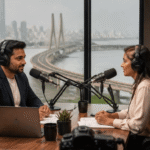
MW Stuudio states that its podcast studio uses broadcast-grade microphones and professional audio infrastructure, with options for clients who want either studio rental or production support.
The objective is not to choose a studio simply because it advertises an expensive microphone.
Instead, evaluate the complete audio chain—from the microphone and room to recording, monitoring and final post-production.
4. Decide Whether You Need Audio or Video Podcast Production
Modern podcasts are no longer limited to audio platforms.
Many brands record video podcasts so that one long-form conversation can become multiple pieces of content.
A single episode can potentially produce:
- Full YouTube episode
- Audio podcast episode
- Instagram Reels
- YouTube Shorts
- LinkedIn clips
- Quote-based social posts
- Promotional teasers
- Website content
If your podcast is intended to contribute to your wider content strategy, video production may therefore be worth considering.
Audio-only podcast
An audio-only setup may be suitable when:
- Your audience primarily listens rather than watches.
- The podcast is primarily educational or conversational.
- You want a simpler production workflow.
- Video content is not part of your strategy.
Video podcast
A video setup may be more suitable when:
- You want to publish on YouTube.
- You want social media clips.
- Guests are an important part of the show.
- Personal branding is important.
- Visual storytelling contributes to the content.
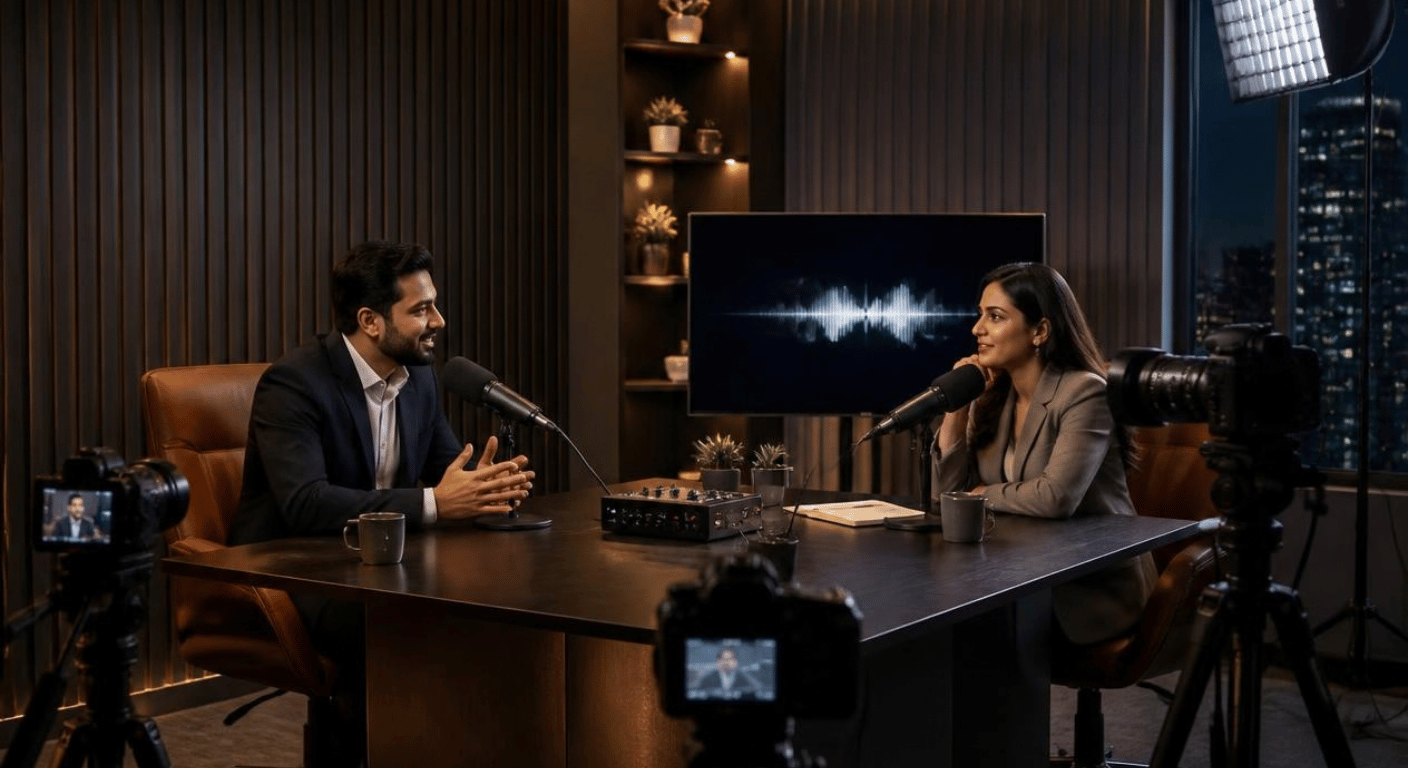
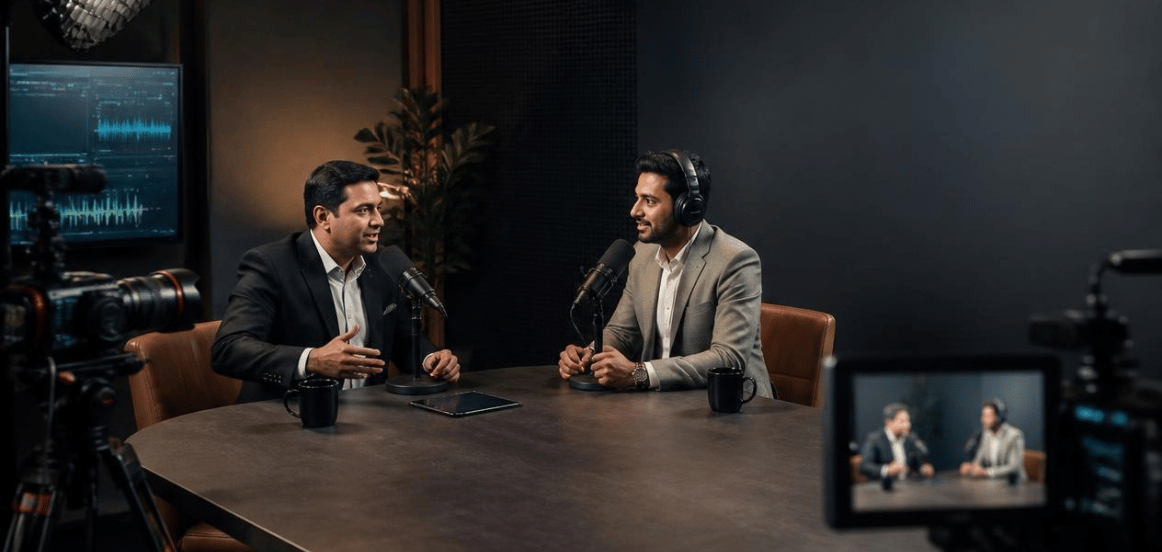
MW Stuudio offers single, dual and triple-camera configurations for video podcasts, along with professional lighting and production support.
Your choice should therefore be based on your content strategy rather than simply choosing the most elaborate setup.
5. Look at the Lighting and Camera Setup
If your podcast will be recorded on video, lighting becomes just as important as the camera.
Good podcast lighting should make the host and guests look natural while creating enough separation from the background.
Poor lighting can result in:
- Flat-looking footage
- Harsh shadows
- Overexposed faces
- Dark backgrounds
- Inconsistent skin tones
- Distracting reflections
The studio should ideally have professional lighting that can be adjusted according to the number of people and the desired visual style.
Camera positioning also matters.
A single static camera may work for certain formats, but multiple camera angles can create more visual variety.
For example:
Camera 1: Wide two-person shot
Camera 2: Host close-up
Camera 3: Guest close-up
This gives the editor more flexibility when creating the final episode.
MW Stuudio’s published studio information states that single, dual and triple-camera configurations are available, with production support for clients who choose its production package.
For a brand podcast, these production details can make the final content feel more intentional and polished.
6. Consider the Experience of Your Guests
Your podcast is not only about the host.
If your format includes guests, their experience should also be considered.
A guest who walks into a professional, organised studio is more likely to feel comfortable and confident during the conversation.
The studio should ideally provide:
- Comfortable seating
- Professional microphones
- Easy microphone positioning
- Good lighting
- A clean environment
- Clear technical guidance
- Efficient setup
- Comfortable waiting space
- A straightforward recording process
Location also matters.
MW Stuudio is located in Borivali in western Mumbai. Its website notes that the studio serves clients from across Mumbai and other cities, including Pune, Nashik, Surat, Ahmedabad and Delhi.
For a podcast that regularly brings in external guests, consider how easily guests can reach the studio.
You should also think about parking, public transport, building access and the amount of time required for setup.
A convenient guest experience can make recurring podcast production easier.
7. Compare Studio Rental With Full Podcast Production
Not every creator needs the same level of support.
Some experienced creators already have their own production team and simply need access to a professional recording space.
Others may want the studio team to manage the entire production.
This is why it is important to understand the difference between studio rental and full production support.
Studio Rental
Studio rental may be suitable if you:
- Already have a production team.
- Know how to operate cameras and microphones.
- Want control over the recording.
- Only need the professional studio environment.
Full Production Support
A production package may be more appropriate if you:
- Are recording your first podcast.
- Do not have camera operators.
- Need technical assistance.
- Want the recording managed professionally.
- Need post-production support.
- Want to focus entirely on the conversation.
MW Stuudio currently describes two studio options: rental-only access and studio space with production support.
Choosing the right option can help you avoid paying for unnecessary services while ensuring you have enough technical support for the production quality you want.
8. Ask About Editing and Post-Production
Recording the podcast is only the beginning.
Professional post-production can significantly influence the final result.
For audio, post-production can include:
- Noise reduction
- Audio cleanup
- Volume balancing
- EQ
- Compression
- Music integration
- Intro and outro
- Final mastering
For video, it can include:
- Camera-angle selection
- Cutting
- Colour correction
- Colour grading
- Audio synchronisation
- Graphics
- Captions
- Transitions
- Exporting
- Short-form clips
Before booking a studio, ask exactly what happens after recording.
A low-cost recording session may not include editing, meaning you may need to hire another editor afterward.
MW Stuudio positions podcast production as an end-to-end service and describes support from initial podcast planning through recording, editing, branding and distribution.
For businesses that want a predictable workflow, having production and post-production connected can simplify the process.
9. Check Whether the Studio Can Help You Repurpose Content
One podcast episode can contain much more content than the final 30- or 60-minute episode.
This is one of the biggest advantages of recording a video podcast.
A single conversation can be broken down into smaller content pieces.
Possible content outputs include:
- Full podcast episode
- Short video clips
- Instagram Reels
- YouTube Shorts
- LinkedIn videos
- Audiograms
- Quote graphics
- Guest promotional clips
- Website content
- Blog ideas
For example, a 45-minute founder interview may contain several strong insights that can each become a separate short-form video.
This approach can help businesses get more value from every recording session.
MW Stuudio combines podcast production with video, post-production, photography and digital services, allowing businesses to think about content beyond the recording itself.
When evaluating a podcast studio, therefore, ask whether the team understands content repurposing and whether it can help you turn one recording session into a broader content library.
10. Consider Podcast Consultation and Strategy
A professional studio can provide equipment and production, but strategy can be equally important.
Many podcasts struggle not because the recording quality is poor, but because the show lacks a clear audience, format or positioning.
Before recording, consider:
- What specific audience are you serving?
- What problem does your podcast address?
- Why should someone listen?
- What makes your perspective different?
- What type of guests should you invite?
- How long should episodes be?
- How frequently should you publish?
- Which platforms should you prioritise?
- How will you promote each episode?
MW Stuudio offers podcast consultation covering areas such as audience and positioning, episode format, branding, distribution and growth strategy.
This type of consultation can be particularly useful for businesses that have an idea but have not yet developed a complete podcast concept.
A studio that understands the strategy behind the content can help you think beyond simply recording an episode.
Conclusion
Choosing the right podcast studio in Mumbai involves much more than comparing hourly rental prices.
The right studio should match the format and objectives of your podcast. For some creators, a professional recording room may be enough. For businesses building a serious branded podcast, a more complete setup with professional audio, multiple cameras, lighting, technical production and post-production may be appropriate.
Start by defining your audience and podcast objectives. Then evaluate acoustic treatment, sound isolation, microphones, cameras, lighting, guest experience and production support.
Do not forget the post-production stage. A well-recorded conversation still needs professional editing before it becomes polished content.
You should also consider how your podcast fits into your wider marketing strategy. A single recording can potentially become a full podcast episode, YouTube content, Reels, Shorts, LinkedIn clips, photographs and other brand assets.
For businesses planning regular episodes, the long-term relationship with the studio can be just as important as the first recording session.
MW Stuudio’s evolution from a podcast and audio studio into a broader creative and digital ecosystem reflects this approach. Its services now extend across podcast production, photography, video, post-production and digital services, allowing brands to develop multiple forms of content through a connected team.
Before booking, compare the actual production environment, technical capabilities, deliverables, support and overall workflow. A thoughtful evaluation will help you choose a podcast studio that fits your current project and can continue supporting your brand as your content strategy develops.