
1. Why Preparation Matters Before a Business Content Shoot
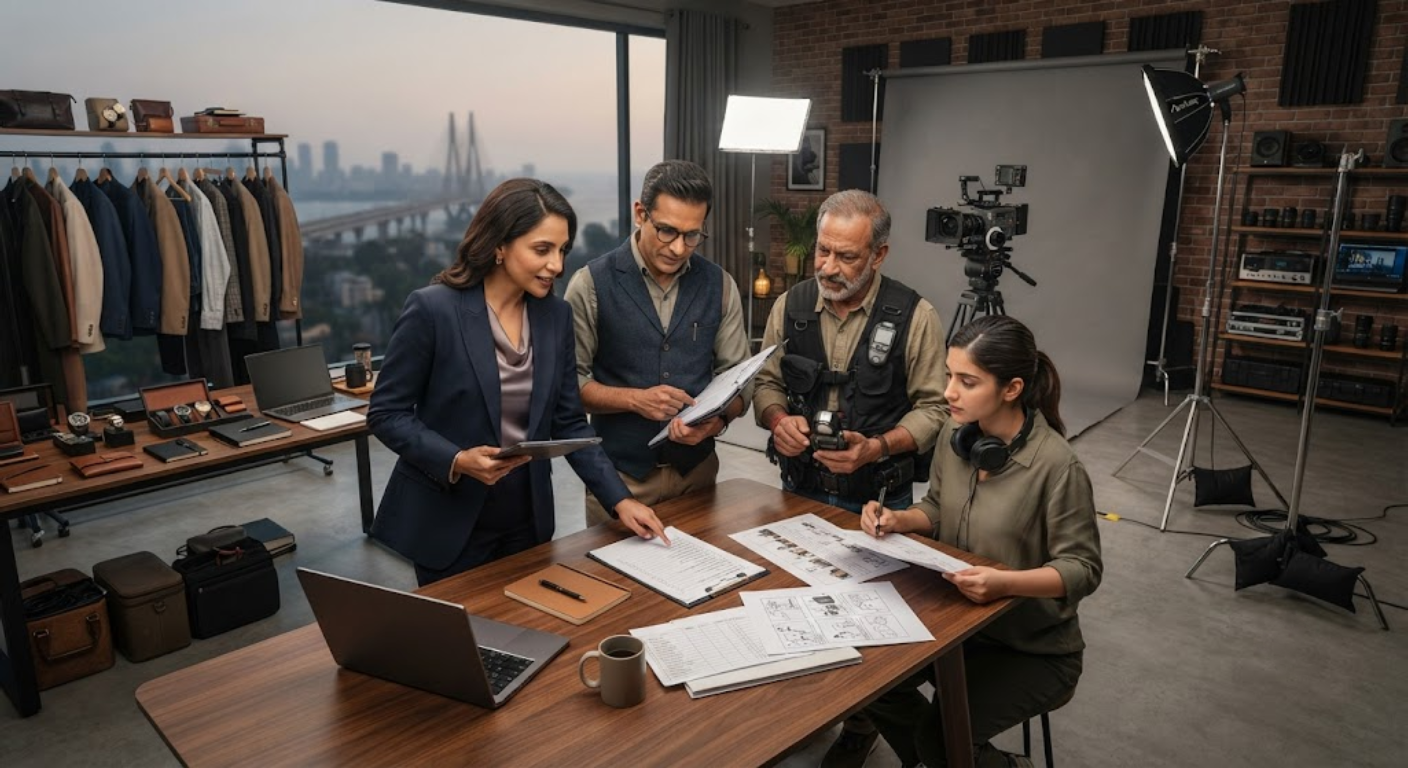
A professional content shoot can involve cameras, lighting, audio equipment, products, people, scripts, wardrobe, props, locations and multiple content formats.
When everything is properly prepared, production becomes smoother and the available shoot time can be used more efficiently.
When preparation is incomplete, valuable production time can be lost.
A product may not be ready.
A spokesperson may arrive without knowing the talking points.
A required prop may be missing.
A product may not be available in every required colour or size.
A script may still be under review.
The team may discover that important content formats were never planned.
These small problems can affect the entire production schedule.
That is why businesses should treat the days before a shoot as part of the production itself.
A successful content shoot starts long before the camera is switched on.
The objective should be to answer four basic questions:
- What content are we creating?
- Who or what needs to be captured?
- What does the production team need?
- Where and how will the final content be used?
This becomes particularly important when one production session is expected to generate multiple assets.
For example, a business might want product photographs, Reels, founder videos, website images and promotional videos from the same shoot.
Without planning, the team may capture beautiful footage but still miss important requirements.
A checklist helps turn a creative idea into an organized production plan.
It also gives the business, production team and talent a shared understanding of what needs to happen.
For Mumbai businesses working with busy founders, marketing teams and external production partners, this preparation can make the difference between a stressful shoot and an efficient production day.
2. Define the Main Objective of the Shoot
Before preparing equipment or booking a studio, determine exactly why the shoot is happening.
A shoot without a clear objective can quickly become a collection of disconnected photographs and videos.
Start by identifying the primary business goal.
For example:
- Launching a new product
- Building a social media content library
- Creating website photography
- Recording educational videos
- Producing Reels
- Creating a corporate video
- Updating team photographs
- Building founder branding content
- Creating e-commerce assets
- Recording a podcast
- Supporting a new advertising campaign
One shoot can have multiple objectives, but they should be prioritized.
For example:
Primary goal: Create content for a new product launch.
Secondary goals:
Create product photographs, Reels, demonstration footage and website images.
This makes it easier for the production team to decide what needs to be captured first.
Before production, answer:
- What is the main campaign?
- Who is the target audience?
- What action should viewers take?
- Which platforms will use the content?
- Which products or services are being promoted?
- What content already exists?
- What content is missing?
- What must be completed during this shoot?
The clearer the objective, the easier it becomes to build the rest of the checklist.
3. Create a Detailed Shot List
A shot list is one of the most useful documents for production day.
It tells the creative team exactly what needs to be captured.
Without a shot list, teams often remember the obvious content but forget smaller assets that become useful later.
For example, a product shoot may include:
- Front view
- Back view
- Side view
- Detail shots
- Product in use
- Packaging
- Lifestyle photographs
- Close-up photographs
- Different product variants
- Group photographs
A video shoot may require:
- Wide establishing shot
- Medium shot
- Close-up
- Product detail
- Presenter introduction
- Demonstration
- Supporting B-roll
- Different camera angles
- Vertical footage
- Horizontal footage
4. Prepare Your Products and Physical Assets
If your business is producing product content, product preparation should happen well before the shoot.
Do not assume products can simply be picked up from inventory on production morning.
Products should be selected, inspected, cleaned and packed carefully.
Check:
- Product condition
- Packaging
- Labels
- Colours
- Sizes
- Variations
- Accessories
- Replacement units
- Batteries
- Working condition
- Safety requirements
For products that need demonstration, test them before the shoot.
A product video becomes much harder to produce when the product does not work correctly during filming.
For food, beverages, cosmetics, jewellery, fashion, electronics and other visually driven products, presentation is especially important.
Bring backup units whenever possible.
If the primary product gets damaged or marked during production, having a replacement can prevent delays.
For e-commerce shoots, prepare a complete product list.
Numbering products can also help the production and post-production teams keep track of what has been photographed or filmed.
Google recommends representative business photos that are in focus, well lit and accurately reflect reality on Business Profiles. For product photos specifically, Google recommends showcasing representative or popular products and keeping product imagery evenly lit.
5. Finalize Scripts, Talking Points and Content Ideas
For any shoot involving people speaking to camera, preparation of the content itself is essential.
Do not wait until the person arrives at the studio to decide what they are going to say.
Depending on the project, prepare:
- Full scripts
- Talking points
- Interview questions
- Hooks
- Calls to action
- Product descriptions
- Frequently asked questions
- Key statistics
- Brand messages
- Customer problems
- Solutions
- Important terminology
Not every video needs to be memorized word-for-word.
In many cases, talking points can produce a more natural delivery.
For short-form videos, prepare the opening carefully.
The first few seconds should quickly communicate why the viewer should continue watching.
For example, instead of starting with a long company introduction, a business might begin with the customer problem.
The presenter can then explain the solution and finish with a clear next step.
Prepare a content sheet containing:
Topic:
What is the video about?
Hook:
What should make the viewer stop scrolling?
Main points:
What three or four ideas must be communicated?
Proof:
What example, demonstration or evidence supports the message?
CTA:
What should the viewer do next?
This preparation makes recording significantly more organized.
6. Prepare the People Appearing in the Shoot
People are often the most important part of business content.
They may include:
- Founders
- Employees
- Models
- Customers
- Experts
- Presenters
- Actors
- Influencers
- Subject-matter specialists
Each person should know what is expected before production day.
Send them:
- Call time
- Studio location
- Shoot duration
- Wardrobe requirements
- Script or talking points
- Expected content formats
- Makeup requirements
- Props they need to bring
- Preparation instructions
If multiple people are appearing, create a schedule.
For example:
9:00 AM: Founder
10:30 AM: Product model
12:00 PM: Customer testimonial
2:00 PM: Team photographs
This prevents unnecessary waiting.
Also consider how many outfit changes are required.
For personal branding or corporate photography, multiple wardrobe changes can create different visual looks from the same shoot.
However, wardrobe should be selected intentionally rather than simply bringing many outfits.
The clothing should suit the brand, audience and intended platform.
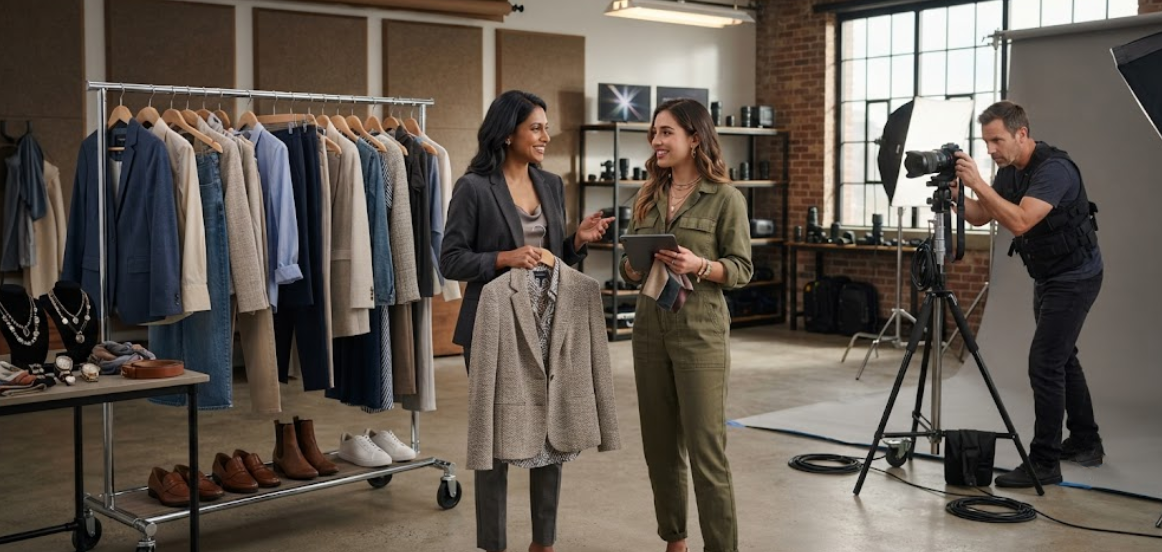
7. Plan Wardrobe, Styling, Hair and Makeup
Wardrobe can significantly influence how business content looks.
The right clothing should support the brand and the purpose of the shoot.
For a corporate shoot, clean professional clothing may be appropriate.
For fashion content, the wardrobe becomes a major part of the creative direction.
For founder photography, a combination of formal, smart-casual and lifestyle looks may create more variety.
For Reels, wardrobe changes can help visually separate different topics.
Before the shoot, check:
- Number of outfits
- Colour coordination
- Brand suitability
- Fit and comfort
- Shoes
- Accessories
- Jewellery
- Watches
- Grooming
- Hair
- Makeup
- Backup clothing
Avoid heavily wrinkled clothing.
Bring outfits properly packed and, where possible, steam or iron them before shooting.
For product or fashion shoots, prepare the complete look rather than only the clothing.
That may include footwear, accessories, bags, jewellery and other supporting elements.
A stylist can also help ensure that different looks work well under studio lighting and camera conditions.
The goal is not simply to look attractive.
The wardrobe should make sense for the audience and communicate the intended brand personality.
8. Prepare Props, Backgrounds and Supporting Materials
Props can make business content more natural and visually interesting.
They can also help demonstrate how a product or service is used.
Depending on the shoot, props may include:
- Office materials
- Packaging
- Product accessories
- Furniture
- Tools
- Food ingredients
- Books
- Technology
- Brand-related objects
- Lifestyle accessories
- Industry-specific equipment
However, every prop should have a purpose.
Avoid filling the frame with random objects simply because they are available.
Think about what the prop communicates.
For example:
A designer can be photographed working with design materials.
A chef can be shown preparing food.
A fitness professional can be shown demonstrating an exercise.
A jewellery brand can show the product being worn.
A technology company can demonstrate its product in a realistic business environment.
Also confirm the required backgrounds.
You may need:
- Clean white background
- Coloured background
- Branded setup
- Office environment
- Lifestyle setup
- Product table
- Interview setup
- Podcast setup
If a studio is providing backgrounds or props, confirm availability before production day.
9. Decide the Content Formats and Platform Requirements
A common production mistake is creating content first and thinking about the platform later.
Instead, determine the intended formats before the shoot.
Different platforms and uses may require different compositions.
Your content plan may include:
- Instagram Reels
- YouTube Shorts
- YouTube videos
- LinkedIn videos
- Website banners
- Website service images
- Product-page images
- Google Business Profile media
- Digital advertisements
- Email campaigns
- Presentations
For every major asset, decide whether it needs to be:
- Vertical
- Horizontal
- Square
- Close-up
- Wide
- High-resolution
- Short-form
- Long-form
If you need both vertical and horizontal video, communicate this to the production team before shooting.
The camera positioning and composition can then be planned accordingly.
For Google Business Profile, Google currently recommends JPG or PNG images between 10 KB and 5 MB, with 720 × 720 px recommended resolution and at least 250 × 250 px; its video guidance specifies up to 30 seconds, up to 75 MB and 720p or higher.
The important point is to know where the content will be used before production begins.
10. Organize the Production-Day Logistics
Once the creative requirements are ready, organize the practical details.
This includes:
- Studio address
- Reporting time
- Parking information
- Contact person
- Shoot duration
- Team arrival times
- Equipment arrival
- Product delivery
- Talent schedule
- Food and refreshments
- Makeup schedule
- Breaks
- Payment arrangements
- Emergency contacts
Create one central production document instead of sending information across multiple WhatsApp messages.
Everyone involved should know:
Where?
Studio or location.
When?
Arrival and production timings.
Who?
People required at each stage.
What?
Products, scripts, wardrobe and props.
How long?
Expected duration.
What happens next?
Editing, approvals and delivery.
Mumbai production schedules can also be affected by travel time, parking availability and traffic, so realistic arrival buffers are useful.
The production schedule should not be so tight that a small delay causes the entire day to collapse.
Build reasonable gaps between major activities.
11. Complete the Pre-Shoot Technical and Equipment Checklist
The production team should handle technical preparation, but the client should still understand what needs to be confirmed.
Depending on the project, technical requirements may include:
- Cameras
- Lenses
- Tripods
- Memory cards
- Batteries
- Chargers
- Lighting
- Light modifiers
- Reflectors
- Microphones
- Audio recorders
- Headphones
- Monitors
- Teleprompter
- Backgrounds
- Stands
- Power supplies
- Extension cables
- Backup equipment
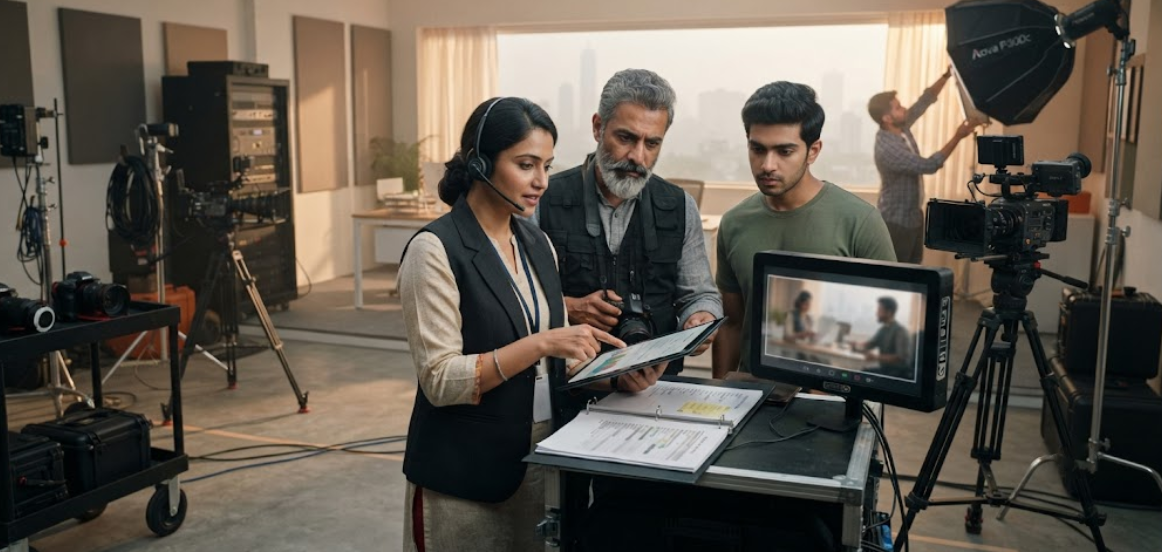
For video, audio deserves particular attention.
A visually impressive video with poor audio can still feel unprofessional.
Before recording, test:
- Microphone placement
- Recording levels
- Background noise
- Room acoustics
- Camera framing
- Lighting
- White balance
- Focus
- Storage capacity
- Battery levels
For a podcast or interview, also test every microphone and recording channel before the first important take.
For product photography, inspect lighting and reflections before shooting the entire product range.
A short technical test can prevent hours of reshooting later.
Conclusion
A successful business content shoot does not begin when the camera starts recording.
It begins with preparation.
When businesses define their goals, create a shot list, prepare products, finalize scripts, organize people, select wardrobes, arrange props, confirm technical requirements and plan post-production, the actual production day becomes much more efficient.
The most important principle is simple:
Do not arrive at the shoot with only an idea. Arrive with a plan.
A detailed checklist gives everyone involved a clear understanding of what needs to be created and reduces the chances of missing important content.
It also makes it easier to turn one production session into a larger content library for websites, social media, advertising, Google Business Profile and other digital channels.
For businesses in Mumbai, where time and coordination can be challenging, organized production can make professional content creation considerably easier.