
A strong brand is more than a logo, colour palette, or website. People often experience a business visually before they interact with it directly. Your website, social media profiles, advertisements, brochures, presentations, product pages, and other marketing channels all depend on visual content to communicate what your business represents.
This is why a professional brand photoshoot can become an important part of a business’s content strategy.
A well-planned photoshoot can give your business a collection of photographs that show your people, products, workspace, services, personality, and brand environment in a consistent visual style. Instead of arranging a new shoot every time you need a photograph, you can build a reusable library of professional images.
However, getting good results is not simply about booking a photographer and standing in front of a camera. The strongest brand photoshoots begin with planning.
You need to understand what the images are for, who they are meant to communicate with, what locations and people are required, what wardrobe and props will be used, and how the final photographs will be used across different platforms.
This guide explains how businesses can plan a professional brand photoshoot from the initial idea to the final image library.
1. Start by Defining the Purpose of Your Brand Photoshoot
Before selecting a photographer, location, outfits, or props, decide why you are doing the photoshoot.
A brand photoshoot can serve several different purposes.
You may need photographs for:
- Your business website
- About Us pages
- Team pages
- Social media
- Advertising campaigns
- Brochures
- Presentations
- Press coverage
- Blog articles
- Email marketing
- Personal branding
- Product promotions
- Company profiles
- Recruitment pages
The purpose of the shoot should influence the type of photographs you create.
For example, a professional services company may need founder portraits, team photographs, office images, and client-interaction photographs. An e-commerce brand may require product photographs, lifestyle images, model photographs, and social media content.
Before the shoot, write down your top three to five uses for the photographs.
This simple step can prevent you from ending up with beautiful images that do not actually solve your business’s content requirements.
2. Understand What Brand Photography Actually Means
Brand photography is broader than a traditional corporate headshot.
A professional brand photoshoot can capture different visual aspects of a business, including the people behind the company, the products being sold, the workplace, the production process, customer interactions, and the overall personality of the brand.
A useful brand photography library can include:
- Founder portraits
- Team photographs
- Individual professional portraits
- Product photographs
- Workspace photographs
- Behind-the-scenes images
- Customer-service interactions
- Working photographs
- Lifestyle photographs
- Detail shots
- Environmental portraits
- Creative campaign photographs
The goal is to create a visual collection that feels connected.
For example, if your website uses warm, natural, professional photography while your social media uses completely different lighting and styling, the overall brand experience can feel inconsistent.
A planned photoshoot gives you the opportunity to establish a consistent visual direction.
3. Identify Your Target Audience
Your photographs should be created for the people your business wants to communicate with.
Think about who normally interacts with your brand.
Are they:
- Business owners?
- Corporate decision-makers?
- Young consumers?
- Families?
- Luxury buyers?
- E-commerce customers?
- Professionals?
- Creators?
- Local customers?
- International customers?
Your audience can influence everything from location and styling to lighting and composition.
For example, a luxury jewellery brand may use refined styling, controlled lighting, elegant backgrounds, and carefully directed portraits.
A modern technology company may prefer clean office photography, founder portraits, team collaboration, and product-focused images.
A wellness brand may use softer lighting, natural environments, neutral colours, and lifestyle-focused compositions.
The objective is not to follow every photography trend. It is to create images that make sense for your brand and audience.
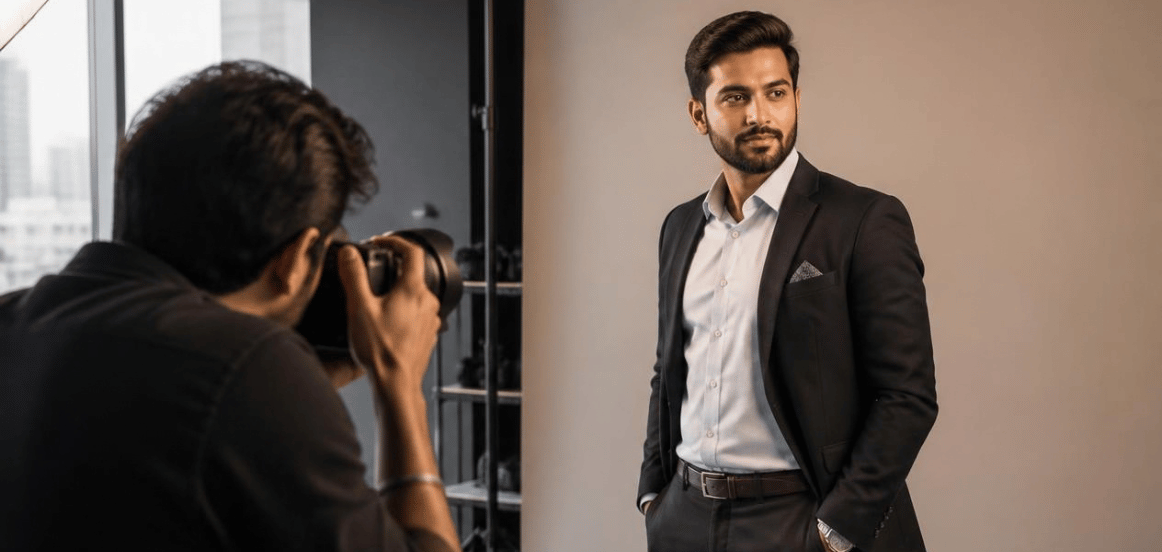
4. Create a Clear Visual Direction
One of the biggest mistakes businesses make is entering a photoshoot without deciding what they want the images to look like.
Before the shoot, create a simple visual direction.
Think about:
- Colour palette
- Lighting style
- Backgrounds
- Clothing
- Props
- Photography angles
- Poses
- Facial expressions
- Locations
- Image composition
- Overall mood
You can create a mood board using reference photographs.
The mood board does not need to be complicated. Even 10–20 carefully selected references can help your photographer, stylist, designer, and marketing team understand the direction.
5. Decide Between Studio and Location Photography
The location of your photoshoot can dramatically change the final images.
There are two common options: studio photography and location photography.
Studio Photography
A professional studio provides greater control over:
- Lighting
- Backgrounds
- Space
- Composition
- Colour
- Privacy
- Equipment
- Creative setups
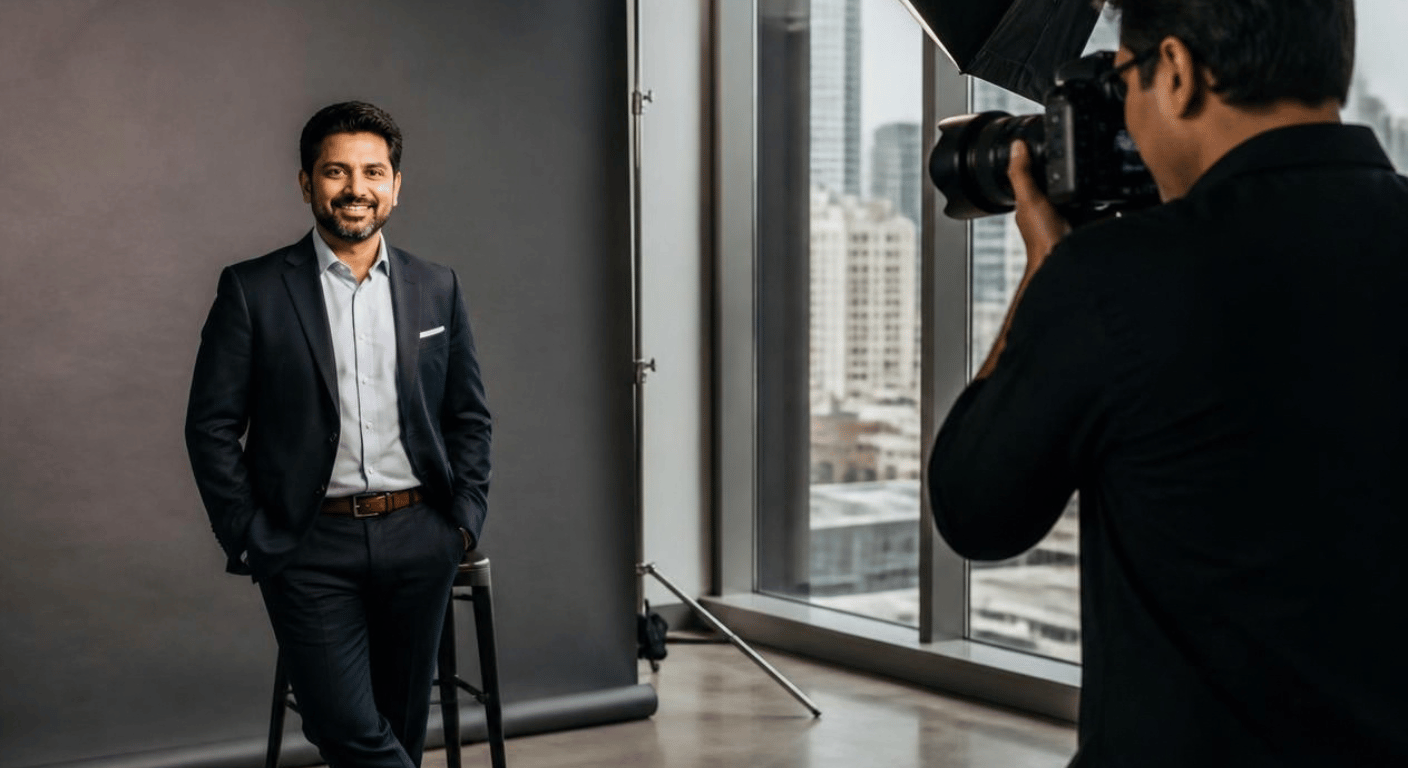
Studio photography can be particularly useful for professional portraits, personal branding, product photography, fashion, jewellery, beauty, and campaign images.
MW Stuudio’s photography studio in Borivali provides professional lighting infrastructure, backdrop options and working space for commercial, fashion, product, portrait and brand photography.
Location Photography
A real location can provide more context.
You could photograph:
- Your office
- Retail store
- Restaurant
- Workshop
- Factory
- Café
- Outdoor environment
- Client-facing space
Location photography can help show your business in action.
The right choice depends on what you want the photographs to communicate.
6. Plan the People Who Need to Be Photographed
Do not assume that everyone needs to appear in every photograph.
Create a list of people required for the shoot.
This may include:
- Founder
- Co-founder
- Leadership team
- Employees
- Sales team
- Creative team
- Customer-service team
- Models
- Brand ambassadors
- Customers, where appropriate
Then decide which combinations are required.
For example:
Founder
- Individual portraits
- Working photographs
- Casual portraits
- Formal portraits
Team
- Full team photograph
- Department photographs
- Small group photographs
- Individual portraits
Employees
- Working naturally
- Collaborating
- Talking to customers
- Using products or equipment
Creating this list prevents important photographs from being forgotten.
7. Prepare a Detailed Shot List
A shot list is one of the most useful documents you can create before the photoshoot.
It tells the production team exactly what needs to be captured.
A simple shot list could include:
- Founder portrait
- Founder working at desk
- Founder interacting with team
- Full team photograph
- Individual employee portraits
- Team collaboration
- Product close-up
- Product in use
- Workspace wide shot
- Detail photographs
- Behind-the-scenes photographs
- Lifestyle photographs
- Horizontal website images
- Vertical social media photographs
- Negative-space compositions
The last point is particularly important.
Some website banners and advertisements require empty space around the subject so designers can later add headlines or buttons.
Therefore, do not make every photograph tightly framed.
Create a mixture of close, medium and wide compositions.
8. Plan Your Wardrobe Carefully
Clothing can significantly influence the appearance of a brand photoshoot.
The wardrobe should support the brand rather than distract from it.
Consider:
- Brand colours
- Industry expectations
- Formal vs casual appearance
- Seasonal clothing
- Patterns
- Accessories
- Shoes
- Jewellery
- Makeup
- Hair styling
Avoid extremely distracting patterns or clothing that clashes with the brand’s visual direction.
9. Think About Hair, Makeup and Grooming
Professional photography captures details that may not always be noticeable in everyday situations.
For portraits and personal branding photographs, grooming should therefore be considered part of the production plan.
Depending on the shoot, this may include:
- Hair styling
- Makeup
- Skin preparation
- Beard grooming
- Wardrobe adjustments
- Clothing steaming
- Jewellery styling
- Nail preparation
The objective is not necessarily heavy makeup or dramatic styling.
For many business photoshoots, a polished and natural appearance works better.
The styling should match the industry and the personality of the people being photographed.
10. Prepare the Products, Props and Brand Elements
If products are part of your brand photography, prepare them before the shoot.
Do not wait until the photographer arrives to discover that products have scratches, packaging is damaged, labels are missing, or important accessories are unavailable.
Create a preparation checklist.
Product Preparation Checklist
- Clean every product
- Remove unnecessary stickers
- Check packaging
- Prepare multiple units where possible
- Bring all product variants
- Prepare accessories
- Steam clothing
- Polish jewellery
- Prepare props
- Prepare branded packaging
- Bring backup products
For lifestyle photography, props should support the story rather than overwhelm the product.
MW Stuudio’s product photography services include styled lifestyle sets, coloured and textured backgrounds, flat-lay surfaces and product-focused setups.
Conclusion
A professional brand photoshoot should be treated as a business content investment rather than simply a photography session.
The goal is not to collect a large number of random photographs. The goal is to create a useful and consistent visual library that supports your website, social media, marketing campaigns, presentations, advertising and other communication channels.
Start with a clear purpose.
Understand your audience.
Create a visual direction.
Prepare your people, products, locations and props.
Build a detailed shot list.
Capture different compositions and orientations.
Think about future content requirements.
And finally, organise and edit the photographs consistently.
When these elements are planned together, one professional photoshoot can provide a business with a much more useful collection of visual assets.
For brands that regularly need photography, video and digital content, combining these requirements into a coordinated production plan can also make the overall content workflow easier to manage.