
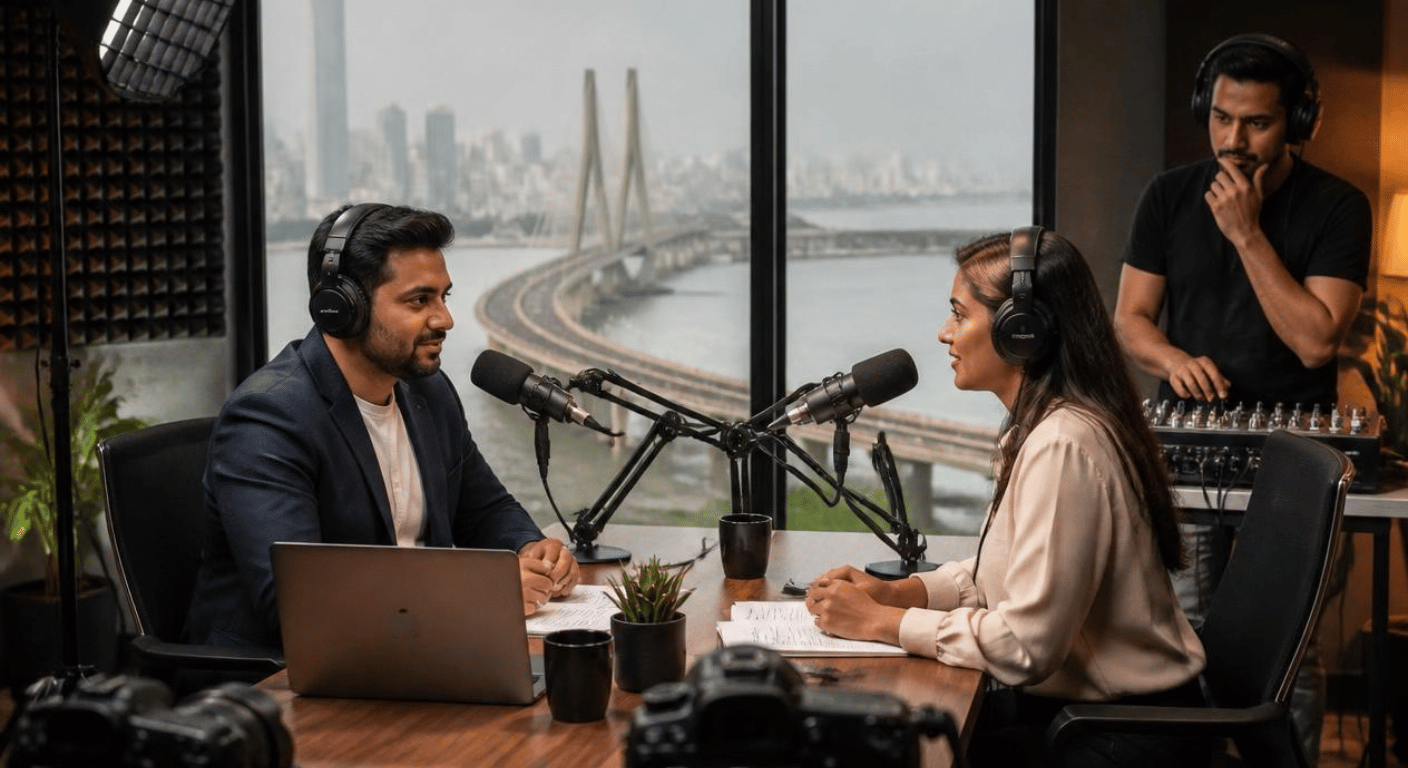
Starting a podcast can be exciting, but walking into a recording studio without preparation can make the session unnecessarily difficult.
A professional podcast is not created only by microphones, cameras and a good-looking studio. The quality of the final episode also depends on what happens before recording begins.
Knowing your topic, understanding your audience, preparing your guest, organising your questions, deciding the episode structure and planning how the recording will be used can make the actual studio session much smoother.
Preparation is especially important when a podcast is being recorded as part of a business or personal brand strategy. A single recording can potentially become a full podcast episode, YouTube video, short-form clips, social media content, blog material and other marketing assets.
MW Stuudio’s podcast services currently cover studio recording, audio and video production, podcast consultation, episode editing, sound design, branding, thumbnail design, show notes and distribution support.
Whether you are recording your first episode or planning a complete podcast series, the following preparation guide can help you arrive at the studio with a clearer plan.
1. Define the Purpose of Your Podcast
Before planning your first recording, ask a simple question:
Why are you creating this podcast?
There can be many reasons.
A business might want to educate its audience. A founder may want to share industry knowledge. A professional may want to build a personal brand. A company may want to interview experts. A creator may simply want to explore interesting conversations.
Your purpose influences almost every other decision.
For example, an educational business podcast may require structured questions and detailed explanations, while an interview-based personal brand podcast may focus more on storytelling and conversation.
Your purpose can help determine:
- Podcast topic
- Target audience
- Episode format
- Guest selection
- Recording style
- Episode length
- Distribution platforms
- Content repurposing strategy
- Visual identity
Do not worry about creating a complicated mission statement.
A simple sentence can be enough:
“This podcast helps [audience] understand [topic] through [format].”
That sentence can become a useful reference while planning future episodes.
2. Know Who You Are Creating the Podcast For
A podcast becomes easier to plan when you know who you want listening.
Your audience does not need to be extremely narrow, but you should have a general understanding of the people you want to attract.
Think about:
- Their profession
- Their interests
- Their challenges
- Their level of knowledge
- Their questions
- Their goals
- The type of information they find useful
For example, a business podcast for startup founders will have different topics from a podcast aimed at college students.
A jewellery brand might create a podcast around fashion, craftsmanship, entrepreneurship and styling.
A healthcare professional might focus on educational conversations.
A real estate professional might discuss property, investment, architecture and market-related topics.
Understanding the audience also helps determine how technical or conversational the episode should be.
3. Choose a Clear Podcast Topic
One of the biggest preparation mistakes is choosing a topic that is too broad.
For example:
“Business”
is a very broad topic.
A more focused episode might be:
“How Small Businesses Can Build Their First Digital Marketing Strategy.”
The second topic gives the host and guest a much clearer direction.
A strong episode topic should be specific enough to create a meaningful conversation.
Before recording, ask:
- What exactly are we discussing?
- Why should someone care about this topic?
- What should the audience learn?
- What questions should the episode answer?
- What makes this conversation different from a generic discussion?
You do not need to reveal every detail before recording, but the host and guest should understand the central subject.
4. Decide the Episode Format
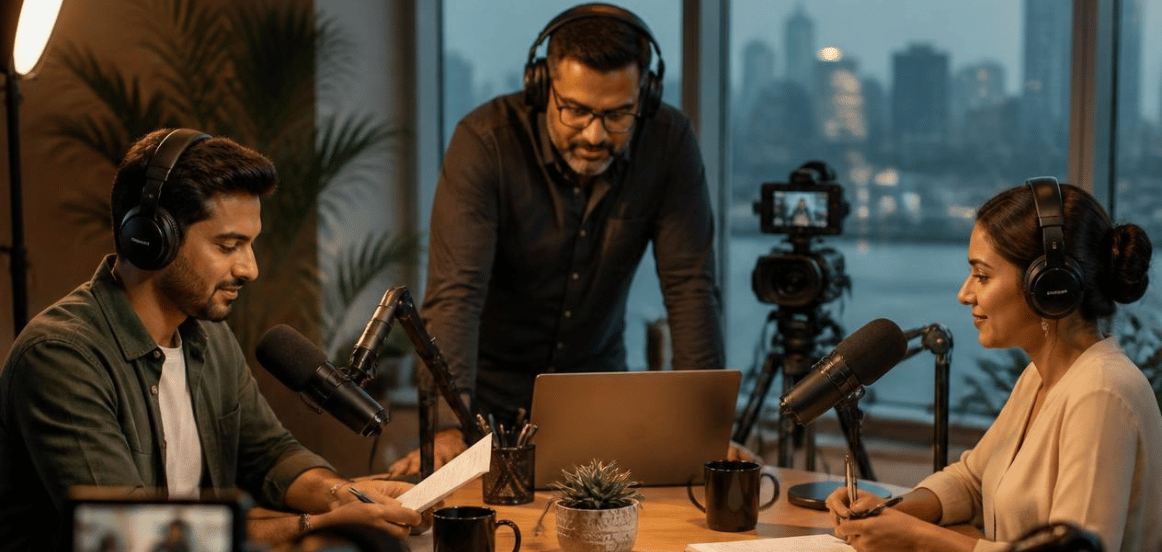
Before entering the studio, decide what kind of podcast episode you are recording.
Different formats require different preparation.
Interview Podcast
One host interviews a guest.
Preparation should include guest research, questions and discussion themes.
Solo Podcast
One person presents the entire episode.
Preparation may require a script, outline, notes or teleprompter.
Co-Host Podcast
Two or more regular hosts discuss a subject.
The hosts should decide who introduces topics, how transitions happen and how the conversation will flow.
Panel Discussion
Multiple guests participate in one episode.
This requires additional planning because speaking order, microphones and discussion structure become more important.
Storytelling Podcast
The host tells a structured story or presents information in a narrative format.
This may require more detailed scripting and sound design.
Choosing the format before recording makes the session easier to organise.
5. Research Your Guest Before the Recording
If your podcast includes guests, research should happen before the recording day.
You do not need to memorise their entire career history.
Instead, understand the areas that are relevant to your conversation.
Look at:
- Professional background
- Areas of expertise
- Recent work
- Projects
- Interesting experiences
- Previous interviews
- Published content
- Opinions they have publicly shared
- Questions their audience frequently asks
This research helps you avoid asking extremely generic questions.
For example, instead of asking:
“Tell us about yourself.”
you could begin with a specific experience from the guest’s professional journey.
Good research can also help you discover follow-up questions that create a more natural conversation.
6. Prepare Questions, But Don’t Write Every Sentence
A common concern among first-time podcast hosts is:
“Should I write the entire conversation?”
Not always.
For a conversational podcast, writing every sentence can make the discussion feel unnatural.
Instead, prepare key questions and talking points.
For example:
Opening
- How did you get started?
- What problem were you trying to solve?
Main Discussion
- What changed as the business grew?
- What mistakes did you make?
- What did you learn?
- What would you do differently today?
Deeper Discussion
- What do people commonly misunderstand about this topic?
- What advice would you give someone starting today?
Closing
- What should listeners remember?
- Where can people learn more?
This gives you structure while still leaving room for natural conversation.
7. Create a Simple Episode Structure
A podcast does not need to be rigid, but having a basic structure can prevent the conversation from becoming unfocused.
A simple interview episode could follow:
Introduction → Guest Introduction → Background → Main Topic → Deeper Discussion → Practical Advice → Closing
For example:
Introduction
Introduce the podcast and explain what the episode is about.
Guest Introduction
Briefly introduce the guest and their relevant experience.
Background
Discuss the guest’s journey or connection to the topic.
Main Discussion
Move into the main subject.
Practical Insights
Ask the guest to provide examples, lessons or advice.
Closing
Summarise the conversation and tell listeners where they can find more information.
The structure does not need to be announced to the audience.
It simply gives the host a roadmap.
8. Prepare Your Introduction and Opening
The first few minutes of a podcast establish the context for the episode.
Prepare your opening before recording.
It could include:
- Podcast name
- Host introduction
- Guest introduction
- Episode topic
- Why the topic matters
- What listeners can expect
For example:
“Welcome to [Podcast Name]. Today we’re discussing how growing businesses can build a stronger digital presence. I’m joined by [Guest Name], who has worked across…”
The exact wording depends on your style.
Some podcasts are highly scripted.
Others are conversational.
The important thing is that the host knows how to begin confidently.
If you are recording video as well, a prepared opening can also reduce unnecessary retakes.
9. Prepare Your Guest Properly
A guest should know what to expect before arriving.
Send them useful information in advance.
This can include:
- Recording date and time
- Studio location
- Expected recording duration
- Podcast topic
- Discussion themes
- Sample questions
- Dress suggestions
- Whether video is being recorded
- Whether clips will be created
- Any documents or products they should bring
If the guest knows the basic structure beforehand, they can arrive more comfortable and prepared.
For video podcasts, it can also be useful to inform guests about clothing choices.
Very busy patterns, reflective accessories or clothing that creates excessive noise can sometimes create production challenges.
Keep the instructions simple and practical.
10. Choose the Right Clothing for Video Podcasts
If your podcast is audio-only, clothing is obviously less important.
But if cameras are recording the session, wardrobe becomes part of the visual presentation.
Choose clothing that makes the guest feel comfortable while also working well on camera.
Generally, consider:
- Comfortable clothing
- Clean and well-fitted outfits
- Colours that complement the studio
- Minimal distracting patterns
- Accessories that do not create unnecessary noise
- A backup outfit for longer sessions
There is no universal “podcast outfit.”
A finance professional, fashion creator, entrepreneur and musician may all have completely different personal styles.
The goal is not to make everyone look the same.
It is to ensure the clothing supports the person and the visual identity of the show.
Conclusion
A professional podcast recording session begins long before you sit in front of a microphone.
The preparation stage determines how clearly you communicate your ideas, how naturally the conversation develops and how efficiently the production team can capture the content.
Start with the basics:
Know your purpose.
Understand your audience.
Choose a focused topic.
Prepare your guest.
Create a simple episode structure.
Prepare questions without over-scripting the conversation.
Plan your visual style.
Think about distribution and content repurposing.
Once you arrive at the studio, focus on having a genuine conversation rather than trying to deliver a perfect performance.
Professional equipment and production support can handle many technical elements, but the most valuable part of a podcast remains the conversation itself.
And when that conversation is planned with the wider content strategy in mind, one recording can become much more than one podcast episode.
It can become a source of long-form video, short-form clips, social media content, written content and ongoing brand communication.
For creators and businesses, that makes podcast preparation not just a recording requirement, but an important part of building a sustainable content system.