
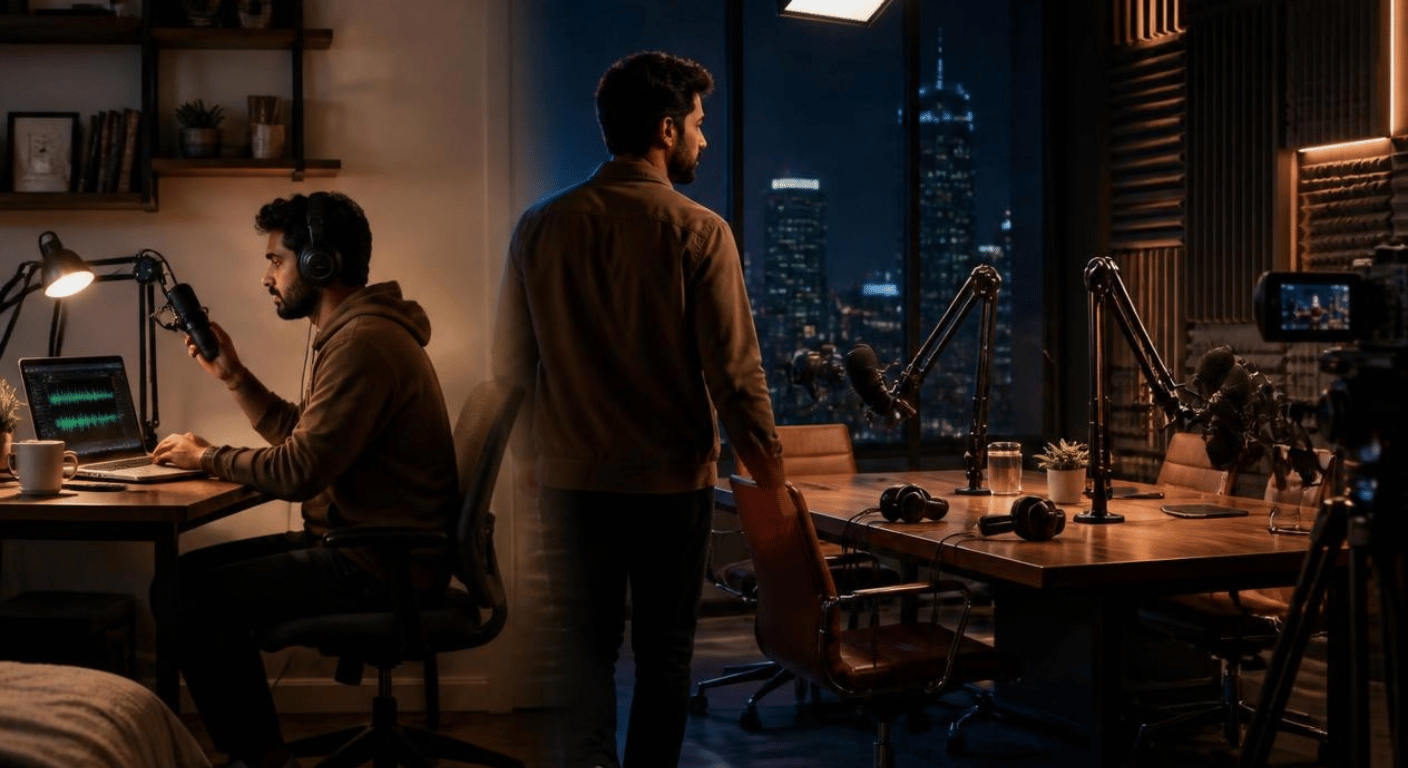
Starting a podcast today does not necessarily require a professional studio. With a good microphone, camera, lighting, and a quiet room, creators can produce content from home.
However, there is an important difference between being able to record a podcast and creating consistently professional podcast content.
A home setup can be practical for beginners, solo creators, and businesses experimenting with podcasting. A professional podcast studio, on the other hand, provides a controlled recording environment, professional audio equipment, lighting, cameras, production support, and a setup designed specifically for content production.
The right choice depends on the type of content you want to create, your production requirements, your available space, your budget, and the quality you want your audience to experience.
MW Stuudio in Borivali, Mumbai, has its roots in podcast recording and studio rental and has expanded into a broader creative production ecosystem covering podcasting, photography, video production, post-production, digital marketing, websites, and e-commerce services. The studio’s podcast setup includes professional acoustic treatment, broadcast-grade microphones, multi-camera video capability, and professional lighting.
This guide compares a podcast studio vs a home setup across the factors that matter most so businesses, creators, professionals, and founders can choose an approach that matches their content goals.
1. What Is a Home Podcast Setup?
A home podcast setup is a recording environment created inside a person’s existing home or office space.
It can range from a very simple arrangement using a smartphone and USB microphone to a more advanced setup involving dedicated microphones, audio interfaces, cameras, acoustic panels, lighting equipment, and recording software.
The biggest advantage is accessibility.
A creator can start recording without travelling to a studio or booking a production space. The equipment can remain installed and ready to use, making spontaneous recording easier.
A basic home setup might include:
- USB or XLR microphone
- Headphones
- Laptop or computer
- Camera or smartphone
- Tripod
- LED light or softbox
- Basic acoustic treatment
- Recording and editing software
For a creator who is primarily focused on audio and has a quiet room, this may be enough to get started.
However, the quality of a home recording depends heavily on the room itself.
A beautiful microphone cannot completely compensate for traffic noise, room reflections, echo, air-conditioning noise, or inconsistent recording conditions.
2. What Makes a Professional Podcast Studio Different?
Social media users scroll through large amounts of content every day. Businesses therefore have limited time to capture attention.
The first visual impression of a Reel can influence whether someone continues watching or moves on to the next piece of content.
A professional podcast studio is designed specifically for recording audio and video content.
Instead of adapting a bedroom, office, living room, or meeting room, the entire environment is designed around production requirements.
The room can be acoustically treated to control unwanted reflections. Professional microphones can be positioned correctly. Cameras can be arranged for different angles. Lighting can be controlled independently from natural daylight.
This creates a more predictable recording environment.
MW Stuudio’s current podcast studio information highlights structural soundproofing, acoustic treatment, broadcast-grade microphones, single/dual/triple-camera configurations, professional lighting, and teleprompter support.
The studio also offers both studio rental and production support, meaning creators who already have their own equipment can use the space, while those who need technical assistance can work with the production team.
For professional content, this controlled environment can be particularly useful.
3. Audio Quality: The Biggest Difference Between Home and Studio
Audio is one of the most important parts of a podcast.
Viewers may tolerate a simple camera setup, but poor or distracting audio can make long-form content difficult to consume.
At home, the microphone is only one part of the audio equation.
The room itself contributes to the recording.
Hard walls, glass windows, tiled floors, empty furniture spaces, ceiling fans, traffic, neighbours, appliances, and air-conditioning systems can all influence the final recording.
Acoustic treatment helps control reflections within the room, while sound isolation addresses unwanted external noise.
Professional studios are designed to control these variables more effectively.
MW Stuudio describes its podcast environment as combining structural soundproofing with acoustic treatment and broadcast-grade microphones.
This combination is important because a high-quality microphone placed inside a poor acoustic environment may still produce disappointing results.
For creators who want clean, consistent dialogue, the recording environment deserves as much attention as the microphone itself.
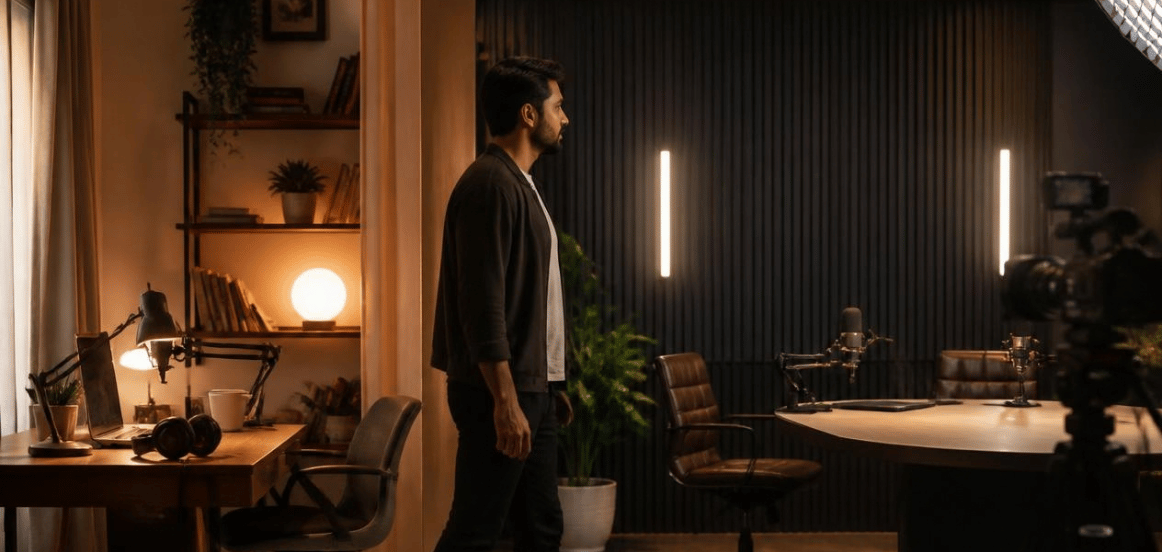
4. Camera and Video Quality Matter for Modern Podcasts
Podcasts are no longer limited to audio platforms.
Many podcasts are now produced as video content for YouTube and short-form social media platforms.
This creates additional production requirements.
A video podcast may need:
- Multiple camera angles
- Proper framing
- Consistent exposure
- Professional lighting
- Background design
- Camera monitoring
- Audio-video synchronisation
- Vertical clips for social media
- Post-production editing
A home creator can certainly build a multi-camera setup, but doing so requires additional equipment, space, cables, lighting, storage, and technical knowledge.
A professional studio already has these elements configured for recording.
MW Stuudio offers single, dual, and triple-camera podcast configurations, allowing different levels of visual production depending on the content format.
For an interview podcast, multiple camera angles can provide greater flexibility during editing and can also make the finished episode more visually dynamic.
5. Lighting: An Often-Overlooked Part of Podcast Production
Good lighting can significantly influence how professional a video podcast looks.
At home, creators often depend on windows, ring lights, desk lamps, or inexpensive LED panels.
These can work, but natural light changes throughout the day.
A cloudy morning, bright afternoon, evening recording, or artificial indoor lighting can produce completely different results.
Professional studios provide controlled lighting that can be positioned and adjusted according to the subject, camera angle, background, and desired visual style.
This is especially useful when recording multiple episodes in one day.
A consistent lighting setup means Episode 1 and Episode 5 can maintain a similar visual appearance.
MW Stuudio’s podcast production information includes professional studio lighting as part of its production environment.
For brands building a long-term podcast, visual consistency can become an important part of the show’s identity.
6. Home Setup vs Podcast Studio: Convenience and Control
A home setup has one obvious advantage: convenience.
There is no travel involved.
The creator can walk into the recording room, switch on the equipment, and start recording.
This can be particularly useful for solo creators who publish frequently.
However, professional studios offer a different kind of convenience: production control.
Instead of spending time checking microphones, adjusting cameras, fixing lighting, troubleshooting cables, controlling background noise, and managing recording software, the creator can focus primarily on the conversation.
This distinction becomes increasingly important as the production becomes more complicated.
For example, recording a solo audio podcast at home can be relatively simple.
Recording a two-person video podcast with three cameras, professional lighting, separate microphones, a teleprompter, and multiple deliverables is significantly more demanding.
A studio can reduce the technical workload associated with such production.
7. When a Home Setup May Make Sense
A home setup can be a practical choice in several situations.
For creators who are still experimenting with podcasting, investing in a full studio every time they want to record may not be necessary.
A home environment may also work well when the content is primarily audio-based and the room has good acoustic characteristics.
Some creators also prefer the personal atmosphere of recording from their own space.
A home setup can make sense when:
- You are testing your podcast concept – You want to publish initial episodes before committing to a larger production workflow.
- Your content is primarily audio – Video production is not a major part of your strategy.
- You already have suitable equipment – You have a good microphone, interface, headphones, and recording software.
- Your room is quiet – External noise and room reflections are manageable.
- You are comfortable with production – You can handle recording, troubleshooting, editing, and file management yourself.
The key is understanding the limitations of the environment.
A home setup can work well when the production requirements are relatively simple.
8. When a Professional Podcast Studio Becomes More Useful
As a podcast grows, production requirements often grow with it.
The creator may introduce guests, video, multiple cameras, branded backgrounds, scripted segments, social media clips, advertisements, or more frequent publishing.
At this point, a professional studio can provide infrastructure that is difficult to reproduce efficiently at home.
A studio can be particularly useful for:
- Business podcasts
- Founder interviews
- Expert interviews
- Video podcasts
- Branded podcasts
- Multi-person conversations
- Corporate content
- Professional YouTube shows
- Podcast recordings with guests
- Batch recording sessions
MW Stuudio provides podcast recording, studio rental, production support, and post-production services, allowing businesses and creators to select the level of support required.
For businesses, the studio environment can also provide a more controlled setting when recording important guests, executives, or branded content.
9. Post-Production: Recording Is Only the Beginning
One of the biggest differences between a simple home podcast and a professionally produced podcast can be what happens after recording.
Raw footage is rarely ready to publish immediately.
A finished episode may require:
- Audio editing
- Noise reduction
- Dialogue cleanup
- Level balancing
- EQ and compression
- Audio mastering
- Multi-camera editing
- Colour correction
- Colour grading
- Subtitles
- Graphics
- Social media clips
- Platform-specific exports
Professional post-production can turn a long recording into multiple pieces of usable content.
MW Stuudio’s current podcast production information describes post-production covering dialogue editing, level balancing, EQ and compression, mastering, multi-camera video editing, colour grading, subtitles, and platform exports.
This becomes particularly valuable for businesses that want one podcast recording to generate a larger content library.
A single conversation could potentially become a complete episode, short clips, quote videos, social posts, and supporting website content.
10. Cost Comparison: Home Setup vs Professional Studio
Cost is naturally an important consideration.
A home setup can appear less expensive because there is no studio rental fee.
However, building a professional home studio can involve several separate expenses.
A creator may need to purchase:
- Microphones
- Audio interface
- Cameras
- Lenses
- Tripods
- Lighting
- Acoustic treatment
- Headphones
- Recording software
- Storage
- Background materials
- Cables and accessories
There is also the time required to install, configure, maintain, troubleshoot, record, and edit the setup.
A professional studio changes this model.
Instead of purchasing and maintaining all the equipment, the creator pays for access to an existing production environment.
The most useful comparison is therefore not simply “home is cheaper” versus “studio is more expensive.”
The better question is:
What level of production do you need, and how much equipment, space, time, and technical work would it take to create that production yourself?
For creators who already own professional equipment and have a suitable recording room, home recording may be practical. For those who need a complete production environment, studio rental or production support may be more efficient.
Conclusion
A home setup can be an effective way to begin podcasting, particularly for creators who want flexibility and already have suitable equipment and a quiet recording environment.
A professional podcast studio provides a different level of control. Acoustic treatment, sound isolation, professional microphones, controlled lighting, multiple cameras, production assistance, and post-production can make the entire workflow more structured.
For businesses and established creators, the decision often comes down to the type of content they want to publish and how much of the production process they want to manage themselves.
MW Stuudio’s podcast services are built around this broader production requirement, offering studio rental as well as production support and post-production. The studio’s development from a podcast-focused operation in 2019 into a broader creative and digital studio also means podcast production can be connected with photography, video, digital marketing, website development, and other content requirements.