
Smartphone cameras have changed the way businesses create video content. A modern phone can record high-resolution footage, stabilize video, capture vertical formats and make it possible to publish content almost immediately. For a small business owner or creator, this makes smartphone video extremely attractive.
But the question is not simply whether a smartphone can record good-looking video.
The more important question is: What type of video does your business need?
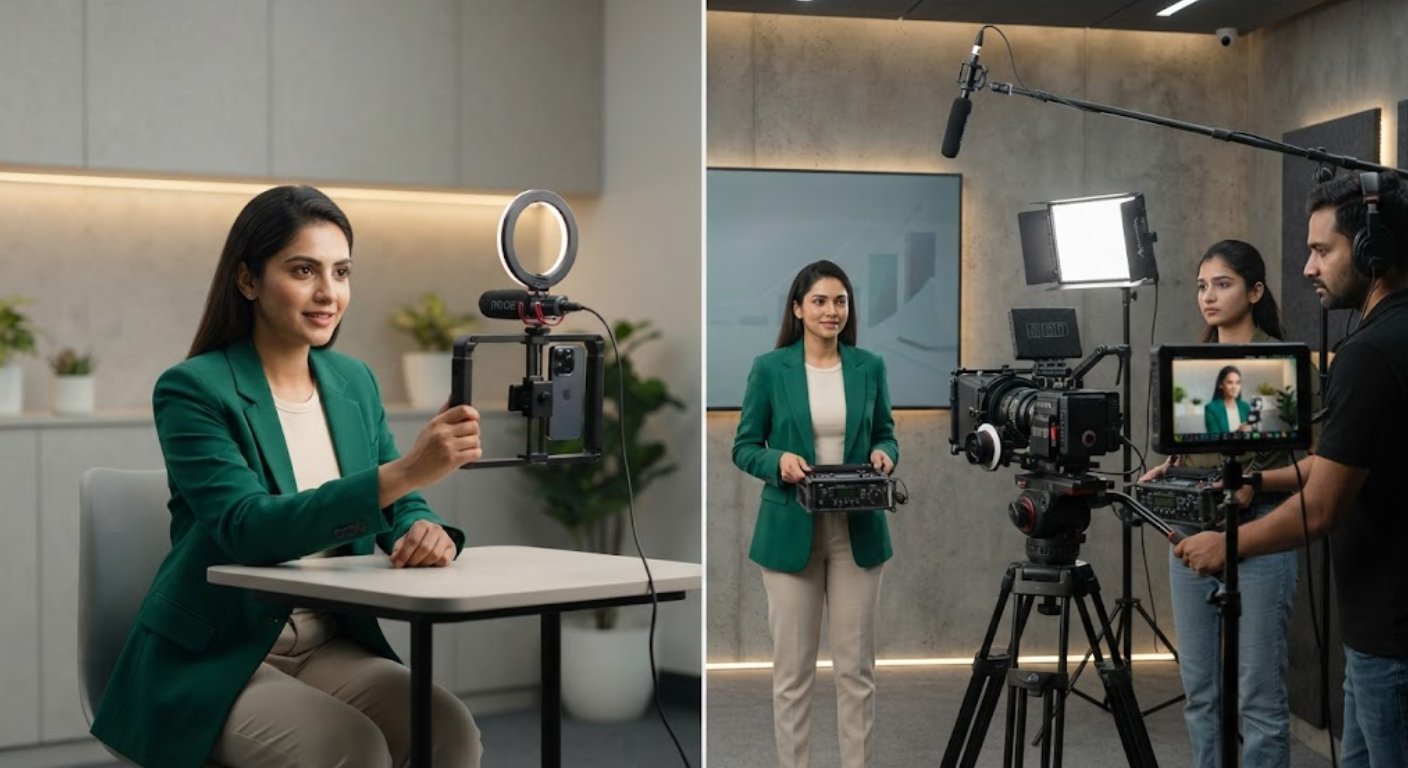
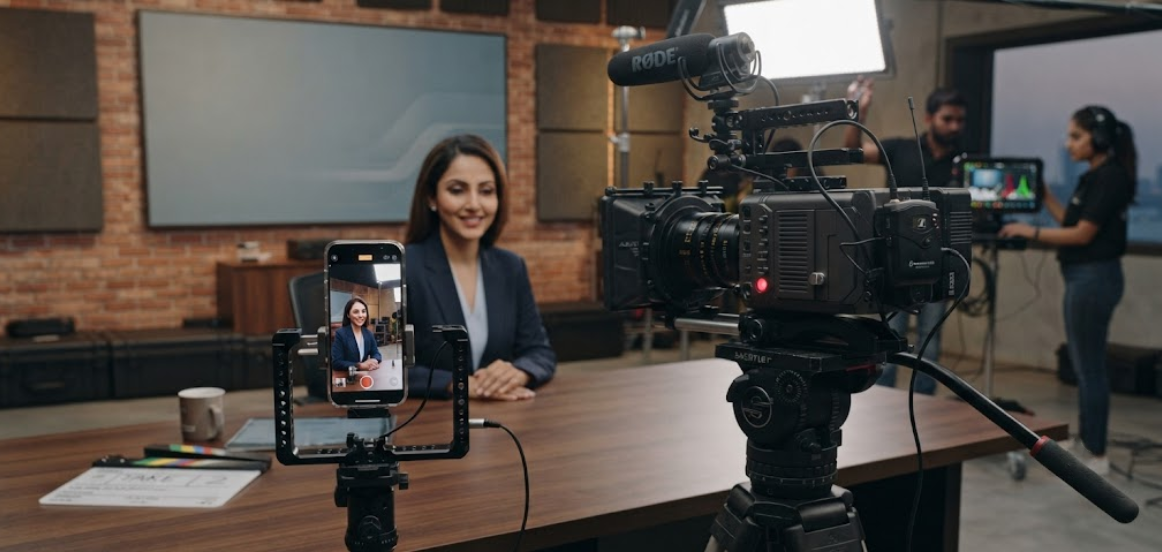
There is a major difference between recording a quick smartphone video and producing a planned Reel shoot. A smartphone video might involve one person, one device and a simple location. A professional Reel shoot can involve concept development, scripting, lighting, cameras, audio equipment, multiple angles, direction, production assistance and post-production.
Neither option is automatically better for every situation.
Smartphone videos are particularly useful when speed, authenticity and frequent posting are important. Behind-the-scenes clips, quick announcements, informal updates, founder thoughts and spontaneous content can often work very well when recorded on a phone.
Professional Reel shoots become more valuable when the content represents your brand, product or expertise at a higher level. If you are launching a product, creating a campaign, filming multiple Reels in one session or building a premium visual identity, controlled production can make the process much more consistent.
The difference is also becoming more relevant in 2026 because businesses are increasingly treating short-form video as part of their broader marketing strategy rather than as occasional social media content. Current video-marketing guidance emphasizes useful, buyer-focused content and consistent publishing, while vertical video continues to expand across social platforms.
1. When Smartphone Videos Make Sense for Businesses
Smartphone video is not an inferior form of content by default. In many situations, it is exactly the right tool.
A business that needs to publish frequently may benefit from having the ability to record content whenever an idea appears. A founder can record a quick explanation, a restaurant can show today’s special, a trainer can demonstrate an exercise, or a retailer can capture a behind-the-scenes moment without arranging a production day.
The biggest advantage is accessibility.
You already have the camera with you. There is no studio booking, production crew or complex setup required. This can make experimentation easier and allow businesses to test different content ideas before investing in larger productions.
Smartphone content can also feel natural. Audiences often respond well to videos that feel direct and human rather than excessively produced. A founder speaking directly to the camera from their office can sometimes communicate personality more effectively than a highly scripted commercial.
Smartphone videos are particularly useful for:
- Quick business updates and announcements.
- Behind-the-scenes content.
- Founder or employee updates.
- Informal educational videos.
- Daily social media content.
- Product demonstrations requiring minimal setup.
- Event snippets and real-time moments.
- Customer questions and quick answers.
- Trend-based short-form content.
- Testing new content ideas before a larger shoot.
However, a phone alone does not automatically create professional video.
The result still depends on lighting, framing, background, audio, camera stability, presentation and editing. A poorly positioned smartphone in a noisy room can produce a weaker result than a well-planned phone shoot.
This is why smartphone content should be viewed as a production method, not a guarantee of quality.
2. What Makes a Professional Reel Shoot Different?
A professional Reel shoot is not simply “using an expensive camera instead of a phone.”
The real advantage is control.
A professional shoot allows the production team to control the environment, lighting, framing, audio, camera movement, background, performance and final editing. Instead of hoping that the conditions are suitable, the team creates conditions that are suitable for the content.
For a business, this can be especially important when several pieces of content need to look consistent.
Professional Reel production can include:
- Content concept development.
- Script or talking points.
- Shot-list planning.
- Camera selection.
- Professional lighting.
- Controlled backgrounds.
- External microphones.
- Multiple camera angles.
- Teleprompter support when required.
- On-camera direction.
- Production assistance.
- Professional editing.
- Captions and graphics.
- Sound cleanup.
- Colour correction.
- Multiple final formats.
Another major advantage is repeatability.
Suppose a company wants to create 20 Reels for the next month. Recording everything randomly on different days may produce inconsistent backgrounds, lighting, audio and presentation.
A planned shoot can bring the content together into one controlled production session.
This makes professional Reel shoots particularly useful for brands that want their social media presence to look organized and intentional.
The objective is not necessarily to make every Reel look like a television commercial. In many cases, the best professional Reel is still short, natural and social-first. The production quality simply ensures that the content communicates clearly and represents the brand properly.
3. Smartphone vs Professional Reel Shoot: Quality Comparison
Video quality has several components, and the camera is only one of them.
A smartphone can capture impressive footage, especially under good lighting. However, professional production provides more control over the entire image-making process.
For example, lighting can significantly influence how a person, product or environment appears on camera. A professional studio can position lights specifically for the subject and maintain consistent exposure between shots.
Audio is another important factor.
Viewers may tolerate a video that is visually simple, but poor or distracting audio can make professional communication difficult to follow. Smartphone microphones can work well at close range in quiet environments, but external professional microphones provide greater control when the situation demands it.
Professional cameras can also provide greater flexibility in lenses, depth of field, exposure control and multi-camera production.
Key differences
- Camera: Smartphones are convenient; professional cameras offer greater creative and technical control.
- Lighting: Phones can work well in good light; professional setups provide controlled and repeatable lighting.
- Audio: Smartphone microphones are convenient; dedicated microphones provide more control.
- Framing: Smartphones are fast to position; professional production supports deliberate composition.
- Background: Phone content often uses available locations; studios can provide controlled backgrounds.
- Stability: Smartphones can use tripods or stabilizers; professional production offers broader camera-support options.
- Multiple angles: One phone usually means one viewpoint; professional shoots can use multiple cameras.
- Editing: Phone apps can handle basic editing; professional post-production can include advanced graphics, sound and visual finishing.
The important point is that production quality is created by the entire workflow, not simply by the camera body.
4. Which Option Is More Cost-Effective?
Cost is one of the biggest reasons businesses choose smartphone video.
If your team already owns a capable smartphone, the initial production cost can be extremely low. You can record, edit and publish without booking external resources.
However, the financial comparison becomes more complicated when you consider the time involved.
A business owner may spend hours setting up the phone, recording multiple takes, checking audio, moving furniture, editing footage, adding captions and trying to correct mistakes. That time has a business cost.
A professional Reel shoot involves a higher direct production cost, but it can reduce the amount of work required from the business team.
The most useful comparison is therefore not:
Smartphone = cheap
Professional shoot = expensive
Instead, consider:
Total investment = production cost + staff time + preparation time + editing time + opportunity cost.
For example, if a founder spends an entire working day trying to produce a small batch of Reels, the actual business cost may be much higher than expected.
Professional production can also become more economical when several videos are created during one session.
When smartphone video can be more economical
- You need frequent spontaneous content.
- Your videos require minimal setup.
- You are testing new ideas.
- Your internal team can handle filming and editing.
- The content does not require premium production.
- Speed is more important than visual consistency.
When professional production can be more economical
- You need many videos from one shoot.
- Your team spends significant time creating content.
- You need professional editing.
- You need consistent branding.
- You are creating campaign content.
- Your products require controlled lighting.
- Your videos support sales or advertising.
The best approach is often a combination of both.
5. Smartphone Videos vs Reel Shoots for Different Types of Businesses
Different businesses have different content requirements.
A local service business may need frequent educational videos. A fashion brand may need professionally lit product and model content. A consultant may need authority-building talking-head videos. A restaurant may benefit from a mixture of polished food videos and spontaneous daily clips.
Therefore, the correct choice depends on what you sell and how customers interact with your brand.
Suitable for smartphone-first content
- Personal brands.
- Consultants.
- Coaches.
- Local service providers.
- Restaurants creating daily updates.
- Small retailers.
- Real estate agents sharing property updates.
- Founders sharing opinions.
- Businesses creating behind-the-scenes content.
Suitable for professional Reel production
- Fashion brands.
- Beauty and cosmetics companies.
- E-commerce businesses.
- Premium restaurants and hospitality brands.
- Product-focused businesses.
- Corporate brands.
- Agencies.
- Real estate developers.
- Fitness brands.
- Businesses running paid advertising campaigns.
Hybrid approach
A hybrid strategy can be even more effective.
A company might professionally shoot its core brand videos, product demonstrations and campaign content while using smartphones for daily updates, behind-the-scenes clips and quick founder communication.
This creates a content system rather than forcing every video into the same production model.
The goal should be consistency in brand identity, not necessarily identical production quality in every post.
6. How Lighting and Audio Change the Final Result
One of the biggest differences between casual smartphone content and professional Reel production is control over lighting and sound.
Lighting determines how clearly the viewer sees the subject.
A professional setup can position lights to create even facial illumination, separate the subject from the background and maintain consistent exposure across multiple takes.
This becomes particularly important for products.
Reflective packaging, cosmetics, jewellery, glass products and food can all require carefully controlled lighting. A phone may record these products, but professional lighting can make it easier to create repeatable and commercially useful visuals.
Audio is equally important.
A professional Reel shoot can use dedicated microphones positioned for the speaker and the specific shooting environment. This can help reduce unwanted room noise and create clearer dialogue.
For talking-head content, clear speech is essential.
If someone is explaining a service, answering a customer question or presenting an important business message, the audience should not have to struggle to hear the speaker.
Why professional lighting matters
- Consistent exposure.
- Better subject separation.
- More controlled shadows.
- Improved product presentation.
- Repeatable results.
- More professional visual consistency.
Why professional audio matters
- Clearer speech.
- Better control of background noise.
- More consistent sound between takes.
- Better suitability for professional editing.
- Improved viewing experience.
A smartphone can still produce excellent results in a controlled environment. The difference is that professional production gives you more tools for controlling the environment.
7. The Importance of Editing and Post-Production
Recording the footage is only one part of creating an effective Reel.
The final viewer sees the edited version.
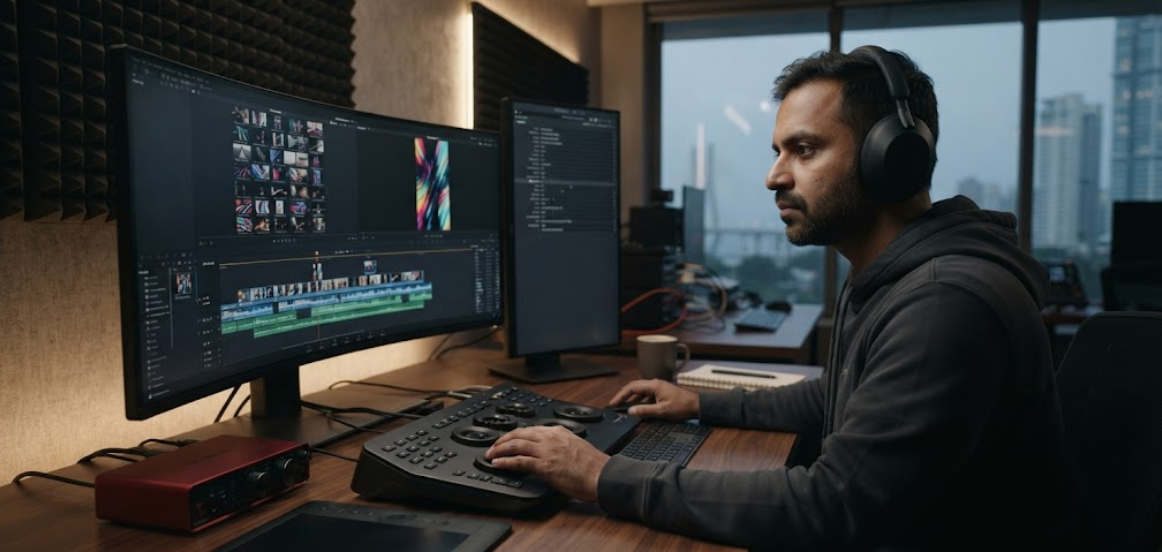
Professional editing can transform several raw clips into a concise and engaging piece of content. Editors can remove pauses, improve pacing, select stronger takes, synchronize audio, add captions, create transitions and incorporate graphics where appropriate.
For businesses, editing also creates consistency.
If every Reel uses different fonts, captions, pacing and visual treatment, the brand can appear disorganized even when the individual videos are technically good.
A professional post-production workflow can include:
- Video trimming.
- Shot selection.
- Dialogue cleanup.
- Audio balancing.
- Captions and subtitles.
- Motion graphics.
- Brand elements.
- Transitions.
- Visual corrections.
- Music and sound design.
- Multiple aspect-ratio exports.
- Platform-ready final files.
Smartphone editing applications can handle many of these tasks. They are useful for businesses that want speed and simplicity.
However, professional editing becomes increasingly valuable when the video is part of a larger campaign or when multiple content assets need to be created from the same footage.
This is especially useful when one professional shoot produces Reels, Shorts, advertisements, website clips, testimonials and longer videos.
Modern video marketing is increasingly about creating useful content consistently and adapting content across channels, rather than producing one isolated video.
8. When Smartphone Video Is Actually Better
There are situations where a smartphone video can be better than a professional shoot.
The biggest example is authenticity.
Suppose a founder suddenly has an important announcement. Waiting several days for a production schedule may reduce the relevance of the message.
A smartphone allows the founder to record immediately.
The same applies to behind-the-scenes moments. If a company is preparing a new product, attending an event or celebrating an important milestone, spontaneous footage can communicate the moment better than a planned production.
Smartphone content can also help businesses understand what their audience responds to.
A company can test different topics, hooks and presentation styles. Once certain formats consistently perform well, those concepts can be developed into professional productions.
Smartphone video is often the better choice when:
- The message is time-sensitive.
- Authenticity is the main objective.
- The content is informal.
- You need to react to a trend quickly.
- The video is behind the scenes.
- You are testing a new concept.
- You need frequent low-production content.
- The subject is naturally comfortable recording alone.
- The location itself is part of the story.
- The video does not need extensive editing.
This is why businesses should not completely replace smartphone content with professional production.
The strongest content strategy often gives each production method a specific role.
9. When a Professional Reel Shoot Is the Better Investment
Professional Reel production becomes particularly valuable when the content directly represents the quality of your business.
If a customer discovers your company through a Reel, that video may become part of their first impression.
For premium brands, visual presentation can therefore matter significantly.
Professional production is also useful when you need a large quantity of content from a single session.
Instead of recording one Reel every few days, a business can plan multiple scripts, outfits, backgrounds, products and concepts and create a complete content library during a dedicated production day.
A professional Reel shoot is usually worth considering when:
- You are launching a product or service.
- Your brand positioning is premium.
- You need campaign-quality content.
- You want several Reels from one shoot.
- You are creating paid advertisements.
- You need professional product demonstrations.
- Your team lacks filming or editing experience.
- Your content requires professional lighting.
- You need controlled audio.
- You want multiple camera angles.
- You need consistent brand presentation.
- The videos will be reused across marketing channels.
A professional studio can also remove many distractions.
Instead of spending time finding suitable locations, managing lighting or troubleshooting audio, the business can concentrate on the message and performance.
For businesses in Mumbai, a dedicated Reel shoot studio can be especially useful when the goal is to create multiple social media assets efficiently within a controlled production environment.
10. The Best Strategy: Combine Smartphone Content With Professional Shoots
For most growing businesses, the answer does not have to be either smartphone or professional production.
A hybrid content strategy can provide the benefits of both.
Use professional production for content where presentation, consistency and quality are important. Use smartphone video for content where speed, personality and authenticity are more valuable.
For example, a business could schedule a professional content day once every few weeks and produce a large library of planned Reels. Between production sessions, the internal team could continue publishing smartphone videos.
This creates a content engine with two layers.
Professional content creates the foundation.
Smartphone content keeps the brand active.
The professional shoot could cover:
- Brand introduction videos.
- Product demonstrations.
- Expert educational content.
- Testimonials.
- Promotional Reels.
- Paid advertising creatives.
- Founder authority videos.
- Service explanations.
Smartphone content could cover:
- Daily updates.
- Behind-the-scenes footage.
- Quick announcements.
- Team moments.
- Customer questions.
- Trending formats.
- Event snippets.
- Informal founder content.
This approach also helps businesses avoid the common problem of spending too much time trying to make every single Reel perfect.
Not every post needs the same production budget.
Instead, assign production resources according to the importance and expected lifespan of the content.
Conclusion: Smartphone or Professional Reel Shoot?
The debate between Reel shoots and smartphone videos is not really about which camera is better.
It is about which production method is better for your business objective.
Smartphones are affordable, fast, accessible and excellent for authentic, frequent and spontaneous content. They allow businesses to respond quickly and maintain an active social media presence without arranging a full production.
Professional Reel shoots provide greater control over lighting, audio, camera work, direction, backgrounds and post-production. They are especially valuable when content represents a brand, promotes a product, supports advertising or needs to be produced consistently at scale.
For many businesses, the strongest solution is a combination of both.
Use smartphones to stay active and authentic. Use professional Reel production to create high-value, polished and reusable content.
The right strategy is not about making every video expensive. It is about investing the right amount of production into the content that matters most.