
Product photography is one of the most important visual assets a brand can invest in.
For an online customer, a product photograph may be the closest thing they have to physically examining the product before making a purchase. They cannot pick it up, check its texture, examine its finish, or see how large it is in their hands. The images on the product page need to communicate as much of that information as possible.
This is why a professional product photoshoot should not be treated as simply placing products in front of a camera.
A successful shoot requires planning.
Brands need to decide where the photographs will be used, which products need to be photographed, how many images are required, what type of background is appropriate, which angles should be captured, what props or models may be needed, and how the final images will be edited and delivered.
The planning stage becomes even more important for e-commerce brands because product images may need to work across Amazon, Flipkart, Myntra, Shopify, WooCommerce, social media, advertising campaigns, catalogues, and other marketing channels.
MW Stuudio in Borivali, Mumbai provides product photography for e-commerce brands, D2C sellers, FMCG companies, jewellery labels, food businesses, retailers, and other product-based businesses. Its current product photography service includes white-background catalogue photography, lifestyle photography, professional strobe lighting, multiple background options, RAW capture, and post-production retouching.
This guide explains how brands can plan a professional product photoshoot from the initial brief through final image delivery.
1. Start by Defining the Purpose of the Photoshoot
Before choosing a photographer, background, camera angle, or lighting setup, determine what the images need to accomplish.
Different photography requirements can produce completely different types of images.
For example, a marketplace listing may need clean product images on a white background, while a brand’s website may require lifestyle photography with styled environments.
A social media campaign may need visually creative compositions, while an e-commerce catalogue may prioritise consistency across hundreds of products.
Start by identifying the primary purpose of the photoshoot.
Consider whether you need images for:
- Amazon or Flipkart listings
- Myntra or other marketplaces
- Shopify or WooCommerce
- Your brand website
- Social media
- Digital advertising
- Printed catalogues
- Product launches
- Brochures
- Packaging
- Press or PR
- Lifestyle campaigns
This decision will influence almost every other part of the shoot.
MW Stuudio’s e-commerce photography process begins with a pre-shoot brief covering the number of products, platforms, required image types, brand guidelines, and whether the project needs white-background or lifestyle photography.
2. Create a Complete Product List Before the Shoot
One of the easiest ways to create confusion during a photoshoot is to arrive at the studio without knowing exactly what needs to be photographed.
Create a master product list before the shoot.
The list should identify each SKU or product variation and the images required for it.
For example, a cosmetics brand may have:
- 10 lipstick shades
- 5 foundation shades
- 4 skincare products
- 3 serum variants
- 2 gift sets
A jewellery brand may have:
- Rings
- Earrings
- Necklaces
- Bracelets
- Bangles
- Pendants
Each product may require several images.
A product list helps the photographer and brand team understand the scope of the shoot before production begins.
It can also prevent products from being forgotten.
For larger catalogues, the list can be divided into categories so the shoot can move systematically from one product group to another.
3. Decide What Type of Product Photography You Need
Not every product needs the same photography style.
Choosing the right format before the shoot helps control both the production process and the final visual identity.
White Background Photography
White-background photography is widely used for e-commerce marketplace listings because it keeps attention on the product and creates a clean catalogue appearance.
Lifestyle Photography
Lifestyle photography places the product within a realistic or styled environment.
This helps customers understand how the product may look or feel in actual use.
Flat Lay Photography
Flat lays photograph products from above and work particularly well for apparel, accessories, stationery, cosmetics, jewellery, and other products that benefit from a top-down composition.
Ghost Mannequin Photography
This approach is commonly used for apparel when brands want to communicate the shape and structure of garments without showing a visible model.
Product-on-Model Photography
Some products are easier to understand when customers can see them being worn or used.
This is particularly relevant for fashion, jewellery, accessories, beauty products, and lifestyle brands.
Creative Brand Photography
Some products require a more editorial approach using colours, textures, props, shadows, or artistic compositions.
MW Stuudio currently offers multiple background configurations including pure white, neutral backgrounds, coloured and textured surfaces, flat-lay surfaces, and styled lifestyle sets.

4. Prepare Your Products Before the Photoshoot
Professional equipment cannot completely fix a poorly prepared product.
Products should arrive at the studio in their best possible condition.
Depending on the product category, preparation may include:
- Removing dust
- Removing fingerprints
- Steaming clothing
- Cleaning glass surfaces
- Polishing jewellery
- Checking packaging
- Removing temporary labels
- Straightening product components
- Checking product colours
- Preparing replacement units
- Organising products by SKU
- Bringing additional samples
For fashion products, garments may need to be steamed and carefully packed.
For jewellery, surfaces should be cleaned and inspected for marks.
For cosmetics, packaging should be free from fingerprints and scratches.
For food products, brands should confirm whether multiple units are required for styling and replacements.
MW Stuudio’s pre-shoot process specifically discusses product preparation such as removing tags, opening packaging, steaming items, and shaping products before photography.
Preparing products beforehand can save significant studio time.
5. Build a Visual Style Guide for the Shoot
If you are photographing multiple products, consistency is extremely important.
Imagine an e-commerce store where one product has a pure white background, another has light grey, another has a yellow background, and another is photographed from a completely different angle.
Even if each photograph looks good individually, the product catalogue can feel visually inconsistent.
A simple visual style guide can define:
- Background colour
- Product positioning
- Camera angle
- Image orientation
- Product scale
- Lighting direction
- Shadow treatment
- Crop style
- Props
- Colour treatment
- Model styling
- Image dimensions
For D2C brands, this is particularly useful because the same photography style can be applied across the entire catalogue.
MW Stuudio’s e-commerce photography service recommends establishing a pre-agreed style guide for D2C shoots so product images maintain a consistent visual identity across the catalogue.
The goal is not to make every image boring.
It is to create a visual system that allows customers to recognise the brand.
6. Choose the Right Lighting for Your Product
Lighting is one of the most important technical decisions in product photography.
Different materials react differently to light.
Jewellery can require precise highlights and reflections.
Glass can create unwanted reflections.
Cosmetics can have glossy, matte, transparent, or metallic surfaces.
Food requires lighting that reveals texture, colour, gloss, and freshness.
Fabric requires lighting that communicates texture and shape.
This is why a single lighting setup does not work equally well for every product.
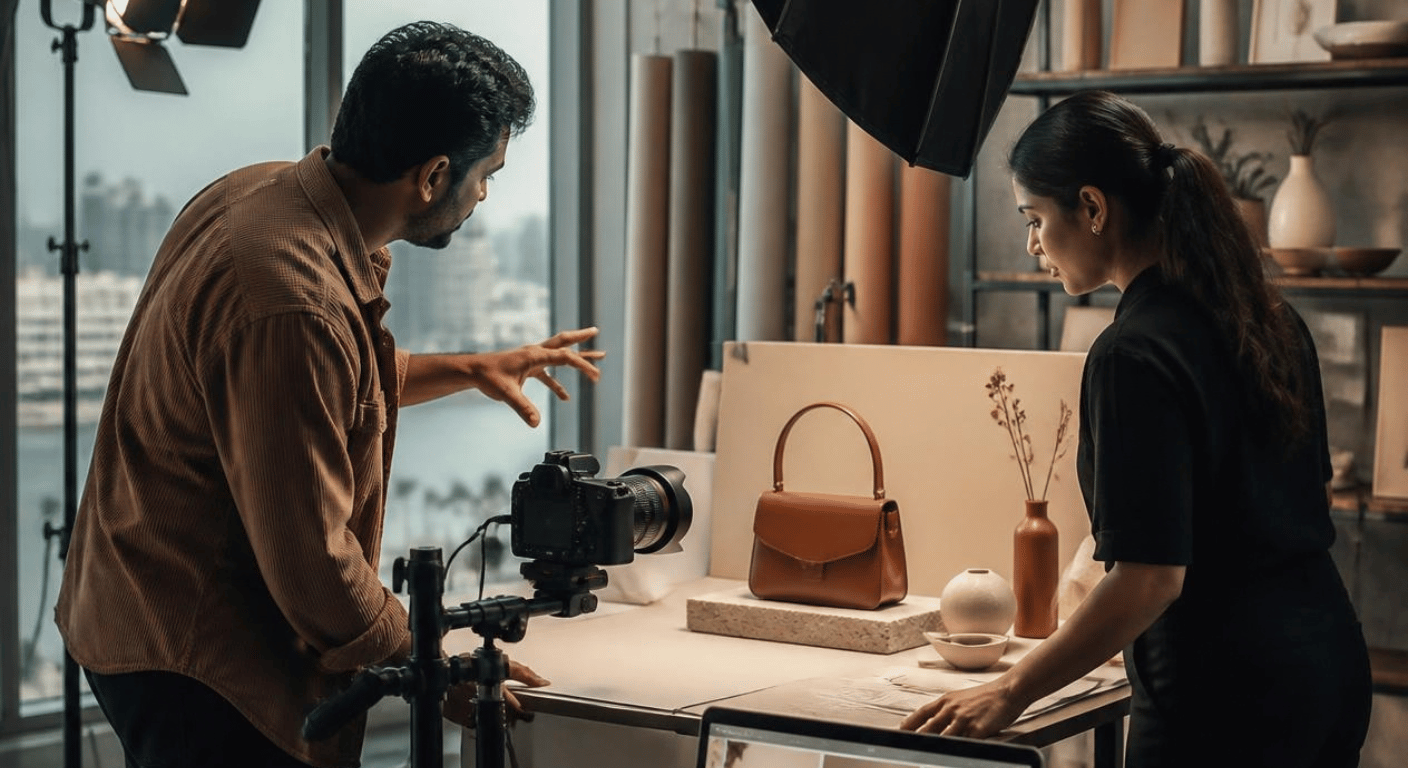
MW Stuudio’s product photography studio uses professional strobe lighting with different modifiers including softboxes, octaboxes, beauty dishes, strip lights, snoots, grids, and reflectors. This allows the lighting to be adapted to different product surfaces and photography requirements.
Professional lighting can help control:
- Highlights
- Shadows
- Reflections
- Texture
- Product dimensions
- Colour appearance
- Surface finish
- Background separation
The objective is not simply to make the product bright.
The objective is to show the product accurately and attractively.
7. Plan the Exact Shots You Need
A professional photoshoot should have a shot list.
Without one, brands can discover after the shoot that an important product angle or detail was never photographed.
A typical product shot list might include:
- Main front-facing product image
- Back view
- Side view
- Close-up detail
- Packaging
- Product-in-use image
- Scale reference
- Lifestyle image
- Feature-focused image
- Product variation or colour option
The exact list depends on the product.
A jewellery brand may require macro detail images.
A fashion brand may need front, back, side, fabric and fit views.
An electronics brand may need ports, buttons, controls and display details.
An FMCG brand may require packaging, front label, back label and product-in-use images.
MW Stuudio’s e-commerce photography workflow plans image types according to the platform and the visual questions buyers need answered.
A detailed shot list keeps the production team focused.
8. Consider Lifestyle Photography for Your Brand
Clean catalogue photography tells customers what a product looks like.
Lifestyle photography helps show customers how the product fits into a real environment.
This distinction can be particularly valuable for D2C brands.
For example:
A candle can be photographed on a white background for a product listing.
The same candle can also be photographed on a styled table with books, flowers and warm lighting to create a lifestyle image.
A skincare product can be photographed against white for the main listing while another image shows it in a bathroom environment.
A piece of furniture can be photographed individually and then shown inside a room.
Lifestyle photography can therefore complement catalogue photography rather than replace it.
MW Stuudio’s product photography service includes styled lifestyle sets and sourcing or arranging props for the specific context required by the product.
9. Decide Whether Models Are Required
Some products are better understood when photographed with a person.
This is particularly relevant to:
- Clothing
- Jewellery
- Watches
- Shoes
- Bags
- Beauty products
- Accessories
- Fitness products
- Lifestyle products
Model photography allows customers to understand scale, fit, proportions, styling, and real-world use.
However, model photography requires additional planning.
10. Plan the Post-Production Before the Shoot
Photography does not end when the camera stops.
Post-production is an important part of the final image.
Depending on the project, editing may include:
- Background cleanup
- Colour correction
- Exposure adjustment
- Blemish removal
- Dust removal
- Shadow refinement
- Reflection control
- Cropping
- Image resizing
- Colour consistency
- Product retouching
- Platform-specific file preparation
For e-commerce photography, the product should remain accurate.
Over-editing can create problems if the final image makes the product look substantially different from the actual item.
MW Stuudio’s current post-production workflow includes background processing, colour correction, blemish removal, tonal optimisation, shadow/reflection work, and platform-specific file preparation.
For this reason, brands should discuss their retouching expectations before the shoot.
Conclusion
A professional product photoshoot starts long before the camera is switched on.
The strongest results come from careful planning: understanding where the images will be used, preparing products properly, defining the visual style, creating a shot list, choosing the right lighting, planning lifestyle or model photography, and establishing post-production requirements.
For e-commerce brands, this planning becomes even more important because product images need to work across different platforms and customer touchpoints.
The objective should not simply be to create attractive photographs.
The images should communicate the product accurately, answer customer questions, maintain brand consistency, and fit naturally into the platforms where customers discover and purchase the product.