
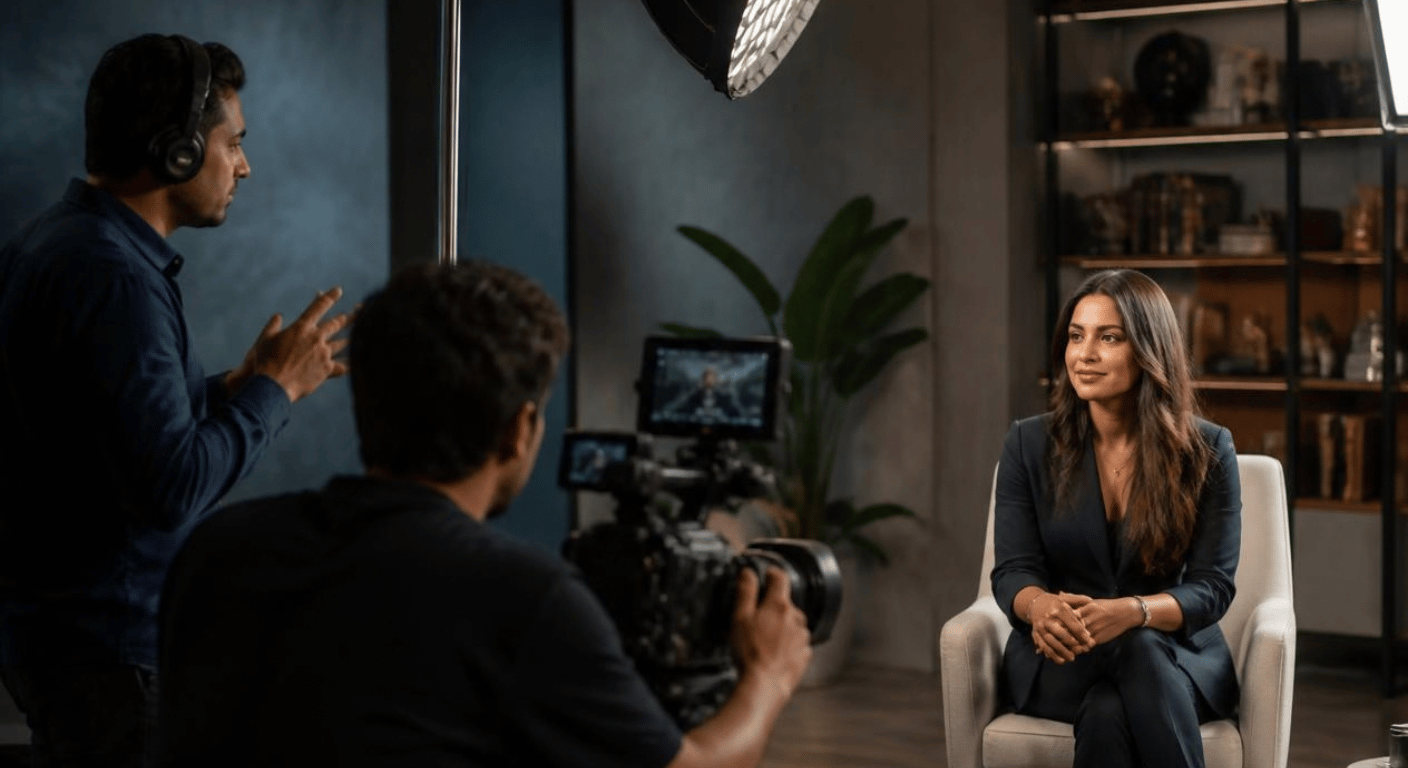
Video has become one of the most important ways for modern brands to communicate online. From Instagram Reels and YouTube videos to product demonstrations, corporate films, testimonials and promotional campaigns, businesses now have more opportunities than ever to use video as part of their marketing strategy.
However, creating video content is not simply about pointing a camera at a subject and pressing record. Good video production involves planning, scripting, lighting, camera work, directing, sound, editing, colour grading and platform-specific delivery.
For brands, the difference between basic footage and professionally produced video can significantly affect how their products, services and people are presented.
MW Stuudio has expanded from its original podcast-focused work into photography, videography, reel production, post-production and digital services. Its video production services cover formats ranging from Instagram Reels and YouTube Shorts to brand films, corporate videos, product demonstrations, real estate walkthroughs and testimonial videos.
In this guide, we will explore why professional video production matters for modern brands and how businesses can use professionally produced video more effectively.
1. Video Gives Brands a More Powerful Way to Communicate
A website can explain what a business offers, while photography can show products and visual identity. Video brings multiple communication elements together.
A professionally produced video can combine visuals, movement, voice, music, sound effects, graphics and storytelling within one piece of content.
This makes video useful for businesses that want to explain something that may be difficult to communicate through static images or text alone.
For example, a brand can use video to:
- Introduce a company and its founders
- Demonstrate how a product works
- Explain a service
- Present customer testimonials
- Show a property or physical location
- Share educational content
- Create short-form social media content
Professional video production gives businesses the opportunity to communicate their message in a structured visual format rather than relying only on written information.
This is particularly useful for brands operating across multiple digital channels, where audiences may interact with a company through websites, social media, advertisements and video platforms.
2. Professional Video Creates a Stronger First Impression
The first few seconds of a video can influence whether viewers continue watching.
Camera quality, framing, lighting, background, sound and editing all contribute to the visual impression of a brand.
A professionally produced video can help businesses present themselves with greater consistency and attention to detail.
This becomes particularly important for brands selling premium products or services.
Imagine two companies offering a similar service. One presents itself through poorly lit footage with inconsistent audio, while the other uses controlled lighting, clear sound, thoughtful framing and professional editing.
The actual service may be similar, but the presentation can feel very different.
Professional production does not replace a strong business proposition. Instead, it helps communicate that proposition in a more polished and organised way.
MW Stuudio describes its video and reel production service as covering scripting, shooting, directing and complete post-production, allowing these different parts of production to be handled as one workflow.
3. Professional Video Helps Brands Show Instead of Simply Tell
One of the biggest advantages of video is its ability to demonstrate products, services and experiences.
A written product description can explain features, but a video can show the product being used.
A service page can describe a process, but a video can visually demonstrate how the process works.
For example, an electronics brand could demonstrate product functionality. A food business could show preparation and presentation. A real estate company could create a property walkthrough. A personal brand could explain a complex topic directly to its audience.
This makes video particularly useful for businesses where movement, demonstration or human interaction is an important part of the customer experience.
Professional production can make these demonstrations easier to understand through controlled camera angles, close-up shots, lighting, editing and sound.
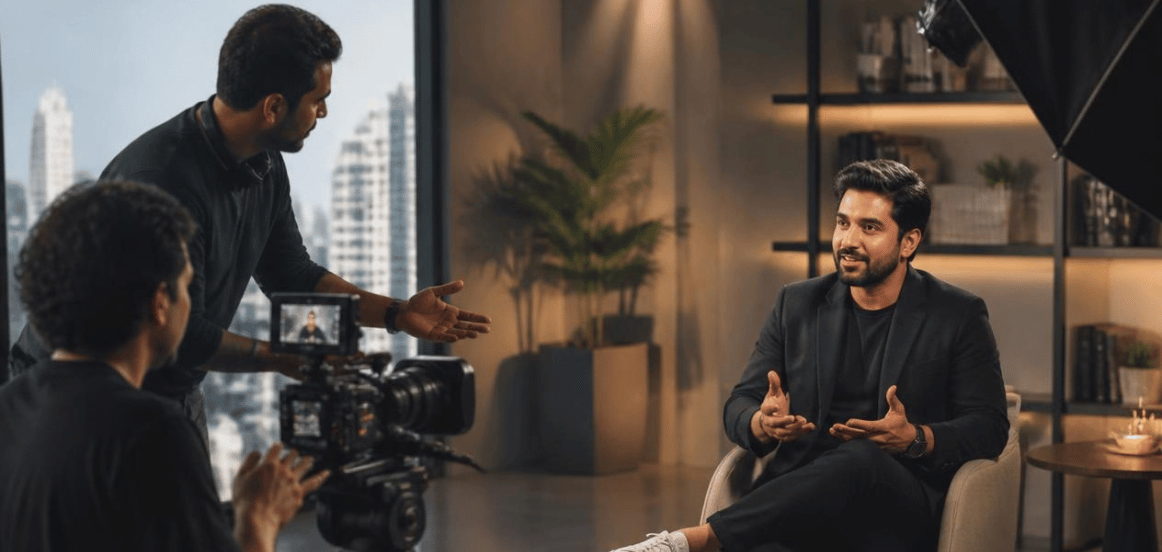
4. High-Quality Video Supports a Consistent Brand Identity
Brand identity is not limited to logos and colours.
The way a company photographs its products, records videos, designs its website and communicates on social media can also influence how audiences perceive the brand.
Video provides another opportunity to establish visual consistency.
A business can develop a consistent approach to:
- Lighting and colour treatment
- Camera framing
- Backgrounds and locations
- Typography and motion graphics
- Music and sound design
- Presenter style
- Editing pace
- Overall visual tone
When multiple videos follow a similar visual language, they can feel like part of the same brand ecosystem.
This is particularly useful for businesses producing regular content.
Instead of treating every video as a separate project, brands can develop a repeatable production style that can be applied across campaigns, social media posts, advertisements and website content.
5. Professional Video Production Goes Beyond the Camera
Many people associate video production primarily with cameras.
However, a professional video involves several interconnected stages.
A strong production workflow can include:
- Pre-production – concept development, scripting, planning, shot lists and scheduling.
- Production – camera operation, lighting, directing, audio recording and on-set management.
- Post-production – editing, colour correction, sound design, motion graphics and subtitles.
- Delivery – exporting the final content according to the requirements of different platforms.
Each stage affects the final result.
A beautifully filmed video can still feel incomplete if the editing is weak. Similarly, strong editing cannot completely compensate for poorly recorded audio or badly planned footage.
That is why professional production should be viewed as a complete process rather than simply a camera rental.
MW Stuudio’s current service offering combines shooting and directing with complete post-production, while also offering post-production as a standalone service for clients who have already recorded their content elsewhere.
6. Short-Form Video Has Become an Important Brand Content Format
Modern brands are not limited to long corporate videos.
Short-form content has become an important format for businesses communicating on platforms such as Instagram and YouTube.
Reels and Shorts can be used for many different purposes:
- Product showcases
- Educational tips
- Behind-the-scenes content
- Founder videos
- Customer questions
- Product demonstrations
- Promotional campaigns
- Brand storytelling
Professional production can make short-form content more structured and visually consistent.
MW Stuudio’s current reel production offering includes professional cameras, lighting, multiple backdrops, creative direction and post-production for short-form content.
The important point is that professional video does not always mean producing a large, expensive corporate film.
A carefully planned short video can also be professionally produced.
For brands that publish frequently, batching multiple videos during one production session can also create a more organised content workflow.
7. Product Videos Can Add Another Dimension to E-Commerce Marketing
Product photography is essential for online stores, but video can provide additional information through movement and demonstration.
A product video can show:
- How the product looks from different angles
- How it is used
- How different features work
- Product scale and proportions
- Texture and movement
- Packaging and unboxing
- Product lifestyle applications
This can be particularly valuable for products where movement or usage is important.
For example, fashion brands can demonstrate how clothing moves, beauty brands can show application techniques, technology brands can demonstrate functionality and home brands can show products within a realistic environment.
MW Stuudio also highlights the ability to produce still photography and video during the same production session, helping brands maintain consistency in lighting, styling and visual presentation across both formats.
8. Video Can Help Humanise a Business
Clean catalogue photography tells customers what a product looks like.
Lifestyle photography helps show customers how the product fits into a real environment.
This distinction can be particularly valuable for D2C brands.
For example:
A candle can be photographed on a white background for a product listing.
The same candle can also be photographed on a styled table with books, flowers and warm lighting to create a lifestyle image.
A skincare product can be photographed against white for the main listing while another image shows it in a bathroom environment.
A piece of furniture can be photographed individually and then shown inside a room.
Lifestyle photography can therefore complement catalogue photography rather than replace it.
MW Stuudio’s product photography service includes styled lifestyle sets and sourcing or arranging props for the specific context required by the product.
9. Post-Production Can Transform Raw Footage Into Finished Content
Recording is only one part of professional video production.
Raw footage normally needs to be reviewed, selected and edited before it becomes a finished piece of content.
Post-production can include:
- Video editing and pacing
- Colour correction and colour grading
- Sound cleanup and sound design
- Background music
- Motion graphics
- Captions and subtitles
- Transitions
- Thumbnail design
- Platform-specific exports
These elements help turn multiple hours of footage into a focused final video.
For social media content, editing can also help remove unnecessary pauses, improve pacing and structure information more clearly.
For corporate videos, post-production can help combine interviews, B-roll footage, graphics and music into a coherent story.
MW Stuudio lists video editing, colour grading, sound design, motion graphics and subtitles among its post-production capabilities.
10. Professional Video Can Support Multiple Marketing Channels
One professionally planned production session can potentially generate content for more than one platform.
Instead of producing completely separate content for every channel, brands can plan a content shoot around multiple final deliverables.
For example, a brand film could generate:
- A longer video for YouTube
- Short clips for Instagram Reels
- Vertical clips for YouTube Shorts
- Website video sections
- Promotional advertisements
- Founder snippets
- Behind-the-scenes content
- Short educational clips
This approach can make a video production project more useful over time.
The key is to plan the required formats before shooting begins.
Camera framing, script structure, B-roll and shot lists can be designed around the final platforms rather than trying to repurpose unsuitable footage later.
MW Stuudio’s broader creative ecosystem combines video production with photography, podcasting, post-production, website development and digital marketing, allowing brands to coordinate several content requirements through one creative team.
Conclusion
Whether a company needs a corporate film, product demonstration, testimonial, Reel, YouTube video, real estate walkthrough or promotional campaign, professional production can bring together planning, visuals, sound and storytelling in one structured process.
The most effective approach is not necessarily to produce the largest or most expensive video.
Instead, brands should focus on producing content that has a clear purpose, matches the brand identity and is designed around the platforms where it will be used.
For businesses that regularly need photography, video, Reels, podcasts and digital content, working with a studio that can coordinate multiple services can also make the production process more streamlined.
MW Stuudio combines video and reel production with photography, podcasting, post-production, website development and digital services, giving Mumbai brands access to a broader creative and digital production ecosystem from one team.
Professional video is ultimately about more than cameras and editing.
It is about taking a brand’s message and turning it into visual content that people can see, hear, understand and remember.