
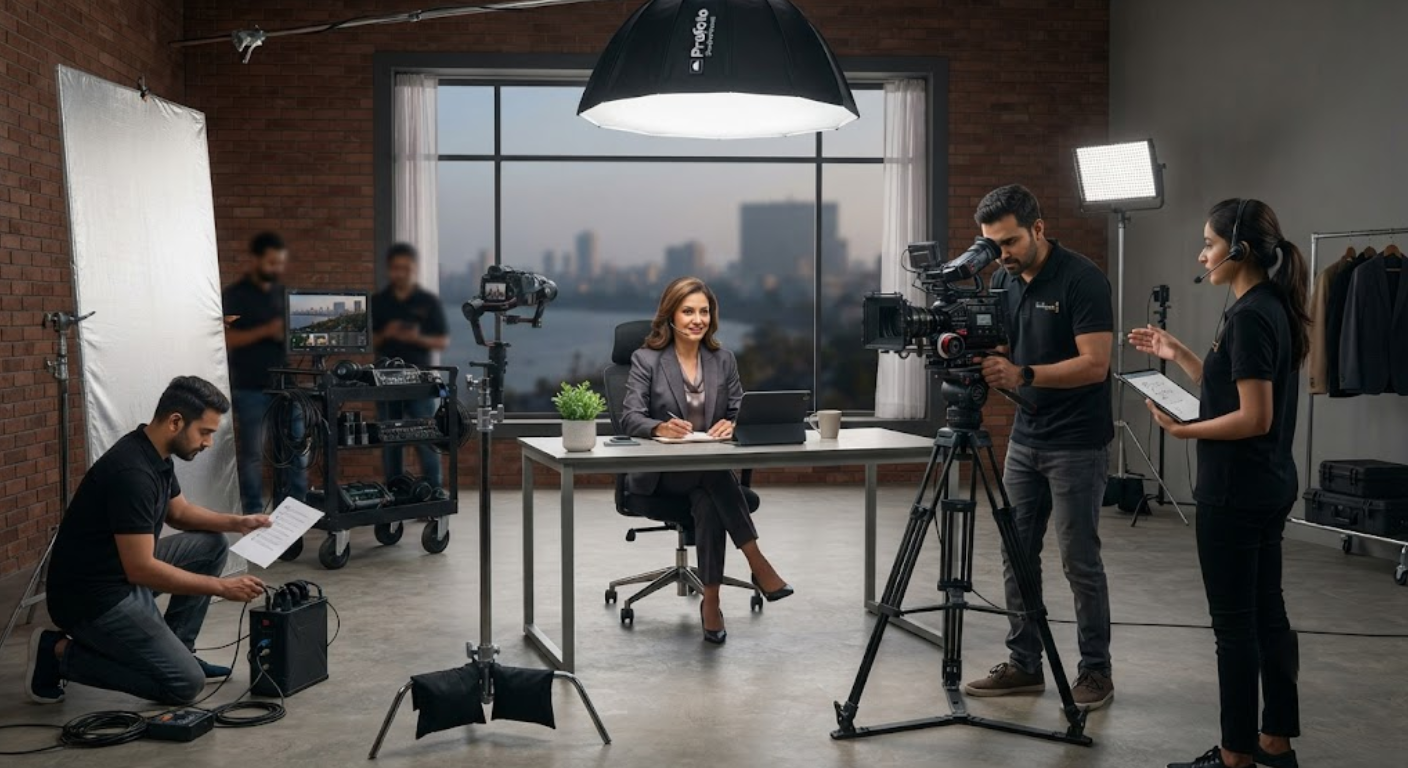
A professional corporate video shoot requires much more preparation than simply placing a camera in front of a speaker and pressing the record button.
Whether you are producing a company profile video, founder interview, employee video, product demonstration, corporate advertisement, training video or recruitment film, preparation can directly affect the quality and efficiency of the production.
This Corporate Video Shoot Checklist helps businesses organize everything they need before recording.
A successful corporate video shoot typically involves several moving parts, including:
- Video concept
- Business objectives
- Script
- Speakers
- Location
- Wardrobe
- Props
- Camera equipment
- Lighting
- Audio
- Production team
- Schedule
- B-roll
- Branding
- Post-production requirements
Missing even one important element can create unnecessary delays during production.
For example, an unfinished script can increase recording time. Poorly selected locations can create audio problems. Inappropriate lighting can affect the visual quality. Unprepared speakers can require many additional takes.
A detailed Corporate Video Shoot Checklist helps businesses identify these issues before the production day.
The objective is not simply to make the shoot look professional. It is to ensure that the final video communicates the company’s message clearly and provides content that can actually be used across websites, social media, presentations, marketing campaigns and other business channels.
This guide covers everything businesses should prepare before a professional corporate video shoot.
1. Define the Objective of Your Corporate Video Shoot
The first item on your Corporate Video Shoot Checklist should be the purpose of the video.
Before discussing cameras, locations or lighting, determine what the video needs to achieve.
A corporate video can serve many different purposes.
For example:
- Introduce the company
- Explain a product or service
- Build brand awareness
- Present a founder
- Educate customers
- Train employees
- Recruit employees
- Showcase company culture
- Present customer testimonials
- Explain a business process
- Promote a new product
- Support a marketing campaign
Each objective requires a different production approach.
A company profile video may require interviews, office footage, team photographs and B-roll.
A product video may require demonstrations, close-up shots and detailed product footage.
A recruitment video may focus more heavily on employees, workplace culture and testimonials.
Therefore, clearly define the purpose before production begins.
Corporate Video Objective Checklist
- What is the primary purpose of the video?
- Who is the target audience?
- Where will the video be published?
- What action should viewers take?
- What key message should viewers remember?
- How long should the final video approximately be?
A clear objective makes every later production decision easier.
2. Create a Clear Corporate Video Concept
Once the objective is established, develop a concept for the video.
The concept explains how the message will be communicated visually.
For example, a corporate video could use:
- Founder interview
- Employee interviews
- Narration
- Product demonstration
- Customer testimonial
- Office walkthrough
- Story-driven presentation
- Educational presentation
- Documentary-style production
A strong concept prevents the shoot from becoming a collection of unrelated clips.
The concept should also match the company’s brand identity.
A technology company may want a modern and fast-paced presentation.
A professional consulting firm may prefer a sophisticated interview-led approach.
A consumer brand may require a more energetic product-focused video.
The concept should determine the visual style, locations, speakers and supporting footage.
This is why concept development should be an important part of your Corporate Video Shoot Checklist.
3. Finalize the Script and Key Talking Points
A script is one of the most important elements of any Corporate Video Shoot Checklist.
Not every corporate video needs a word-for-word script.
However, every professional video should have a clear communication structure.
Depending on the format, you may prepare:
- Full script
- Interview questions
- Talking points
- Voice-over script
- Product demonstration instructions
- Founder talking points
- Call-to-action
- Closing statement
For interview-based corporate videos, detailed questions may work better than memorizing a complete script.
For advertisements or highly structured videos, a complete script may be more appropriate.
Script Checklist
- Opening message
- Company introduction
- Main problem
- Business solution
- Key benefits
- Supporting information
- Proof or examples
- Closing message
- Call-to-action
The script should also be reviewed before the shoot.
Changing major messaging on the production day can create unnecessary delays.
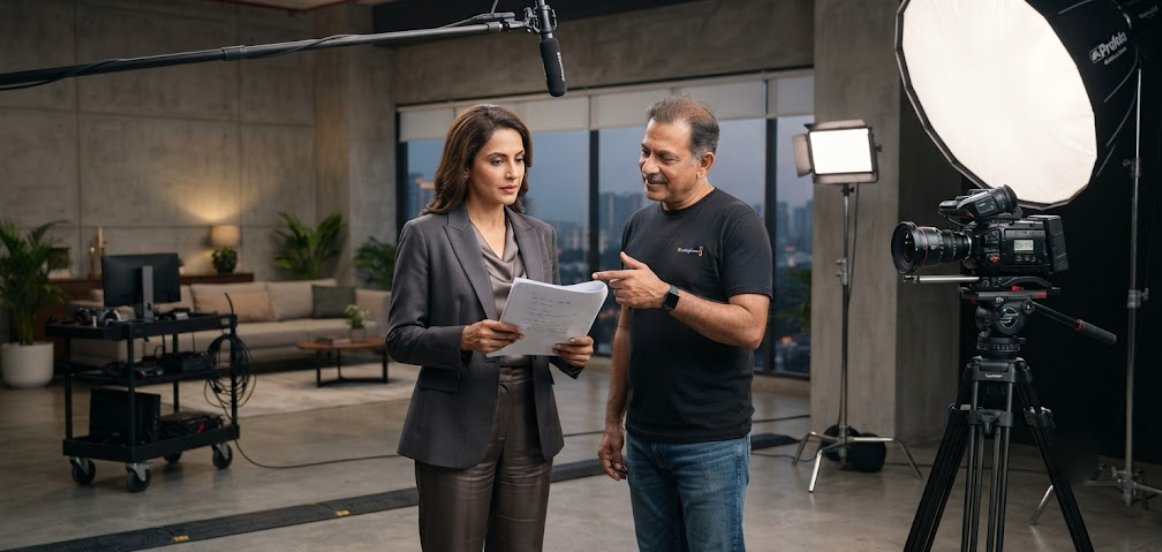
4. Prepare the People Appearing in the Video
Your Corporate Video Shoot Checklist should include every person who will appear on camera.
These could include:
- Founder
- CEO
- Directors
- Employees
- Customers
- Subject-matter experts
- Sales representatives
- Product specialists
- Voice-over artists
Confirm everyone’s availability before finalizing the production schedule.
Participants should also understand what is expected from them.
If they are speaking on camera, provide them with:
- Key talking points
- Interview questions
- Expected recording duration
- Dress requirements
- Arrival time
- Location details
- Basic camera guidance
People who are comfortable and prepared generally require less time to record.
For executives and founders, schedule enough time for multiple takes rather than assuming the first recording will be perfect.
5. Select the Right Location
Location can significantly influence the quality and message of a corporate video.
Depending on the concept, businesses can consider:
- Professional video studio
- Company office
- Meeting room
- Factory
- Showroom
- Retail location
- Production facility
- Outdoor business environment
- Customer location
An office location can help communicate company culture and workplace environment.
A professional studio provides greater control over lighting, sound and visual consistency.
A factory or production facility can provide authentic business context.
Before selecting the location, check:
- Background appearance
- Noise levels
- Available space
- Lighting conditions
- Power availability
- Accessibility
- Parking
- Employee movement
- Permission requirements
- Camera positioning
The location should support the story rather than create production problems.
6. Plan Wardrobe and Appearance
Wardrobe is another important item on the Corporate Video Shoot Checklist.
People appearing on camera should know what type of clothing is appropriate before arriving.
The wardrobe should match:
- Company identity
- Industry
- Video concept
- Location
- Audience
- Desired professional image
For most corporate videos, clean and well-fitted clothing works well.
Avoid clothing that is uncomfortable or distracting.
Depending on the production, participants may need more than one outfit.
This can be particularly useful when producing several videos during one shoot.
Wardrobe Checklist
- Prepare complete outfits in advance.
- Iron or steam clothing.
- Bring backup options.
- Select suitable footwear.
- Keep accessories professional.
- Avoid overly distracting patterns unless appropriate.
- Coordinate clothing with the background.
Small details such as grooming, hair and accessories should also be considered before recording.
7. Prepare the Camera, Lighting and Audio Setup
Technical preparation is a major part of a professional Corporate Video Shoot Checklist.
A high-quality corporate video requires more than a camera.
The production team should plan:
- Primary camera
- Secondary camera where required
- Professional lenses
- Tripods
- Studio lighting
- Softboxes
- Reflectors
- Microphones
- Audio recorder
- Headphones
- Memory cards
- Batteries
- Power supplies
- Backup equipment
Audio deserves particular attention.
A visually attractive corporate video with poor sound can still feel unprofessional.
The team should test microphone placement and monitor audio before recording.
Lighting should also be checked for:
- Facial exposure
- Shadows
- Background separation
- Reflections
- Consistency between takes
A technical test before the first take can prevent avoidable problems later.
8. Prepare B-Roll and Supporting Shots
A corporate video should rarely consist entirely of people speaking directly into the camera.
B-roll provides visual context and makes the final edit more engaging.
Useful corporate B-roll can include:
- Employees working
- Team meetings
- Product demonstrations
- Office environment
- Customer interactions
- Manufacturing processes
- Packaging
- Product close-ups
- Employees collaborating
- Founder working
- Business operations
- Service delivery
Create a B-roll list before recording.
This is one of the most useful steps in a Corporate Video Shoot Checklist because important supporting footage can easily be forgotten when the production team focuses only on interviews.
B-roll can also be reused in future social media content.
A single corporate video shoot can therefore produce more content than the main video alone.
9. Prepare Your Branding Elements
Corporate videos should maintain consistency with the company’s existing brand identity.
Before recording, prepare the relevant brand assets.
These may include:
- Logo files
- Brand colours
- Product packaging
- Company signage
- Branded products
- Uniforms
- Presentation materials
- Website visuals
- Brand graphics
The production team may need these assets during editing.
For example, the final corporate video may include:
- Logo animation
- Lower thirds
- Brand graphics
- Product visuals
- Contact information
- Call-to-action screens
Providing correct brand assets before editing reduces delays during post-production.
The visual style of the shoot should also complement the company’s existing website and marketing materials.
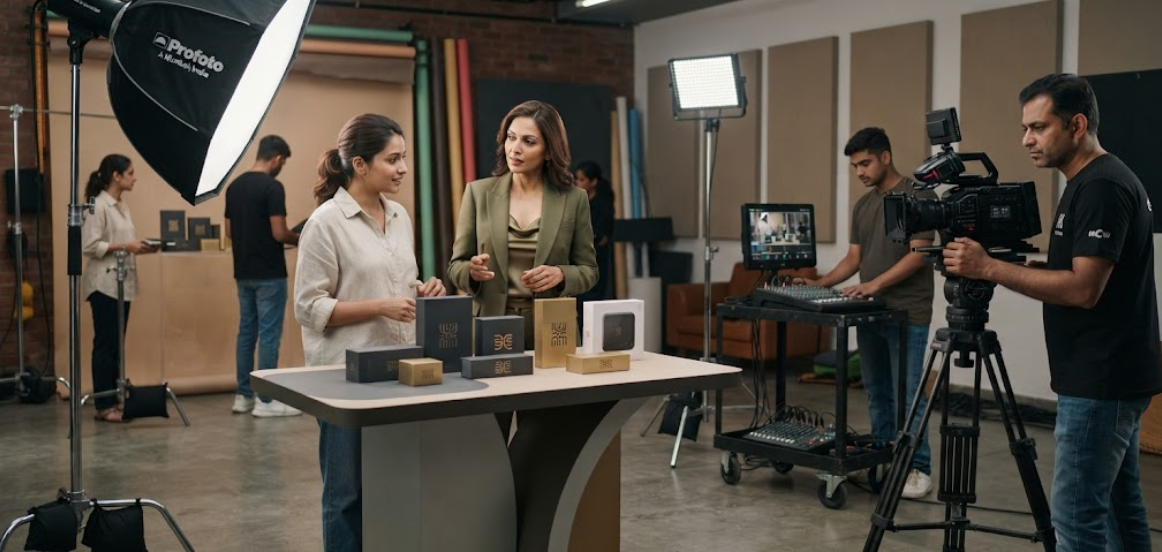
10. Create a Detailed Corporate Video Shoot Schedule
A professional Corporate Video Shoot Checklist should always include a realistic production schedule.
Without a schedule, different participants may arrive at different times and production can become inefficient.
A basic schedule should include:
- Crew arrival
- Equipment setup
- Lighting setup
- Audio testing
- Speaker preparation
- Rehearsal
- Main recording
- B-roll
- Photography
- Breaks
- Equipment backup
- Final checks
If multiple people are appearing in the video, schedule them individually.
For example:
9:00 AM: Crew arrival
9:30 AM: Equipment and lighting setup
10:00 AM: Executive interview
11:00 AM: Employee interviews
12:00 PM: B-roll
1:00 PM: Break
2:00 PM: Product demonstrations
3:00 PM: Founder content
4:00 PM: Additional B-roll
5:00 PM: Final shots and backup
The exact schedule should be adapted to the production requirements.
Adding buffer time is also important.
Professional video production rarely works well when every minute is planned without flexibility.
11. Plan Post-Production Before Recording
Post-production should be considered before the cameras start recording.
Your final video may require:
- Video editing
- Colour correction
- Sound editing
- Music
- Captions
- Graphics
- Motion graphics
- Logo animation
- Subtitles
- B-roll integration
- Thumbnail
- Multiple aspect ratios
If the business needs versions for different platforms, this should be communicated before production.
For example, you may need:
- Horizontal corporate video
- Vertical Reel
- Short social media clips
- Website version
- Presentation version
Knowing these requirements early allows the production team to capture suitable footage.
It also helps determine camera framing and composition.
This makes post-production more efficient.
Conclusion
A successful corporate video shoot begins long before the camera starts recording.
Businesses need to prepare the objective, concept, script, speakers, location, wardrobe, equipment, B-roll, branding, schedule and post-production requirements.
Using a detailed Corporate Video Shoot Checklist makes the entire production process easier to organize.
It also helps the production team capture more useful footage during the available shooting time.
Most importantly, businesses should think beyond one final video.
A well-planned corporate video shoot can also generate professional photographs, B-roll, short-form videos, social media clips, founder content and other marketing assets.
The better the preparation, the more efficiently the production day can be used.
Whether you are producing a company profile, founder interview, product video, recruitment video or corporate marketing film, a detailed Corporate Video Shoot Checklist can help your team arrive prepared and ready to record.
Plan the message. Prepare the people. Organize the production. Capture more content.