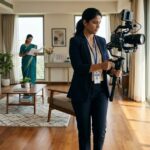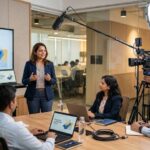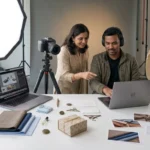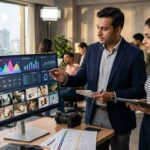

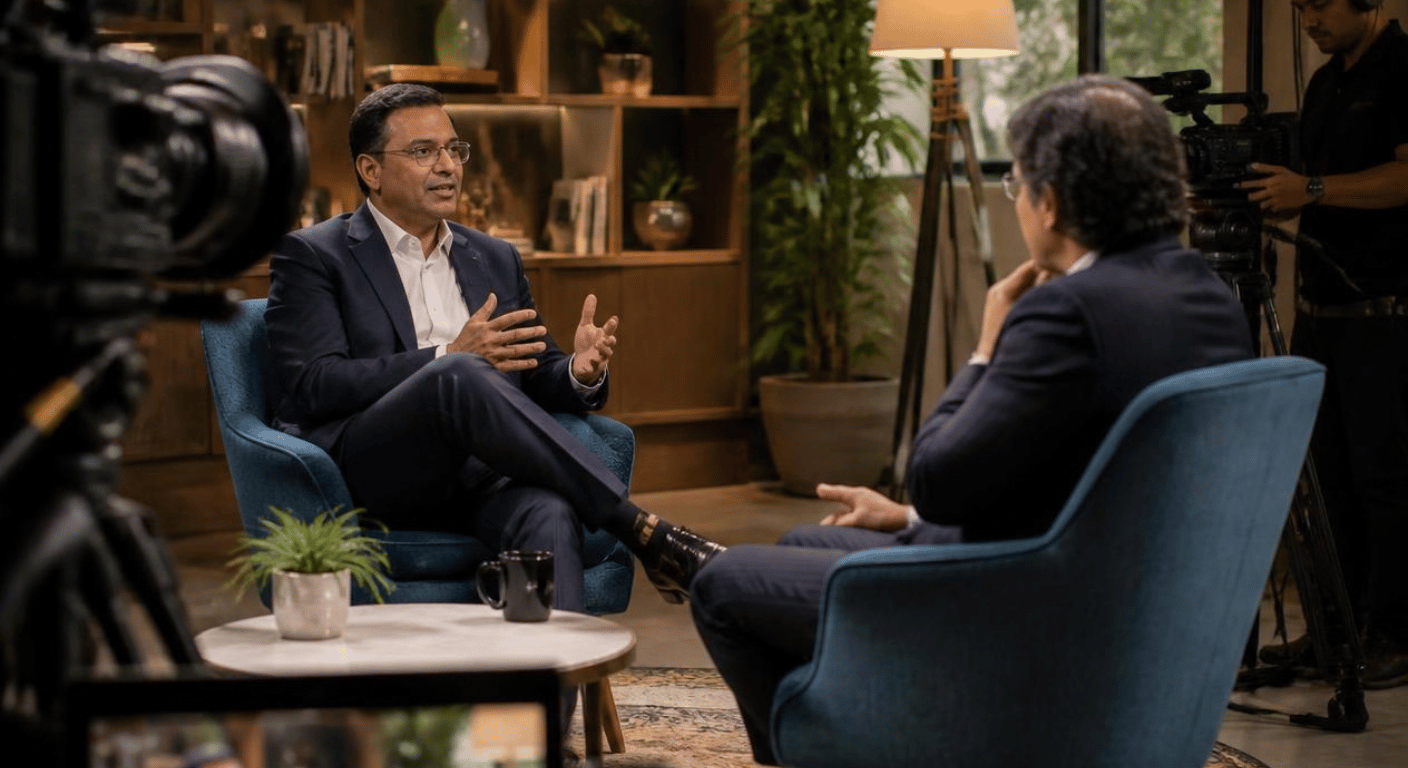
Interview videos can be one of the most useful forms of business video content. They give businesses an opportunity to share expertise, introduce people behind the brand, explain complex topics, present customer experiences, and communicate important ideas in a natural conversation.
However, a professional interview video requires more than placing two people in front of a camera and asking questions.
Professional interview video production involves planning the purpose, choosing the right participant, preparing questions, selecting the location, setting up cameras and lighting, recording clear audio, capturing supporting footage, and completing professional post-production.
A well-planned interview can become more than a single video. A full interview can potentially be turned into a YouTube video, short-form clips, social media content, website content, customer education material, blog topics, and other marketing assets.
For businesses, the key is to plan the interview before the cameras start recording.
The following 15 steps can help businesses plan and produce professional interview videos that are clear, natural, visually engaging, and aligned with their communication goals.
1. Define the Purpose of the Interview
The first step is to determine why the interview is being recorded.
A business interview should have a clear purpose rather than simply being a conversation that happens to be filmed.
Possible objectives include:
- Introducing a founder
- Sharing industry expertise
- Explaining a service
- Answering customer questions
- Presenting a customer story
- Discussing an industry topic
- Introducing a new product
- Recording an expert discussion
- Creating educational content
- Supporting a marketing campaign
For example, a digital agency could interview its founder about common website development mistakes.
A product company could interview its product expert about how customers can use a new product.
A professional service business could interview a customer about their experience.
The objective influences everything else, including the questions, guest, location, camera setup, and editing style.
2. Identify the Target Audience
An interview should be designed around the people who will watch it.
The questions that work for industry professionals may not work for beginners.
For example, an interview about website development for business owners could focus on:
- Cost considerations
- Common mistakes
- Platform selection
- SEO
- Website security
- Conversion
- Maintenance
An interview for experienced developers might instead discuss:
- Technology
- Architecture
- Performance
- Development workflows
- Advanced integrations
Understanding the audience helps determine how technical, conversational, educational, or detailed the interview should be.
Ask:
- Who is watching?
- What do they already know?
- What do they want to learn?
- What questions do they have?
- What problems are they trying to solve?
- What would make them continue watching?
The interview should provide value to the viewer rather than simply promoting the business.
3. Choose the Right Interview Participant
The person in front of the camera has a major influence on the interview.
The participant does not necessarily have to be the company’s CEO.
Depending on the topic, the right person could be:
- Founder
- Director
- Subject-matter expert
- Designer
- Developer
- Product specialist
- Customer
- Industry professional
- Team member
- Partner
- Guest expert
Choose someone who has genuine knowledge or experience related to the subject.
For customer interviews, select customers who can explain their experience clearly.
For expert interviews, choose people who can provide useful insights.
For founder interviews, select topics where the founder can provide authentic perspective.
The objective is to make the interview informative rather than simply promotional.
The right participant can also make the conversation more natural because they have personal experience with the subject.
4. Decide the Interview Format
Not every interview needs to look the same.
Choose a format that matches the content.
One-to-One Interview
One interviewer and one guest.
Useful for expert discussions, founder interviews, and customer stories.
Direct-to-Camera Interview
The subject answers questions while looking directly at the camera.
Useful for educational content and testimonials.
Conversational Interview
Two people speak naturally with one another.
Useful for podcasts and discussions.
Panel Discussion
Multiple participants discuss a topic.
Useful for industry conversations and expert discussions.
Video Podcast
A longer conversation recorded with professional cameras and microphones.
Useful for detailed discussions that can later be repurposed into shorter clips.
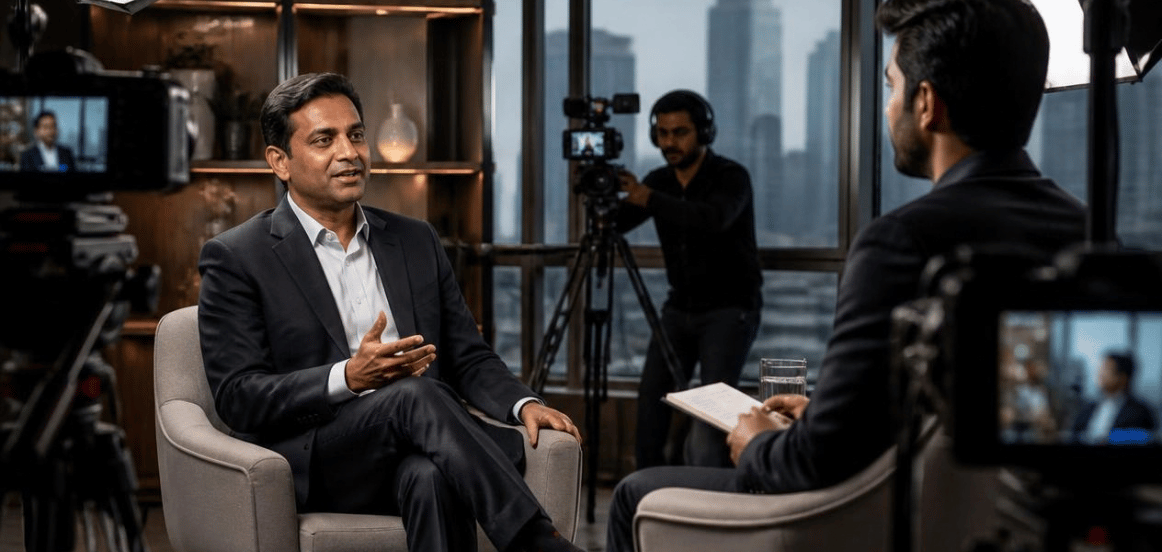
The format also affects camera placement, lighting, audio, room arrangement, and editing.
Choose the format before production so the technical setup can be planned properly.
5. Prepare Questions That Encourage Useful Answers
Good interview questions should encourage the participant to explain, describe, and share.
Avoid questions that produce only “yes” or “no” answers.
Instead of asking:
“Is website speed important?”
Ask:
“Why does website speed matter for a business, and what problems can a slow website create?”
Instead of:
“Do customers have common mistakes?”
Ask:
“What are some of the most common mistakes you see customers making?”
Useful question types include:
- What?
- Why?
- How?
- When?
- What happened?
- What did you learn?
- What would you recommend?
- What should businesses avoid?
- Can you give an example?
Prepare a question list, but do not treat it like a rigid script.
The interviewer should be prepared to ask follow-up questions when the guest says something interesting.
6. Create a Natural Conversation
A professional interview should not necessarily sound like someone reading a corporate presentation.
The goal is to create a structured but natural conversation.
The interviewer can help by:
- Listening carefully
- Asking follow-up questions
- Giving the guest time to answer
- Avoiding unnecessary interruptions
- Asking for examples
- Clarifying complicated statements
- Encouraging specific explanations
If the guest gives a short answer, the interviewer can ask:
“Can you explain that with an example?”
Or:
“What does that look like in a real project?”
Or:
“What should someone do if they are facing this problem?”
These follow-ups can turn simple answers into useful content.
It is also acceptable to pause and repeat an answer during production.
The editor can remove unnecessary pauses and mistakes later.
7. Choose a Suitable Location
The location contributes to the visual identity of the interview.
Possible locations include:
- Professional studio
- Office
- Store
- Workshop
- Restaurant
- Outdoor business environment
- Production facility
- Client location
Choose a location that supports the story.
For example, a chef interview could take place inside a professional kitchen.
A designer could be interviewed inside a creative studio.
A manufacturing expert could be interviewed at the production facility, provided the environment is safe and suitable for recording.
A corporate interview may work better in a controlled office or studio environment.
The location should also be evaluated from a technical perspective.
Consider:
- Background
- Ambient noise
- Available space
- Lighting
- Power
- Echo
- Privacy
- Camera positions
A visually interesting location is useful only if the production team can also record good-quality audio and video there.
8. Plan Professional Lighting
Lighting has a major influence on interview video quality.
The subject should be clearly visible while the lighting should also create depth and separation from the background.
A professional setup may include:
- Key light
- Fill light
- Back light
- Background light
- Practical lights
- Diffusion
- Reflectors
The exact arrangement depends on the location, subject, camera, and desired visual style.
Soft lighting is often useful for interviews because it can create natural transitions between highlights and shadows.
Background lighting can also help create visual depth.
MW Stuudio provides professional video production and photography with controlled studio lighting setups designed for commercial content. Its production environment includes professional lighting and camera equipment for video and photography work. (mwsindia.in)
Good lighting should make the guest look natural while supporting the overall brand aesthetic.
9. Prioritise Clear Audio
A beautiful interview becomes difficult to watch if the audio is unclear.
Audio should therefore be treated as a major production priority.
Depending on the setup, businesses can use:
- Lavalier microphones
- Shotgun microphones
- Professional podcast microphones
- Audio recorders
- Wireless microphone systems
- Headphones for monitoring
The production team should listen for:
- Background noise
- Echo
- Air conditioning
- Traffic
- Equipment noise
- Clothing noise
- Microphone interference
Record a short test before the actual interview.
Listen to the recording.
If the audio sounds poor, solve the issue before continuing.
It is usually easier to correct an audio problem during production than to depend entirely on post-production.
For podcast and interview production, MW Stuudio describes professional microphones, multi-camera setups, and post-production as part of its podcast studio workflow.
10. Use Multiple Camera Angles
A single-camera interview can work, but multiple cameras provide greater flexibility during editing.
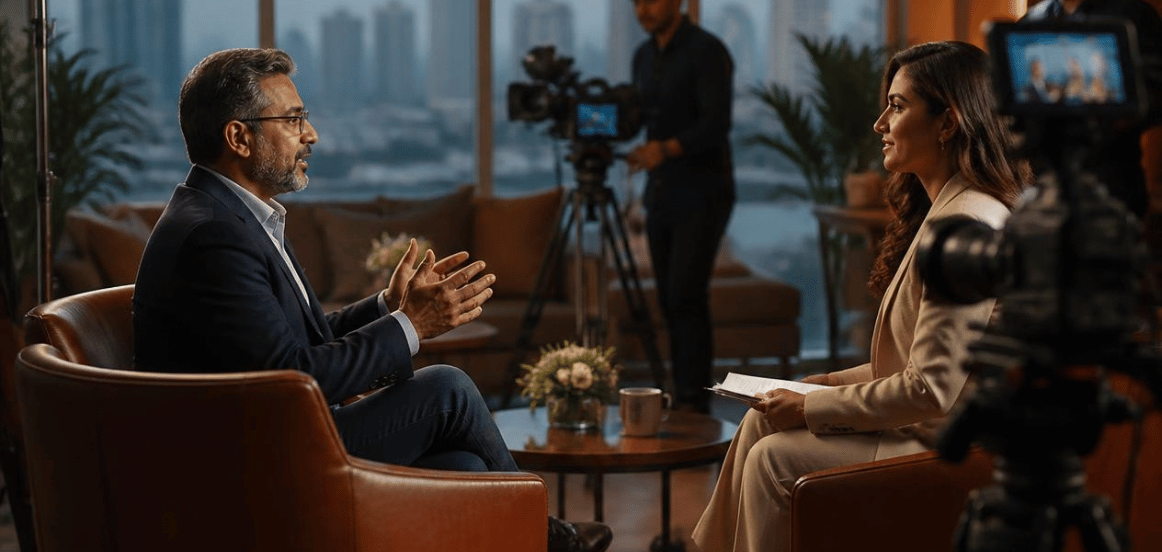
A two- or three-camera setup could include:
Camera 1
Main shot of the guest.
Camera 2
Alternative angle or interviewer shot.
Camera 3
Wider two-person shot or secondary close-up.
Multiple angles allow editors to:
- Hide cuts
- Change visual perspective
- Improve pacing
- Highlight important statements
- Remove unwanted pauses
- Create short clips
The camera setup should still feel natural.
Angles should be planned so that the viewer understands who is speaking and where the participants are positioned.
MW Stuudio’s podcast production setup includes multi-camera recording, which is useful for creating dynamic long-form interview and podcast content.
11. Capture B-Roll and Supporting Footage
An interview does not have to consist entirely of people talking.
B-roll can make the final video more visually interesting and informative.
For a business interview, B-roll could include:
- Team working
- Product close-ups
- Office environment
- Customer interactions
- Website screens
- Production processes
- Tools and equipment
- Store environment
- Behind-the-scenes footage
For example, if a founder says:
“Our team spends a lot of time testing every product before delivery.”
the editor could show footage of the team testing products while the founder’s voice continues.
This gives the audience visual evidence of what is being discussed.
B-roll can also help hide cuts in the interview.
Plan B-roll during pre-production rather than deciding everything after the interview.
12. Maintain Consistent Brand Visuals
Interview videos should feel connected to the wider brand.
This can be achieved through:
- Brand colours
- Background styling
- Wardrobe guidelines
- Lighting style
- Typography
- Lower thirds
- Logo treatment
- Motion graphics
- Music
- Editing style
For example, a premium financial brand may prefer a clean and sophisticated interview environment.
A creative agency may use a more colourful studio.
A technology company may use a modern minimalist setup.
The visual identity should support the company’s existing branding.
Consistency becomes especially important when multiple interview videos are published as a series.
Viewers should be able to recognise that the videos belong to the same channel or business.
13. Plan the Editing and Post-Production
The interview recording is only the beginning.
Post-production determines how the final conversation feels.
Editing may include:
- Removing unnecessary pauses
- Cutting repeated statements
- Improving pacing
- Selecting the strongest answers
- Balancing audio
- Colour correction
- Adding B-roll
- Adding subtitles
- Creating lower thirds
- Adding transitions
- Adding background music where appropriate
- Creating intro and outro sections
- Preparing platform-specific versions
The editing style should match the purpose.
An educational interview may benefit from clear chaptering and graphics.
A customer testimonial may need a tighter edit focused on the customer’s experience.
A long podcast may retain more of the natural conversation.
A short social clip may require faster pacing.
MW Stuudio’s post-production services include editing, colour grading, sound design, motion graphics, subtitles, thumbnail design, and photo retouching.
14. Plan Multiple Content Versions From One Interview
A professional interview can create much more than one final video.
Before recording, identify how the content can be repurposed.
For example, one 30-minute interview could become:
- Full YouTube interview
- YouTube Shorts
- Instagram Reels
- LinkedIn clips
- Website video
- Customer testimonial
- Blog article
- Quote graphics
- FAQ content
- Newsletter material
The production team can also identify strong sections during editing.
For example:
Question: What is the biggest website mistake businesses make?
That answer might become a standalone 45-second educational clip.
Another section could become a LinkedIn video.
Another could become a paragraph in a blog.
This approach helps businesses get more value from the original production session.
It also means the interview should be recorded with multiple final formats in mind.
15. Create a Repeatable Interview Series
A single interview can be useful, but a series can create a more organised content system.
Businesses can develop recurring interview formats such as:
Founder Conversations
Discussions about business, growth, challenges, and lessons.
Expert Insights
Industry professionals answering common questions.
Customer Stories
Customers explaining their experiences.
Behind the Business
Employees explaining processes and company culture.
Industry Conversations
Two professionals discussing trends and practical topics.
A repeatable format makes future production easier because the team already understands the structure.
You can establish:
- Standard intro
- Interview length
- Question framework
- Camera setup
- Lighting style
- Graphics
- Thumbnail style
- Editing approach
- Publishing schedule
YouTube recommends using repeatable formats and reviewing groups of similar content to understand what works for a particular audience. (support.google.com)
A recurring interview series can therefore become part of a broader business content strategy rather than an isolated video project.
Conclusion
A successful professional interview video starts long before the camera begins recording.
The business first needs to define the purpose, understand its audience, select the right participant, choose an appropriate format, prepare useful questions, select a suitable location, and plan the technical production.
Professional lighting, clear audio, multiple camera angles, B-roll, consistent branding, and thoughtful editing can then transform a simple conversation into a polished business communication asset.
The interview should also be planned beyond the final video.
A single recording can potentially produce a complete YouTube episode, short-form clips, social media content, website material, blog topics, customer education content, and other marketing assets.
For businesses that regularly create interviews, podcasts, testimonials, or expert discussions, developing a repeatable production format can make the entire process more organised.
The most important principle is simple:
Plan the conversation before you plan the camera.
When the purpose and story are clear, the production team can make better decisions about questions, location, lighting, audio, camera angles, B-roll, and editing.
A professional interview should not simply look polished. It should also give the audience a reason to watch, listen, learn, and remember the message.