
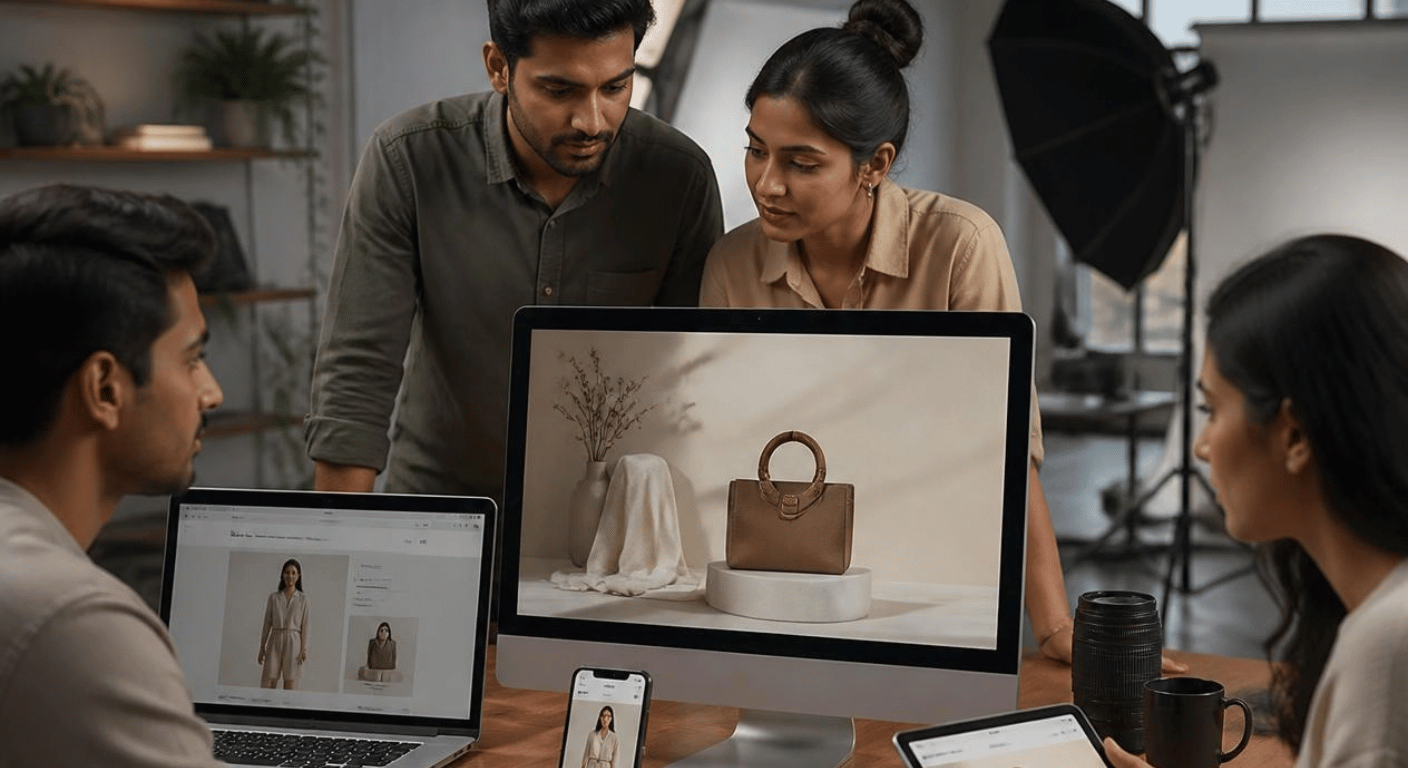
Professional photos and videos are valuable business assets, but their usefulness should not end when the photoshoot or video shoot is completed. A single professional production session can create content for websites, social media, e-commerce stores, advertisements, presentations, email campaigns, blogs and many other marketing channels.
The challenge for many businesses is not producing content once. It is learning how to repurpose professional photos and videos across multiple platforms without making the brand look repetitive or inconsistent.
Instead of creating completely different content for every platform, businesses can build a content system around the assets they already have. A product photoshoot, for example, can generate website images, social media posts, product banners, advertisements and promotional graphics. Similarly, one professionally produced video can become a YouTube video, Instagram Reel, YouTube Short, website video, testimonial clip, advertisement or educational snippet.
MW Stuudio provides photography, video production and post-production services, making it possible for businesses to plan multiple content requirements around the same production workflow. Its photography services cover product, e-commerce, lifestyle, jewellery, food and personal branding content, while its video team works on Reels, YouTube Shorts, brand films, corporate videos, testimonials and other video formats.
The following 15 strategies can help businesses turn professional visual content into a reusable marketing library.
1. Start With a Content Repurposing Plan
The first step is to plan repurposing before the photoshoot or video shoot begins.
Many businesses think about one platform at a time. They plan an Instagram post, then later realise they need website images, LinkedIn content, advertisements and other assets.
A better approach is to ask:
- Where will this content be used?
- Which platforms need horizontal images?
- Which platforms need vertical videos?
- Which assets are required for the website?
- Which visuals can be used for advertisements?
- Which content can be reused later?
- Which images should remain evergreen?
This planning can influence the entire production process.
For example, an e-commerce brand could plan one shoot around product listing images, lifestyle photographs, social media content and short product videos. A professional studio can then capture the required variations during the same production workflow.
The result is a content library rather than a collection of unrelated photographs.
2. Turn One Photoshoot Into Multiple Social Media Posts
A professional photoshoot can produce far more than one Instagram post.
Businesses can select different images from the same session and create different types of social content.
For example, a fashion brand could use:
- Product-focused posts
- Lifestyle photographs
- Detail shots
- Behind-the-scenes images
- Carousel posts
- Customer education graphics
- Promotional creatives
- Seasonal campaigns
- Story content
The important part is changing the purpose of the content rather than simply uploading the same photograph repeatedly.
A single product can be photographed from multiple angles, in different compositions and in lifestyle environments. Those images can then support social media content for several weeks.
Professional photography becomes much more valuable when the shoot is planned as a content library rather than a one-time campaign.
3. Adapt Professional Photos for Your Website
Your website is one of the most important places to reuse professional photography.
Business websites need visuals for multiple areas, including:
- Homepage banners
- Service pages
- About pages
- Product pages
- Team sections
- Case studies
- Blog articles
- Landing pages
- Testimonials
Instead of using generic stock images throughout the website, businesses can build a visual library around their own brand.
For an e-commerce business, professional product photography can populate product pages. For a service company, team photographs, workplace images and brand photographs can make service pages more authentic.
The same photographs used on social media can also appear on the website, but they should be selected and cropped according to the website layout.
MW Stuudio also combines photography with website and e-commerce development, allowing visual assets to be prepared with their eventual digital destination in mind.
4. Create Multiple Formats From One Professional Video
Video is particularly useful for repurposing because one long recording can contain many smaller moments.
A business could record a 10-minute educational video and extract:
- One long-form YouTube video
- Several short clips
- Instagram Reels
- YouTube Shorts
- LinkedIn video posts
- Website video sections
- Promotional snippets
- Educational clips
- Quote-based social content
The key is to identify useful moments during editing.
For example, an interview with a company founder might contain several answers that work independently. Each answer can become a short educational video while the complete interview remains available as long-form content.
Professional post-production makes this process easier because the footage can be edited into different formats while maintaining consistent colour, sound and visual identity.
MW Stuudio’s post-production services include video editing, colour grading, sound design, motion graphics, subtitles and platform-specific delivery.
5. Prepare Different Aspect Ratios During Production
Different platforms require different visual formats.
A horizontal video may work well for YouTube or a website, while a vertical version may be more suitable for short-form social media.
Instead of trying to crop everything after the shoot, businesses should consider these requirements during production.
For example:
Horizontal:
Website videos, YouTube videos, presentations and some advertising placements.
Vertical:
Instagram Reels, YouTube Shorts and other mobile-first content.
Square or flexible crops:
Certain social posts, advertisements and content layouts.
A professional production team can plan framing so that important subjects are not positioned too close to the edges.
MW Stuudio’s reel production workflow specifically supports vertical 9:16 content and platform-ready exports, while its broader video services cover longer-form production as well.
6. Use Product Photography Across E-Commerce Platforms
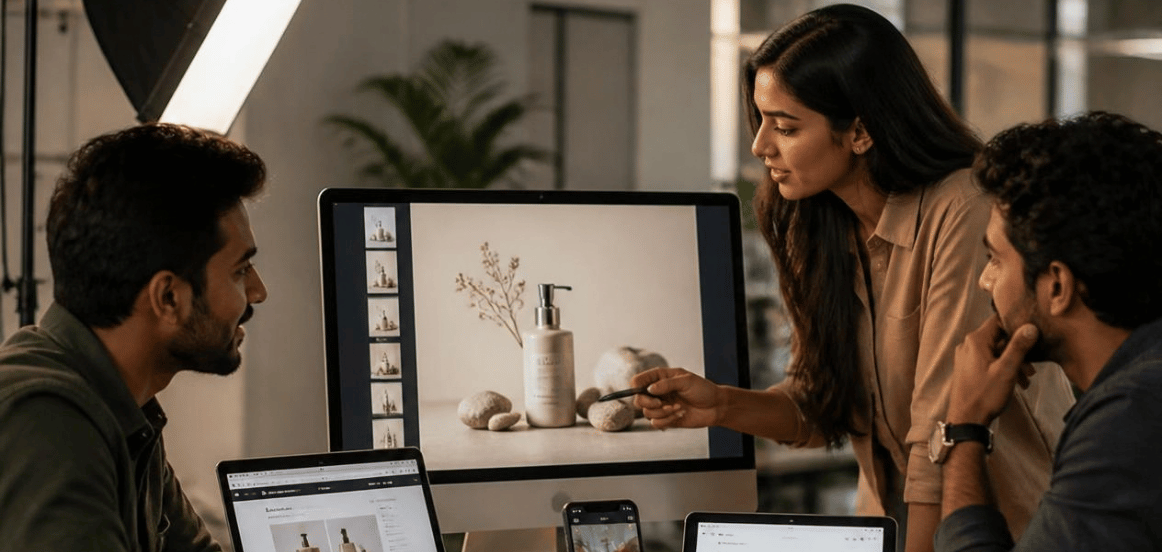
E-commerce businesses have particularly strong opportunities for visual content repurposing.
A single product photography session can create assets for:
- E-commerce websites
- Amazon listings
- Flipkart listings
- Myntra or other marketplaces
- Google advertising
- Promotional banners
- Email campaigns
- Product catalogues
Businesses can also combine white-background product images with lifestyle photographs.
White-background images are useful for product listings, while lifestyle images can communicate how the product looks in real-world situations.
MW Stuudio’s e-commerce photography workflow includes catalogue photography, lifestyle photography, platform-specific preparation and post-production.
7. Convert Product Videos Into Social Media Content
Product videos do not have to remain limited to product pages.
A professionally produced product video can be adapted into several pieces of social content.
For example, a skincare brand could create:
- Product introduction
- How-to-use video
- Ingredient explanation
- Texture close-up
- Before-and-after concept
- Product demonstration
- Short educational clip
- Frequently asked question video
This allows businesses to communicate the same product from different perspectives.
Instead of repeatedly saying that a product exists, each piece of content can answer a different customer question.
This approach is especially useful for brands that need to maintain regular social media activity.
8. Use Professional Photos in Email Marketing
Email marketing is another channel where existing visual assets can be reused.
A professional photograph can support:
- Product launch emails
- Seasonal campaigns
- New service announcements
- Promotional newsletters
- Customer education
- Event invitations
- Brand updates
- Case studies
The image does not need to be completely new every time.
Instead, businesses can use different photographs from the same production session depending on the message.
For example, a clothing brand can use product detail photographs for one email, lifestyle photography for another and collection photographs for a seasonal campaign.
This creates visual consistency while reducing the need for constant new photoshoots.
9. Repurpose Content for LinkedIn and Professional Platforms
Businesses often associate professional photography and video primarily with Instagram, but visual content can also support professional communication.
Companies can use photographs and videos for:
- LinkedIn posts
- Founder content
- Company announcements
- Employee stories
- Industry insights
- Case studies
- Project showcases
- Recruitment content
- Corporate presentations
A corporate photoshoot can provide images for months of professional communication.
Similarly, an interview video can be edited into short educational clips that communicate expertise.
The content should be adapted to the platform’s audience rather than copied without modification.
10. Build Paid Advertising Creatives From Existing Assets
Professional visual assets can also support paid advertising campaigns.
Instead of producing a completely new creative for every advertisement, businesses can test different versions using existing photographs and video footage.
For example:
One product photoshoot could produce:
- Product-focused advertisement
- Lifestyle advertisement
- Feature-focused creative
- Customer-problem creative
- Promotional banner
- Short video advertisement
Different versions can communicate different benefits while maintaining the same visual identity.
The important part is to create variations intentionally rather than simply resizing one image repeatedly.
11. Turn Behind-the-Scenes Footage Into Content
Businesses should not focus only on final photographs and finished videos.
Behind-the-scenes footage can provide another category of content.
During a professional shoot, businesses can capture:
- Camera setup
- Lighting setup
- Product preparation
- Team discussions
- Model preparation
- Set design
- Filming moments
- Editing process
- Final result comparisons
Behind-the-scenes content can make a brand feel more human and can show the effort involved in producing professional work.
It can also help businesses explain their production process to potential customers.
12. Create Blog and Educational Content From Visual Assets
Professional photography and video can support written content as well.
Businesses can use their own visual assets inside:
- Blog articles
- Tutorials
- Guides
- Case studies
- Service pages
- Educational articles
- Industry reports
For example, a product company can use its own product photographs inside a guide explaining how to use its products.
A service company can use team photographs, project images and interview clips inside case studies.
This creates stronger connections between visual content and written content.
Instead of treating blogs, social media and photography as separate marketing activities, businesses can build them around the same content library.
13. Create a Consistent Visual Brand Across Platforms
Repurposing should not mean copying the same content everywhere.
The goal is to maintain consistency while adapting the content to each platform.
Businesses should keep visual elements consistent, including:
- Photography style
- Colour treatment
- Brand colours
- Typography
- Video editing style
- Image composition
- Product presentation
- Tone of communication
When these elements remain consistent, customers can recognise the brand across different channels.
Professional post-production is especially useful for maintaining consistency. Colour correction, colour grading, retouching and formatting can help assets from different production sessions feel more connected. MW Stuudio offers these types of post-production services for photography and video.
14. Organise Your Content Into a Reusable Content Library
Creating professional content is only the first step. Businesses should also organise it properly.
A useful content library can contain folders for:
- Product photography
- Lifestyle photography
- Brand photography
- Founder portraits
- Corporate videos
- Product videos
- Reels
- YouTube videos
- Testimonials
- Behind-the-scenes footage
- Seasonal campaigns
Files can also be organised by product, campaign, date and platform.
This makes future content creation much faster.
Instead of searching through old hard drives every time a social media post is needed, the marketing team can immediately find suitable assets.
Professional photography services can also include platform-ready delivery and organised final files, helping businesses move from production to publishing more efficiently.
15. Plan Batch Production to Create More Content From One Shoot
One of the most practical ways to repurpose content is to plan production in batches.
Instead of arranging a separate shoot every time the business needs a new social post, businesses can create a larger content plan and produce multiple assets during one session.
For example, one production day could include:
- Product photography
- Lifestyle photography
- Product videos
- Founder videos
- Short-form Reels
- Behind-the-scenes footage
- Website images
- Advertisement creatives
This approach can create a larger content library while keeping the visual style consistent.
Batch production is particularly useful for businesses that publish content regularly.
MW Stuudio’s services are structured across photography, video, podcast production and post-production, and its studio workflows can accommodate multiple content requirements around the same production setup.
Conclusion
Professional photos and videos should not be treated as one-time marketing materials.
When production is planned properly, the same visual assets can support a website, e-commerce store, Instagram, YouTube, LinkedIn, email campaigns, advertisements, blogs, presentations and other marketing activities.
The key is to think about content repurposing before production begins.
Businesses should identify their platforms, plan required formats, capture different types of photographs and footage, maintain consistent visual branding and organise the finished files into a reusable content library.
Professional production also makes repurposing easier because high-quality original assets provide more flexibility during editing, cropping, resizing and post-production.
For businesses producing regular content, a batch-production approach can be particularly useful. Instead of constantly creating isolated pieces of content, brands can build a structured visual library that supports their marketing activities over time.
MW Stuudio combines photography, video production, post-production and digital services, allowing businesses to plan visual content with its eventual digital use in mind. Its photography services include product, e-commerce, lifestyle, jewellery, food and personal branding photography, while its video production covers Reels, YouTube Shorts, corporate videos, brand films, testimonials and other formats.
The objective is not simply to create more content. It is to get more practical use from every professional photo and video asset your business produces.