
In today’s digital business environment, customers often want to understand the people behind a company before deciding whether to work with it. They may visit a founder’s LinkedIn profile, watch a company introduction video, explore interviews or look for useful insights shared by the business leader.
This creates an opportunity for founders to build a recognisable professional identity alongside their company’s brand.
Personal brand through professional video content allows business owners to communicate their experience, explain their ideas and share their perspective in a more personal format. Instead of relying entirely on written posts or company announcements, founders can use video to demonstrate their knowledge, tell their stories and connect with audiences through their own voice.
For example, a technology founder could explain an industry challenge, a creative entrepreneur could discuss the thinking behind a project, and a business consultant could share lessons learned from working with clients.
However, building a personal brand requires more than recording random videos. Founders need a clear message, a suitable content strategy, consistent presentation and a realistic production routine.
Professional video production can help organise these elements into content that reflects the founder’s personality and business objectives.
MW Stuudio offers video production, podcast recording and post-production services in Mumbai, supporting businesses and individuals who want to develop professional video content. Its video shoot and editing services cover formats such as brand films, corporate videos, interviews and social media content.
Here are 15 practical ways business founders can use professional video content to develop a stronger personal brand.
1. Define What You Want Your Personal Brand to Represent
Before creating videos, decide what you want people to associate with you professionally.
A founder’s personal brand should communicate more than their job title or company name. It should give audiences an idea of their expertise, values, interests and approach to business.
For example, a founder of a digital agency may want to be recognised for practical marketing knowledge, while a manufacturing entrepreneur might focus on operational experience, product development and business leadership.
Start by identifying three things:
- The subjects you understand well.
- The audience you want to reach.
- The professional qualities you want your content to communicate.
These decisions help determine which topics deserve your attention and which ones may not fit your positioning.
You do not need to discuss every aspect of your industry. A focused founder brand is often easier to communicate because audiences can understand what kind of insights to expect from you.
Your positioning should also remain authentic. Do not present yourself as an expert in areas where you lack relevant experience. Sharing thoughtful lessons, practical observations and genuine questions can be valuable without overstating your authority.
Once your direction is clear, use it as the foundation for your video topics, scripts and publishing plan.
2. Develop a Clear and Memorable Founder Story
People often want to understand why a founder started a business, what problem they wanted to solve and how their experience shaped their approach.
A founder story gives context to the business and helps audiences understand the person behind its decisions.
Your story does not need to be dramatic. It can begin with a practical observation, a professional challenge, a customer need or a skill that inspired you to start a company.
Consider organising your story around four questions:
- What experience led you to start the business?
- What problem were you trying to address?
- What important lessons have you learned?
- What do you want to build or contribute next?
A founder introduction video can answer these questions in a natural, conversational way.
Avoid turning the story into a long list of achievements. Specific experiences and honest reflections often communicate more than broad statements about success.
You should also distinguish your personal story from the company’s official history. The two can complement each other, but the founder’s video should reveal their individual perspective.
A clear founder story can be adapted into a website introduction, a LinkedIn video, a podcast interview or a series of shorter social media clips.
3. Share Educational Videos Based on Your Expertise
Educational content allows founders to demonstrate how they think about problems relevant to their industry.
Instead of repeatedly promoting your company, explain concepts that help your audience make informed decisions.
A website development founder might discuss common website planning mistakes. A retail entrepreneur could explain how product presentation influences the shopping experience. A business consultant might share practical considerations when building an internal workflow.
The most useful topics are often connected to questions customers already ask.
Create a list of subjects you can explain clearly without relying on excessive technical language. Then select one question per video.
For example, a short educational video could explain:
- One common mistake in your industry.
- One factor customers should consider before buying.
- One practical way to evaluate a service.
- One misconception worth clarifying.
- One lesson from a completed project.
Keep the explanation focused and provide enough context for viewers to understand the point.
You do not have to share confidential client information or proprietary processes to demonstrate expertise. General examples, fictional scenarios clearly identified as examples, and publicly available information can all support useful educational content.
Over time, a consistent collection of educational videos can help audiences understand the subjects you care about and the perspective you bring to them.
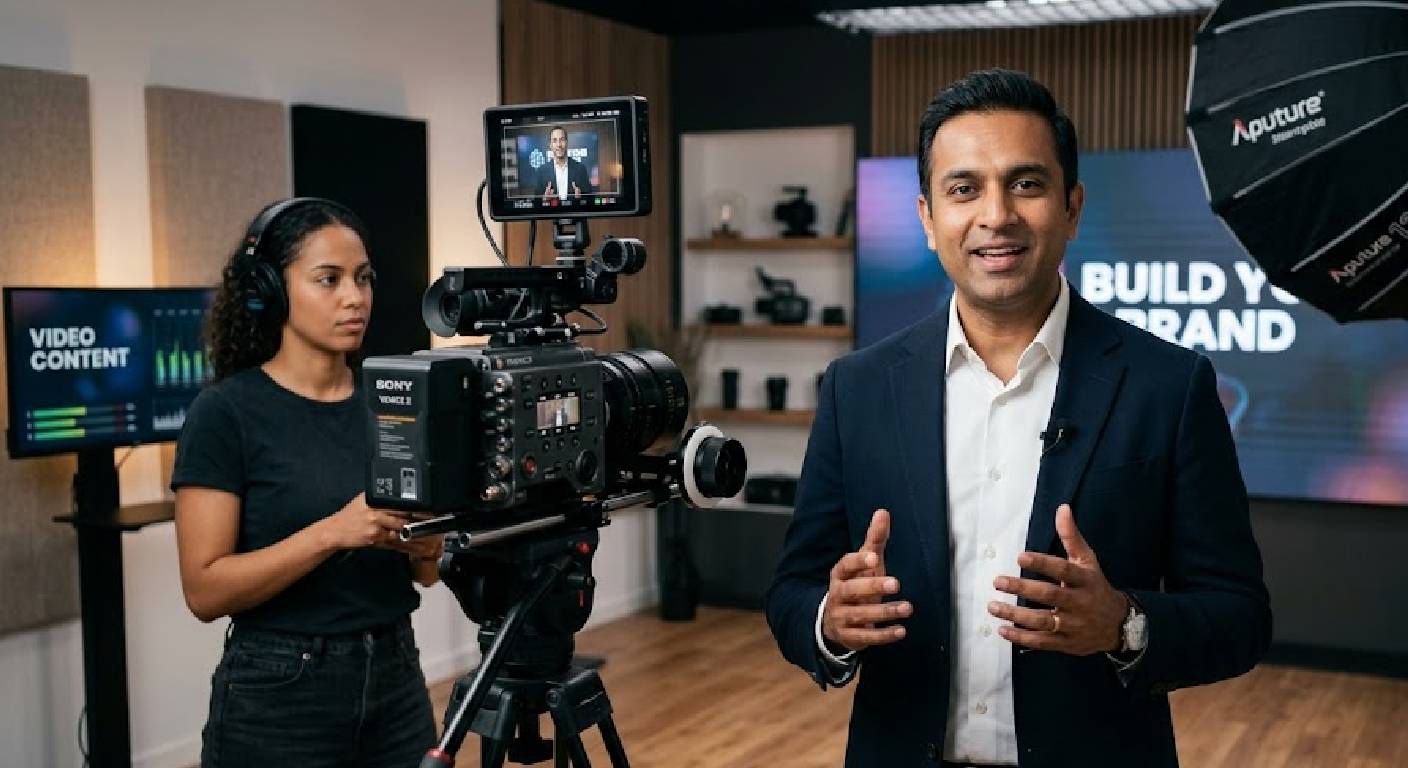
4. Use Professional Video Quality to Support Your Message
The quality of a video influences how easily audiences can watch and understand it.
A useful message can lose clarity when the audio is difficult to hear, lighting creates distracting shadows or the framing makes the presenter uncomfortable to watch.
Professional production helps address these technical details so the audience can focus on the founder’s message.
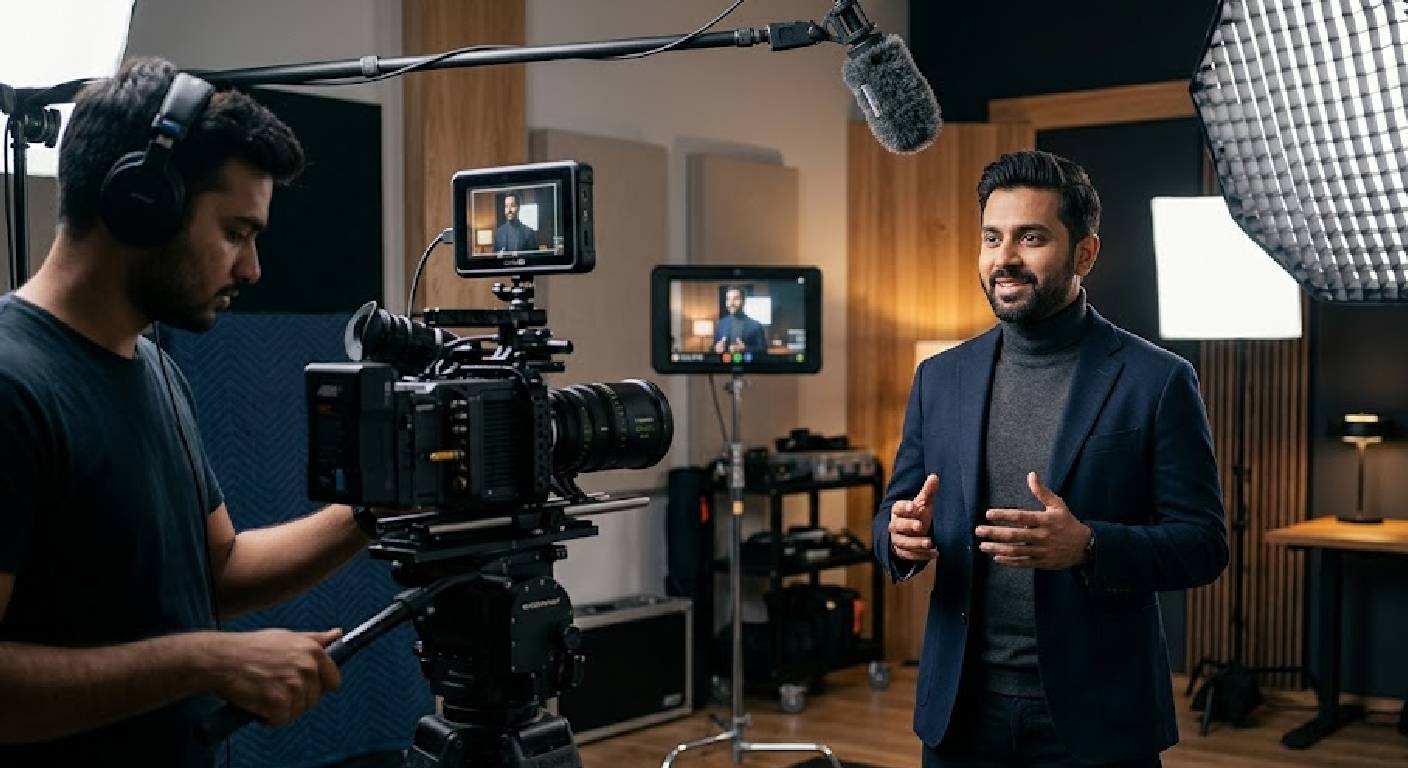
Important elements include clear audio, suitable lighting, balanced composition, stable footage and clean editing.
However, professional quality does not mean every video must look cinematic or highly elaborate. A simple, well-lit talking-head video may suit an educational post, while a brand introduction film may benefit from multiple locations, supporting footage and more detailed editing.
Choose the production style according to the purpose of the content.
Founders should also prioritise understandable speech and natural delivery. Expensive equipment cannot compensate for an unclear message.
A useful approach is to prepare the topic first, then select the appropriate production setup. This keeps the focus on communication while ensuring that the final video reflects the standard of the founder’s professional identity.
MW Stuudio’s video production services include scripting, shooting, directing and post-production, which can help founders plan content according to their needs.
5. Build a Consistent Set of Core Content Topics
A personal brand becomes easier to manage when its content follows a few recurring themes.
Without a defined structure, founders may jump between unrelated subjects, making it difficult for audiences to understand what their professional identity represents.
Choose three to five content pillars that connect your expertise, experience and audience needs.
For example, a business founder might use these themes:
- Industry knowledge and practical advice.
- Lessons from building the company.
- Leadership and team management.
- Customer challenges and solutions.
- Future trends and professional opinions.
Each theme can generate many video topics without requiring a new content strategy every week.
The balance between themes can change depending on your objectives. A founder who wants to educate potential clients may publish more practical guides, while someone speaking to peers may focus on leadership, industry developments and business lessons.
Keep the themes broad enough to support different formats but specific enough to reflect your expertise.
Review your content pillars periodically. If a topic no longer fits your professional direction, adjust it rather than continuing to publish simply because it was part of an earlier plan.
A consistent framework gives your audience a clearer experience and helps you plan video production more efficiently.
6. Create Short-Form Videos for Regular Communication
Short-form video can help founders communicate one idea at a time across platforms that support vertical video.
These videos work well for quick explanations, practical tips, brief observations and answers to common questions.
The format encourages clarity because the founder must identify the central message before recording.
A simple structure is:
Opening question → Main insight → Practical explanation → Closing takeaway
For example, a founder could begin with a question about why a website redesign sometimes fails to solve underlying business problems. They could then explain one important consideration and finish with a practical recommendation.
Avoid forcing every subject into an extremely short video. Complex topics may need a longer explanation or a separate article.
It is also useful to record several related videos in one session. A founder discussing website planning could prepare separate videos about content, navigation, mobile usability and launch testing.
Each clip should still make sense when viewed independently.
Vertical framing, clear captions and appropriate pacing can make short-form videos easier to consume on mobile devices. The final format should match the requirements of the intended platform.
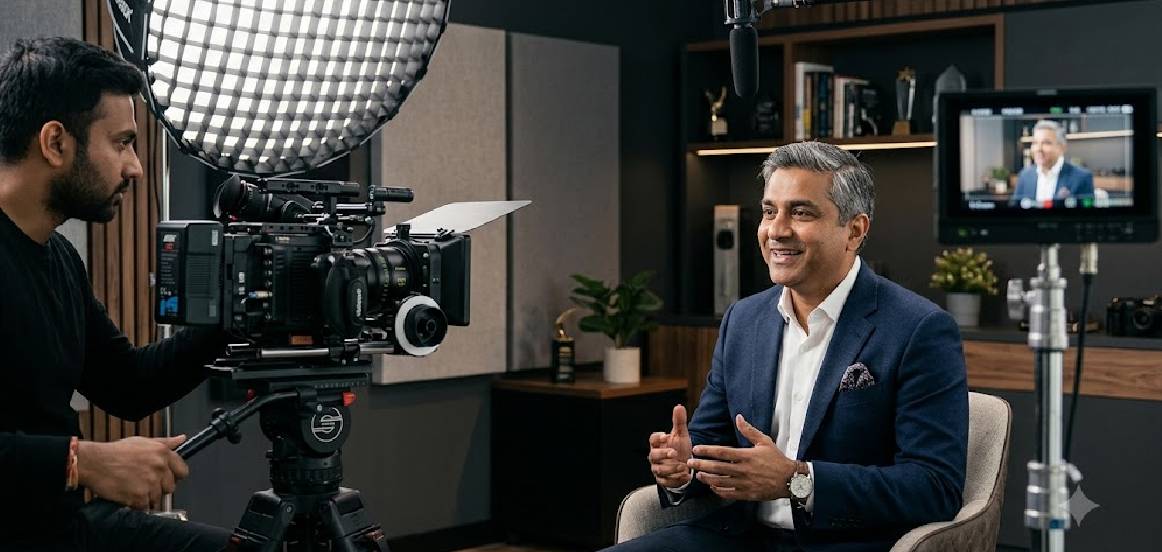
7. Use Interviews and Podcasts to Explore Ideas in Greater Depth
Not every founder insight needs to be delivered in a short, scripted video.
Interviews and video podcasts provide space for more detailed discussions about business experiences, industry challenges, leadership and professional lessons.
These formats can be particularly useful for founders who communicate more naturally through conversation than through direct-to-camera presentations.
A founder can host a discussion with an industry professional, answer questions from a moderator or participate in an interview about their business journey.
Prepare a few core topics and questions before recording, but leave room for genuine conversation. Overly rigid scripts can make an interview feel less natural.
Good discussion topics include:
- Lessons learned while building a business.
- Changes affecting the industry.
- Common customer misconceptions.
- Approaches to leadership and decision-making.
- Challenges faced by growing companies.
The production should support the conversation rather than distract from it. Clear audio, suitable camera framing and thoughtful editing help maintain a professional presentation.
Long-form interviews can also provide material for shorter clips, quotations and educational posts, provided the excerpts retain the original context.
MW Stuudio offers podcast and studio production options for founders who want a managed recording environment and post-production support.
8. Explain the Thinking Behind Your Business Decisions
Founders make decisions every day, but audiences usually see only the final outcome.
Explaining the reasoning behind selected decisions can help viewers understand your approach to business and problem-solving.
For example, you could discuss why your company prioritised a particular customer need, how you evaluated two possible approaches or what you learned from changing a process.
The most useful videos focus on the reasoning rather than presenting every decision as a success story.
A simple structure can help:
- Describe the situation.
- Explain the options you considered.
- Share the factors that influenced your choice.
- Discuss what you learned.
Where appropriate, explain that your decision was based on the circumstances at the time. Different businesses may reasonably choose different approaches.
Avoid disclosing sensitive commercial information, private employee matters or confidential customer details. You can explain the general principle without revealing the underlying private information.
This format can communicate professional maturity because it shows how you approach uncertainty, trade-offs and learning.
It also creates opportunities to discuss subjects that are more distinctive than generic motivational advice.
9. Show Behind-the-Scenes Moments That Reflect Your Values
Behind-the-scenes content can help audiences understand the people and working practices behind a business.
It may include team collaboration, preparation for a launch, a planning session, a studio recording or the process of developing a new idea.
For founders, the value lies in showing relevant moments that support their professional identity rather than recording routine activities without a clear purpose.
For example, a founder who values customer education might share a session where the team prepares a helpful guide. A founder focused on product quality could explain the checks completed before delivery.
The content should be authentic and respectful of employees, customers and business privacy.
Before recording, decide what can be shown publicly. Check that screens, documents, conversations and unreleased projects do not expose information that should remain confidential.
Behind-the-scenes videos do not need to reveal every detail. A short explanation accompanied by carefully selected footage may communicate the intended message more effectively than a lengthy office tour.
When used thoughtfully, this content can help audiences connect the founder’s stated values with the company’s actual working practices.
10. Prepare a Script Without Losing Your Natural Voice
Some founders feel uncomfortable on camera because they try to remember every sentence perfectly.
A script can provide structure, but reading a long passage word for word may make the delivery sound stiff if the presenter is not accustomed to it.
Start with the main message and organise it into a few supporting points.
For a short educational video, prepare:
- A clear opening statement.
- Two or three main ideas.
- One example or explanation.
- A practical conclusion.
Practise explaining the subject aloud before recording. Use language you would naturally use in a professional conversation.
If a full script is necessary, break it into shorter sections and record them separately where appropriate. A teleprompter can also help, provided the presenter maintains a natural pace and comfortable eye contact.
Avoid filling the script with industry jargon, exaggerated promises or unnecessary introductions.
It is useful to rehearse difficult names, statistics and technical explanations in advance. Verify factual claims before recording.
The goal is not to sound like a television presenter. It is to communicate clearly and confidently while remaining recognisable as yourself.
11. Develop Your On-Camera Presence Through Practice
On-camera confidence usually improves through preparation, repetition and constructive feedback.
Founders do not need to eliminate every pause or gesture. A natural presentation can be more effective than trying to imitate someone else’s speaking style.
Start with subjects you know well. Familiar topics reduce the mental effort required to remember the information and allow you to focus on delivery.
Pay attention to a few practical details:
- Look toward the appropriate camera lens.
- Speak at a comfortable pace.
- Use clear, complete sentences.
- Pause briefly between important ideas.
- Keep gestures natural.
- Maintain a posture that feels comfortable.
- Review audio clarity and framing before recording.
After each session, watch the footage and identify one or two improvements for next time. Avoid judging the entire performance based on minor imperfections.
It may help to begin with short recordings before moving to longer interviews or presentations.
Founders who prefer conversation can use an interviewer to guide the discussion. Others may feel more comfortable presenting prepared explanations directly to the camera.
Choose the format that helps you communicate most effectively, then practise it consistently.
12. Repurpose Founder Videos Across Multiple Platforms
A well-planned recording session can create content for more than one channel.
For example, a founder interview may contain several useful insights that can be edited into short clips. The main discussion can remain available as a longer video, while selected clips introduce individual topics to new audiences.
Repurposing should be planned before production whenever possible.
A single recording might support:
- A full-length YouTube video.
- Short vertical clips.
- LinkedIn video posts.
- A written article based on the discussion.
- A company newsletter.
- Short quotations for social media graphics.
- A relevant FAQ on the company website.
Each output should suit the platform and preserve the original meaning. Avoid cutting a sentence in a way that changes the founder’s intended point.
Capture clean audio and enough supporting footage to help editors create varied versions. Plan for different aspect ratios and leave suitable space for captions or on-screen graphics where needed.
The aim is to make the original recording more useful, not to publish the same file everywhere without adapting it.
A repeatable repurposing process can help founders maintain a more consistent content presence without requiring a completely new shoot for every post.
13. Maintain a Consistent Publishing Schedule
A personal brand develops through repeated communication, not just a single introduction video.
However, a realistic publishing schedule is more useful than an ambitious plan that becomes difficult to maintain.
Choose a frequency that fits your workload and production resources. A founder may begin with one substantial video each month and several shorter clips, then adjust based on experience and audience response.
Create a content calendar that includes the topic, intended audience, format, recording date, publishing date and required approvals.
Batch recording can make the process more efficient. For example, you might record several educational videos during one studio session, then publish them over the following weeks.
Leave room for timely subjects, industry changes and relevant business developments. A calendar should provide structure without preventing you from discussing something important when it arises.
Consistency also includes presentation. Use a recognisable approach to framing, audio, captions and visual styling while allowing the format to change when the topic requires it.
Review the schedule regularly to ensure it remains practical.
14. Measure Whether Your Content Supports Your Goals
Personal branding should have a clear purpose, even when the main objective is long-term professional visibility rather than immediate sales.
Before publishing, decide what you want the videos to help you achieve. You may want to explain your expertise, increase awareness of your work, attract relevant professional conversations or provide useful resources to customers.
Then choose measurements that reflect those objectives.
Possible indicators include:
- Video watch time and completion rate.
- Relevant comments and audience questions.
- Shares and saves.
- Profile visits.
- Website visits from video content.
- Enquiries mentioning a video or topic.
- Invitations to relevant interviews or industry discussions.
No single metric tells the entire story. A video with fewer views may still reach the right audience or answer an important question.
Review patterns across several posts rather than making major decisions based on one result.
Consider the subject, presentation, distribution and audience when evaluating performance. These factors can all affect how a video is received.
Use the findings to improve your future topics, opening statements, video length and publishing approach.
Avoid assuming that a rise in views automatically means the personal brand has improved. The more useful question is whether the content is reaching the intended audience and supporting the professional objectives you set.
15. Choose Professional Production Support When It Adds Value
Founders often have limited time because they must manage operations, employees, customers and business development.
Planning, recording and editing videos independently can become difficult when content requirements grow.
Professional production support can help organise the process, especially when the founder needs a consistent series of videos or more complex formats.
Depending on the requirements, support may include:
- Topic planning and script preparation.
- Studio and lighting setup.
- Camera operation and framing.
- Audio recording.
- On-camera direction.
- Video editing and colour grading.
- Subtitles and motion graphics.
- Platform-specific exports.
- Creation of shorter clips from longer recordings.
Not every founder needs a fully managed production service. A smartphone setup may be sufficient for a quick update, while a founder introduction film, interview series or professionally edited educational library may benefit from a more structured workflow.
Choose the level of support based on the content objectives, available time, budget and expected output.
MW Stuudio’s studio and production package offers a managed production option for business founders and other professionals who need studio recording and post-production support.
A clear brief will help the production team understand your audience, message, preferred style and publishing requirements before recording begins.
Conclusion
Building a personal brand through professional video content gives business founders an opportunity to communicate their experience, explain their ideas and present a more recognisable professional identity.
The process begins with clear positioning. Founders should understand what they want to be known for, develop a genuine story and choose content themes that reflect their knowledge and audience needs.
From there, educational videos, interviews, behind-the-scenes content and explanations of business decisions can help communicate their perspective in different formats.
Professional production supports this process by improving audio, lighting, framing and editing, while a consistent publishing schedule makes it easier to maintain momentum.
It is equally important to remain authentic. Founders do not need to imitate influencers or discuss every part of their personal lives. They can build a professional presence by sharing useful insights, explaining real experiences and communicating in a style that suits them.
Reviewing audience feedback and content performance can help refine the strategy over time. With a clear plan, a repeatable workflow and suitable production support, video content can become a practical part of a founder’s long-term communication strategy.
For founders who need help creating polished interviews, educational videos, founder introductions or social media content, MW Stuudio offers video production and studio services in Mumbai that can be explored according to their requirements.
The most important step is to begin with a message worth sharing, communicate it clearly and build a process that you can maintain.