


A podcast conversation can create much more value than a single audio or video episode.
Businesses often invest significant time preparing guests, researching topics, recording conversations, and producing professional episodes. But if the final recording is published once and then forgotten, much of its potential content value remains unused.
A well-planned podcast can become a long-term source of content for social media, websites, blogs, newsletters, YouTube, LinkedIn, email marketing, educational resources, and other digital channels.
The idea is simple: create once, distribute many times.
A 45-minute podcast conversation can contain dozens of useful ideas. A guest may answer customer questions, explain an industry concept, share an experience, discuss a trend, or provide practical advice. Each of these moments can become a separate piece of content.
This approach is often called content repurposing.
For businesses, podcast repurposing can make content production more efficient because the original conversation becomes the source material for multiple formats.
MW Stuudio’s current production model combines podcast recording with audio and video production, editing, sound design, branding, thumbnails, show notes, and distribution support. Its wider creative ecosystem also includes content writing, video production, post-production, SEO, websites, and digital marketing.
That connected approach makes podcast conversations particularly useful as the foundation of a longer-term content strategy.
Here are 15 practical ways businesses can turn podcast conversations into long-term content.
1. Start With a Repurposing Strategy Before Recording
Content repurposing should not be an afterthought.
Before recording the podcast, decide how the conversation could be used after production.
For example, a business recording one podcast episode might plan to create:
- One full-length podcast episode
- Several short video clips
- Instagram Reels
- YouTube Shorts
- LinkedIn posts
- Blog articles
- Email content
- Quote graphics
- Educational posts
- Website resources
- Guest promotional content
This changes the way you prepare the conversation.
Instead of recording only for the full episode, you begin looking for useful standalone ideas.
For example, suppose a marketing consultant is discussing SEO.
The full episode might be:
“How Businesses Can Build a Sustainable SEO Strategy.”
Inside that conversation, there could be individual topics such as:
- Why businesses struggle to rank
- Common SEO mistakes
- How long SEO can take
- Importance of technical SEO
- Local SEO strategies
- Content quality
- Measuring SEO performance
Each subject could become another piece of content.
The key is to plan these possibilities before the cameras start recording.
This helps the host prepare better questions and gives the production team a clearer idea of what material needs to be captured.
2. Treat the Podcast Episode as the Primary Content Asset
The complete podcast episode should remain the foundation of the content system.
Do not immediately cut everything into short clips without first producing a strong long-form episode.
The full conversation contains the complete context.
A viewer who discovers a short clip may become interested in the larger discussion.
The long-form episode can live on platforms such as YouTube or podcast distribution platforms, while shorter content directs attention toward it.
A typical content structure could look like this:
Primary asset:
Full podcast episode
Secondary assets:
Short video clips, articles, social posts, quotes, newsletters
Distribution assets:
Captions, thumbnails, episode descriptions, show notes
Website assets:
Episode page and supporting articles
This creates a content hierarchy.
The podcast is not simply one piece of content.
It becomes the original source from which other content is developed.
MW Stuudio’s podcast workflow includes recording, audio and video production, episode editing, sound design, branding, thumbnails, show notes, and distribution support, which fits naturally into this type of content system.
3. Create Short Video Clips From the Best Moments
One of the most useful ways to repurpose a podcast is to create short-form video clips.
A long conversation may contain several moments that can stand independently.
Look for sections where the guest:
- Gives practical advice
- Explains a common mistake
- Shares an unusual opinion
- Tells an interesting story
- Answers a customer question
- Explains a complicated subject simply
- Shares a personal experience
- Makes a useful prediction
- Gives a specific recommendation
These sections can become short videos.
For example, a 50-minute podcast might contain 10 to 20 moments worth reviewing for short-form content.
Not every clip needs to be promotional.
Educational and informative clips can often provide more value because they give the audience a reason to watch.
The short clip should ideally have enough context to make sense on its own.
Instead of starting with:
“As I mentioned earlier…”
the clip can begin with a clear statement:
“Most businesses make this SEO mistake before they even publish their first article.”
That creates a stronger standalone piece of content.
MW Stuudio’s post-production services include video editing, colour grading, sound design, motion graphics, subtitles, and thumbnail design, supporting the transformation of longer recordings into polished content formats.
4. Turn Podcast Answers Into Educational Social Media Posts
Not every useful podcast moment needs to become a video.
Some answers can become written social media content.
For example, a guest might explain:
“Three things businesses should check before launching an e-commerce website.”
That answer could become a LinkedIn post or Instagram carousel.
A useful process is:
Step 1
Identify a useful answer.
Step 2
Remove unnecessary conversational language.
Step 3
Turn the answer into a clear structure.
Step 4
Add an introductory hook.
Step 5
End with a useful conclusion or question.
For example:
Podcast discussion:
A 5-minute conversation about website speed.
Repurposed post:
“5 Website Speed Problems That Can Affect the User Experience.”
The information already exists.
The content team simply restructures it for another format.
This makes podcasting more valuable because the same expertise can reach people who prefer reading instead of watching or listening.

5. Turn Important Discussions Into Blog Articles
Podcast conversations can also become long-form written content.
This is particularly useful when the episode covers a topic that people actively search for online.
For example:
Podcast:
“Why Small Businesses Struggle With Digital Marketing”
Possible article:
“Why Small Businesses Struggle With Digital Marketing: Common Problems and Practical Solutions.”
The podcast provides the raw ideas.
The writer can then:
- Organise the discussion
- Add headings
- Remove repetition
- Expand important points
- Add examples
- Add supporting information
- Optimise the article for search intent
- Link to relevant website pages
This creates another long-term asset.
Unlike a social media post that may have a short visibility window, a useful website article can continue attracting visitors through search and direct sharing.
MW Stuudio’s integrated digital services include content writing and SEO alongside podcast and video production, making podcast-to-blog workflows a natural extension of its production ecosystem.
6. Create Quote-Based Content From Strong Statements
Podcasts often contain short statements that are useful outside the original conversation.
A guest might say:
“Your customers don’t need more information. They need clearer information.”
That sentence could become:
- A LinkedIn graphic
- Instagram quote post
- Website banner
- Newsletter section
- Presentation slide
- Social media caption
However, quote content should be used carefully.
Do not take statements out of context in a way that changes their meaning.
The strongest quotes usually have one of three characteristics:
Insight:
They explain something useful.
Perspective:
They express an interesting professional opinion.
Experience:
They communicate a lesson learned.
Businesses can also create a collection of quotes from multiple episodes and develop recurring content formats.
This can help establish a consistent visual and editorial identity.
7. Use Podcast Content for LinkedIn Thought Leadership
LinkedIn can be particularly useful for businesses using podcasts to communicate professional expertise.
A podcast discussion can become several LinkedIn formats.
For example:
Short insight
One important lesson from the conversation.
Founder story
A personal experience discussed during the episode.
Industry observation
A trend or change mentioned by the guest.
Practical checklist
A list of recommendations extracted from the discussion.
Question post
A topic from the conversation turned into a discussion prompt.
Video clip
A short section of the original podcast.
The important thing is to avoid simply copying the same caption everywhere.
Each platform should receive content adapted to its audience and format.
A professional audience may respond differently to a detailed LinkedIn insight than to a 30-second Instagram clip.
The podcast provides the source material.
The content team adapts it.
8. Create YouTube Shorts From Long-Form Podcast Episodes
Long-form podcast videos can also generate YouTube Shorts.
The key is to select moments that make sense independently.
Useful short-form topics could include:
- One important lesson
- A surprising industry fact
- A common mistake
- A practical tip
- A controversial opinion
- A useful definition
- A short story
- A direct answer to a customer question
Short videos should not simply be random pieces cut from the middle of the episode.
The selected section should have a clear beginning and useful takeaway.
Captions can also make short-form content easier to follow, especially for viewers watching without sound.
MW Stuudio’s reel production workflow includes editing, colour treatment, sound design, captions and platform-specific 9:16 exports for short-form video.
9. Build Email Newsletter Content From Podcast Insights
Podcast episodes can also support email marketing.
Instead of sending an email that simply says:
“Our new podcast episode is live.”
businesses can provide a useful insight from the conversation.
For example:
Subject:
“3 Lessons From Our Latest Conversation About Brand Growth”
The email could include:
- One key idea
- Two supporting insights
- A short guest introduction
- A useful takeaway
- Link to the complete episode
This gives subscribers a reason to read the email even if they do not immediately listen to the full episode.
Over time, podcast episodes can become a recurring source of newsletter material.
One conversation could provide multiple emails if the discussion covers several useful topics.
10. Create a Website Resource Hub Around the Podcast
Businesses can create a dedicated podcast section on their website.
Each episode can have its own page containing:
- Episode title
- Embedded audio or video
- Guest introduction
- Episode summary
- Key discussion points
- Important quotes
- Related resources
- Transcript or selected highlights
- Relevant service pages
- Related blog articles
- Guest links
This creates a searchable content library.
Over time, the podcast section can contain dozens of useful conversations.
The website then becomes more than a place where the podcast is embedded.
It becomes a knowledge resource.
This can also create opportunities to connect podcast topics with relevant services.
For example, a web development company could publish an episode about e-commerce and link the episode page to its e-commerce development service.
The connection should be useful and relevant rather than forced.
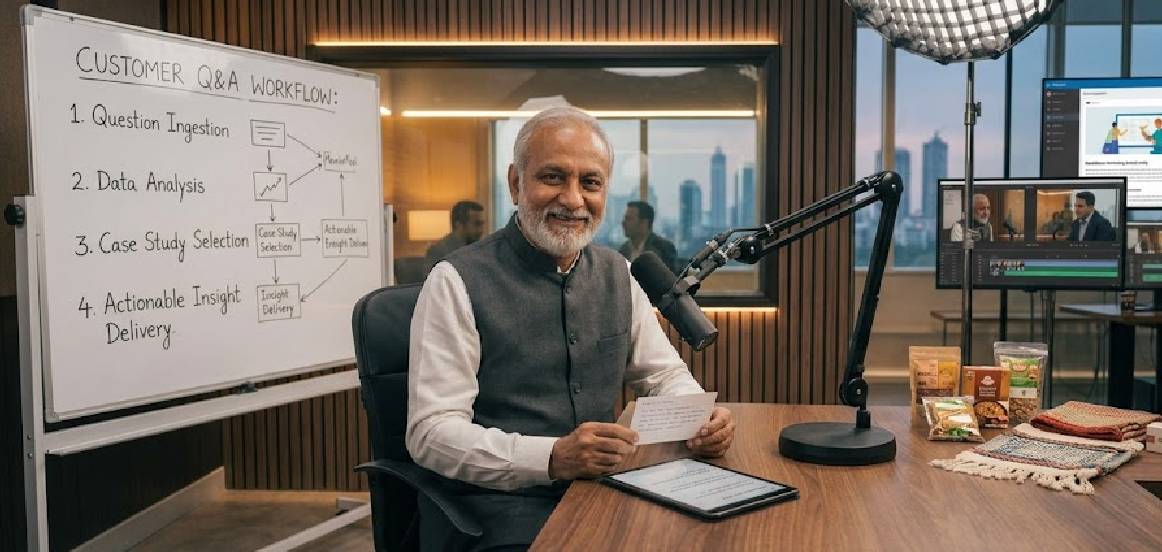
11. Build a Searchable Podcast Transcript and Content Archive
A podcast conversation contains a large amount of information.
A transcript can make that information easier to organise and reuse.
The transcript can be reviewed for:
- Important statements
- Questions
- Industry terminology
- Customer problems
- Statistics mentioned by the guest
- Stories
- Examples
- Advice
- Future content ideas
It can also help the team find useful moments months after the episode was recorded.
Imagine a business has 50 podcast episodes.
Without transcripts or organised notes, finding one specific insight could take a long time.
With a searchable archive, the team can search for subjects such as:
SEO
Leadership
E-commerce
Hiring
Branding
Customer experience
Technology
This turns the podcast library into a long-term knowledge database.
The content does not disappear after publication.
It becomes reusable source material.
12. Create Content Series From Recurring Podcast Themes
After recording several episodes, businesses may notice recurring themes.
For example, a business podcast might repeatedly discuss:
- Leadership
- Entrepreneurship
- Marketing
- Customer experience
- Technology
- Business growth
These themes can become recurring content series.
For example:
Leadership Lessons From Our Podcast
Marketing Questions Answered
Founder Lessons
Industry Trends
Customer Experience Insights
A recurring series makes content planning easier.
Instead of asking every week, “What should we post?”, the team can select an insight from the podcast archive and place it into an existing content format.
This also creates continuity between episodes.
A listener who discovers one episode may encounter related content from another conversation.
Over time, the podcast and social media channels start supporting one another.
13. Use Podcast Content to Create Customer Education
Podcast conversations can become educational resources for customers.
Suppose a business repeatedly receives the same questions.
Instead of answering those questions individually every time, the company can create podcast episodes around them.
For example:
Customer question:
“How should I prepare my products for an e-commerce photoshoot?”
Podcast episode:
“How to Prepare Products for Professional E-Commerce Photography”
The conversation can then become:
- Full podcast episode
- Blog article
- Short video
- FAQ answer
- Social media carousel
- Email content
- Website resource
This creates a content library that answers customer questions before a sales conversation begins.
It can also help sales teams.
A salesperson could share a relevant episode or article with a prospective customer who wants to understand a particular topic.
The content therefore becomes part of the customer journey.
14. Create a Long-Term Content Calendar From Your Podcast Archive
Once a business has several podcast episodes, it can build a content calendar around them.
For example, one episode could support an entire week:
Monday:
Full podcast episode
Tuesday:
Short video clip
Wednesday:
LinkedIn insight
Thursday:
Quote graphic
Friday:
Second short video
Saturday:
Blog or newsletter promotion
The following week can use another episode.
This creates a repeatable content system.
Businesses can also schedule older podcast content again when the subject becomes relevant.
For example, an episode about festive e-commerce preparation can be promoted again before the next festive season.
An episode about annual business planning can be reused toward the end of the year.
This is one reason a well-organised content archive is valuable.
Evergreen conversations can continue to provide content long after their original publication date.
15. Build a Long-Term Content Ecosystem From Every Conversation
The ultimate goal is not simply to create more posts.
It is to build a connected content ecosystem.
A single podcast conversation can follow a path like this:
Podcast recording
↓
Full audio episode
↓
Full video episode
↓
Short video clips
↓
YouTube Shorts / Reels
↓
LinkedIn posts
↓
Blog article
↓
Newsletter
↓
Quote graphics
↓
Website resource
↓
SEO content
↓
Future content ideas
This approach allows businesses to get more value from the time and expertise invested in every recording.
It also creates consistency.
The same ideas can appear across different channels while being adapted to each platform.
The key is not to copy and paste the exact same content everywhere.
Instead, the core idea stays consistent while the format changes.
A podcast might explain an idea in 20 minutes.
A Reel might communicate it in 45 seconds.
A LinkedIn post might explain the business lesson in 500 words.
A blog might explore the subject in 2,000 words.
A newsletter might summarise the key takeaway.
MW Stuudio’s integrated production and digital services model supports this type of workflow by connecting podcast production with video, post-production, content writing, SEO, website development, and digital marketing.
For businesses recording regularly, batch production can make this system even more practical. MW Stuudio’s current podcast workflow describes batch recording and post-production for multiple episodes, with finished audio and video episodes prepared for publishing.
Conclusion
A podcast conversation should not be treated as a single piece of content.
It can become the foundation of a much larger content system.
The time spent preparing a guest, researching a topic, recording the conversation, and producing the episode can generate weeks or even months of additional content when the material is planned and organised properly.
Businesses can turn podcast conversations into:
- Long-form podcast episodes
- Video podcasts
- Short-form clips
- Instagram Reels
- YouTube Shorts
- LinkedIn posts
- Blog articles
- Email newsletters
- Quote graphics
- Website resources
- Customer education
- SEO content
- Industry insights
- Content series
- Future content ideas
The most important step is to think about repurposing before the recording.
Choose topics with multiple content possibilities.
Ask questions that produce useful answers.
Encourage guests to share stories and practical insights.
Record professional audio and video.
Then organise the material into a content library.
The podcast becomes the source.
The website, social media, email, blog, and other channels become distribution and repurposing platforms.
This approach can help businesses reduce the pressure of constantly creating completely new ideas.
Instead of starting from zero every week, the business can continue extracting useful insights from conversations it has already recorded.
Over time, this creates something more valuable than a collection of podcast episodes.
It creates a long-term library of business knowledge and brand content.
For businesses that want to build this system professionally, MW Stuudio provides podcast production, video production, post-production, content writing, SEO, website development, and digital marketing as connected services.