
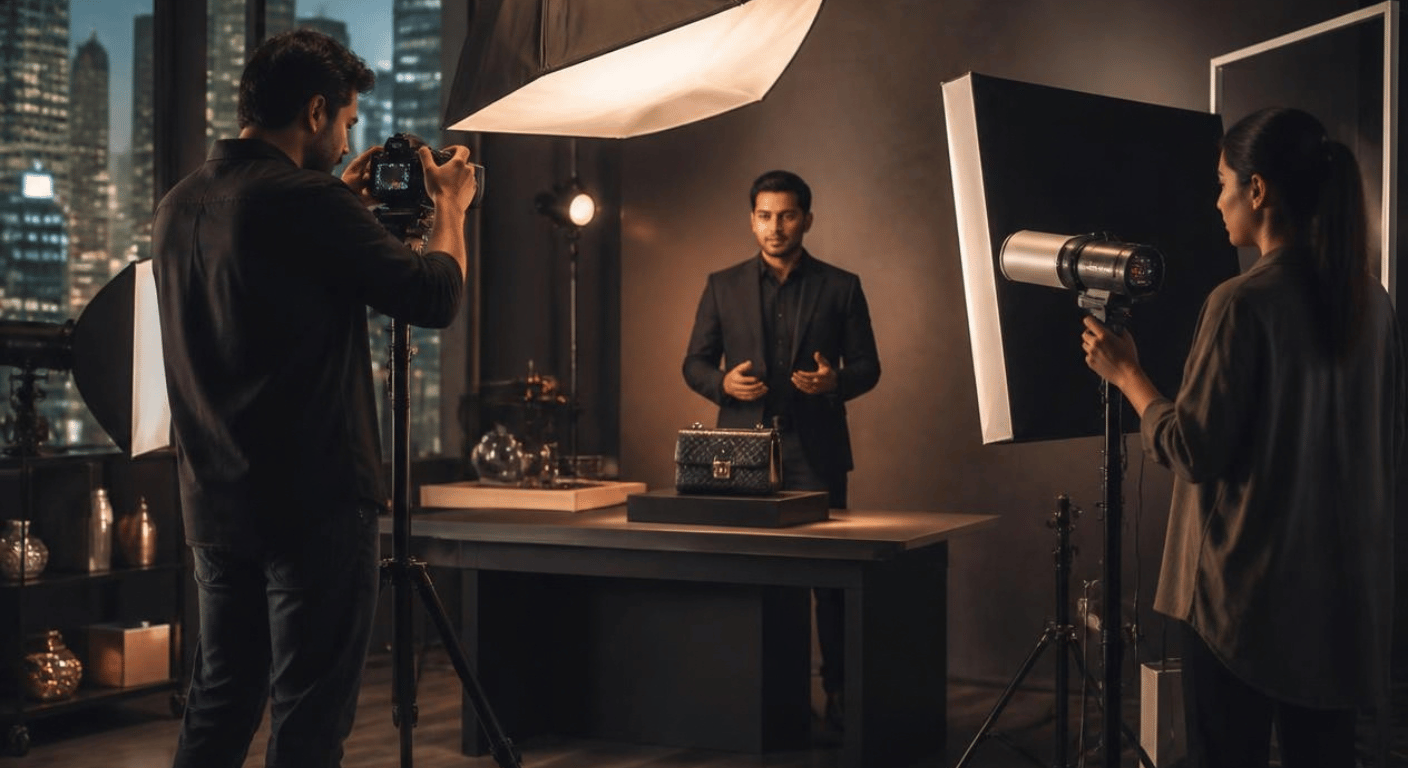
Professional photography and video are no longer limited to large companies, advertising agencies, or major production houses. Businesses of all sizes now use visual content across websites, e-commerce stores, Instagram, YouTube, advertisements, presentations, social media, and other digital platforms.
However, having a good camera does not automatically guarantee professional-looking content.
Professional lighting for business photography and video plays a major role in determining how a subject looks on camera. Lighting affects brightness, shadows, colour, texture, depth, skin tones, product details, background separation, and the overall visual mood of a photograph or video.
A product photographed with uncontrolled lighting can look flat or inaccurate. A business presenter recorded under poor lighting can have harsh shadows or uneven skin tones. A fashion shoot may fail to show the texture and shape of clothing properly. A professional lighting setup gives the photographer or videographer much greater control over these visual elements.
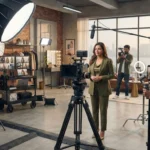
MW Stuudio’s photography and video setup includes professional strobe lighting systems, precision light modifiers, multiple backdrop options, cinema-grade cameras, and controlled studio environments. Its product photography setup uses modifiers such as softboxes, octaboxes, beauty dishes, strip lights, snoots, grids, and reflectors to create different lighting effects for different subjects.
Professional lighting is therefore not simply about making an image brighter. It is about controlling how the subject is presented.
Here are 15 ways professional lighting can improve business photography and video.
1. Professional Lighting Creates Better Exposure
One of the first benefits of professional lighting is better control over exposure.
Exposure determines how bright or dark the image appears. When businesses rely entirely on available room light or inconsistent natural light, the camera may struggle to produce consistent exposure.
Professional lights allow the production team to control the amount of light falling on the subject.
This is particularly useful when photographing:
- Products
- People
- Jewellery
- Clothing
- Food
- Interiors
- Corporate teams
- Business owners
- Models
- E-commerce products
Instead of depending on whatever light happens to be available, photographers can position lights according to the subject and desired result.
This makes it easier to maintain consistent brightness across a complete collection of photographs.
For businesses creating hundreds of product images, this consistency becomes especially important.
A catalogue where one product looks bright, another looks dark, and another has a different colour temperature can make the overall brand presentation feel inconsistent.
Professional lighting helps establish a repeatable setup.
2. It Gives Photographers Control Over Shadows
Shadows are not necessarily bad.
In fact, shadows can add depth, dimension, and character to an image.
The problem occurs when shadows are uncontrolled.
A ceiling light can create shadows under the eyes. Direct sunlight can create extremely hard shadows. A single light source may illuminate one side of a product while leaving important details hidden.
Professional lighting gives photographers greater control over where shadows appear and how strong they are.
A photographer can use:
- Fill lights
- Reflectors
- Softboxes
- Diffusion
- Grids
- Flags
- Multiple light sources
For example, a softbox can create a softer transition between highlights and shadows than a small direct light source.
For product photography, controlled shadows can help maintain shape while avoiding distracting dark areas.
For portraits, carefully positioned lighting can add dimension to the face while keeping the subject flattering and professional.
MW Stuudio’s professional product photography setup includes multiple light modifiers designed for different lighting requirements.
3. Professional Lighting Makes Products Look More Three-Dimensional
Product photography needs more than simple brightness.
The lighting should help communicate the product’s shape, surface, material, and dimensions.
A flat lighting setup can make a product look two-dimensional.
Directional lighting can help reveal:
- Curves
- Edges
- Texture
- Surface details
- Materials
- Depth
- Shape
For example, leather products may benefit from directional lighting that reveals texture.
Glass products may require carefully positioned highlights and reflections.
Jewellery may need precise lighting to create controlled sparkle.
Cosmetic packaging may require reflections to communicate the shape and finish of the container.
Different products therefore require different lighting strategies.
MW Stuudio specifically describes using directional side lighting for leather and fabric, controlled backlighting for liquids, and precise lighting for jewellery.
The objective is to make the product visually understandable while maintaining an attractive commercial presentation.
4. It Improves Skin Tones in Business Portraits and Videos
People are often at the centre of business content.
Founders, employees, models, presenters, influencers, experts, and customers may all appear in photographs and videos.
Poor lighting can make skin tones appear uneven, overly dark, overly bright, or unnatural.
Professional lighting allows the production team to control the direction, intensity, softness, and colour of the light falling on the subject.
This can create a more balanced and natural appearance.
For business portraits, the goal is generally not to make someone look artificially perfect.
Instead, professional lighting should create a clean and flattering representation that still looks natural.
This is particularly important for:
- Founder portraits
- Team photographs
- LinkedIn content
- Corporate videos
- Interviews
- Testimonials
- Podcast videos
- Website team pages
- Professional headshots
When people look comfortable and properly illuminated, the content can feel more polished and intentional.
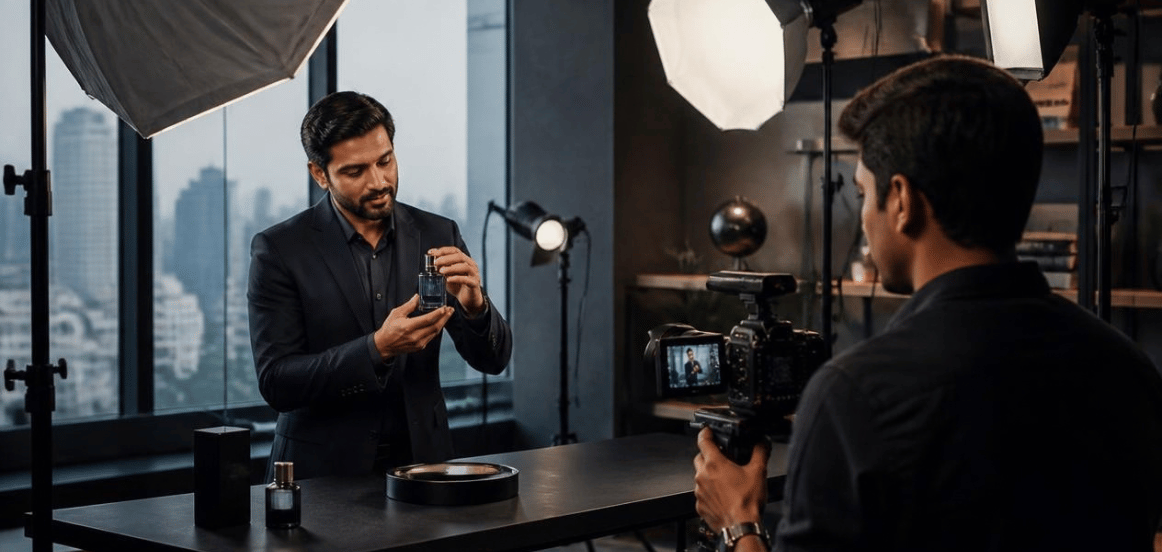
5. Professional Lighting Helps Create Brand Consistency
Businesses often publish visual content across many different platforms.
A brand may have:
- Website photography
- Product images
- Instagram posts
- Reels
- YouTube videos
- Advertisements
- LinkedIn content
- Brochures
- E-commerce listings
If every shoot uses completely different lighting, colours, backgrounds, and visual styles, the brand can appear inconsistent.
A controlled lighting setup makes it easier to repeat a visual style.
For example, a fashion brand may consistently use soft, bright lighting.
A premium jewellery brand may use more controlled contrast and highlights.
A corporate consultancy may use clean, balanced lighting.
A fitness brand may use stronger directional lighting to create energy and definition.
The specific style depends on the brand.
The important point is that professional lighting gives the creative team greater control over reproducing that style.
MW Stuudio also highlights the benefit of using the same lighting, backdrop, styling, and colour treatment when shooting product photography and video together.
6. It Makes Video Presenters Look More Professional
Video content has become an important part of business communication.
Companies use videos for:
- YouTube
- Website introductions
- Educational content
- Product demonstrations
- Interviews
- Testimonials
- Corporate communication
- Podcasts
A presenter standing in front of a camera under a single overhead room light can produce distracting shadows and an uneven appearance.
A professional three-point-style lighting approach can provide much greater control.
A typical setup may involve:
Key Light
The main light illuminating the presenter.
Fill Light
Used to control the darkness of shadows.
Back or Rim Light
Used to separate the presenter from the background.
Additional background lights can also be used when the production requires them.
The exact setup can change depending on the location, subject, camera, and creative style.
The goal is to make the presenter clear, dimensional, and visually integrated into the scene.
7. Professional Lighting Improves Background Separation
A common problem in business photography and video is a subject blending into the background.
If the subject and background have similar brightness and colour, the image can appear flat.
Lighting can help create separation.
For example, a photographer may:
- Light the subject separately
- Darken the background
- Add a subtle background light
- Use a rim light
- Change the subject-to-background distance
- Use different colour temperatures
- Control contrast
This creates visual layers.
The viewer can immediately distinguish between the foreground subject and the environment.
Background separation is especially useful for:
- Corporate portraits
- Founder videos
- Interviews
- Product demonstrations
- Fashion photography
- YouTube content
- Podcast videos
It does not necessarily require dramatic lighting.
Even subtle separation can make an image appear more dimensional.
8. It Helps Highlight Product Texture and Material
Different materials respond to light differently.
A matte surface absorbs and diffuses light.
A glossy surface reflects light.
Metal creates highlights.
Glass creates reflections and transparency.
Fabric reveals texture through directional light.
Leather can benefit from controlled side lighting.
Jewellery can require carefully positioned highlights to show its reflective qualities.
This is why there is no single lighting setup that works perfectly for every product.
Professional photographers can adjust:
- Light direction
- Light size
- Light intensity
- Distance
- Diffusion
- Reflection
- Contrast
- Modifier type
MW Stuudio’s product photography setup includes softboxes, octaboxes, beauty dishes, strip lights, snoots, grids, and reflectors, allowing different lighting configurations depending on the product.
The result is photography that communicates more information about the actual product.
9. Professional Lighting Reduces Dependence on Natural Light
Natural light can produce beautiful results.
However, it is constantly changing.
Clouds move.
The sun changes position.
Weather changes.
The colour and intensity of daylight can vary throughout the day.
This can create problems when a business needs consistent results.
A controlled studio environment provides greater predictability.
MW Stuudio’s photography studio describes a controlled lighting environment where artificial lighting is the primary controllable source rather than relying on changing external light.
This is useful for larger commercial shoots where dozens or hundreds of images need to maintain a similar appearance.
It also makes production planning easier.
A shoot does not have to stop because clouds suddenly change the lighting.
The team can adjust the artificial lighting instead.
10. It Makes E-Commerce Product Photography More Consistent
E-commerce businesses need consistency.
When customers browse an online store, they may see dozens or hundreds of products together.
Product photographs should ideally maintain consistent:
- Brightness
- Background
- Colour
- Camera angle
- Framing
- Shadow treatment
- Product positioning
- Visual style
Professional lighting helps create repeatable shooting conditions.
This is particularly valuable for businesses that regularly add new products.
For example, a fashion brand may photograph 50 new products every season.
A cosmetics company may launch new packaging every few months.
A jewellery business may continuously add new collections.
If the lighting setup changes for every shoot, the website can quickly become visually inconsistent.
A professional studio environment makes repeatable production easier.
MW Stuudio specifically positions its professional lighting setup for e-commerce and product photography, with controlled configurations for different product types.
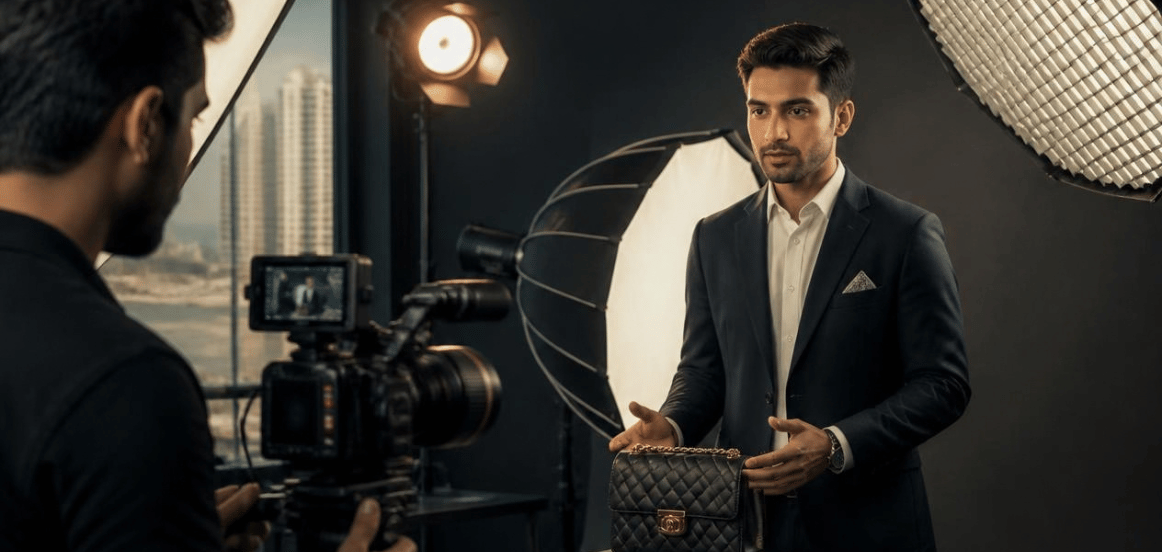
11. Different Light Modifiers Create Different Visual Results
Professional lighting is not simply about owning powerful lights.
Modifiers are equally important.
A modifier changes the quality, direction, spread, or character of light.
Common examples include:
Softbox
Creates broad and relatively soft illumination.
Octabox
Often used for portraits, fashion, and commercial photography where a large soft light source is useful.
Beauty Dish
Can provide more defined facial lighting while retaining some softness.
Strip Light
Creates a narrow light source useful for edge lighting and shaping subjects.
Reflector
Can redirect light back toward the subject and help control shadows.
Snoot
Can create a narrow, focused beam.
Grid
Helps control where light spreads.
The right modifier depends on the subject and desired visual result.
MW Stuudio’s professional product photography setup includes several of these modifier types.
This flexibility allows one studio environment to support very different types of commercial photography.
12. Lighting Can Improve Product Videos as Well as Product Photos
Businesses often treat photography and video as completely separate productions.
However, the same product may need both.
For example:
A product page may require high-quality product photographs.
The same product may also need:
- Demonstration video
- Unboxing video
- Feature video
- Social media Reel
- YouTube product video
- Advertisement
Maintaining visual consistency between these formats is useful for brand presentation.
If the product looks one way in photographs and completely different in video, the content library may feel disconnected.
Shooting still images and video during the same production session can help maintain consistent lighting, styling, backdrop, and overall visual treatment.
MW Stuudio specifically notes that its product photography and video can be produced in the same session using the same lighting setup and visual style.
This can also make the production workflow more efficient.
13. Good Lighting Can Reduce Unnecessary Post-Production Work
Post-production is an important part of professional photography and video.
Colour correction, retouching, editing, background cleanup, and other finishing processes can improve the final output.
However, post-production should not be used as a substitute for proper lighting.
If a product is poorly illuminated, fixing every shadow, reflection, highlight, or colour issue afterward can require additional work.
Good lighting establishes a stronger foundation before the file reaches the editing stage.
This can help the post-production team focus on creative refinement rather than correcting avoidable technical problems.
A professional workflow therefore looks at the entire process:
Planning → Lighting → Shooting → Editing → Colour → Final Delivery
The better the lighting is during production, the stronger the starting material can be.
MW Stuudio combines professional lighting and photography/video production with a full post-production workflow.
14. Professional Lighting Helps Create Different Moods
Lighting does not only determine visibility.
It can also influence the mood of a visual.
A bright, evenly illuminated setup can feel:
- Clean
- Fresh
- Modern
- Approachable
Directional lighting with stronger contrast can feel:
- Dramatic
- Premium
- Editorial
- Sophisticated
Soft warm lighting can create:
- Comfort
- Intimacy
- Lifestyle appeal
The appropriate style depends on the brand and content.
For example, a financial consultancy may want a professional and controlled appearance.
A fashion brand may prefer more editorial lighting.
A restaurant may use warm lighting to communicate atmosphere.
A technology company may choose a clean, modern visual style.
The lighting should therefore support the message rather than simply follow a trend.
15. Build a Professional Lighting Workflow for Consistent Content
The final benefit of professional lighting is the ability to create a repeatable production workflow.
Businesses rarely need only one photograph or one video.
They may need content every month.
A brand may regularly require:
- Product photography
- Social media images
- Reels
- YouTube videos
- Founder videos
- Team photographs
- Customer testimonials
- Website banners
- Advertising content
A repeatable lighting workflow makes recurring production easier.
It becomes easier to maintain a consistent appearance across months of content.
For businesses producing both photography and video, a coordinated production setup can also help maintain consistency between formats.
MW Stuudio’s broader creative setup combines photography, videography, production, post-production, and digital services under one creative ecosystem.
The goal is not to use the most complicated lighting setup possible.
The goal is to use the right lighting setup for the subject, message, platform, and brand.
Conclusion
Professional photography and video depend on more than cameras and editing software.
Professional lighting for business photography and video gives photographers and videographers greater control over exposure, shadows, colour, texture, depth, background separation, skin tones, and overall visual style.
For businesses, this control can be especially valuable because visual content is often used across multiple platforms.
A single product may appear on an e-commerce website, Instagram post, Reel, YouTube video, advertisement, and product catalogue.
A founder may appear on the company website, LinkedIn, YouTube, podcast, and corporate presentation.
When these assets are created using a consistent professional lighting approach, the brand can maintain a more unified visual identity.
The right lighting does not necessarily mean using the most expensive equipment or the most complicated setup. It means understanding the subject and using light intentionally.