


Introduction
Instagram Reels for Business help brands showcase products, explain services, connect with their target audience, and build brand awareness through engaging short-form videos. To create high-quality Instagram Reels, businesses need a clear content strategy, strong opening hooks, professional lighting, clean audio, and effective editing. Whether you run a small business, an e-commerce store, or a professional service company, well-planned Reels can help you communicate your value and encourage potential customers to take the next step.
1. Instagram Reels for Business: Define Your Content Goals
Before recording your first video, decide what you want your Instagram Reels to achieve. A clear goal helps you select suitable topics, develop relevant scripts, and measure whether your content is producing useful results.
Some businesses want to increase brand awareness, while others focus on product enquiries, website visits, bookings, or direct sales. Your content should support the business outcome that matters most.
For example, a skincare brand might create Reels demonstrating how to use a product. A consultant could share practical tips, while a restaurant might showcase food preparation and customer experiences.
Set a Clear Objective
Choose one primary objective for each Reel. Avoid trying to explain your entire business in a single short video. A focused message is easier for viewers to understand and remember.
Understand Your Target Audience
Identify your audience’s interests, questions, challenges, and purchasing concerns. Content that addresses a real problem is often more useful than content created only to follow a trend.
Connect Content With Business Results
Decide what success means before publishing. Depending on the goal, you might measure reach, watch time, shares, saves, profile visits, enquiries, or purchases.
2. Build an Instagram Reels Content Strategy
A consistent content strategy makes it easier to create relevant videos without running out of ideas. Rather than deciding what to post at the last minute, organize your content around a few recurring themes that support your brand positioning.
A business can combine educational videos, product-focused content, behind-the-scenes footage, customer experiences, and brand storytelling. This variety keeps the account informative and engaging while maintaining a recognizable identity.
Use Four Core Content Pillars
- Educational content: Explain useful concepts, answer common questions, and share practical tips.
- Product or service content: Demonstrate features, benefits, applications, or the experience customers can expect.
- Behind-the-scenes content: Show your team, production process, workplace, preparation, or daily operations.
- Trust-building content: Share customer feedback, team expertise, business milestones, and authentic brand stories.
Plan Topics in Advance
Prepare a list of topics based on customer questions and common objections. Group similar ideas together so you can record several related Reels during one session.
Maintain a Consistent Publishing Routine
Choose a realistic schedule that fits your resources. Publishing fewer, well-planned videos consistently can be more sustainable than producing many videos without a clear purpose.
3. Start Every Reel With a Strong Hook
The opening moments of a Reel are important because viewers can quickly scroll to the next video. Start with a clear reason to keep watching instead of spending several seconds on greetings, introductions, or unnecessary branding.
A strong hook creates curiosity, introduces a relevant problem, promises useful information, or immediately shows the result viewers want to see.
For example, a home décor business might open with a room transformation. A marketing consultant could begin with a common mistake that affects enquiries. A product brand might show its product in use before explaining its benefits.
Hook Ideas for Business Reels
- Ask a question your target customers frequently have.
- Show the final result before explaining the process.
- Highlight a common mistake and introduce a solution.
- Demonstrate an unexpected product feature.
- Promise a specific, useful takeaway that the video delivers.
Keep the Hook Relevant
Avoid misleading openings that promise something the video never explains. The content that follows should fulfil the expectation created by the first few seconds.
Remove Unnecessary Introductions
Start with the most interesting visual, statement, action, or question. Add your business name or context naturally when it helps viewers understand the content.

4. Write a Short and Focused Reel Script
A script helps keep the video clear, concise, and purposeful. Even conversational Reels benefit from a simple structure because it prevents rambling and makes recording more efficient.
You do not need to memorize every sentence. A short outline with key talking points can help you sound natural while covering the essential message.
Follow a Simple Three-Part Structure
- Hook: Introduce the problem, question, result, or reason to watch.
- Value: Demonstrate the product, explain the solution, or deliver the promised information.
- Call to action: Tell viewers what useful next step they can take.
For example, a professional service provider might begin by identifying a common business challenge, explain two practical ways to address it, and invite interested viewers to explore the service.
Keep One Main Message Per Reel
A short video should not attempt to cover an entire subject. Break a large topic into a series of focused videos that can each stand independently.
Write for Spoken Language
Use short sentences and familiar words. Read the script aloud before recording to identify awkward phrases and sections that sound too formal.
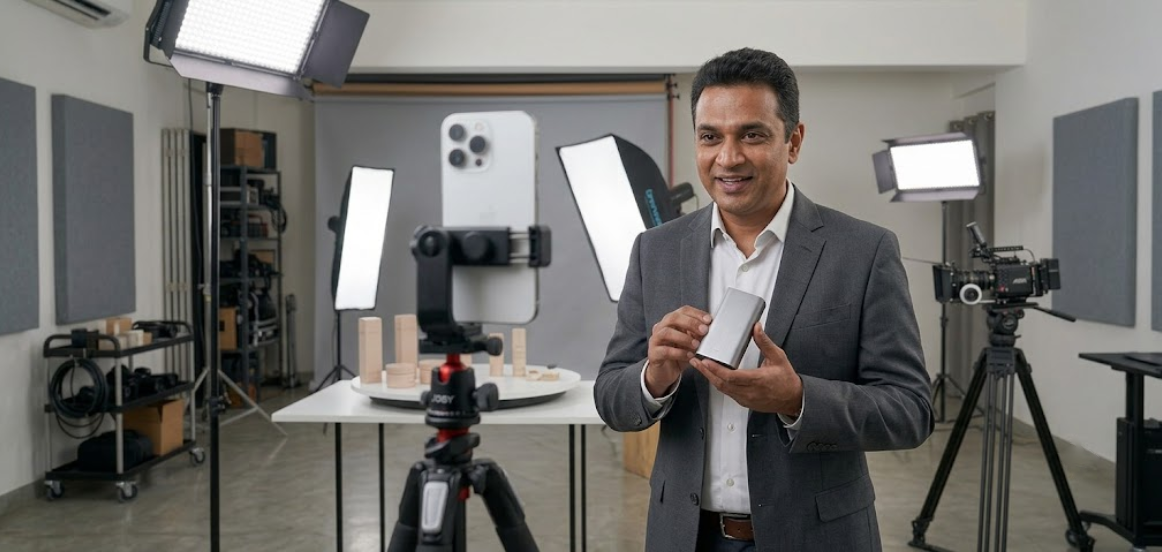
5. Use Proper Lighting, Camera Framing, and Composition
High-quality Instagram Reels do not always require the most expensive camera. Clear lighting, stable framing, clean backgrounds, and thoughtful composition can significantly improve the appearance of a video.
Start by selecting a location that suits your message. A founder video may work well in a professional office, while a product demonstration might need a clean tabletop setup with controlled lighting.
Choose the Right Lighting
Natural window light can work well for talking-head videos when it illuminates the subject evenly. For more controlled results, use suitable soft lights and position them to reduce harsh shadows.
Keep the Subject in Focus
Place the speaker or product clearly within the frame. Avoid distracting backgrounds, unnecessary movement, and objects that compete with the main subject.
Stabilize Your Camera
Use a tripod or another stable support for interviews, tutorials, product demonstrations, and founder videos. Handheld movement can be appropriate for behind-the-scenes content, but it should feel intentional.
Record in a Vertical Format
A vertical 9:16 composition is generally suitable for Instagram Reels. Check the framing before recording and leave sufficient space around faces and important products. Keep essential visual details away from interface overlays that may cover the edges of the video.
6. Prioritize Clear Audio and Natural Delivery
Viewers may tolerate simple visuals when the message is useful, but poor audio can make a video difficult to follow. Clear speech is particularly important for educational Reels, founder content, interviews, and service explanations.
Record in a quiet location whenever possible. Reduce background noise, switch off distracting equipment, and check for echoes before beginning the main recording.
Choose Suitable Audio Equipment
A quality external microphone can improve voice clarity, particularly in rooms with background noise. A wireless lavalier microphone may be useful for presenters who move around, while a directional microphone can suit controlled recording environments.
Speak Naturally
Encourage presenters to speak as they would to a customer. A friendly, confident delivery often feels more authentic than an overly rehearsed performance.
Monitor Background Music
Music should support the message without overpowering speech. Check that you have the appropriate rights to use music for your intended commercial purpose, and review Instagram’s current music and licensing options.
Record a Test Clip
Listen to a short sample through headphones before recording the full video. Check speech clarity, background noise, volume levels, and the distance between the speaker and microphone.
7. Use Editing to Make Your Reels Easier to Watch
Editing should improve clarity and pacing rather than distract viewers with unnecessary effects. A well-edited Reel removes dead time, keeps the main message visible, and guides the audience through the story.
Start by selecting the strongest takes. Remove repeated phrases, long pauses, mistakes, and sections that do not contribute to the main point.
Improve the Pace
Use cuts to maintain momentum, but allow enough time for viewers to understand demonstrations and important information. The ideal duration depends on the topic and how much explanation it requires.
Add Captions Where Appropriate
Captions help people follow spoken content when watching without sound and can improve accessibility. Review automatically generated captions for names, technical terms, accents, and transcription mistakes.
Use Transitions With Purpose
Simple cuts and occasional transitions are often sufficient. Avoid adding effects simply because they are available; visual consistency and clear storytelling are more important.
Check the Final Export
Review the entire video on a phone before publishing. Confirm that the image is clear, speech is audible, captions are readable, and important content is not hidden behind interface elements.
8. Create Product and Service Reels That Demonstrate Real Value
Businesses should use Reels to show how their products or services solve relevant customer problems. A direct demonstration can make an offer easier to understand than a video that only lists features.
The approach will vary by industry. An e-commerce brand can show product details and usage, a restaurant can capture preparation and presentation, and a professional service provider can explain how a process works.
Demonstrate the Product in Context
Show the product being used in a realistic setting. Include useful details such as its size, texture, operation, application, or practical benefits.
Explain Benefits Instead of Listing Features
Connect product features to customer needs. Rather than simply describing a feature, explain what it helps the customer do or understand.
Show the Process Behind Your Service
For service businesses, use short clips to explain the steps involved, introduce team members, demonstrate equipment, or show how a project progresses.
Keep Claims Accurate
Use genuine demonstrations and realistic examples. Avoid unsupported promises, misleading before-and-after comparisons, or claims that cannot be substantiated.
9. Adapt Trends Without Losing Your Brand Identity
Trending sounds, formats, and creative approaches can give businesses ideas for Reels, but not every trend fits every audience. Use trends selectively and adapt them to your products, expertise, communication style, and business goals.
A trend should make your message more engaging, not replace the message entirely.
Check Whether the Trend Fits
Ask whether your customers will understand the format and whether it supports your brand. A playful trend may suit a lifestyle brand but may need adaptation for a highly specialized professional service.
Add Your Own Perspective
Use a familiar format to answer an industry question, demonstrate a product, or share an insight that reflects your business experience. Original relevance gives the content more value than simply copying another account.
Review Audio Suitability
Check whether the audio is available for your account and appropriate for commercial use. Music availability and licensing may differ by account type, region, and intended use.
Avoid Chasing Every Trend
Prioritize trends that fit your content plan. A consistent, recognizable brand voice can be more valuable over time than publishing unrelated trend-based videos.
10. Write Better Captions, Use Relevant Hashtags, and Add a Call to Action
The Reel itself attracts attention, while the caption and call to action provide additional context and help interested viewers decide what to do next. Treat these elements as part of the content rather than an afterthought.
Write Captions That Add Value
Use the caption to clarify the main point, add a useful detail, or explain a next step. Avoid repeating every spoken sentence if it does not help the reader.
Use Relevant Hashtags
Choose a small, relevant selection of hashtags that describe the topic, industry, product, or audience. Hashtags should accurately reflect the content rather than serve as a substitute for a strong video and caption.
Give Viewers One Clear Next Step
A call to action should match the purpose of the Reel. Depending on the topic, you can invite viewers to save the tips, share the video with a colleague, visit your profile, explore a service page, or contact your business.
Make the Next Step Easy
If you want enquiries, explain how viewers can reach you. If you want engagement, ask a specific and relevant question. Avoid crowding a short video with several competing calls to action.
11. Measure Performance and Improve Each New Reel
Publishing is only one part of a successful Instagram Reels strategy. Reviewing performance helps you understand which topics resonate with viewers and which parts of your production process need improvement.
Use the analytics available through Instagram’s professional tools and compare results against your objectives. Different metrics reveal different aspects of performance, so avoid judging every Reel using a single number.
Track Relevant Metrics
- Reach and views: Understand how broadly the video was distributed and watched.
- Watch time and retention: Assess whether the opening and overall pacing hold attention.
- Shares and saves: Identify content that viewers find useful or worth passing along.
- Profile visits and follows: See whether the video encourages further interest in your brand.
- Website visits and enquiries: Evaluate whether content contributes to business actions when these can be tracked.
Metric definitions and availability can change, so use the current Instagram Insights interface for the most accurate interpretation.
Compare Similar Content
Review Reels with similar topics and objectives. Look for patterns in opening hooks, presentation styles, video length, subjects, and calls to action rather than drawing conclusions from a single post.
Test One Change at a Time
Try a different opening, shorter explanation, clearer caption, or new visual approach. Comparing focused experiments makes it easier to identify what may have influenced results.
Learn From Underperforming Videos
A Reel with limited reach can still reveal useful information. Check whether the topic was relevant, the hook was clear, the audio was understandable, and the content delivered what it promised.
12. Batch Your Production to Maintain Consistency
Creating every Reel separately can consume time and make publishing inconsistent. Batch production allows businesses to plan multiple videos together, share equipment and setup time, and build a more reliable content library.
A well-organized shoot can include several scripts, different product demonstrations, short expert answers, behind-the-scenes clips, and alternate introductions for future testing.
Prepare a Shoot Plan
List each video idea, its key message, presenter, location, props, required shots, and intended call to action. Group videos that use the same setup to reduce unnecessary changes.
Record Multiple Videos in One Session
Once lighting, framing, and audio are ready, record several related videos. Capture additional supporting footage, close-ups, and behind-the-scenes clips that may be useful during editing.
Allow Time for Retakes
Plan a realistic schedule that includes setup, rehearsal, recording, and review. Rushing the shoot can create avoidable audio and visual problems.
Organize and Repurpose Your Footage
Label files clearly and keep original recordings, edited versions, captions, and approved assets organized. Suitable footage can often be adapted into Instagram Stories, short advertisements, website videos, or other formats, provided each version is edited for its intended use.
Build a Repeatable Workflow
Create a process for planning, shooting, editing, reviewing, approving, and publishing content. A repeatable workflow makes it easier for teams to maintain quality as their content requirements grow.
How MWS India Can Help You Create High-Quality Instagram Reels
Creating effective Reels requires more than recording a video on a smartphone. Businesses need relevant concepts, confident presentation, appropriate lighting, clean audio, professional editing, and a production process that supports consistent publishing.
MWS India provides content production support for businesses, founders, brands, and creators looking to develop professional visual content in Mumbai. Depending on your requirements, a planned shoot can include Reel concepts, video recording, product demonstrations, founder-led content, behind-the-scenes footage, and editing for social media.
Professional Reel Shoot Planning
A clear production plan helps your team prepare the right subjects, props, scripts, and locations before recording begins. This reduces avoidable delays and makes the shoot more productive.
Studio-Based Video Production
A suitable studio environment can provide better control over lighting, sound, backgrounds, and camera positioning. This is especially useful for product videos, educational Reels, interviews, and business presentations.
Multiple Content Assets From One Shoot
With an organized shot list, one production session can create several distinct videos. Additional footage may also support Stories, promotional edits, and other marketing content.
Editing and Brand Consistency
Consistent framing, captions, pacing, and presentation help create a recognizable content style. Each video should still be edited to suit its topic and audience.
For businesses looking for professional Instagram Reels production in Mumbai, working with an experienced content team can simplify the process from planning to final delivery.
Conclusion
Learning how to create high-quality Instagram Reels for your business starts with understanding your audience and defining a clear purpose for every video. Strong hooks, useful scripts, effective lighting, clear audio, thoughtful editing, and relevant calls to action all contribute to a better viewing experience.
A sustainable strategy also depends on consistency and measurement. Plan your content pillars, batch similar videos, review performance, and use the insights to improve future productions. Instead of chasing every trend, focus on creating videos that communicate your expertise, demonstrate genuine value, and build trust with your target audience.
With a structured workflow and suitable production support, businesses can create a more consistent library of Instagram Reels and use short-form video as part of a broader content marketing strategy.
Creating successful Instagram Reels for Business requires consistency, relevant ideas, clear messaging, and continuous improvement. Plan your videos around customer needs, maintain professional production quality, and review performance insights to understand what works best. With a repeatable content workflow and the right production support, your business can create engaging Reels that strengthen brand recognition and support long-term marketing goals.