
A professional corporate video production is no longer limited to a company introduction or a formal presentation from the CEO. Businesses today can use video to explain what they do, introduce their people, demonstrate their expertise, showcase their workplace, communicate their values, present their products and tell stories that are difficult to communicate through text alone.
However, simply recording a professional-looking video does not automatically make it an effective corporate video.
A successful corporate video needs a clear purpose, a well-defined audience, a strong story, appropriate visuals, professional audio, thoughtful direction and effective post-production.
The most important question before starting production is:
What should the viewer understand, remember or feel after watching this video?
Once that question is clear, the rest of the production becomes easier to plan.
MW Stuudio provides video production services covering brand films, corporate videos, testimonial videos, real-estate walkthroughs, product videos and other business-focused content, along with scripting, shooting, directing and post-production.
This guide explains how businesses can plan and create professional corporate videos that communicate their brand story clearly and naturally.
1. Understand What a Corporate Video Should Achieve
Before discussing cameras, locations or editing, establish the purpose of the video.
A corporate video can have several different objectives.
For example, a company may want to:
- Introduce the business
- Explain its products or services
- Present its company culture
- Introduce its leadership team
- Showcase its workplace
- Explain its manufacturing or production process
- Build awareness around a new service
- Present a customer success story
- Support sales presentations
- Improve its website
- Recruit employees
- Explain a complex service
- Communicate company values
These objectives require different approaches.
A recruitment video should feel different from a product demonstration.
A corporate profile film should feel different from an employee testimonial.
A manufacturing company may need process-focused visuals, while a consulting company may need interviews, office scenes and expertise-led storytelling.
Therefore, define the primary purpose before starting production.
2. Define Your Target Audience
A corporate video should be created for a specific audience rather than for everyone.
Your audience could be:
- Potential customers
- Existing customers
- Investors
- Business partners
- Employees
- Potential employees
- Distributors
- Corporate clients
- Industry professionals
- General consumers
Understanding the audience affects the language, visuals, pacing and storytelling style.
For example, a video aimed at corporate decision-makers may require a more structured and information-focused approach.
A recruitment video may focus more on people, culture and the working environment.
A consumer-facing brand film may rely more heavily on emotion, lifestyle and visual storytelling.
Before production, answer three questions:
- Who is watching?
- What do they already know?
- What should they understand after watching?
This helps prevent unnecessary information from entering the script.
3. Find the Story Behind the Business
A corporate video should communicate more than a list of services.
Instead of simply saying:
“We provide technology solutions to businesses.”
you can tell viewers:
- Why the company was created
- What problem it wanted to solve
- Who it helps
- How the team works
- What makes its approach different
- What values guide its work
- Where the company is going
This creates a story.
The story does not need to be dramatic.
A simple business journey can be enough.
For example:
Problem → Idea → People → Process → Solution → Vision
This structure can give a corporate video a natural progression.
The viewer first understands the problem, then learns why the company exists, sees the people behind it, understands how the company works and finally sees the broader purpose.
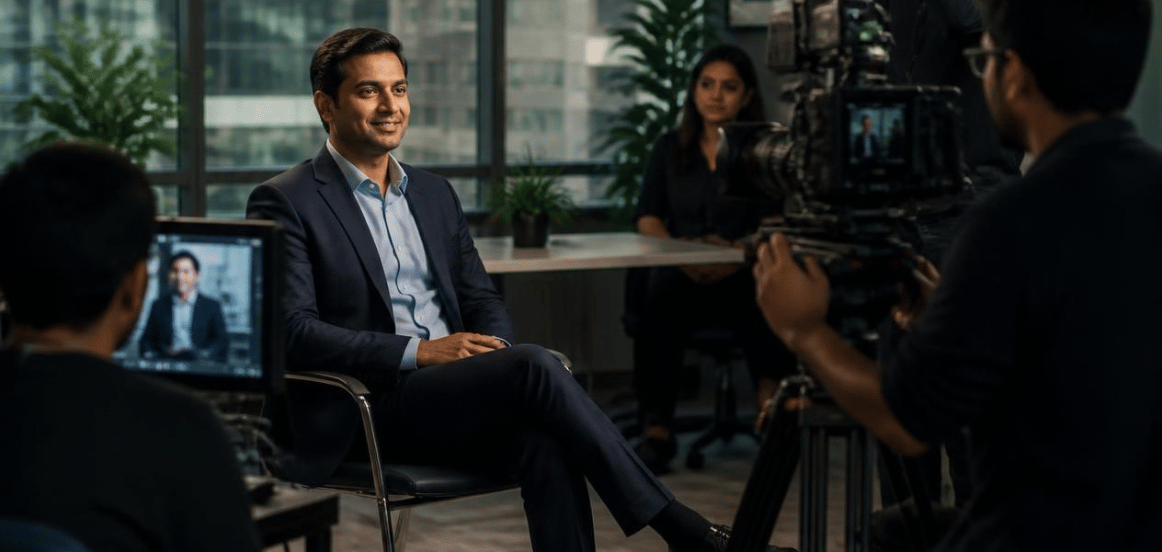
4. Decide What Type of Corporate Video You Need
“Corporate video” is a broad category.
Choosing the right format makes production much easier.
Company Profile Video
Introduces the business, history, services, people and values.
Corporate Brand Film
Uses stronger visual storytelling to communicate brand personality and positioning.
Founder Video
Places the founder or leadership team at the centre of the story.
Customer Testimonial Video
Uses customer experiences to explain the value of the company’s products or services.
Product or Service Video
Explains what the company offers and how it works.
Corporate Culture Video
Shows employees, workplace environment, company values and working culture.
Process Video
Shows how a product is created or how a service is delivered.
Recruitment Video
Communicates what it is like to work at the company.
Training or Educational Video
Explains internal processes, products, systems or industry concepts.
Selecting the format before production helps determine the script, locations, people and equipment required.
5. How MW Stuudio Can Help With Corporate Video Production
Creating a professional corporate video can involve several stages, including concept development, scripting, production, direction, filming, editing, sound, colour and final delivery.
MW Stuudio’s video production services include brand introduction films, corporate videos, testimonial videos, product videos, real-estate walkthroughs, advertising content and other business-focused video formats. The studio states that its production team handles scripting, shooting, directing and complete post-production.
The studio also provides post-production services including video editing, colour grading, sound design, motion graphics and subtitles.
For businesses that need several content formats, MW Stuudio combines video production with photography, podcast production, post-production and digital services such as website development, e-commerce development, SEO, digital marketing and content writing.
This can be useful when a company wants its corporate video to work as part of a larger digital content strategy rather than as a standalone production.
6. Write a Script That Sounds Natural
Corporate scripts can easily become too formal.
Phrases such as:
“We are a leading organisation committed to delivering innovative solutions.”
may communicate very little.
Instead, write language that sounds like the people actually speak.
For example:
“We started this company because businesses were struggling to manage their operations efficiently.”
This feels more conversational and gives the viewer a reason to keep listening.
A good corporate script should be:
- Clear
- Specific
- Conversational
- Relevant
- Concise
- Easy to understand
- Appropriate for the audience
Avoid filling the script with unnecessary industry jargon.
If technical terms are necessary, explain them using simple language.
7. Use Real People Whenever Possible
People are one of the strongest storytelling elements in professional corporate video production.
Instead of showing only offices, buildings and products, show the people who make the business work.
These could include:
- Founder
- CEO
- Employees
- Designers
- Engineers
- Sales representatives
- Production workers
- Customer-service team
- Consultants
- Customers
Real employees can communicate authenticity because viewers see the people behind the company.
You do not need every employee to speak.
Some can appear naturally in B-roll footage while working, collaborating or interacting with customers.
The combination of interviews and natural workplace footage can make the corporate story more human.
8. Plan Interviews Carefully
Interviews are often an important part of corporate videos.
However, asking someone to simply “talk about the company” can produce long and unfocused answers.
Prepare questions before filming.
Useful questions may include:
Founder
- Why did you start the company?
- What problem were you trying to solve?
- What has changed since the beginning?
- What does the company stand for?
- What are you building for the future?
Employees
- What do you enjoy about working here?
- What does your team work on?
- What makes your working process different?
- What kind of problems do you solve?
Customers
- What challenge were you facing?
- Why did you choose the company?
- What was your experience?
- What changed after using the product or service?
The questions should encourage people to tell stories rather than repeat marketing slogans.
9. Plan B-Roll That Supports the Story
B-roll is the supporting footage that appears while someone is speaking.
For example, while a founder explains how the company operates, the video might show:
- Employees working
- Product development
- Meetings
- Customers
- Equipment
- Office details
- Manufacturing processes
- Packaging
- Computer screens
- Product demonstrations
B-roll prevents the entire video from becoming a series of talking-head interviews.
It also gives the viewer visual evidence of what is being discussed.
Useful B-roll categories
- Wide environment shots
- Medium working shots
- Close-up details
- Product shots
- Team interactions
- Process footage
- Customer interactions
- Equipment
- Hands and gestures
- Workplace details
Create a B-roll list before filming.
10. Choose the Right Location
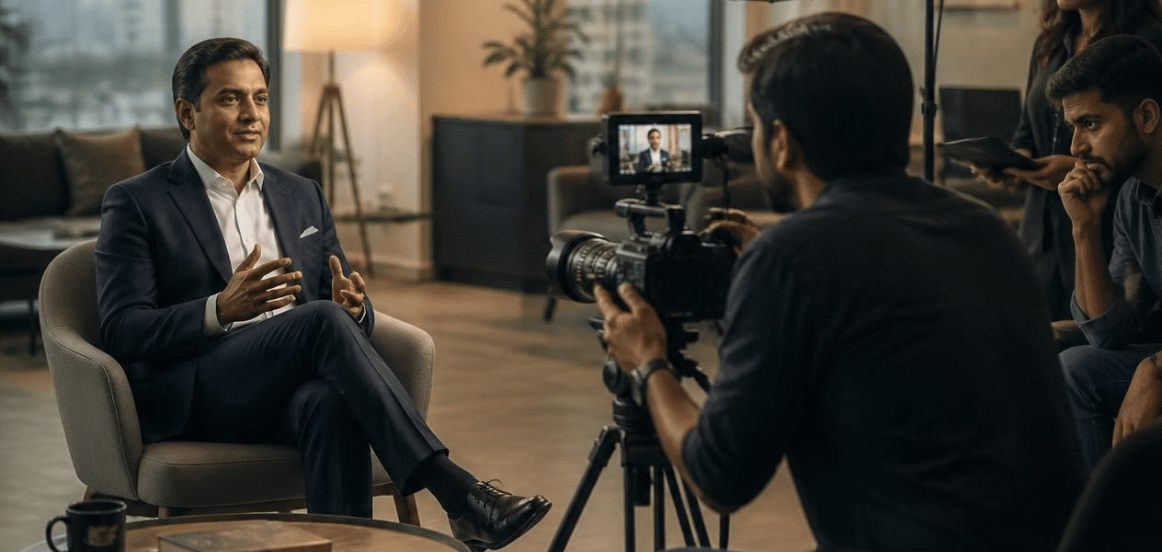
Location influences the mood and credibility of a corporate video.
Depending on the story, you could film in:
- Corporate office
- Studio
- Factory
- Warehouse
- Retail store
- Restaurant
- Clinic
- Workshop
- Outdoor location
- Customer location
A location should support the story rather than simply look impressive.
For example, if the video explains a manufacturing process, showing the actual production environment may be more useful than filming everything against a studio backdrop.
A studio can be useful when you need controlled lighting, clean backgrounds or a highly polished interview setup.
The best approach may also combine both.
11. Pay Attention to Professional Lighting
Lighting can significantly influence how professional corporate video production looks.
Poor lighting can create:
- Harsh shadows
- Flat faces
- Overexposed windows
- Distracting backgrounds
- Inconsistent scenes
Professional lighting helps create visual consistency.
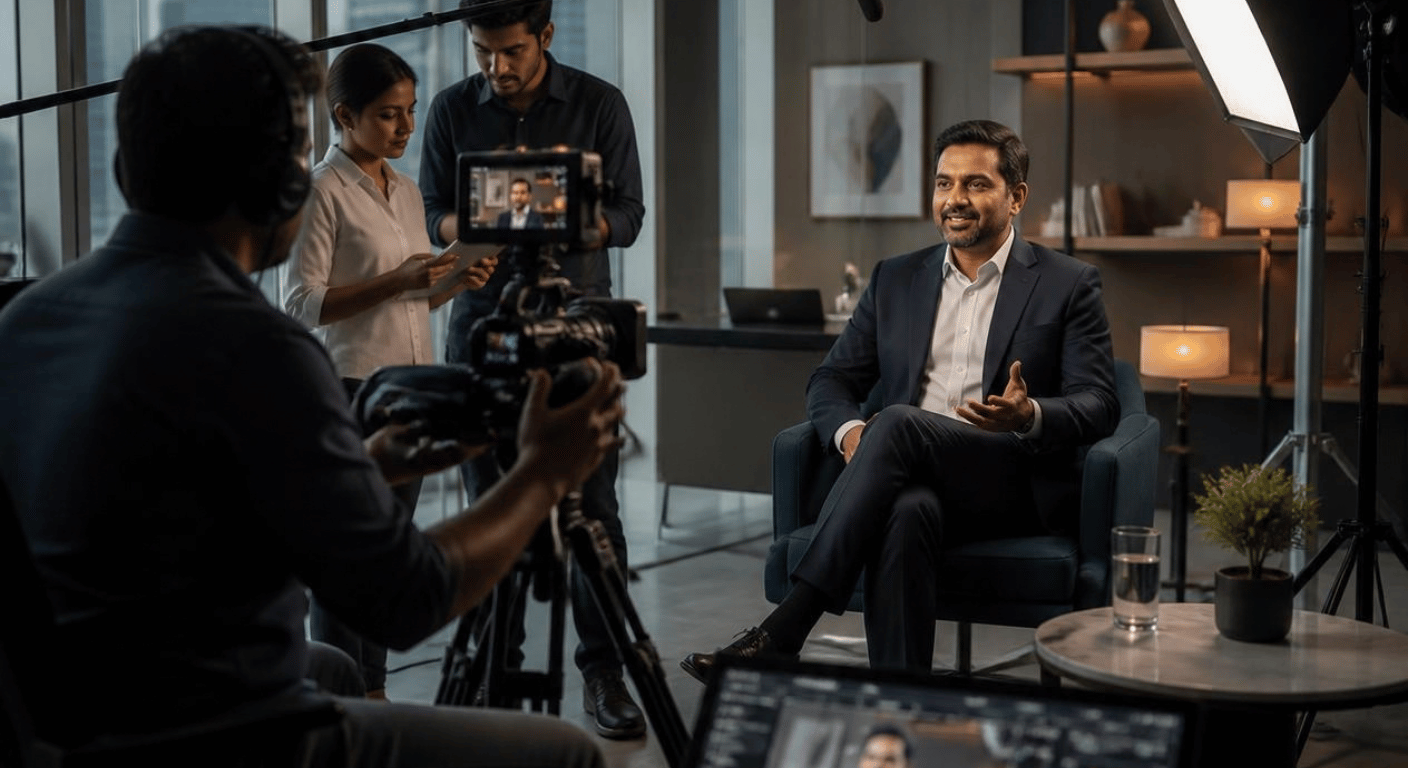
For an interview, a basic lighting arrangement may include:
- Key light
- Fill light
- Backlight or hair light
- Practical background lighting
The exact setup depends on the location and creative direction.
For product demonstrations, lighting requirements may be different.
For corporate workplace footage, natural light can sometimes be combined with controlled artificial lighting.
The goal is not simply to make everything bright.
The goal is to make the subject clear and create an appropriate visual atmosphere.
12. Never Treat Audio as an Afterthought
A beautiful corporate video with poor audio can still feel unprofessional.
Clear speech should be one of the highest priorities during production.
Depending on the setup, production teams may use:
- Lavalier microphones
- Shotgun microphones
- Boom microphones
- Professional audio recorders
- Wireless microphone systems
The filming environment also matters.
Air-conditioning noise, traffic, echo, machinery and nearby conversations can interfere with recordings.
Before filming, listen carefully to the location.
For interviews, record clean dialogue whenever possible.
Good production audio also makes the editing process easier.
13. Use Cinematic Camera Composition Carefully
Professional corporate video does not necessarily mean adding complicated camera movements everywhere.
Good composition is often more important.
Consider:
- Headroom
- Subject placement
- Background
- Depth
- Camera angle
- Lens choice
- Framing
- Movement
Use a combination of:
Wide Shots
Show the environment.
Medium Shots
Show the person and surroundings.
Close-Ups
Capture details, expressions and products.
Moving Shots
Add energy when movement supports the story.
The camera should serve the narrative rather than distract from it.
14. Capture the Company’s Visual Identity
A corporate video should look like it belongs to the brand.
Think about how the company’s identity can appear naturally through:
- Brand colours
- Office environment
- Products
- Packaging
- Employee clothing
- Signage
- Architecture
- Props
- Graphics
However, avoid placing the logo in every possible shot.
Subtle brand integration often looks more natural.
The visual identity should support the story rather than turn the video into a continuous advertisement.
15. Show the Product or Service in Action
If your business sells a product or delivers a service, show it.
A viewer should ideally understand what the company actually does through the visuals.
For a product:
- Show the product
- Demonstrate its use
- Capture details
- Show different angles
- Show the customer using it
For a service:
- Show the process
- Show employees working
- Show customer interactions
- Show tools or technology
- Show the final outcome where appropriate
This is particularly useful for businesses that offer complex or technical services.
Visual demonstrations can make an explanation easier to understand.