
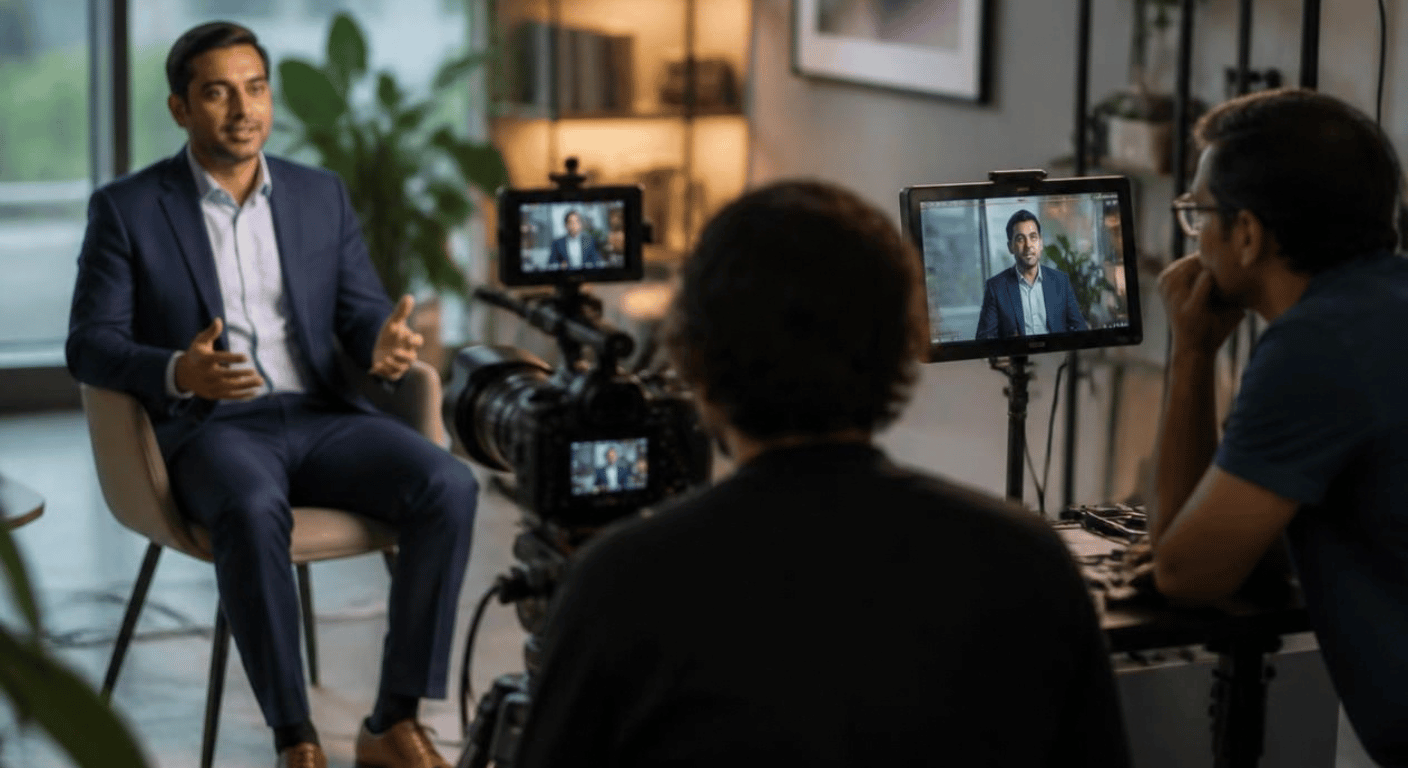
Preparing your brand properly before the cameras start rolling can make a major difference to the quality and efficiency of your production.
A professional video shoot is not only about cameras, lighting and filming. The final result also depends on how clearly the brand defines its message, prepares its people, plans its visuals, organises products and communicates its expectations to the production team.
Whether you are creating a corporate video, product video, brand film, testimonial, professional Reel or social media content, preparation helps the shoot stay focused.
For businesses investing in a professional video shoot, the preparation stage is an opportunity to decide what the audience should see, hear and understand.
MW Stuudio provides video and Reel production including scripting, shooting, directing and complete post-production. Its broader creative services also include photography, podcast production, website development, e-commerce development, SEO, digital marketing and content writing.
This guide explains how businesses can prepare their brand before a professional video shoot and create a more organised production process.
1. Define the Main Purpose of the Video
Before planning locations, outfits or camera shots, decide why you are creating the video.
A clear purpose helps the production team make better creative decisions.
Your video could be created to:
- Introduce your company
- Explain a product
- Promote a service
- Present your founder
- Share a customer story
- Create social media content
- Build a YouTube channel
- Support a website
- Create advertising content
- Communicate your company culture
One video does not necessarily need to achieve every objective.
If you try to communicate too many unrelated messages, the final video can become difficult to follow.
Instead, identify the primary objective first and build the production around it.
2. Identify Your Target Audience
Your video should be created for a specific audience.
Before the shoot, consider who will watch it and what they need to understand.
Think about:
- Age group
- Industry
- Customer needs
- Buying concerns
- Familiarity with your product
- Common questions
- Preferred communication style
- Platform where they will watch the video
A corporate video aimed at business decision-makers may have a different tone from a product Reel aimed at younger consumers.
Similarly, a technical product demonstration may require more explanation than a simple lifestyle product video.
Understanding your audience helps determine the script, visual style, location and presentation.
3. Clarify Your Brand Message
Your brand should have a clear message before the shoot begins.
Ask yourself:
What should someone remember after watching this video?
It could be your product benefit, company story, expertise, process, personality or customer experience.
Try to express the central message in one or two sentences.
For example:
“We help growing businesses create professional e-commerce experiences.”
Or:
“We create handcrafted furniture designed for modern Indian homes.”
The exact message depends on the business.
Once the central message is clear, the script and visuals can support it consistently.
4. Decide What Type of Video You Are Creating
Different video formats require different preparation.
A business should decide the format before production begins.
Common options include:
- Corporate videos
- Brand films
- Product demonstrations
- Customer testimonials
- Founder videos
- Professional Reels
- YouTube videos
- Educational videos
- Company introduction videos
- Training videos
- Advertisement content
- Behind-the-scenes videos
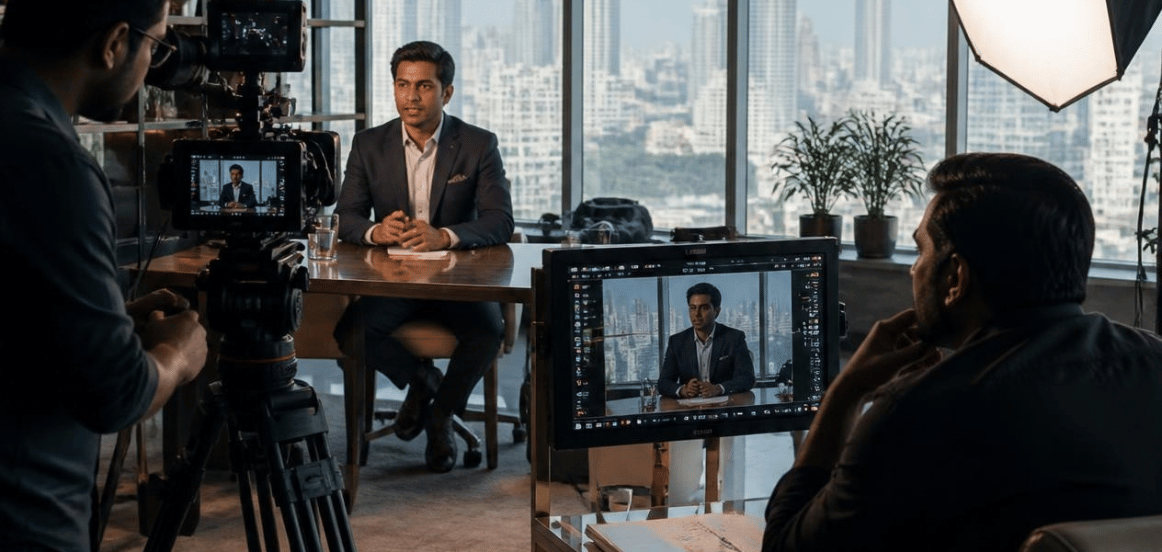
The format influences everything from camera setup to script length and location.
MW Stuudio’s current video production services include Reels, YouTube Shorts, brand films, corporate videos, real estate walkthroughs, testimonial videos and advertising content.
5. Prepare the Script or Talking Points
A professional video does not always require a word-for-word script.
However, every participant should understand what they need to communicate.
For scripted videos, prepare the complete script in advance.
For interviews or founder videos, prepare talking points and questions.
A good preparation document can include:
- Opening statement
- Main message
- Key points
- Product or service information
- Important examples
- Call to action
- Interview questions
- Closing statement
If a teleprompter will be used, the script should be written for natural spoken delivery rather than sounding like a formal document.
Practice difficult words and technical terms before the shoot.
6. Choose the Right People for the Shoot
The people appearing in the video can strongly influence how the brand is represented.
Depending on the project, you might include:
- Founder
- CEO
- Employees
- Subject-matter experts
- Customers
- Models
- Product specialists
- Sales representatives
- Creative professionals
Choose people who understand the subject and can communicate naturally.
Not everyone needs to be highly experienced on camera.
Good direction, preparation and multiple takes can help participants become more comfortable.
Before the shoot, explain the purpose of the video and what you expect from each person.
7. Prepare Your Location
The location should support the story of your brand.
It could be:
- Office
- Studio
- Showroom
- Store
- Factory
- Restaurant
- Clinic
- Outdoor location
- Customer location
- Home
- Professional workspace
Before filming, inspect the location carefully.
Look for distracting objects, unwanted branding, clutter, poor lighting, noise and areas that may not work well on camera.
Clean and organise the space before the production team arrives.
If the video requires multiple backgrounds, identify them in advance.
A well-prepared location saves time during production.
8. Prepare Your Products and Props
If products are part of the video, prepare them before the shoot.
Do not wait until the camera is ready to discover that a product has scratches, missing components or incorrect packaging.
Prepare:
- Clean products
- Final packaging
- Accessories
- Product samples
- Demonstration items
- Props
- Brand materials
- Backup products
- Working devices
- Different product variants
For e-commerce brands, it can be useful to prepare multiple products together so the production team can organise the shoot efficiently.
Product photography and video can also be planned together when appropriate. MW Stuudio’s studio setup supports combining product photography with Reel and video content during the same session or booking day.
9. Plan Your Wardrobe and Appearance
What people wear should fit the brand and the video’s visual direction.
For a corporate video, professional business clothing may be appropriate.
For a fashion brand, styling may need to match the campaign.
For a founder video, the clothing should reflect the person’s normal professional identity while looking polished on camera.
Avoid clothing that creates distracting patterns or reflections unless it is specifically part of the visual concept.
Prepare outfits in advance rather than deciding on the day of the shoot.
If multiple videos are being recorded, changing outfits can also help create visual variety.
10. Create a Detailed Shot List
A shot list gives the production team a clear visual plan.
It should identify what needs to be captured rather than leaving everything to the shooting day.
For example:
- Establishing shot
- Founder introduction
- Team interaction
- Product close-up
- Product demonstration
- Customer interaction
- Office B-roll
- Detail shots
- Walking shots
- Interview
- Behind-the-scenes footage
- Closing shot
A shot list also helps identify additional footage that could be useful later.
This is particularly valuable when creating multiple pieces of content from one production day.
11. Prepare Your Brand’s Visual Guidelines
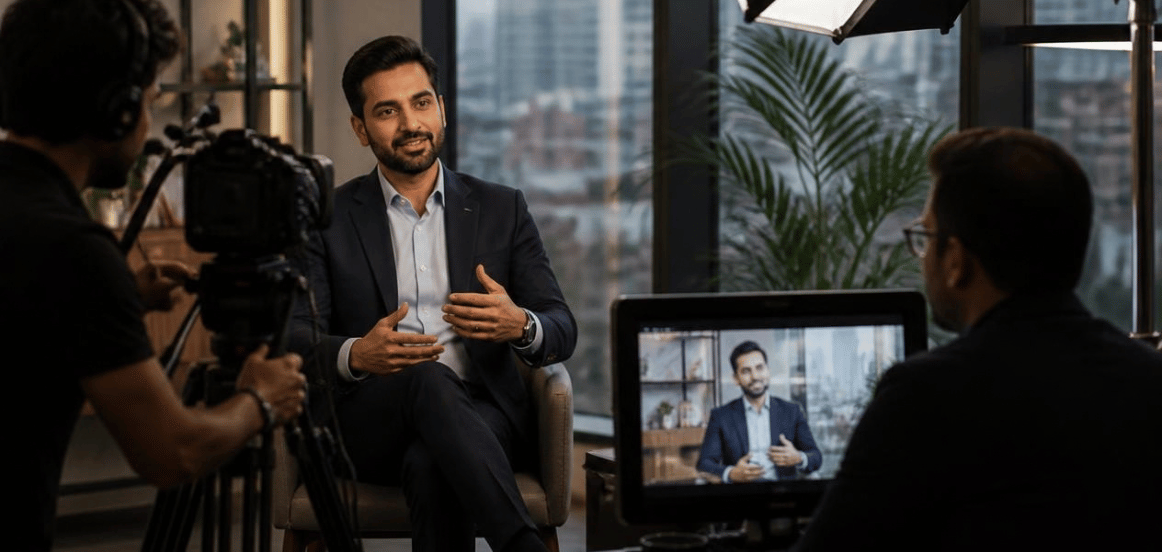
The production team should understand how the video should look and feel.
Share relevant brand materials before the shoot.
These may include:
- Logo
- Brand colours
- Typography
- Existing photography
- Previous videos
- Website
- Social media references
- Packaging
- Brand guidelines
- Mood boards
This helps the production team maintain visual consistency.
For example, a premium jewellery brand may require a sophisticated visual style, while a children’s brand may need a brighter and more playful direction.
The visual treatment should match the identity of the brand.
12. Plan Lighting, Audio and Technical Requirements
Technical preparation should happen before filming begins.
Discuss the production requirements with your video team.
Important considerations include:
- Camera format
- Aspect ratio
- Lighting
- Microphones
- Number of cameras
- Backgrounds
- Teleprompter
- Audio recording
- Power requirements
- Props
- Special equipment
- Storage
- Final delivery formats
For example, a Reel shoot may require native vertical framing, while a corporate film may primarily use a horizontal composition.
MW Stuudio’s current production setup includes cinema-grade cameras, professional lighting systems, multiple backdrop options and a complete post-production workflow. Its video services cover scripting, shooting, directing and post-production.
Discuss these requirements before the production day so the team can prepare the appropriate equipment.
13. Plan for Multiple Content Formats
A professional video shoot can potentially create more than one piece of content.
If your brand is already investing in production time, think about how the footage can be reused.
For example, one production session could produce:
- Main corporate video
- Short social media clips
- Instagram Reels
- YouTube Shorts
- Website videos
- Founder clips
- Product videos
- Behind-the-scenes content
- Advertisement variations
- Photography assets
Planning this before the shoot changes the way the production team captures footage.
You may need additional close-ups, vertical shots, B-roll or alternative takes.
MW Stuudio’s production ecosystem is designed to support video, photography, podcast and post-production requirements, which can allow brands to plan multiple content formats within a connected production workflow.
14. Prepare a Realistic Production Schedule
A detailed schedule helps everyone understand what needs to happen and when.
Include:
- Arrival time
- Setup time
- Hair and makeup
- Product preparation
- First shot
- Interviews
- Outfit changes
- Location changes
- Breaks
- B-roll
- Product shots
- Final takes
- Pack-up
Avoid filling every minute with filming.
Equipment changes, lighting adjustments, retakes and movement between locations take time.
A realistic schedule gives the production team enough room to maintain quality.
If several videos are being created in one day, group similar shots together to reduce repeated setup changes.
15. Prepare for the Shoot Day and Post-Production
The final preparation stage is about making sure everyone arrives ready.
The day before the shoot, confirm:
- Location
- Arrival time
- Participants
- Products
- Props
- Wardrobe
- Scripts
- Shot list
- Equipment
- Contact information
- Parking or access
- Food and water
- Special requirements
After the shoot, the workflow continues into post-production.
Discuss what you expect from the final delivery.
Conclusion
Preparing your brand for a professional video shoot is one of the most important parts of the production process.
The quality of the final video depends not only on cameras and lighting but also on the preparation that happens before filming begins.
A clear objective, defined audience, strong brand message, prepared script, suitable people, organised location, ready products, planned wardrobe, detailed shot list and realistic production schedule can make the shoot more efficient and focused.
Businesses should also think beyond a single final video. When the production is planned strategically, one shoot can potentially create corporate videos, Reels, product videos, website content, social media clips, photography assets and other reusable content.
This approach can make each production session more useful while maintaining consistency across different brand channels.
MW Stuudio currently combines video production, photography, post-production and digital services, allowing businesses to connect their visual content with broader website, e-commerce and digital marketing requirements.
The most important preparation step is simple: know what you want your audience to understand before you start filming.
Once the message, people, visuals and production requirements are organised, the camera becomes one part of a much larger and more purposeful brand storytelling process.