
A successful podcast recording does not begin when the guest sits in front of the microphone.
It begins much earlier—with the invitation, topic selection, guest briefing, preparation, scheduling, and communication between the host and guest.
A guest may have excellent professional experience and valuable knowledge, but without proper preparation, the conversation can become unfocused. The guest may give short answers, repeat information, speak too quickly, feel uncomfortable on camera, or arrive without understanding the purpose of the episode.
Preparing a professional podcast guest does not mean giving them a rigid script or asking them to memorise every answer. The goal is to make the guest comfortable, informed, and prepared enough to have a natural conversation.
This becomes even more important when the podcast is recorded in a professional studio with multiple cameras, microphones, lighting, and post-production. A controlled studio environment can improve the production quality, but the guest’s preparation still has a major influence on the final conversation.
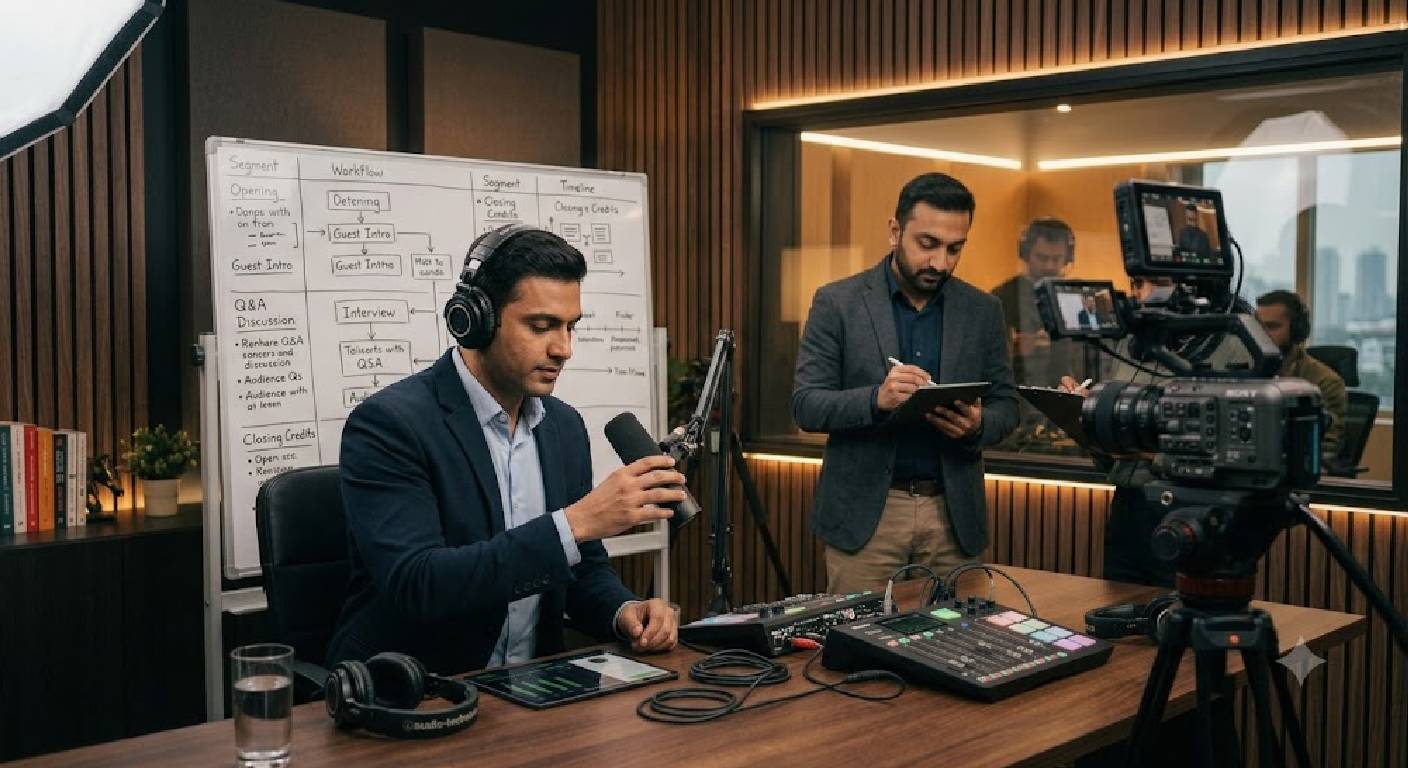
MW Stuudio’s podcast production services include studio recording, audio and video production, podcast consultation, episode editing, sound design, branding, thumbnails, show notes, and distribution support. Its studio setup includes broadcast-grade microphones, professional audio interfaces, acoustic treatment, multi-camera video production, and studio lighting.
Whether the guest is a founder, industry expert, creator, consultant, professional, customer, or thought leader, the following preparation process can help create a smoother studio recording.
1. Explain the Purpose of the Professional Podcast Guest Before the Recording
The first step is to make sure the guest understands why the podcast episode is being recorded.
Do not assume the guest already understands the format.
Send a short briefing explaining:
- What the podcast is about
- Who the audience is
- Why the guest was invited
- What the episode will discuss
- Approximate recording duration
- Whether the episode will be audio or video
- Where the content will be published
- Whether short clips will be created
- What the guest should prepare
This information reduces uncertainty.
For example, if the podcast focuses on business leadership, the guest should understand that the conversation may explore their professional journey, leadership experiences, challenges, decisions, and lessons.
If the podcast is educational, the guest should know that the discussion may focus more heavily on explaining concepts and answering common audience questions.
The clearer the purpose, the easier it becomes for the guest to prepare relevant stories and examples.
It also helps prevent the conversation from becoming a general discussion with no clear direction.
2. Share the Podcast Format With the Guest
A guest should know what will happen when they arrive.
Different podcasts have different formats.
Some are structured interviews.
Some are informal conversations.
Some involve multiple guests.
Some use prepared questions.
Some use a teleprompter.
Some include demonstrations or presentations.
Some podcasts are recorded entirely as video.
Explain the format before the recording.
For example:
Opening:
The host introduces the guest and topic.
Introduction:
The guest briefly explains their background.
Main discussion:
The host asks prepared questions.
Deep-dive section:
The conversation explores specific experiences or industry topics.
Quick questions:
The guest answers shorter questions.
Closing:
The guest shares final advice or where people can learn more.
This structure gives the guest a mental map of the episode.
They do not need to memorise it.
They simply need to understand how the conversation is expected to flow.
When guests know what is coming next, they often feel more relaxed during recording.
3. Send the Topics and Questions in Advance
One of the easiest ways to improve guest preparation is to send the main discussion topics before recording.
The guest does not necessarily need the exact questions if the podcast is intended to feel spontaneous.
However, they should know the general areas that will be discussed.
For example:
Topic 1: Their professional journey
Topic 2: Major challenges in their industry
Topic 3: Lessons from experience
Topic 4: Current industry trends
Topic 5: Advice for beginners
This allows the guest to think about relevant examples beforehand.
It also reduces the risk of the guest being surprised by an important subject.
Questions should encourage stories and explanations rather than one-word answers.
Instead of asking:
“Was starting your business difficult?”
consider:
“What was the most difficult stage of building your business, and what did you learn from it?”
The second question gives the guest room to tell a story.
A prepared guest can still answer naturally.
Preparation simply gives them a better foundation.
4. Help the Guest Identify Their Key Messages
A podcast conversation can cover many subjects, but the guest should know the most important ideas they want to communicate.
Ask the guest to identify three to five key messages.
For example, a business founder might want the audience to understand:
- Why they started the company
- What problem the company solves
- What they learned from early mistakes
- What they believe about the future of their industry
- What advice they would give new entrepreneurs
These messages can guide the conversation.
They also help the guest avoid getting lost in unnecessary details.
This does not mean every answer needs to repeat the same message.
Instead, the key messages act as a reference point.
If the conversation moves into an unexpected direction, the host can bring it back toward one of these important themes.
This is particularly useful when the podcast episode is intended to support a business’s positioning or professional reputation.
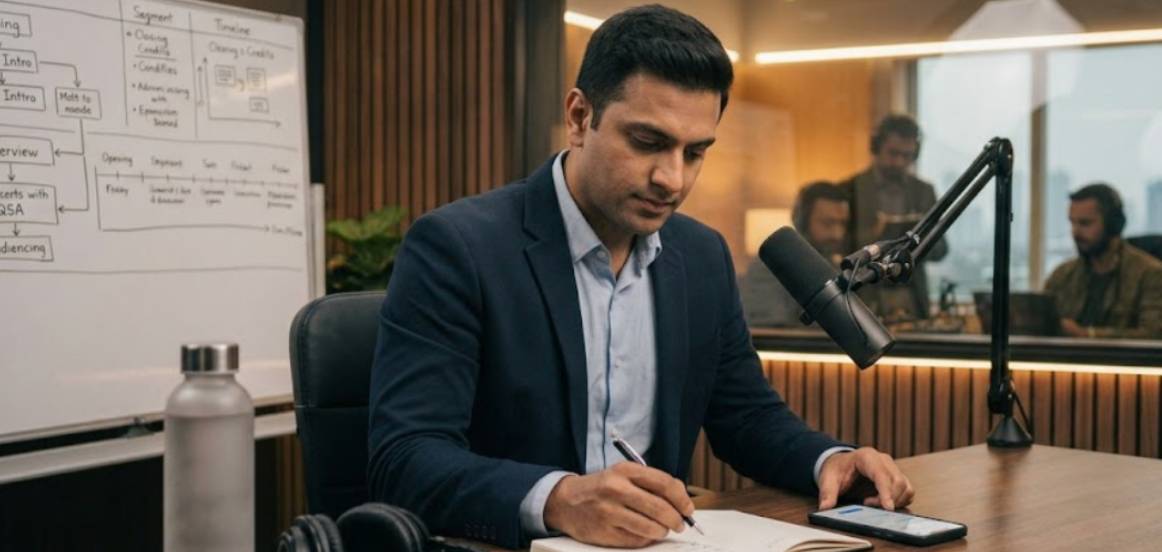
5. Ask the Guest to Prepare Stories and Examples
People often remember stories more easily than lists of facts.
A guest who prepares a few relevant stories can make the conversation significantly more engaging.
Ask them to think about:
- A major professional challenge
- A mistake they learned from
- An important success
- A difficult decision
- An unexpected opportunity
- A customer experience
- An industry lesson
- A personal turning point
- A project they are proud of
- Something they would do differently today
Stories provide context.
For example, instead of saying:
“Customer service is important.”
A guest could explain a specific situation where a customer problem changed the way their company handled support.
That story gives the audience something concrete.
The host can then ask follow-up questions.
Stories also create natural opportunities for short-form clips after the recording.
A strong 60-second story can potentially become a social media video without requiring an additional shoot.
6. Give Clear Instructions About What to Wear
Clothing can affect both comfort and camera appearance.
Guests should receive basic wardrobe guidance before arriving.
In most professional podcast environments, simple clothing works well.
Good options may include:
- Solid colours
- Clean shirts
- Blazers
- Simple dresses
- Professional casual clothing
- Minimal patterns
Very small patterns can sometimes create unwanted visual effects on camera.
Guests should also avoid clothing that makes excessive noise when they move, especially when microphones are positioned close to the body.
For example, jewellery that repeatedly hits a microphone or clothing that produces constant friction can create unwanted audio.
The goal is not to make every guest dress identically.
The goal is to make sure their clothing works with the visual style of the podcast and does not create unnecessary technical problems.
If the podcast has a specific brand identity, the host should communicate that before the recording.
7. Ask the Guest to Arrive Early
Arriving just before recording time can create unnecessary stress.
Guests may need time to:
- Find the studio
- Park
- Use the restroom
- Drink water
- Review questions
- Meet the host
- Adjust clothing
- Understand the studio setup
- Complete microphone setup
- Become comfortable with the environment
Arriving early gives everyone time to prepare.
A professional production team can use this time to check microphones, cameras, lighting, framing, and other technical requirements.
It also gives the guest an opportunity to ask questions.
A relaxed guest is generally easier to interview than someone who arrives rushed and immediately has to start recording.
For batch productions, early arrival becomes even more important because the production team may have multiple episodes scheduled throughout the day.
8. Explain the Microphone and Studio Setup
Some guests may have never recorded a professional podcast before.
A large microphone, headphones, cameras, lights, and other equipment can initially feel unfamiliar.
Take a few minutes to explain the setup.
Show the guest:
- Where to sit
- Where to look
- How close to stay to the microphone
- How to wear headphones
- How to adjust their chair
- When they can move
- What to do if they need a break
- How the host will signal them during recording
This simple explanation can make the guest feel much more comfortable.
MW Stuudio’s podcast environment includes professional microphones, audio interfaces, acoustic treatment, multi-camera video production, and studio lighting.
The guest does not need to understand the technical equipment.
The production team should handle that.
The guest’s job is to focus on the conversation.
9. Encourage Natural Conversation Instead of Memorised Answers
One common mistake is asking guests to memorise their answers.
This can make the conversation sound rehearsed.
A podcast should generally feel like a conversation rather than a speech.
Encourage the guest to understand the topics rather than memorise complete sentences.
If the guest knows what they want to communicate, they can answer naturally.
The host can also ask follow-up questions when an interesting point appears.
For example:
Host: “You mentioned that your first business failed. What happened?”
Guest: “We underestimated our operating costs.”
Host: “When did you realise that?”
This type of follow-up can create a much more interesting conversation than simply moving mechanically through a list of questions.
The host should listen carefully.
The best podcast moments are sometimes found in an unexpected answer.
10. Prepare the Guest for Camera Presence
Audio and video podcasts require slightly different preparation.
A guest who is comfortable speaking may still feel nervous when multiple cameras are pointed at them.
Explain that they do not need to constantly look directly into the camera unless instructed.
In a conversational interview, the guest will generally focus on the host.
The production team handles camera angles.
Basic guidance can include:
- Sit comfortably
- Keep natural posture
- Avoid excessive chair movement
- Speak toward the host
- Use natural hand gestures
- Avoid repeatedly touching the microphone
- Take pauses when needed
- Do not worry about small mistakes
- Ask for a retake when necessary
The guest should understand that mistakes are normal.
A sentence can be repeated.
A question can be asked again.
A pause can be edited.
This knowledge can significantly reduce recording anxiety.
For structured content, a teleprompter may also be useful. MW Stuudio’s studio setup supports teleprompter-based delivery for structured recording workflows.
11. Discuss Sensitive or Confidential Topics Before Recording
Professional guests sometimes work with confidential information.
This is especially relevant for:
- Corporate executives
- Doctors and healthcare professionals
- Lawyers
- Financial professionals
- Consultants
- Technology companies
- Startup founders
- Employees discussing their organisations
Before recording, discuss whether there are subjects that should not be mentioned.
The guest should know whether the podcast is intended for public distribution.
If there are confidential clients, internal financial figures, private customer information, legal matters, or sensitive business details, these should be handled carefully.
The host can also identify topics that may require clarification or approval before publication.
This is not about making the conversation overly restrictive.
It is about avoiding preventable problems after recording.
A simple pre-recording discussion can save significant editing time later.
12. Prepare the Guest for Short-Form Content
A podcast recording can create content beyond the full episode.
Businesses increasingly use podcast conversations to create short-form videos for platforms such as Instagram, YouTube Shorts, LinkedIn, and other social channels.
Therefore, guests should understand that parts of their conversation may be edited into short clips.
Encourage them to provide clear, self-contained answers.
Instead of saying:
“As I explained earlier…”
it can be more useful to answer in a way that makes sense independently.
For example:
“One of the biggest mistakes new businesses make is trying to reach everyone at once.”
That statement can stand alone as a short clip.
The host can also ask questions that generate useful standalone insights.
This makes the podcast more valuable as a content-production session.
MW Stuudio’s broader production services include video editing, colour grading, sound design, motion graphics, subtitles, and thumbnail design, which can support the creation of different content formats from recorded material.
13. Plan the Guest’s Introduction and Closing Message
The beginning and ending of the episode deserve preparation.
The host should know how to introduce the guest correctly.
Confirm:
- Full name
- Job title
- Company name
- Professional achievements
- Pronunciation
- Relevant credentials
- Social media or website information
- Preferred description
The guest can also prepare a short closing message.
For example:
- One final lesson
- Advice for the audience
- A prediction about the industry
- Where people can learn more
- A project they are currently working on
This gives the episode a clear ending.
It also prevents the final few minutes from becoming awkward.
The closing should feel like a natural conclusion rather than an abrupt stop.
14. Give the Guest a Simple Recording-Day Checklist
A short checklist can make preparation easier.
Send the guest a simple message one day before recording.
Podcast Guest Checklist
Before leaving home:
- Review the episode topic
- Review the main questions
- Think about three important stories
- Prepare your key messages
- Choose suitable clothing
- Charge your phone
- Bring any required presentation or product material
- Avoid arriving rushed
At the studio:
- Arrive early
- Inform the team about pronunciation or name preferences
- Ask technical questions if needed
- Adjust your chair and headphones
- Stay hydrated
- Relax before recording
During recording:
- Speak naturally
- Take your time
- Listen to the question
- Give examples
- Do not worry about small mistakes
- Ask for clarification when needed
- Follow the host’s conversation
- Avoid tapping the table or microphone
After recording:
- Confirm how your name and company should appear
- Confirm social media handles
- Provide any required links
- Ask about the expected publishing process
A checklist like this makes the guest feel prepared without overwhelming them.
15. Create a Comfortable Guest Experience From Start to Finish
The final and perhaps most important step is to remember that the guest experience influences the conversation.
A guest should feel welcomed rather than tested.
The host should create an environment where the guest can speak naturally.
That starts before the recording and continues after it.
A good guest experience can include:
- Clear communication
- Easy scheduling
- Helpful preparation material
- Directions to the studio
- A welcoming production team
- Comfortable seating
- Clear technical instructions
- Professional recording
- Short breaks when necessary
- Respectful interviewing
- Clear post-production communication
- Information about publishing
Professional production is not only about cameras and microphones.
It is also about how the people involved experience the process.
MW Stuudio positions its podcast service as an end-to-end workflow—from ideation and consultation through recording, editing, sound design, branding, thumbnails, show notes, and distribution support.
This type of connected workflow can reduce the number of separate tasks a host and guest need to manage.
The guest can focus on what they know.
The production team can focus on capturing and preparing the content.
And the host can focus on creating a useful conversation.
Ultimately, the goal is simple: help the guest feel prepared enough to forget about the equipment and concentrate on the conversation.
Conclusion
Preparing a professional podcast guest is one of the most important parts of producing a strong podcast episode.
Good preparation does not mean giving the guest a script and asking them to memorise every answer.
It means giving them enough information to feel comfortable and confident.
Before the recording, the guest should understand:
- Why they were invited
- Who the audience is
- What topics will be discussed
- What the podcast format looks like
- What they should wear
- When they should arrive
- How the studio recording will work
- What key messages they want to communicate
- Which stories and examples they can share
- How the content may be repurposed
During recording, the guest should focus on having a natural conversation.
They should listen carefully, take their time, provide useful examples, and avoid worrying about small mistakes.
The production team can manage cameras, microphones, lighting, editing, and other technical details.
After recording, the guest’s information should be collected correctly so their name, company, links, and other details can be presented accurately.
A professional podcast is ultimately a team effort.
The host brings the questions.
The guest brings the knowledge and experience.
The production team captures the conversation.
The post-production team turns the recording into a polished episode.
And the content team can extend that episode into additional videos, social posts, website content, and other marketing assets.
When these parts work together, the guest can focus on what matters most: sharing useful ideas and having a meaningful conversation with the audience.
For businesses and creators planning regular podcast production, a professional studio can also provide a structured environment where preparation, recording, video production, and post-production are handled as part of one connected workflow.