
Creating a podcast episode requires time, planning, recording, editing and promotion. But the work does not have to end when the full episode is published.
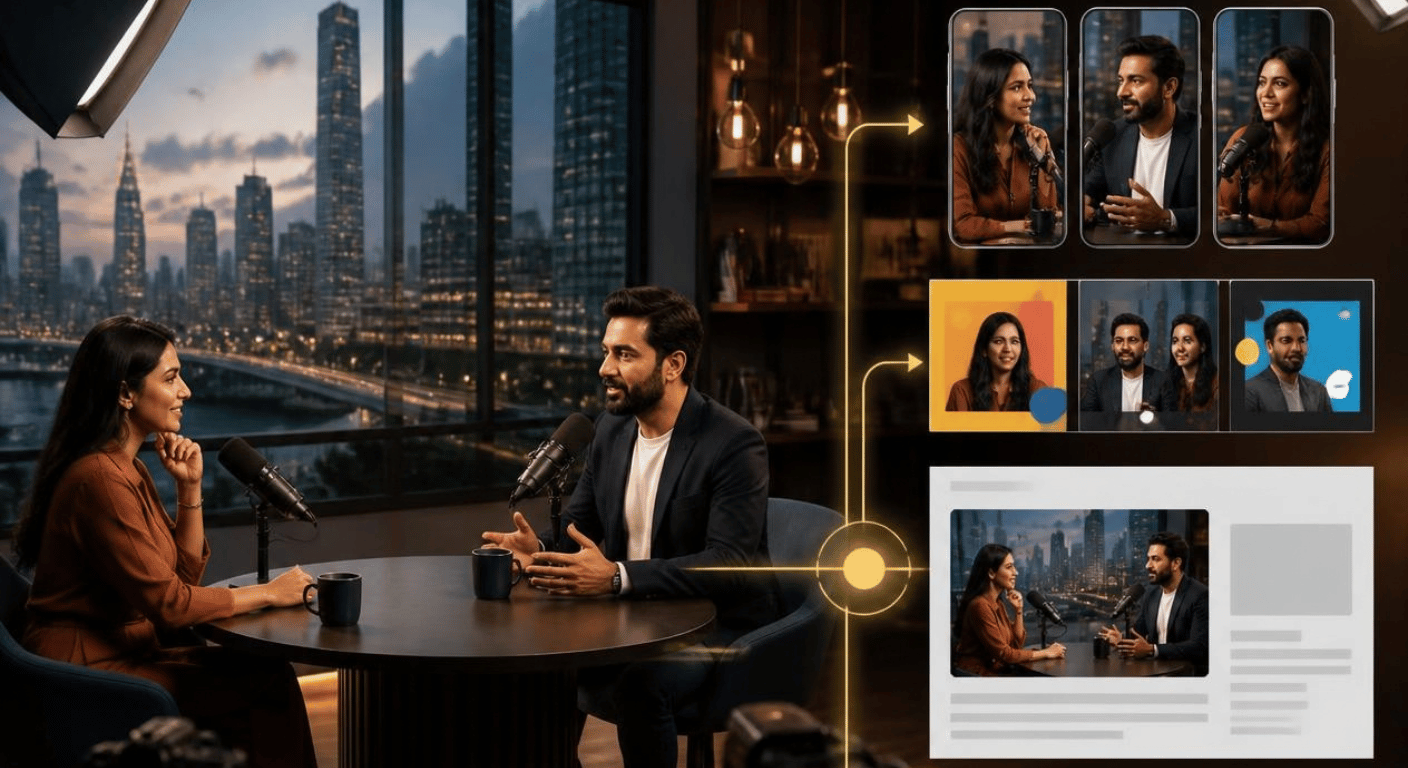
A single 30-, 45-, or 60-minute podcast episode can contain dozens of useful ideas, stories, opinions, questions and insights. Instead of publishing the episode once and moving on to the next one, brands and creators can turn that same recording into multiple pieces of social media content.
This process is commonly known as content repurposing.
For example, one podcast interview can become short-form videos, Instagram Reels, YouTube Shorts, quote graphics, carousel posts, audiograms, Stories, LinkedIn posts, a blog article and website content.
The advantage is not simply producing “more content.” The goal is to make better use of the ideas already created during the original recording.
MW Stuudio provides podcast recording and production services along with episode editing, sound design, branding, show notes and distribution support. Its wider production services also include Reel and video production, post-production, photography, digital marketing and content writing.
This makes a repurposing strategy particularly relevant for brands that want to turn one professionally recorded conversation into a larger content library.
1. Why One Podcast Episode Can Create So Much Content
A podcast conversation contains much more information than what appears in the final published episode.
An interview might include:
- Several important questions
- Multiple expert opinions
- Personal stories
- Practical advice
- Industry observations
- Common mistakes
- Interesting statistics or examples
- Strong statements
- Frequently asked questions
- Short memorable quotes
Each of these can become a separate content opportunity.
For example, imagine a 45-minute podcast interview with a business founder.
The conversation might cover how the company started, its biggest challenge, lessons from failure, marketing strategy, customer experience and advice for new entrepreneurs.
Instead of treating that as one 45-minute video, the content team can identify individual moments and turn them into smaller pieces.
The full episode becomes the source content, while the smaller pieces become distribution assets.
This approach can make podcast production much more valuable because one recording session can support content publishing over an extended period.
2. Start With the Full Podcast Episode
The first step is to create a strong full-length episode.
Before thinking about social media clips, the original podcast should have a clear structure.
Consider:
- Who is the guest?
- Who is the target audience?
- What is the main subject?
- What questions should be answered?
- What stories should be explored?
- What practical value should the audience receive?
- Which topics are most relevant to the brand?
A well-structured conversation creates more opportunities for repurposing later.
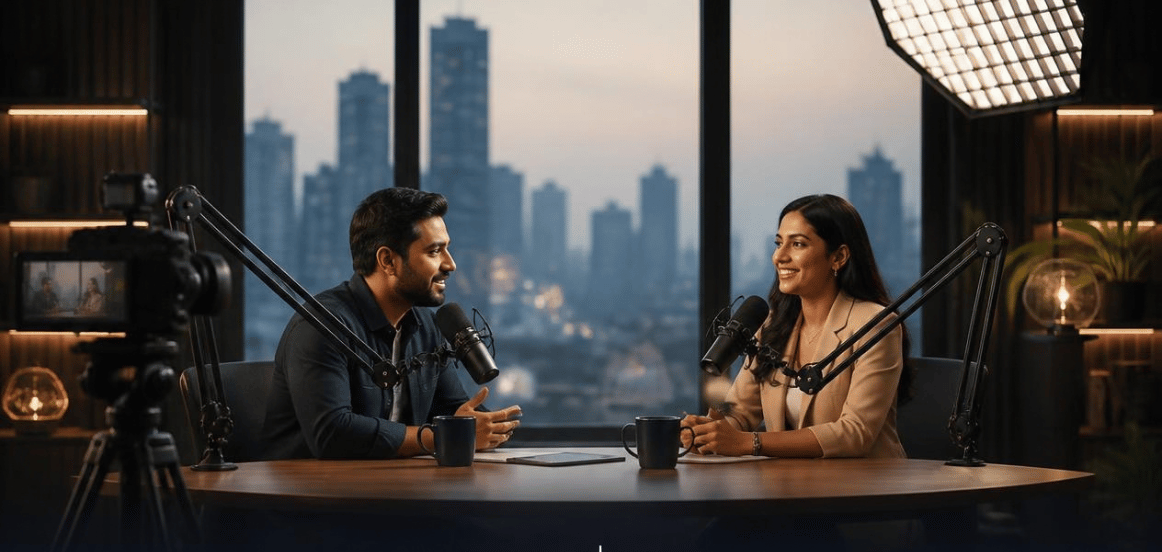
During recording, it is also useful to capture professional audio and video.
Multiple camera angles can provide additional flexibility during editing, while good lighting and clean audio make the resulting short-form clips easier to use.
MW Stuudio’s podcast services include studio recording, audio and video production, podcast consultation, episode editing and sound design, branding, show notes and distribution support.
The stronger the original recording, the more useful the resulting content library can become.
3. Turn the Best Moments Into Short Video Clips
The first and most obvious piece of repurposed content is the short-form video clip.
Instead of asking viewers to watch an entire 45-minute episode, select individual moments that can stand alone.
A good clip might contain:
- A surprising opinion
- A useful business tip
- A strong answer
- A personal story
- A common mistake
- A practical lesson
- An interesting disagreement
- A memorable statement
The clip should ideally make sense even when viewed outside the context of the full podcast.
For example, if the guest says:
“Most businesses don’t have a marketing problem. They have a positioning problem.”
That statement can become the opening of a short video.
The rest of the clip can explain what the guest means.
Short clips can then be formatted for platforms such as Instagram Reels and YouTube Shorts.
MW Stuudio’s Reel and video production service supports short-form formats including Instagram Reels and YouTube Shorts, along with shooting and complete post-production.
4. Create Multiple Reels From Different Parts of the Conversation
One episode does not have to produce only one Reel.
A 45-minute conversation could contain several moments worth publishing independently.
For example:
Reel 1: The guest’s biggest business mistake
Reel 2: One lesson they wish they had learned earlier
Reel 3: A practical marketing tip
Reel 4: A surprising industry opinion
Reel 5: The story behind the business
Reel 6: Advice for beginners
The important part is selecting clips with different angles.
Publishing six clips that all communicate the same message can feel repetitive.
Instead, each Reel should offer a different reason for someone to watch.
This also allows the same podcast to reach different audience interests.
Someone interested in entrepreneurship may watch the business lesson, while another viewer may connect more strongly with the founder’s personal story.
5. Turn Strong Statements Into Quote Posts
Not every useful podcast moment needs to become a video.
Some statements work well as text-based social media posts.
A memorable quote can become:
- Instagram quote graphic
- LinkedIn post
- X post
- Story graphic
- Carousel slide
- Newsletter section
For example, a founder might say:
“Your first product teaches you more than your first hundred ideas.”
That sentence can become a standalone social post.
The visual design should match the brand’s identity rather than using a completely different style for every quote.
A consistent typography system, colour palette and layout can make these posts feel connected to the podcast.
Quote content is particularly useful because it requires less production than a full video while still allowing an important idea from the episode to reach the audience.
6. Build Carousel Posts From Educational Segments
A podcast can also become an educational carousel.
This works particularly well when the guest explains a process, framework, list or series of recommendations.
For example, suppose a podcast discussion covers:
“5 Things Every New Business Should Know Before Running Paid Ads.”
That section can become a carousel:
- Cover slide
- Point 1
- Point 2
- Point 3
- Point 4
- Point 5
- Final takeaway
The carousel does not need to reproduce the entire conversation.
Instead, it should extract the most useful information and present it in a concise format.
This creates another piece of content from the same recording without requiring another interview or shoot.
7. Create YouTube Shorts From the Same Podcast
Instagram Reels are not the only destination for podcast clips.
The same vertical footage can potentially be adapted for YouTube Shorts.
This is where planning the original production properly becomes useful.
If the podcast is recorded with suitable camera framing, high-quality audio and enough visual variety, individual moments can be edited into vertical short-form content.
A single podcast can therefore support:
- Full YouTube episode
- YouTube Shorts
- Instagram Reels
- Social media clips
- Quote posts
- Educational content
The key is to think about repurposing before the recording starts.
If short-form content is part of the plan, the production team can capture the footage and framing needed for those future edits.
MW Stuudio’s current video production services cover YouTube Shorts as well as Instagram Reels, with complete post-production available.
8. Turn the Episode Into an Audiogram
Some podcast moments can work without video.
An audiogram combines a podcast audio clip with a visual background, waveform or branded design.
This can be useful when the strongest part of a conversation is the speaker’s voice or story rather than the visual scene.
For example:
“The biggest lesson I learned after losing my first major client…”
That opening can become an audiogram featuring:
- Guest photograph
- Podcast artwork
- Audio waveform
- Episode branding
- Short caption
- Call to action
Audiograms can provide another way to distribute podcast content while maintaining the connection to the full episode.
They can also be useful for promoting an upcoming episode before the complete video or audio version is published.
9. Convert the Podcast Into a Blog Article
A long-form podcast can contain enough information to become a written article.
For example, a podcast titled:
“How Entrepreneurs Can Build a Stronger Personal Brand”
could become a blog article covering:
- What personal branding means
- Common mistakes
- Content strategy
- Social media
- Video
- Networking
- Consistency
- Long-term brand building
The blog does not have to be a word-for-word transcript.
Instead, the conversation can be reorganised into a structured article that answers specific questions.
This can create another content asset for the business website.
The written article can also link back to the original podcast episode.
MW Stuudio offers content writing alongside podcast, digital and web services, making this type of content workflow possible within the broader creative ecosystem.
10. Use Behind-the-Scenes Content to Show the Production
Not every piece of content has to come directly from the conversation.
The recording session itself can generate additional material.
For example:
- Guest arrival
- Microphone setup
- Camera preparation
- Lighting setup
- Host preparation
- Funny moments
- Studio tour
- Recording countdown
- Guest interaction
- Post-recording discussion
These moments can make the production process feel more human.
They can also show audiences what happens behind a professionally produced podcast.
For a studio, behind-the-scenes content can demonstrate the production environment while giving potential clients a visual understanding of the recording experience.
MW Stuudio’s studio environment includes professional podcast equipment, multi-camera video capability and production infrastructure designed for content creation.
Conclusion
The exact number will depend on the length, quality and subject of the conversation.
The strongest approach is to identify useful moments, give each piece a clear purpose, adapt it to the platform and maintain consistent branding.
For businesses and creators, this can make podcast production part of a broader content strategy rather than an isolated activity.
With professional recording, structured editing and planned repurposing, one conversation can become an entire library of content.