

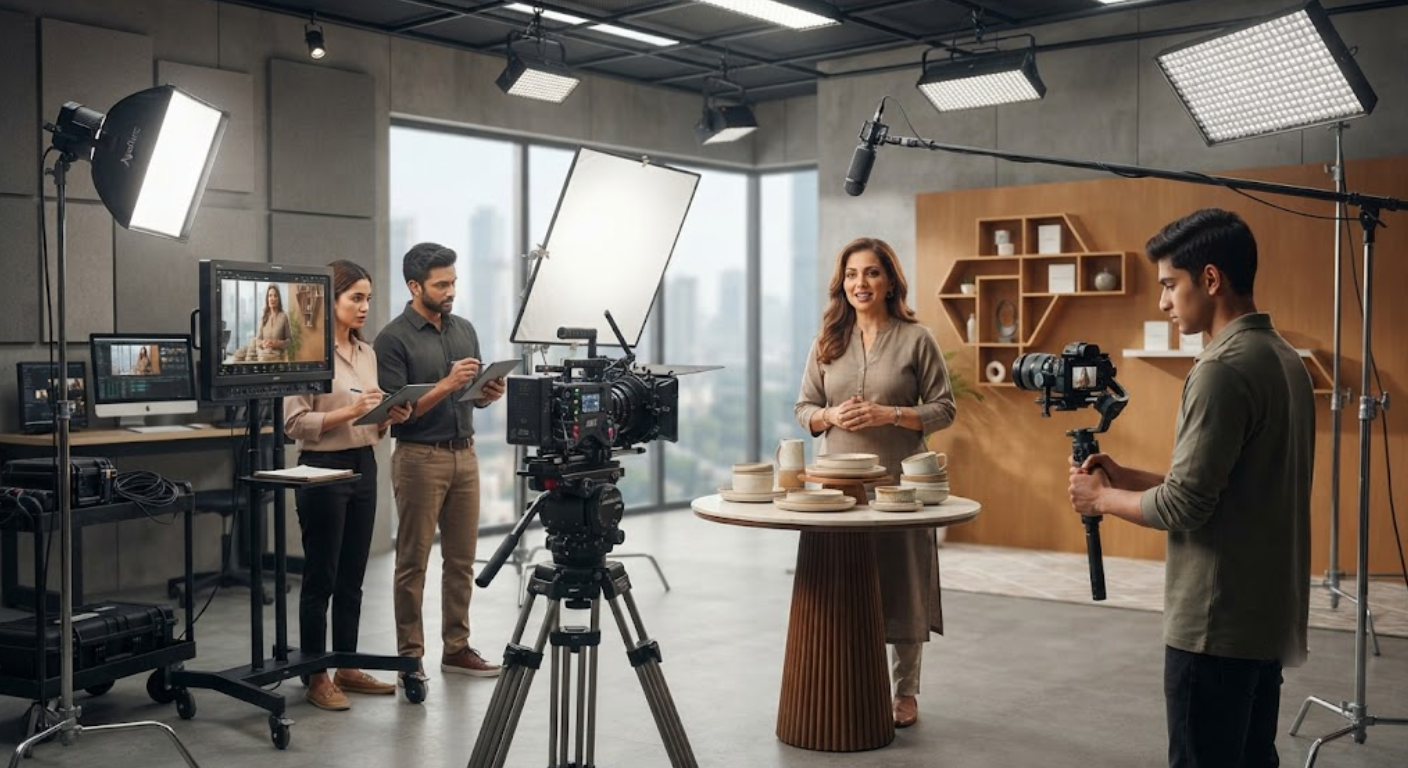
Video has become one of the most powerful formats for businesses that want to attract attention, explain their products, build trust and generate enquiries online. From Instagram Reels and YouTube videos to Meta advertisements and website campaigns, businesses can use video to communicate their value much faster than many traditional content formats.
However, simply creating a professional-looking video does not automatically make it an effective advertisement. A successful video ad needs a clear objective, a strong opening, relevant messaging, engaging visuals and a compelling reason for the viewer to take action.
This is where high-converting video ads become different from ordinary promotional videos. The goal is not only to make the brand look professional. The video needs to move the viewer from attention to interest and, ultimately, toward an action such as visiting a website, submitting an enquiry, making a purchase, booking a consultation or contacting the business.
For Mumbai businesses competing for attention across crowded digital platforms, this distinction is especially important. A well-planned video can communicate a product, service or business advantage within a few seconds while also creating a stronger emotional connection with potential customers.
The good news is that creating effective video ads does not always require complicated production. What matters most is combining the right strategy with strong creative execution.
1. Why Video Ads Matter for Modern Businesses
People encounter hundreds of pieces of content every day. Businesses therefore have only a short opportunity to capture attention before a potential customer scrolls away.
Video combines movement, visuals, voice, music, demonstrations and storytelling into one format. This makes it useful for businesses that need to explain something quickly or demonstrate the value of a product or service.
A professional video advertisement can help a business:
- Capture attention quickly
- Demonstrate products and services
- Explain complex ideas more simply
- Build brand credibility
- Show real people behind the business
- Create stronger emotional connections
- Generate website visits and enquiries
- Support remarketing campaigns
- Produce reusable social media content
Video is particularly useful when the product or service benefits from demonstration. A skincare brand can show how a product is applied. A restaurant can showcase food preparation and presentation. A real estate company can show a property walkthrough. A consultant can explain a common customer problem.
The format should therefore be selected according to the business objective rather than simply because video is popular.
2. Start With One Clear Advertising Goal
One of the biggest mistakes businesses make is trying to communicate everything in a single video ad.
A video should have one primary purpose.
For example, the goal might be to:
- Generate product purchases
- Increase website enquiries
- Promote a new service
- Generate leads
- Drive WhatsApp enquiries
- Increase bookings
- Promote an offer
- Build awareness
- Introduce a new product
When the objective is clear, the script and visuals become easier to plan.
For example, a video designed to generate leads may focus on a customer problem followed by the company’s solution and a direct enquiry CTA.
A product advertisement may instead focus on product benefits, demonstrations and reasons to purchase.
A brand awareness video may use storytelling and emotional messaging rather than an aggressive sales approach.
Before production begins, ask:
“What should the viewer do after watching this video?”
The answer should influence every major creative decision.
3. Understand Your Target Audience
High-converting video ads are not designed for everyone.
They are designed for a specific audience with a specific problem, desire or need.
Before writing a script, understand:
- Who is the customer?
- What problem are they facing?
- What do they currently use?
- What concerns might stop them from buying?
- What benefit matters most to them?
- What would convince them to take action?
For example, a premium skincare brand may target consumers looking for professional-quality skincare solutions. A B2B software company may target business owners concerned about productivity or operational efficiency.
The same product can require completely different advertising messages depending on the audience.
A younger audience may respond well to fast-paced vertical videos and direct storytelling. A professional audience may prefer a founder-led explanation, product demonstration or customer case study.
Understanding the audience allows the video to feel relevant rather than generic.
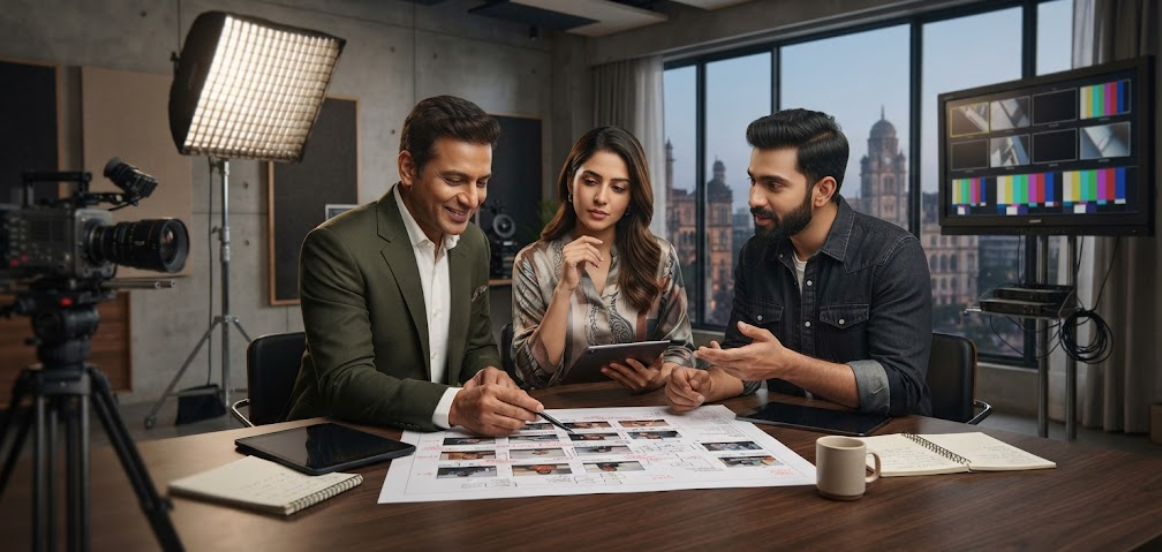
4. Create a Strong Hook in the First Few Seconds
The opening of a video advertisement is extremely important.
If viewers do not find the beginning interesting, they may scroll away before they understand what the advertisement is about.
A strong hook can be created through:
- A direct customer question
- A surprising statement
- A common problem
- A product demonstration
- A visually interesting opening
- A strong founder statement
- A before-and-after comparison
- A relatable situation
For example, instead of beginning with a long company introduction, a business could start by addressing the customer’s problem directly.
The opening should create curiosity while remaining relevant to the product or service.
The goal is not to trick viewers into watching. The goal is to immediately communicate why the video deserves their attention.
5. Focus on the Problem Your Product or Service Solves
People are rarely interested in a product simply because a business wants to sell it.
They are interested because the product or service solves a problem or provides a valuable outcome.
This should be reflected in the video.
Instead of spending most of the advertisement explaining the company, focus on the customer’s situation.
A strong structure can be:
Problem → Solution → Benefit → Action
For example, an e-commerce brand could show a common customer problem and then demonstrate how its product provides a practical solution.
A professional service company could explain a frustrating business challenge and show how its service makes the process easier.
This approach makes the advertisement customer-focused rather than company-focused.
6. Write a Simple and Persuasive Video Script
A video advertisement does not need a complicated script.
In fact, simpler messaging often works better because viewers need to understand the message quickly.
A practical script can include:
- Hook – Capture attention.
- Problem – Identify the customer’s challenge.
- Solution – Introduce the product or service.
- Benefits – Explain why it matters.
- Proof – Add credibility where appropriate.
- CTA – Tell the viewer what to do next.
The language should sound natural rather than overly promotional.
If a founder is speaking on camera, the script should allow room for natural delivery. Reading a long paragraph word-for-word can make the video feel artificial.
Short sentences, conversational language and clear ideas generally make the recording process easier.
The script should also be written with the final platform in mind. A short social media advertisement needs a different rhythm from a longer YouTube advertisement.
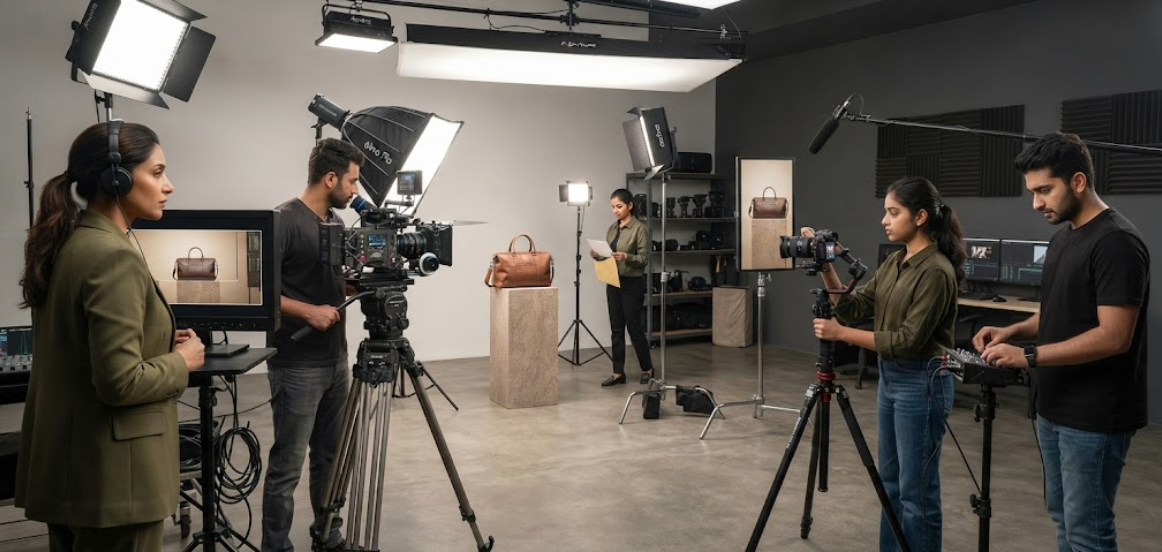
7. Use Professional Visuals to Build Trust
Production quality matters because viewers often associate presentation quality with professionalism.
This does not mean every advertisement needs an expensive cinematic setup.
Instead, businesses should focus on the elements that make a visible difference:
- Clean lighting
- Clear audio
- Stable camera movement
- Appropriate framing
- Professional backgrounds
- Good product styling
- Consistent branding
- Natural performance
Audio is particularly important. Even attractive footage can become difficult to watch if the dialogue is unclear or background noise is distracting.
Professional lighting can also make products and people appear more polished while maintaining a natural appearance.
The goal should be professional and authentic, rather than overly artificial.
8. Show Your Product or Service in Action
One of the strongest advantages of video advertising is the ability to demonstrate rather than simply describe.
If you sell a physical product, show:
- How it looks
- How it works
- How it is used
- Important features
- Product details
- Before-and-after results where appropriate
For services, demonstration can take a different form.
A business consultant could show a client discussion. A fitness brand could demonstrate an exercise. A restaurant could show food preparation. A real estate company could showcase a property walkthrough.
Showing the experience helps the viewer imagine themselves using the product or service.
For many businesses, demonstration footage can be more persuasive than a long verbal explanation.
9. Create Different Video Formats for Different Platforms
One video does not necessarily need to be distributed in exactly the same format everywhere.
Different platforms have different viewing behaviours.
For example:
- Instagram and Facebook often work well with vertical short-form videos.
- YouTube can support both short-form and longer videos.
- LinkedIn may work well with professional founder or educational videos.
- Websites can use product demonstrations, testimonials and brand videos.
- Paid advertising campaigns may require multiple aspect ratios and creative variations.
During production, businesses should consider capturing both vertical and horizontal footage where practical.
This allows one production session to generate more usable advertising assets.
It can also reduce the need to organize completely separate shoots for every platform.
10. Add a Clear Call to Action
A viewer may like your advertisement but still do nothing if the next step is unclear.
Every performance-focused video should have a clear call to action.
Depending on the campaign, the CTA could encourage viewers to:
- Visit the website
- Shop now
- Send an enquiry
- Book a consultation
- Call the business
- Send a WhatsApp message
- Download a resource
- Request a quotation
- Schedule an appointment
The CTA should match the advertising objective.
For example, a high-value professional service may benefit more from “Book a Consultation” than “Buy Now.”
The CTA should also be easy to understand and visible or clearly communicated through the video.
11. Test Multiple Video Ad Variations
Even experienced marketers cannot always predict which creative will perform best.
Testing different versions can reveal what your audience responds to.
You can experiment with:
- Different opening hooks
- Different presenters
- Different video lengths
- Product-focused vs founder-focused videos
- Different CTAs
- Different thumbnails
- Different offers
- Different visual styles
- Different customer problems
The core message can remain similar while individual creative elements change.
This approach allows businesses to learn from actual audience behaviour instead of relying entirely on assumptions.
For paid campaigns, testing can be especially valuable because performance data can reveal which creative attracts attention, generates clicks or produces enquiries.
The objective is not simply to create more advertisements. It is to identify the creative approach that produces better business results.
12. Measure Results and Improve Your Video Ads
A video advertisement should ultimately be evaluated against its business objective.
Depending on the campaign, useful performance indicators may include:
- Video views
- Watch time
- Engagement
- Click-through rate
- Landing page visits
- Leads
- Enquiries
- Purchases
- Bookings
- Cost per lead
- Return on advertising spend
Do not judge an advertisement only by likes or views.
A video with fewer views may generate significantly more qualified enquiries than a video with high reach.
Performance data should be used to improve future production.
If viewers leave early, the hook may need improvement. If people watch but do not click, the CTA or offer may need adjustment. If the video generates clicks but few enquiries, the landing page or overall offer may need attention.
This creates a continuous cycle:
Create → Publish → Measure → Learn → Improve → Create Again
That is how businesses can build a stronger video advertising system over time.
Conclusion
Creating high-converting video ads requires a combination of strategy, creativity and professional execution.
The strongest advertisements begin with a clear business goal and a defined target audience. They capture attention quickly, focus on a real customer problem, demonstrate the solution and finish with a clear call to action.
Professional production can strengthen trust through better lighting, audio, camera work and visual presentation. At the same time, businesses should avoid making advertisements unnecessarily complicated. Clear messaging and relevant storytelling are often more important than excessive visual effects.
The most effective approach is to treat every video shoot as part of a larger content strategy. Capture multiple formats, test different creative approaches, measure performance and use the results to improve future campaigns.
With the right planning, one professional production session can provide businesses with advertising videos, Reels, product demonstrations, social media content and reusable brand assets.
For businesses ready to turn their products, services and expertise into professional marketing videos, a well-planned production process can make the difference between simply producing content and creating content designed to generate real business results.